
Why Does One Toenail Grow Faster Than Another?

Have you ever trimmed all ten toenails at the same time, only to notice a few weeks later that one nail already looks longer than the others? It can feel strange, especially when the faster-growing nail is always the same one.
So, why does one toenail grow faster than another? In many cases, a small difference is completely normal. Different toes can have slightly different growth rates, and the big toenail may naturally grow faster than smaller toenails. Previous injuries, shoe pressure, nail thickness, infection, aging, and other factors can also change how quickly a nail appears to grow.
Below, we’ll look at what is normal, what may slow one nail down, how nail files and trimming affect what you see, and which changes deserve professional attention.
Quick Answer
One toenail can grow faster than another because nail growth naturally varies between toes. Big toenails may grow faster than smaller toenails, while injury, repeated shoe pressure, nail fungus, inflammation, aging, or damage to the nail-producing area can slow another nail. Small, stable differences are usually nothing to worry about.
Is It Normal for Toenails to Grow at Different Speeds?

Yes. Toenails do not necessarily grow at exactly the same rate.
Research involving healthy young adults found that toenails grew more slowly overall than fingernails and that the great, or big, toenail tended to grow faster than the other toenails. You can see the findings in this published PubMed study on fingernail and toenail growth rates.
That means you might trim every toenail evenly today but have your big toenail extend beyond the others sooner.
A slight difference is especially reassuring when the nail:
- Has always grown that way
- Has a normal color
- Is not painful
- Is not unusually thick or crumbly
- Is firmly attached to the nail bed
- Has healthy-looking surrounding skin
What matters more than perfect symmetry is whether there has been a new or dramatic change.
How Toenails Actually Grow
Understanding nail growth makes the difference between toes easier to explain.
The hard surface you paint and file is the nail plate, made mostly from keratin. New nail cells are produced in the nail matrix, an area underneath the skin near the base of the nail.
As new cells form, older cells are pushed forward. That creates the gradual movement we recognize as nail growth.
The nail bed is the skin beneath the nail plate. Your cuticle forms a protective seal near the base, helping keep unwanted germs away from the growing nail.
According to the NCBI overview of toenail anatomy and growth, toenails generally grow much more slowly than fingernails and may require roughly 12–18 months for complete replacement.
Because growth happens slowly, changes caused by an injury today may remain visible for months.
Why Does One Toenail Grow Faster Than Another?
Several factors can explain the difference. Some are simply part of normal anatomy, while others deserve closer attention.
1. Natural Differences Between Toes
The simplest explanation is natural variation.
Your ten toenails are not identical structures. Each has its own nail matrix, shape, thickness, and exposure to everyday pressure.
The big toenail is particularly different from the smaller nails. Its nail plate and growth area are larger, and research has found that great toenails can grow faster than the other toenails.
If your big toenails consistently need trimming before your smallest toenails, that alone is generally not unusual.
2. An Old Injury Can Slow One Nail
Think back over the past several months.
Did you stub a toe? Drop something on your foot? Wear painfully tight shoes? Run a race or spend a long day walking in shoes that pressed against one particular toenail?
Repeated trauma can disturb the nail matrix. Even relatively minor pressure may affect how smoothly a toenail grows.
A damaged nail may:
- Grow more slowly
- Develop ridges
- Become thicker
- Grow slightly crooked
- Temporarily stop growing
- Lift away from part of the nail bed
The tricky part is timing. Because toenails grow slowly, you may notice the effect long after you have forgotten the original injury.
3. Your Shoes May Affect One Toe More Than the Others
Shoes rarely place perfectly equal pressure across every toe.
For example, your second toe may be slightly longer than your big toe. A pointed shoe or short sneaker could repeatedly push against that toenail while leaving neighboring nails alone.
Over time, repeated friction can damage or distort the nail.
A recent clinical review in the Journal of the American Academy of Dermatology noted that physical trauma and poorly fitting footwear can contribute significantly to toenail abnormalities.
If one nail repeatedly looks different, check your shoes as well as the nail.
There should be enough space for your toes to move comfortably without hitting the front of the shoe.
4. A Fungal Nail Infection Can Change What Growth Looks Like
A fungal infection does not always make a toenail simply “stop growing.” Instead, it may alter the nail so much that growth becomes difficult to judge.
A fungal toenail may become:
- Yellow, white, or brownish
- Thick
- Rough
- Crumbly
- Misshapen
- Partially separated from the nail bed
The damaged nail may appear to grow much more slowly than the healthy toenail next to it.
Do not assume every thick or yellow toenail is fungus. Repeated shoe trauma, psoriasis, aging, and other conditions can look similar.
A dermatologist, podiatrist, or other qualified healthcare professional can determine whether treatment is actually needed.
5. Inflammation Around the Nail Can Affect Growth
The nail matrix sits close to the skin around the base of your toenail. Significant inflammation or infection in this area can sometimes interfere with normal nail production.
Pay attention to:
- Redness
- Swelling
- Warmth
- Increasing tenderness
- Pus or drainage
- Throbbing pain
Those signs are different from simply noticing that one healthy-looking toenail is longer than another.
Avoid cutting, digging, or aggressively filing around an inflamed nail. That can cause additional injury and introduce bacteria.
6. Nail Thickness Can Fool Your Eye
Sometimes the nails are growing at similar rates but look different.
A thin, smooth nail develops an obvious free edge quickly. A thick or curved toenail may grow forward less noticeably.
The slower-looking nail could also have:
- A downward curve
- A wider nail plate
- More surface ridges
- An uneven tip
- Thick material underneath the nail
Instead of comparing only length, photograph the nails immediately after trimming and compare them again four to six weeks later.
That gives you a much clearer picture.
7. Age and Overall Health Can Influence Nail Growth
Toenail growth generally slows as people get older. Circulation and other age-related changes may contribute.
Health conditions can also affect nails, although one slightly slower-growing toenail by itself is not enough to diagnose a health problem.
A change becomes more important when it appears alongside other symptoms or when several nails suddenly change at once.
If a toenail completely stops progressing for months without an obvious injury, professional evaluation is more useful than trying supplements or aggressive DIY treatments.
How Can You Tell Whether the Difference Is Normal?
Use appearance and symptoms rather than growth speed alone.
| What You Notice | More Likely to Be Routine | Worth Professional Attention |
|---|---|---|
| One big toenail grows slightly faster | Often | Usually not by itself |
| Difference has been present for years | Often | If no other symptoms |
| Nail becomes suddenly much slower | Less typical | Yes |
| Yellow, thick, crumbly nail | No | Possible infection or damage |
| Red, swollen skin around nail | No | Possible infection |
| Nail lifts away from skin | No | Should be evaluated |
| New dark streak | No | Dermatologist evaluation recommended |
| Pain or drainage | No | Seek professional care |
| Nail stops growing | No | Medical evaluation recommended |
The American Academy of Dermatology recommends paying attention to significant changes in nail color, shape, attachment, and growth. Its guide to nail changes that deserve a dermatologist’s attention explains several warning signs, including nail lifting, swelling and certain new dark streaks.
Can Trimming or Filing Make a Toenail Grow Faster?
Not directly.
Cutting or filing the free edge does not stimulate the nail matrix underneath your skin. The visible nail plate is made from hardened keratin, so removing its tip does not tell the nail root to produce cells faster.
However, good trimming and filing habits can keep toenails smoother and prevent damage that makes them harder to manage.
Choosing a Nail File for Toenails
You do not need an expensive tool simply because one nail grows faster.
| File Type | Material | Cost Consideration | Best For | Main Caution |
|---|---|---|---|---|
| Emery board | Abrasive-coated board | Usually inexpensive | Routine smoothing | Replace when worn or dirty |
| Glass/crystal file | Etched glass | Higher upfront cost, reusable | Gentle shaping | Avoid dropping it |
| Metal file | Textured metal | Usually inexpensive and reusable | Thicker nail edges | Can be aggressive with heavy pressure |
| Electric nail file | Motorized abrasive bits | Most expensive option | Specialized thick-nail work | Easy to over-file at home |
For healthy natural toenails, a basic emery board or gentle glass file is usually enough.
Electric files require much more control. Do not grind deeply into a thick, painful, discolored, or suspicious nail simply to make it look thinner. A nail technician can help with cosmetic maintenance, but possible infection or disease belongs with a healthcare professional.
A Safe Routine When One Nail Grows Faster
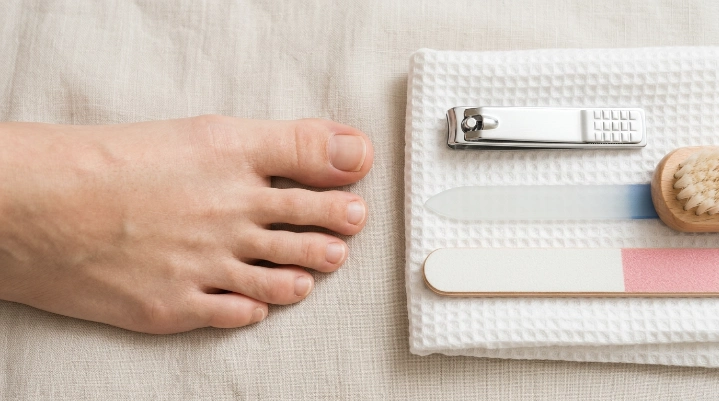
You do not need to trim every toenail on exactly the same schedule.
Instead:
- Wash your feet and inspect the nails. Look for redness, swelling, discoloration, lifting, or broken skin.
- Use clean toenail clippers. Avoid sharing personal nail tools.
- Trim mostly straight across. Do not carve deeply into the corners.
- Leave a small amount of visible nail. Cutting extremely short increases the chance of irritating surrounding skin.
- Smooth sharp edges gently. Use light strokes with a clean nail file.
- Clean and dry reusable tools. Good tool hygiene reduces contamination between nails.
- Wear properly fitting shoes. Make sure the faster-growing nail is not constantly hitting the front of your footwear.
The American Academy of Dermatology’s nail-trimming recommendations also advise trimming toenails straight across, smoothing rough edges, and regularly disinfecting nail-care tools.
Expert Tip: Take a clear photo immediately after trimming your toenails, then photograph them again four weeks later from the same angle. Comparing photos is much more reliable than trying to remember which nail seemed longer.
Can You Make the Slower Toenail Grow Faster?
There is no reliable beauty trick that can make one healthy toenail suddenly catch up with another.
Instead, focus on creating good conditions for normal growth:
- Protect toes from repeated impact.
- Wear comfortable shoes with enough room.
- Keep feet and nail tools clean.
- Avoid picking under the nail with sharp objects.
- Do not repeatedly file the nail surface thinner.
- Eat a balanced diet rather than depending on “nail growth” supplements.
- Address athlete’s foot or other foot problems appropriately.
- Give an injured nail time to grow out.
Be especially skeptical of products promising dramatic toenail growth in days or weeks. Toenails naturally grow slowly.
Common Mistakes to Avoid
When one toenail grows differently, it is easy to overcorrect.
Avoid these common mistakes:
- Cutting the faster-growing nail extremely short. This can make the corners more likely to irritate surrounding skin.
- Digging into the sides. Trying to “even up” the shape can contribute to ingrown toenails.
- Filing aggressively back and forth. Excessive pressure can thin and damage the nail edge.
- Using an electric file on a suspicious nail. Thickening or discoloration may need diagnosis first.
- Sharing nail files or clippers. Shared tools can spread microorganisms.
- Assuming every slow nail has fungus. Trauma and other nail conditions may look similar.
- Covering changes indefinitely with polish. Polish is fine for many healthy nails, but repeatedly hiding a changing nail can make it harder to monitor.
- Cutting the cuticle. The cuticle helps protect the area where the nail begins growing.
DIY Care vs. a Salon Visit
A minor growth difference between healthy-looking toenails is usually easy to manage yourself.
A licensed nail technician can be useful when you want help with:
- Neat cosmetic shaping
- Pedicure maintenance
- Smoothing uncomplicated rough edges
- Choosing an appropriate file for natural nails
However, a nail technician should not be expected to diagnose a fungal infection, circulation problem, melanoma, psoriasis, or another medical condition.
If a nail is painful, inflamed, draining, lifting, dramatically discolored, or suddenly changing shape, cosmetic treatment should take a back seat to proper evaluation.
When to See a Nail Technician or Dermatologist
Choose the professional based on the problem.
A nail technician is appropriate for routine cosmetic grooming when the nail and surrounding skin appear healthy.
A dermatologist, podiatrist, or other healthcare professional is a better choice if you notice:
- Persistent pain
- Redness, heat, or swelling
- Pus or drainage
- A nail separating from the nail bed
- Significant unexplained thickening
- Crumbling or major discoloration
- A new or changing dark streak
- Bleeding without a clear reason
- A nail that appears to stop growing
- A sudden change after months or years of normal growth
If you have diabetes, reduced sensation in your feet, poor circulation, or another condition that makes foot injuries harder to heal, seek professional guidance rather than aggressively trimming a difficult nail yourself.
FAQs
Is it normal for one big toenail to grow faster than the other?
A small difference can be normal. Research has not found a consistent major right-versus-left difference in healthy people. If one big toenail suddenly changes speed or appearance, however, check for injury, pressure, infection, or another nail problem.
Which toenail usually grows the fastest?
The big toenail can grow faster than the smaller toenails. Individual growth rates still vary, so this is not a rule for every person.
Why is one toenail barely growing?
Previous trauma, repeated shoe pressure, nail damage, infection, inflammation, or naturally slow growth may be responsible. If the nail appears to have completely stopped growing or has changed color or shape, have it evaluated.
Does cutting a toenail make it grow faster?
No. Cutting removes the hardened end of the nail plate. It does not directly stimulate the nail matrix where new nail cells are produced.
Does filing toenails make them grow faster?
No. Filing changes the shape and length of the visible nail but does not meaningfully speed up nail production. Gentle filing is useful for smoothing sharp or rough edges.
How long should I watch an uneven growth rate?
If both nails look healthy and the difference is small, monitoring them over several trimming cycles is reasonable. Take monthly photos so you can compare them accurately. Seek care sooner if pain, swelling, discoloration, lifting, or other warning signs develop.
Can nail fungus make one toenail grow differently?
Yes, a fungal infection can thicken, crumble, discolor, and distort one or more nails, making the affected nail appear to grow differently. Because trauma can cause similar changes, professional diagnosis may be needed before treatment.
Conclusion
So, why does one toenail grow faster than another? Most often, the answer is simple natural variation. Your big toenail may naturally outpace the smaller ones, and individual nails can respond differently to pressure, previous injuries, footwear, thickness, and everyday wear.
Focus less on making every toenail grow at the exact same speed and more on whether each nail stays comfortable, attached, and healthy-looking.
Trim carefully, use a gentle clean nail file, wear shoes that give your toes enough space, and monitor unfamiliar changes instead of trying to file or cut them away. If a nail suddenly stops growing, becomes painful, changes color, lifts, or develops inflammation, choose professional evaluation over a DIY fix.
Your safest next step is simple: compare your toenails after your next trim, watch how they change over the following month, and let the appearance and comfort of the nail—not perfect symmetry—guide your care.

