
Dry, cracked heels are a common annoyance, especially during summer sandal season or dry winter months. When you notice rough, peeling skin on your feet, it is tempting to reach for whatever beauty tool is nearby. This leads many people to wonder: can nail file be used on foot heel to smooth out those stubborn calluses?
While it might seem like a quick fix in a pinch, using a standard emery board or glass nail file on thick foot skin is not the smartest or safest choice for your routine. In this comprehensive guide, we will explain exactly why standard nail files fall short, highlight the safest alternatives for your feet, and share expert tips for achieving salon-quality smooth heels safely at home.
Quick Answer
Yes, a nail file can be used on a foot heel for very minor touch-ups, but it is highly discouraged. Standard nail files are too small and fine to effectively remove thick calluses. Using them can cause friction burns, tear healthy skin, and easily spread bacteria. A dedicated foot file or pumice stone is always the safer, more effective choice.
Why Using a Nail File on Your Heel Is Not Ideal
When you are desperate to smooth out a rough patch of skin, an emery board might seem like an easy solution. However, fingernails and foot calluses have entirely different textures, densities, and care requirements. Using the wrong tool can lead to discomfort and poor results.
The Grit Level Is Too Fine
Nail files are specifically designed for the hard keratin structure of your fingernails. The grit—or coarseness—of a standard nail file is typically too fine to make a dent in thick, dead heel skin. If you try to use a nail file on a callus, you will end up rubbing the area repeatedly without much success. This excessive rubbing creates heat and friction, which can result in painful blisters or friction burns rather than smooth skin.
Hygiene and Cross-Contamination Risks
One of the biggest concerns with using a nail file on your feet is hygiene. Your feet naturally harbor different types of bacteria and fungi compared to your hands. If you use an emery board on your heels and then use that same file on your fingernails, you risk transferring foot fungus or bacteria to your hands.
According to the American Podiatric Medical Association, maintaining proper foot hygiene and never sharing or cross-contaminating pedicure tools is essential to avoid stubborn fungal infections and keep your feet healthy.
Tool Damage and Breakage
Standard cardboard emery boards are fragile. The thick, tough skin on your heel requires a firm, sturdy surface to exfoliate properly. If you apply the heavy pressure needed to file a heel using a flimsy nail file, the file will likely bend, snap, or wear down instantly, rendering the tool completely useless.
Better Alternatives for Smoothing Your Heels
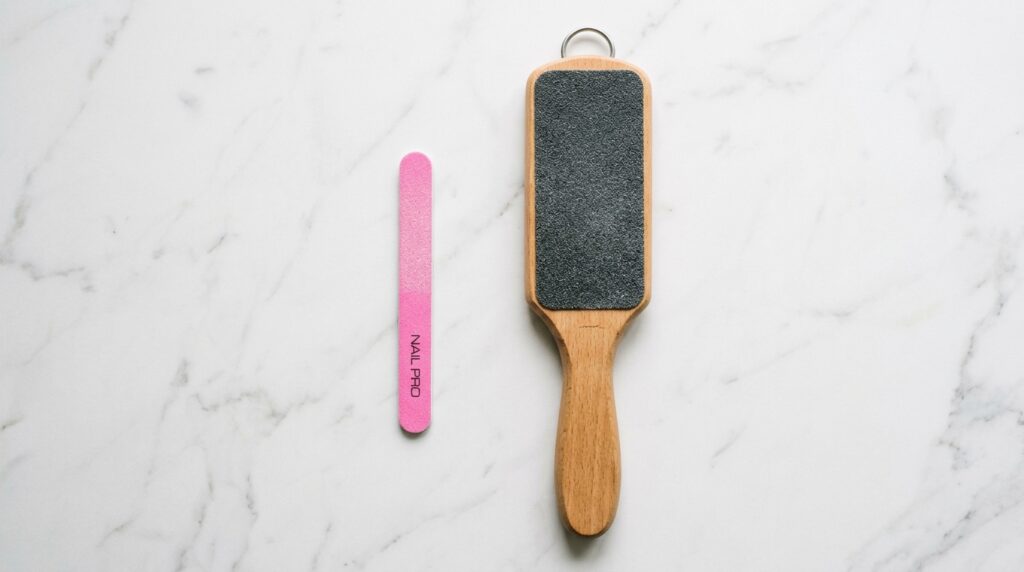
If you want smooth, soft feet without risking injury or infection, you need to use tools specifically designed for foot care. These tools are built to handle tough calluses safely and efficiently.
The Pumice Stone
A natural volcanic rock, the pumice stone is a gentle, time-tested tool for foot exfoliation. It works best when your feet are softened from warm water. It gently buffs away the top layer of dead skin without the risk of slicing into healthy tissue.
For the best and safest results, the American Academy of Dermatology recommends soaking your feet in warm water for 5 to 10 minutes before gently filing the thickened skin with a clean pumice stone.
Manual Foot Files and Paddles
Foot files (often called foot paddles) look like oversized nail files. They feature a wide surface area and a coarse grit specifically calibrated for heel skin. Many come with dual sides: one coarse side to break down the hard callus, and a finer side to smooth the skin afterward. These are highly effective and easy to sanitize.
Exfoliating Foot Peels
If you prefer not to use physical tools at all, chemical foot peels are a fantastic alternative. These liquid booties use alpha-hydroxy acids (AHAs) or beta-hydroxy acids (BHAs) to break down the bonds between dead skin cells. Over the course of a week or two, the thick, calloused skin will naturally peel away, revealing baby-soft heels without any scrubbing.
Tool Comparison: Nail File vs. Foot File vs. Pumice Stone
To help you make the right choice for your at-home pedicure, here is a quick breakdown of how these popular beauty tools compare.
| Tool Type | Best Used For | Grit Level | Safety for Heels | Durability |
|---|---|---|---|---|
| Standard Nail File | Shaping fingernails | Fine to Medium | Low (Can cause friction burns) | Low (Bends easily) |
| Pumice Stone | Daily/Weekly gentle heel smoothing | Coarse (Natural) | High (Very safe for most skin) | High (Lasts months) |
| Foot File/Paddle | Removing thick, stubborn calluses | Very Coarse | Medium (Safe if not overused) | High (Often washable) |
| Electric Foot Buffer | Fast, effortless callus removal | Interchangeable | Medium (Can file too deep if left in one spot) | High (Requires batteries/charging) |
Expert Tip:
Always sanitize your reusable foot tools! After using a foot file or pumice stone, scrub it with an old toothbrush, soap, and hot water, then spray it with rubbing alcohol. Let it air dry completely before storing it to prevent dangerous bacterial growth.
How to Safely Smooth Your Heels at Home
Achieving salon-perfect feet at home requires a gentle touch and a bit of patience. Follow these exact steps to safely remove rough heel skin without causing damage.
- Soak Your Feet: Fill a basin with warm (not hot) water and add Epsom salts or a gentle foot soak. Let your feet soak for 10 to 15 minutes. This softens the hardened keratin, making it much easier to remove.
- Choose the Right Tool: Grab your clean pumice stone or foot file. Do not grab your fingernail file.
- File Gently in One Direction: Use light to medium pressure. Rub the tool over the callused area in a single direction. Do not aggressively saw back and forth, as this can tear the skin.
- Know When to Stop: You only want to remove the top layer of dead skin. If the skin turns pink, feels tender, or if you feel pain, stop immediately.
- Rinse and Moisturize: Rinse your feet with clean water and pat them dry. Apply a thick, urea-based foot cream or heel balm to lock in hydration.
- Wear Cotton Socks: Put on a pair of clean cotton socks to seal in the moisture while you sleep.
Common Mistakes to Avoid
Even with the best intentions, it is easy to make mistakes during a DIY pedicure. Avoid these common errors to keep your heels healthy and pain-free:
- Filing on dry skin: Never file a dry heel. This causes the skin to rip and creates a jagged, rough texture that catches on your socks.
- Over-filing: Your feet actually need a small layer of callus to protect them from the pressure of walking. Removing too much skin will make walking incredibly painful.
- Using sharp tools: Never use razor blades, cheese graters, or callus shavers at home. These can easily slip, causing deep cuts and severe infections.
- Ignoring deep cracks: If your heels have deep fissures that are bleeding or oozing, do not file them. Filing will only irritate the open wound.
When to See a Nail Technician or Dermatologist

While mild calluses can be managed safely at home, some foot issues require a professional. It is vital to know when to step away from your home tools and seek expert advice.
You should see a professional if:
- Your heels are deeply cracked or bleeding: Fissures that bleed are essentially open wounds and are highly susceptible to bacterial infections. A dermatologist can prescribe medicated ointments.
- You have diabetes or neuropathy: If you have poor circulation or cannot feel your feet properly, never attempt to file your own calluses. The Centers for Disease Control and Prevention (CDC) strongly advises individuals with diabetes to have their feet checked and treated exclusively by healthcare professionals to prevent dangerous ulcers and complications.
- The callus is painful when you walk: This could actually be a plantar wart or a deep corn, which a standard foot file will not cure.
- You suspect a fungal infection: If your skin is peeling excessively, red, itchy, or emitting a bad odor, you may have athlete’s foot. A medical professional needs to treat this before you begin an exfoliation routine.
FAQs
Can I use a glass nail file on my heels?
While glass nail files are highly durable and sanitize easily, they are still too small and their grit is too fine to effectively smooth thick foot calluses. You would be better off using a glass foot file, which is specifically designed with a larger surface and coarser texture for heels.
Is an electric foot file better than a manual one?
Electric foot files are faster and require less physical effort, making them great for regular maintenance. However, they can quickly file away too much skin if you hold them in one spot for too long. Manual files offer you more precise control over the pressure.
Can filing your heels make them worse?
Yes. If you file your heels too aggressively, your body will react to the trauma by producing skin cells faster, leading to thicker, harder calluses than before. Gentle, consistent exfoliation is always better than one aggressive session.
How often should I file my heels?
For most people, filing your heels once every one to two weeks is perfectly adequate. Doing it more often than this risks stripping away healthy skin layers and causing painful sensitivity.
What happens if I file too much skin off my heel?
If you file too deep, the skin will become bright pink, sensitive to the touch, and painful when you walk. You may also notice clear fluid or blood. If this happens, apply an antibacterial ointment, cover it with a bandage, and avoid wearing tight shoes until it heals.
Can I use a body scrub instead of a foot file?
Body scrubs are excellent for the softer tops of your feet and your ankles, but they are generally not abrasive enough to remove thick, hardened heel calluses on their own.
Conclusion
When taking care of your feet at home, using the right tools makes all the difference in the world. So, can nail file be used on foot heel? Technically yes, but it is highly inefficient, potentially unhygienic, and likely to ruin your file.
Instead of reaching for your delicate fingernail tools, invest in a quality pumice stone or a dedicated foot file. By soaking your feet first, filing gently, and following up with a rich moisturizer, you can safely achieve beautiful, smooth heels without leaving your bathroom. If you are ever in doubt about deep cracks or stubborn calluses, don’t hesitate to book an appointment with a professional nail technician or a dermatologist to get your feet back to optimal health!
