
How to Make Nail Polish Dry Faster Without Ruining Your Manicure

If you want a manicure that feels dry fast, the honest answer is this: regular nail polish usually cannot dry instantly in the true sense. It dries as solvents evaporate, so there is always a short window where the surface may seem set while the layers underneath are still soft. The goal is to get to touch-dry as quickly as possible, then protect the finish until it is fully dry.
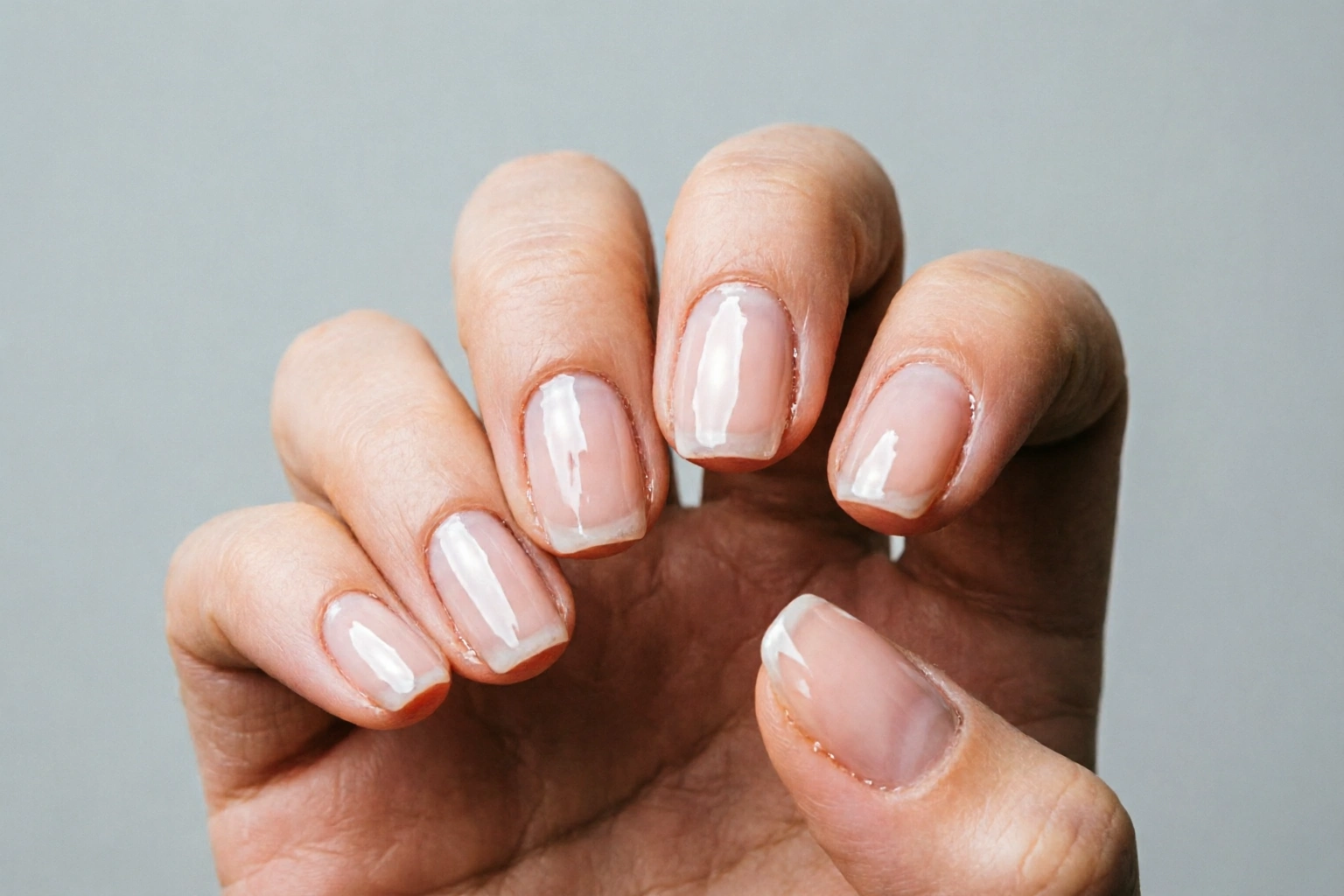
That distinction matters. A manicure can look finished and still dent if you grab your phone, zip jeans, or search in your bag too soon. If you are in a hurry, the smartest move is not one magic trick. It is a combination of thin coats, a quick-dry product, and gentle cooling airflow.
Can Nail Polish Dry Instantly?
Not really, at least not in the way most people mean it. For regular nail polish, “instant” usually means dry enough to avoid obvious smudges, not fully hardened all the way through.
A polish can feel dry on top while still being soft underneath. That is why a nail may look fine and then pick up a dent from a blanket, a hair tie, or the edge of a pocket. Manucurist notes that polish can seem dry on the surface but still be soft underneath, and suggests waiting at least a few minutes even when thin coats are applied correctly. You can read their guidance here.
For regular polish, drying means the solvents are evaporating and the surface is setting. It does not mean the polish “cures” the way gel polish does under UV/LED light. Gel systems are a different category entirely, so if you are using regular polish, the fastest result is touch-dry first and fully dry later.
So the realistic target is:
- Touch-dry: the surface no longer feels tacky and is less likely to pick up a light mark
- Safe for light tasks: you can handle very low-risk actions carefully, like reaching for something gently
- Fully dry: the manicure is much less likely to dent or smudge during normal use
If you need the fastest reliable result, focus on methods that speed up surface drying without disturbing the polish layer.
What You Need Before You Start
The fastest setup is simple.
Best tools for speed:
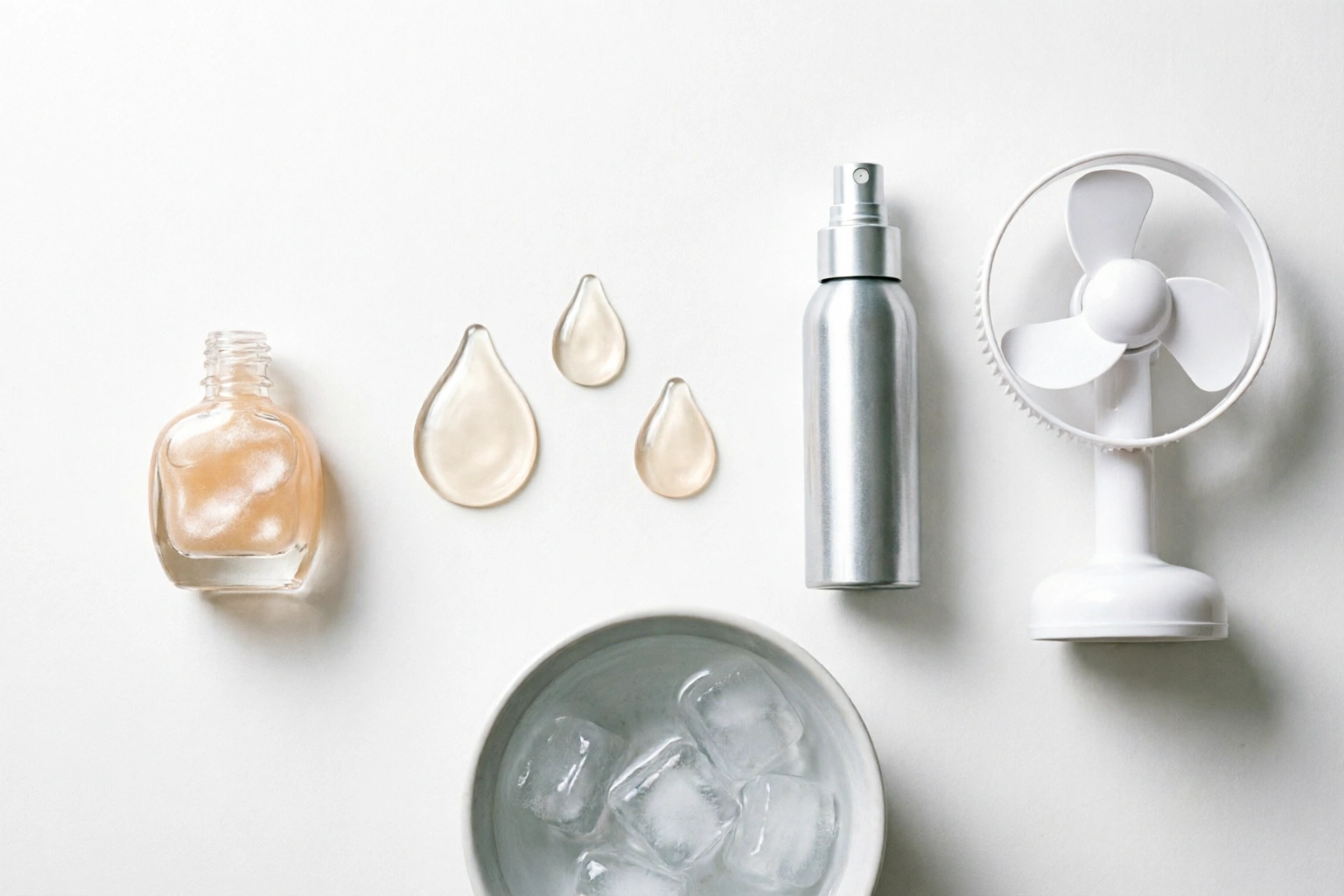
– Quick-dry top coat
– Quick-dry drops
– Quick-dry spray
– Fan or hair dryer on the cool setting
– Bowl of cold water with ice, if you want a household hack
– Clean, dry nails before painting
One small but important prep step: essie notes that washing your hands before application can remove oils that interfere with polish adhesion, and that older polish may be thicker and stickier. That thicker texture can slow drying and make application less even. Their advice is on essie’s drying tips page.
Fastest Ways to Dry Nail Polish Faster
If you want the shortest wait time, use this order of priorities.
1) Thin coats first
This is the biggest speed factor. Thin layers dry faster than thick ones because there is less solvent to evaporate. Thick coats trap softness underneath, which is why a manicure can still smudge long after the top looks set.
2) Use a quick-dry top coat
This is usually the best all-around option if you want speed and a cleaner finish. A quick-dry top coat seals the color and helps the surface set more quickly.
3) Add quick-dry drops or spray
These are useful when you want to shrink waiting time after the last coat. They are especially handy if you already painted your nails and need help now.
4) Use cool air
A fan or cool-setting hair dryer can help move solvent out of the polish.
5) Try cold water only if you are comfortable with the trade-off
Cold water can help set the surface, but it is not a magic fix. It is better as a backup than as your main strategy.
If you only do one thing, use thin coats; if you buy one product, choose a quick-dry top coat; if you already finished painting, use drops or cool air.
Step-by-Step: How to Dry Nail Polish as Fast as Possible
Here is the most practical fast-dry routine for at-home manicures.
-
Prep clean nails.
Make sure nails are free of lotion, oil, and leftover residue. That helps the polish adhere more evenly. -
Apply thin color coats.
Two thin coats usually dry better than one thick coat. If your polish is sheer, resist the urge to load it on. -
Wait briefly between coats.
If the first layer is still wet and you pile on the next one, the whole manicure stays soft longer. For more on timing between layers, see how long to wait between coats of nail polish. -
Finish with a quick-dry top coat.
This is the best moment to use a drying product because it locks the surface and helps reduce accidental marks. -
Use quick-dry drops or spray if you have them.
Follow the label directions. These products are made to work with polish, so they are usually safer than improvised kitchen hacks. -
Add cool air for a short burst.
Hold a fan or hair dryer on the cool setting a few inches away. Cote Beauty recommends cool air from a hair dryer held a few inches away, with gentle airflow so you do not disturb the top layer. Their instructions are here. -
Avoid using your hands normally too soon.
Even when the surface feels dry, treat your nails as delicate for a little while longer.
If you need a deeper breakdown of timing, how long does nail polish take to dry completely is the better next read.
Quick-Dry Top Coat vs. Drops vs. Spray
Each product helps in a slightly different way.
| Method | Speed | Ease | Reliability | Best use case | Trade-off |
|---|---|---|---|---|---|
| Quick-dry top coat | Fast | Very easy | High | Best single buy for regular polish | Adds one more step |
| Quick-dry drops | Fast | Easy | High | Great after your final coat | Needs careful application |
| Quick-dry spray | Fast | Easy | Medium-high | Helpful for quick touch-dry support | Can be messier to use |
| Cold water | Moderate | Easy | Medium | Cheap household backup | Can disturb soft polish |
| Fan/cool air | Moderate | Very easy | Medium-high | Good no-fuss option | Usually slower than products |
Which one should you choose?
- Choose a quick-dry top coat if you want the best balance of speed, finish, and reliability.
- Choose drops if you already have polish on and want a simple finishing aid.
- Choose spray if you like a low-effort product and do not mind a slightly less controlled application.
- Choose cool air if you want a free, low-risk method.
- Choose cold water only if you are okay with a more limited, less consistent hack.
Manucurist also recommends top coat plus drying drops for a smoother, less stressful finish, which fits the same strategy: seal the surface, then support drying with a dedicated product.
Cold Water, Ice Water, Fan, or Cool Air: Which Hack Works Best?
Cold water or ice water
This is one of the most popular DIY ideas because it feels clever and cheap. Cote Beauty describes dipping nails in ice-cold water as a time-efficient method, and Beetles suggests placing nails in a bowl of cold water with ice cubes for about two minutes after the polish feels dry. You can see that guidance here.
The limitation is important: cold water is less reliable than cool airflow for most people, and it can be risky if the polish is still too soft. Too much movement in the water can smudge the manicure, and dipping too early can leave dents.
Fan or cool air
This is the safer, more controlled household option. Essie recommends a blast of cool air on a lower-power setting, and Cote Beauty also suggests cool air a few inches away with gentle airflow. See essie’s guidance for the same general approach.
Heat
Skip it. Warm air can cause bubbling or uneven drying, and stronger airflow can disturb the polish before it settles. If you are tempted to use a hot blow dryer, that is one of the easiest ways to ruin the finish.
Best practical choice: if you want a simple household hack, use cool air before cold water.
How to Apply Polish So It Dries Faster
Drying speed starts before the last coat goes on.
Use thinner coats
This is the single most important technique. Thin layers dry faster and more evenly than thick ones. If you are covering a streaky color, resist the urge to “fix” it with a heavy coat. That usually makes the wait longer.
Avoid old, thickened polish
Essie notes that older polish may be thicker and stickier. That matters because thick polish spreads unevenly and stays soft longer. If the bottle has become gloopy, a polish thinner is a better fix than shaking it hard.
Keep the bottle calm
Vigorous shaking can introduce bubbles, and bubbles can make the finish look rough even after drying. Roll the bottle gently between your hands instead.
Choose faster formulas when possible
If you often need your manicure to dry quickly, fast-drying polish is worth considering. Regular polish can still look beautiful, but the drying window is usually less forgiving.
Common Mistakes That Make Polish Dry Slower
A lot of “slow drying” problems are actually application problems.
- Applying thick coats
- Painting too many layers
- Touching the nails too soon
- Using heat instead of cool air
- Shaking the bottle hard
- Trying to rush with water before the polish has set at all
The most common mistake is assuming the surface look tells the whole story. It does not. A nail can appear fine and still be soft enough to dent from a sleeve, a phone case, or a blanket.
How to Tell When Your Nails Are Safe to Use
Use a gentle test, not a risky one.
The back-of-nail test
Manucurist suggests lightly touching the polish with the back of another nail rather than your fingertip. If it does not feel sticky, that is a better sign than pressing hard with skin.
What to avoid
- Fingerprint tests
- Pressing into the polish
- Rubbing the surface
- Testing on a corner that can snag
Practical timing rule
If you used thin coats and a quick-dry top coat, your nails may be ready for very light tasks sooner than a standard manicure. For normal hand use, though, be more cautious and give the polish extra time before anything rough, tight, or high-contact. In other words, treat “touch-dry” as the first milestone, not the finish line.
If you want a deeper timing guide, how long does nail polish take to dry can help you set expectations.
Troubleshooting: Why Your Polish Is Still Tacky or Smudging
Problem: The top feels dry, but the manicure dents
Likely cause: coats were too thick, or you moved too soon.
Fix: use thinner layers next time and give the polish more time before normal hand use.
Problem: The surface looks bumpy or bubbly
Likely cause: the bottle was shaken hard, or heat disturbed the polish.
Fix: roll the bottle gently and stick to cool air.
Problem: The polish smudges when you try cold water
Likely cause: the polish was not set enough first.
Fix: wait until the surface is at least partially set before trying the ice-water method.
Problem: Polish seems thicker than usual
Likely cause: the formula is old or has started to thicken.
Fix: replace the bottle if needed, or use polish thinner instead of overworking it.
Best Method for Different Situations
If you need the fastest reliable result
Use thin coats + quick-dry top coat + cool air. That combination gives you the best balance of speed and finish.
If you already painted your nails and need a rescue plan
Use quick-dry drops or spray, then sit under cool airflow. This is the best “I need to leave soon” setup.
If you do not want to buy anything
Use thin coats and a fan or cool hair dryer on low. It will not be as fast as a dedicated product, but it is the simplest no-cost option.
If your polish is thick or old
Do not try to force speed with heat. Thin the polish properly or replace it. Thick polish is one of the biggest reasons a manicure stays tacky.
If you are using gel polish instead of regular polish
The fastest method is different. Gel polish is designed to cure under a UV or LED lamp, so quick-dry top coats, drops, and cold-water hacks are for regular polish, not gel systems. If you are wearing gel, follow the lamp and product instructions for that system.
When to Ask a Nail Technician
If your polish repeatedly stays sticky, bubbles every time, or never seems to set properly even when you use thin coats and quick-dry products, a nail technician can help you figure out whether the issue is the formula, the application, or a product compatibility problem. That is especially useful if you paint your nails often and want a routine that works consistently.
FAQs
What is the fastest way to dry nail polish at home?
The fastest practical method is usually thin coats + quick-dry top coat + cool air. That combination is more reliable than any single household trick.
Does cold water really dry nail polish faster?
It can help set the surface, but it is not a guaranteed instant fix. It works best after the polish has already started to set, and cool airflow is usually the safer first choice.
Are quick-dry drops better than a top coat?
They do different jobs. A quick-dry top coat is usually the better first purchase because it seals the manicure. Drops are useful as an extra speed step after painting.
Can I use a hair dryer on my nails?
Yes, but use the cool setting and gentle airflow held a few inches away. Strong heat or forceful air can smudge the polish.
Why does my polish feel dry but still dent?
Because the surface can dry before the lower layers. That is why thin coats matter so much.
Is fast-drying polish better than regular polish?
If speed matters often, yes, it can be worth it. Fast-drying formulas reduce waiting time, but they still work best when applied in thin coats.
How long should I wait before using my hands normally?
Long enough that the polish is not just dry on top, but stable enough not to dent. If you are unsure, be conservative and give it more time before normal hand use.
Can I make every polish dry the same way?
No. Formula, thickness, and how many coats you used all change drying behavior. Some methods help across the board, but none work equally well on every polish.
Is this article about regular polish or gel?
It is about regular nail polish. Gel polish works differently because it cures under UV or LED light, so the drying tips here do not apply to gel systems.

