
Why Nail Polish Gets Thick and How to Fix It Safely

If you’ve opened a favorite polish and found it gooey, stringy, or hard to spread, you’re not alone. Thick polish is a common beginner nail problem, and it usually happens because some of the liquid ingredients have slowly evaporated, leaving the formula denser than it used to be.
In many cases, you can bring it back to a usable consistency with the right thinner and a gentle touch. The trick is knowing when a bottle can be saved, when it needs a little cleanup, and when it’s better to replace it.
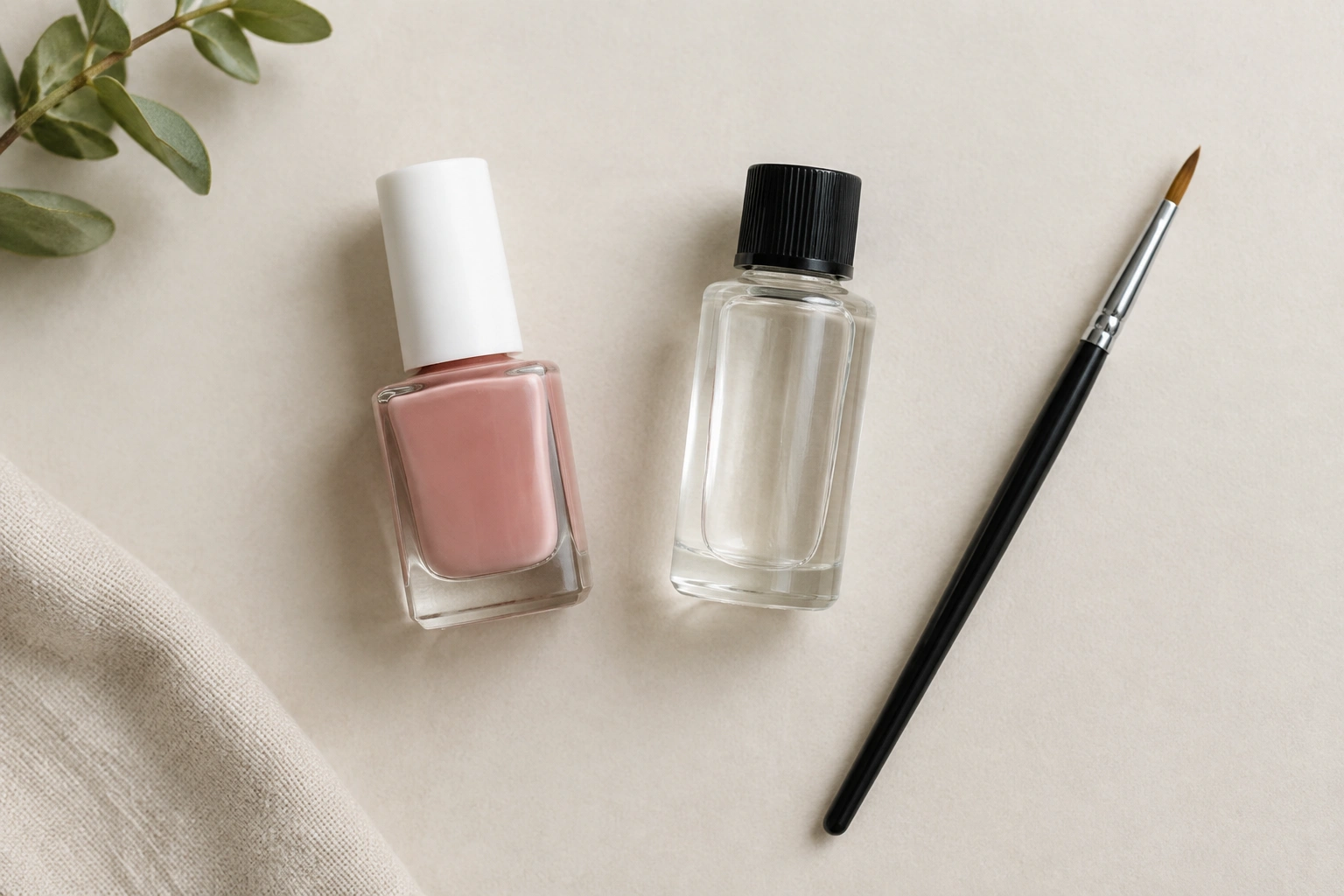
Why Nail Polish Gets Thick
Nail polish is made with pigments, film-forming ingredients, and solvents that keep everything flowing smoothly. Over time, those solvents can escape from the bottle every time it’s opened, and sometimes even through tiny gaps around the cap. As the liquid portion decreases, the polish becomes thicker and harder to apply.
Heat can speed that process up. So can bottles that are opened and closed often, or caps that don’t seal tightly. If polish dries around the bottle neck, the cap may not close properly, which lets even more air in. That’s one reason a bottle can feel “closed” but still slowly change inside.
Age matters too. Even if you barely use a polish, it can still change over time. Some formulas hold up better than others, but all polish will eventually drift away from its original smooth texture if it sits long enough.
For a related breakdown of drying and consistency changes, see this guide on why nail polish gets thick.
How to Tell If Thick Polish Is Still Usable
A polish that looks thicker is not automatically done for. The key question is whether it still mixes back to a smooth, even flow and levels on the nail.
Here’s a simple way to judge it:
Still worth trying to save
- It pours slowly, but still moves.
- The color looks even after gentle mixing.
- It applies a little streaky at first, but smooths out within a few seconds.
- The polish is thicker than normal, but not full of hard bits.
Better to replace
- It stays stringy when you pull the brush out.
- It looks separated and won’t blend back together.
- You see clumps that do not dissolve with thinning.
- It drags across the nail instead of leveling out smoothly.
- It stays bumpy, ropey, or patchy on the nail instead of settling into an even coat.
A quick example: if your red polish is just a bit gooey and still smooths out after mixing, it may be fine for a full manicure. If your old nude polish looks like colored syrup with little rubbery strands, that bottle is probably past the point of rescue.
The Safest Way to Thin Nail Polish
The safest fix is a proper nail polish thinner. It is made to restore flow without throwing the formula off balance.
Here’s the beginner-friendly method:
- Open the bottle in a well-ventilated area.
- Add a small amount of thinner. For a small bottle, start with 1 to 2 drops.
- Close the bottle tightly.
- Roll the bottle between your hands. Don’t shake hard.
- Wait about a minute, then test the brush or apply one thin coat.
- Check the texture. If it still feels too thick, add 1 more drop at a time and repeat.
Go slowly. It’s much easier to add a little more than to fix polish that has become too runny. If you over-thin it, the polish may apply too sheer, drip, or take longer to dry.
If the polish becomes too thin, stop adding thinner and let the bottle sit for a few minutes before testing again. If it still looks watery, it may be better to leave it for touch-ups or replace it.
If you want a more detailed walkthrough, you may also find how to thin thick nail polish helpful.
How much thinner should you use?
There is no single amount that works for every bottle, because formulas vary. The safest rule is to add a little, test, then adjust. If the polish starts flowing smoothly from the brush and covers the nail without dragging, stop there.
Nail Polish Thinner vs. Nail Polish Remover
This is where many beginners get tripped up. Nail polish thinner and nail polish remover are not the same product.
Nail polish thinner is designed to restore the polish’s original consistency.
Nail polish remover is designed to break down and remove polish from the nail.
That difference matters. Remover may seem to loosen thick polish at first, but it can also weaken the formula and change how it dries. The result can be patchy application, poor wear, or polish that becomes even less stable.
A simple rule: if the bottle says thinner, it’s meant to help polish flow again. If it says remover, it’s meant to take polish off the nail. Those jobs are not interchangeable.
How to Mix Thick Polish Without Bubbles
Once you add thinner, mix the bottle gently. Hard shaking traps air and can leave bubbles in your manicure.
Rolling is the better choice. Hold the bottle between your palms and roll it back and forth for a few seconds. This helps blend the ingredients without whipping air into the polish.
If the bottle has sat for a long time, you may need a little patience. Roll, let it settle, then check the brush. If you see bubbles on the surface, give the polish a minute or two before applying.
A beginner-friendly comparison:
- Shaking: faster, but more likely to create bubbles
- Rolling: slower, but gentler and usually cleaner
If your polish dries too quickly while you work, that can also make it seem thicker on the nail. For more on that, see does quick-dry nail polish really dry faster?
What to Do If Polish Is Thick Around the Bottle Neck or Cap
Sometimes the polish in the bottle is still usable, but the dried polish around the neck makes the bottle hard to open or close. That dried ring can keep the cap from sealing properly, which speeds up thickening.
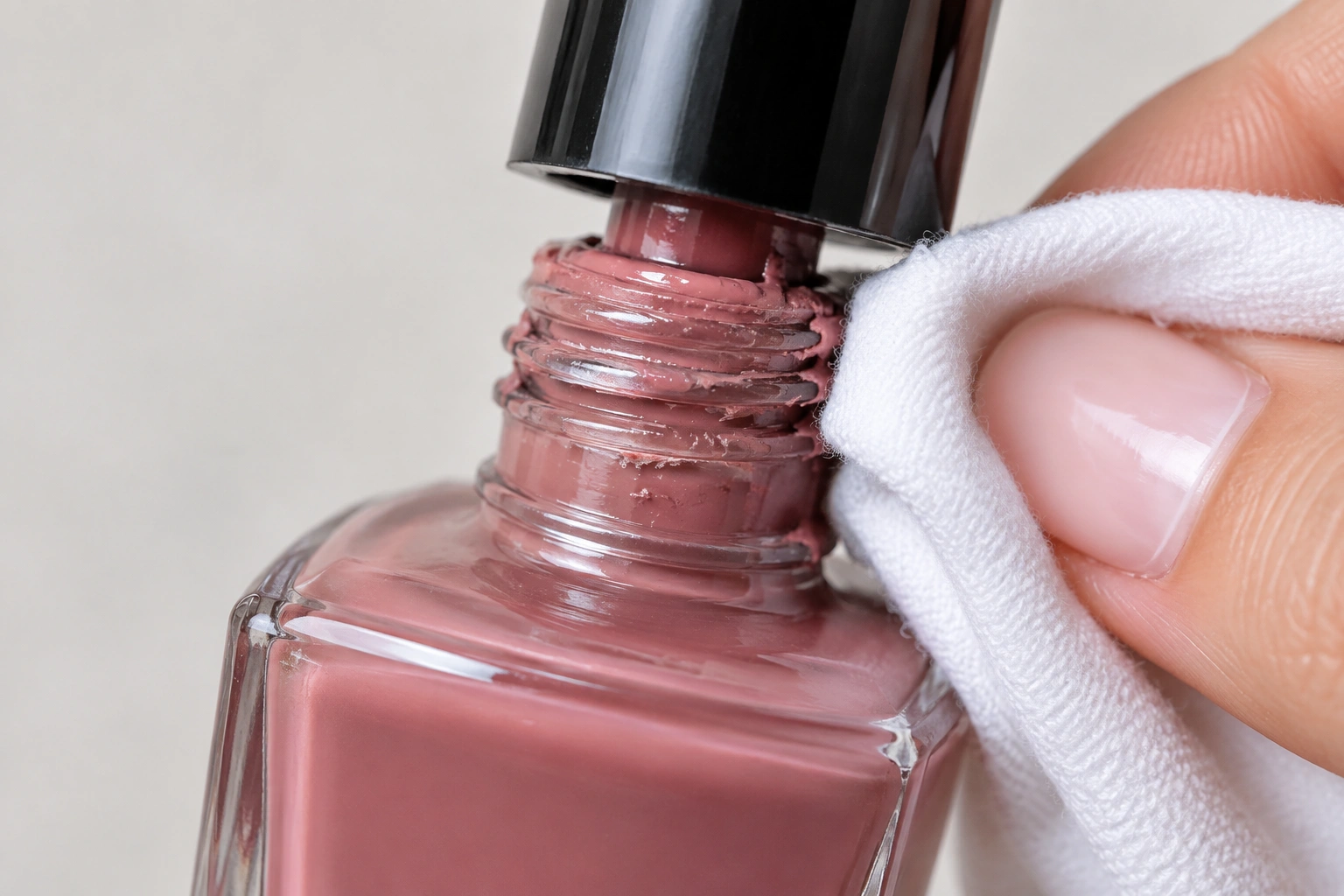
The fix is simple:
- Wipe the rim and the inside of the cap with a lint-free cloth or a bit of remover on a cotton swab.
- Remove any sticky buildup from the threads of the bottle.
- Make sure the cap closes smoothly and tightly.
This small cleanup step matters more than many beginners realize. If the cap isn’t sealing, even a good polish can thicken faster than expected.
When to Save It and When to Throw It Out
Not every thick bottle deserves the same treatment. Use this quick decision guide:
| What the polish looks like | Best next step | Why |
|---|---|---|
| Slightly thick, still smooth | Add nail polish thinner | Usually easy to restore |
| Thick but still blendable | Thin and test on one nail | Good for checking flow |
| Stringy, clumpy, or badly separated | Replace it | Formula may be too far gone |
| Usable but not perfect | Keep for nail art or touch-ups | Less demanding than full coverage |
A polish that is only a little thick can often be rescued. A polish that fails to remix smoothly, stays stringy after thinning, or never levels out on the nail is usually not worth fighting with. If it drags, streaks, or leaves an uneven finish every time, replacing it may save you time and frustration.
How to Store Nail Polish So It Stays Usable Longer
Good storage won’t make polish last forever, but it can slow thickening.
Keep bottles:
– Tightly closed
– Upright
– Away from heat and direct sunlight
– Stored in a cool, dry place
A drawer or cabinet is usually better than a sunny windowsill or a warm bathroom shelf. Avoid storing polish in the bathroom if you can, since temperature swings and humidity can make it harder to keep the bottle stable.
Also, try not to leave bottles open while you paint your nails. Even a few extra minutes of exposure adds up over time. After each use, wipe the bottle neck so the cap doesn’t get glued shut and the seal stays tight.
Common Mistakes That Make Thick Polish Worse
A few small habits can turn a manageable bottle into a frustrating one.
1. Adding remover instead of thinner
This is the most common mistake. Remover is not designed to restore polish consistency.
2. Shaking the bottle hard
It may look mixed, but you may just be adding bubbles that show up on the nail.
3. Leaving the bottle open too long
Polish thickens faster when it sits exposed during a manicure.
4. Ignoring dried polish on the neck
If the cap can’t seal properly, the bottle keeps changing even when closed.
5. Over-thinning
Too much thinner can make polish watery and harder to control.
If you want to avoid future frustration, the simplest habit is this: clean the rim, close the bottle fully, and store it somewhere cool.
When to Replace Old Nail Polish
If a bottle is very old, the safest decision may be to discard it instead of trying to rescue it. That’s especially true if it has a strong off smell, won’t remix smoothly, stays separated after gentle rolling, or remains stringy and clumpy even after adding a proper thinner.
A good beginner rule is this: if the polish still looks smooth after mixing and levels out on the nail, it may be worth saving. If it never becomes smooth again, it’s usually time to let it go.
Quick Answers to Common Questions
Why does nail polish get thick even when the bottle is closed?
Because bottles are not perfectly sealed forever. Small amounts of solvent can still escape over time, and heat can speed that up.
Can I use nail polish remover to thin polish?
It’s not recommended. Remover is made to dissolve polish, not restore its original formula.
Does shaking help?
Shaking mixes fast, but it can create bubbles. Rolling is gentler and usually better.
How do I know if old polish is too far gone?
If it stays stringy, clumpy, separated, or never levels out smoothly on the nail after careful thinning, it’s usually time to replace it.
Can thick polish still be used for something?
Yes. If it’s only slightly thick, it may still work for a full manicure. If it’s not smooth enough for that, it may still be usable for touch-ups or nail art.
Should I buy nail polish thinner if I only have one old bottle?
If you plan to keep and use older polish, yes. If it’s just one bottle and it’s badly degraded, replacement may be simpler.
Final Takeaway
Thick nail polish usually happens because solvents slowly evaporate, especially when bottles are opened often or not sealed well. In many cases, the fix is simple: clean the bottle neck, add a proper thinner in small amounts, and mix gently.
If the polish is still smoothable, it can often be saved. If it stays clumpy, stringy, or won’t level out on the nail, it’s usually better to replace it. That’s the easiest way to keep your manicure routine calm and beginner-friendly.

