
Does Quick Dry Nail Polish Really Dry Faster? A Beginner’s Guide

If you’ve ever painted your nails and then ruined them on a pillow, a zipper, or a phone screen, you’ve probably wondered: does quick dry nail polish really dry faster? The short answer is yes — it usually does dry faster than regular polish. But “faster” does not always mean fully hard or ready for every task right away.
As a licensed nail technician, I like to explain it this way: quick-dry polish can help the surface set sooner, which makes it easier to move on with your day. That said, it still needs time to finish drying through the layers. If you rush too soon, you can still get dents, smudges, or a soft manicure that looks dry but isn’t quite ready.
If you want a broader breakdown of polish drying, you may also find our guide on how nail polish dries helpful.

Quick Answer: Does Quick Dry Nail Polish Really Dry Faster?
Yes, quick-dry nail polish is designed to dry faster than regular polish.
The main reason is simple: all nail polish dries as solvents evaporate, and quick-dry formulas are designed so that process happens more efficiently. In practical use, that usually means the polish can set on the nail sooner and feel less wet sooner than standard polish.
But there’s an important catch. Faster drying does not always mean a manicure is fully hardened right away. You may be able to touch the surface sooner, but heavier activity — like showering, washing dishes, or digging through a bag — can still leave marks if the polish hasn’t fully settled.
If you want a quick overview of the product type itself, our page on what quick-dry nail polish is is a good companion read.
What “Dry” Actually Means for Nail Polish
A lot of manicure frustration comes from one simple misunderstanding: dry to the touch is not the same thing as fully dry.
Dry to the touch means the top layer feels set. You can often lightly tap the nail without leaving an obvious mark. Fully dry means the polish has hardened enough through the layers to handle more normal daily movement without denting or smudging.
That difference matters because polish can feel ready before it truly is. For example, you might think your nails are safe after 10 or 15 minutes, then press them against a bag strap or a blanket and leave a dent. The polish looked dry on top, but the layers underneath were still soft.
This is why beginners often blame the product when the real issue is timing. Quick-dry polish can shorten the wait, but it does not erase the drying process.
How Quick Dry Nail Polish Works
Quick-dry polish works by helping solvents leave the formula faster.
In plain English, the polish is made to lose its wetness more quickly after you apply it. That is why it can feel speedier than standard polish. A simple way to picture it: regular polish is like a puddle that takes its time shrinking, while quick-dry polish is formulated so that “wet” stage passes more quickly on the surface.
That said, quick-dry products mainly speed up the surface drying stage. They do not make the manicure instantly hard all the way through. You may get a nail that feels dry enough to stop worrying about light contact, but it still needs time before it can handle normal daily activity without dents.
You can read more about that drying process in NailKnowledge’s explanation of quick-dry nail polishes.
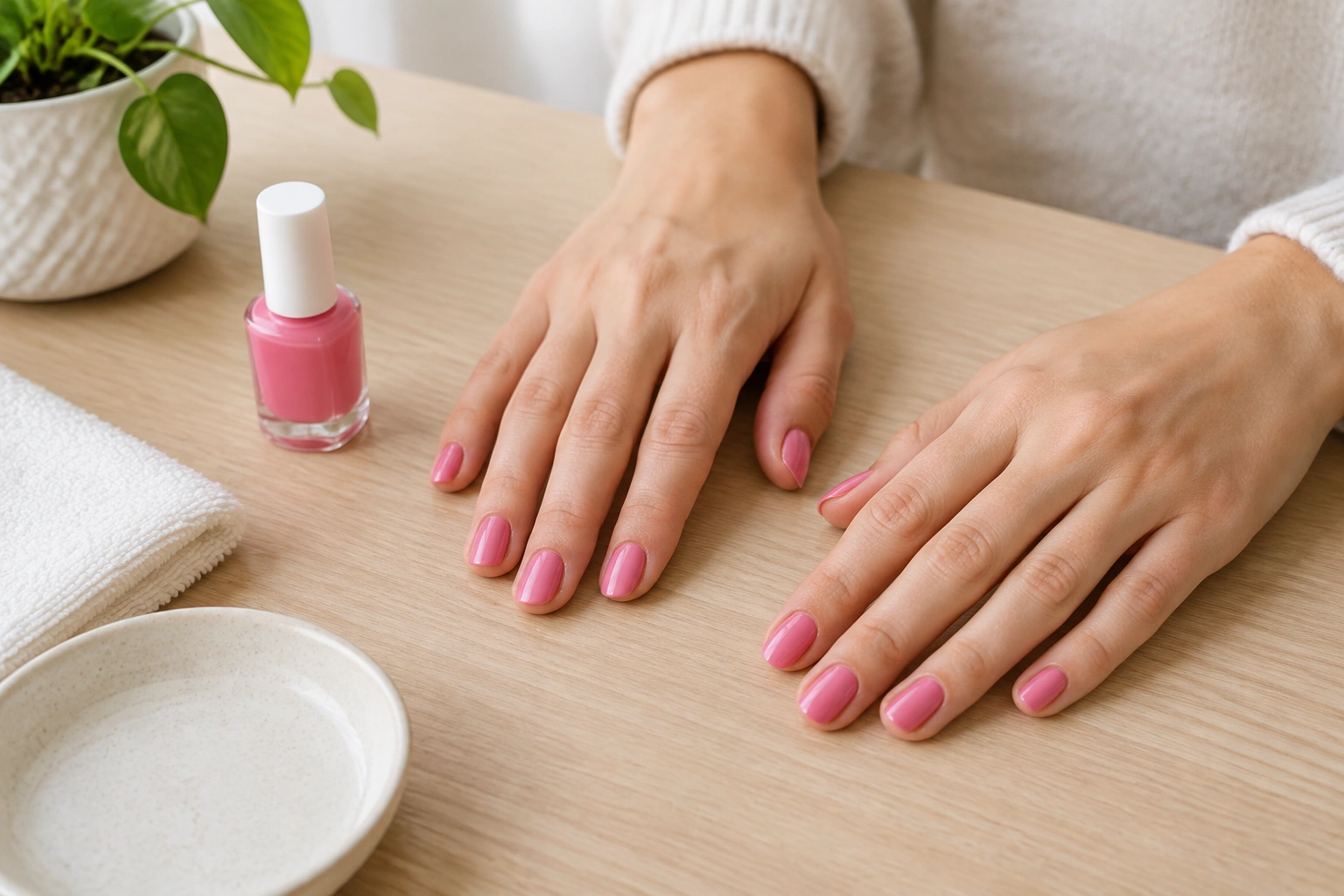
Some quick-dry formulas are also thinner, which can help them set faster. But that thinner feel can be a trade-off, because quick-dry products may be more brittle and may not last as long as regular polish. In other words, they often save time, but they may not always win on wear.
Quick Dry Nail Polish vs Regular Nail Polish
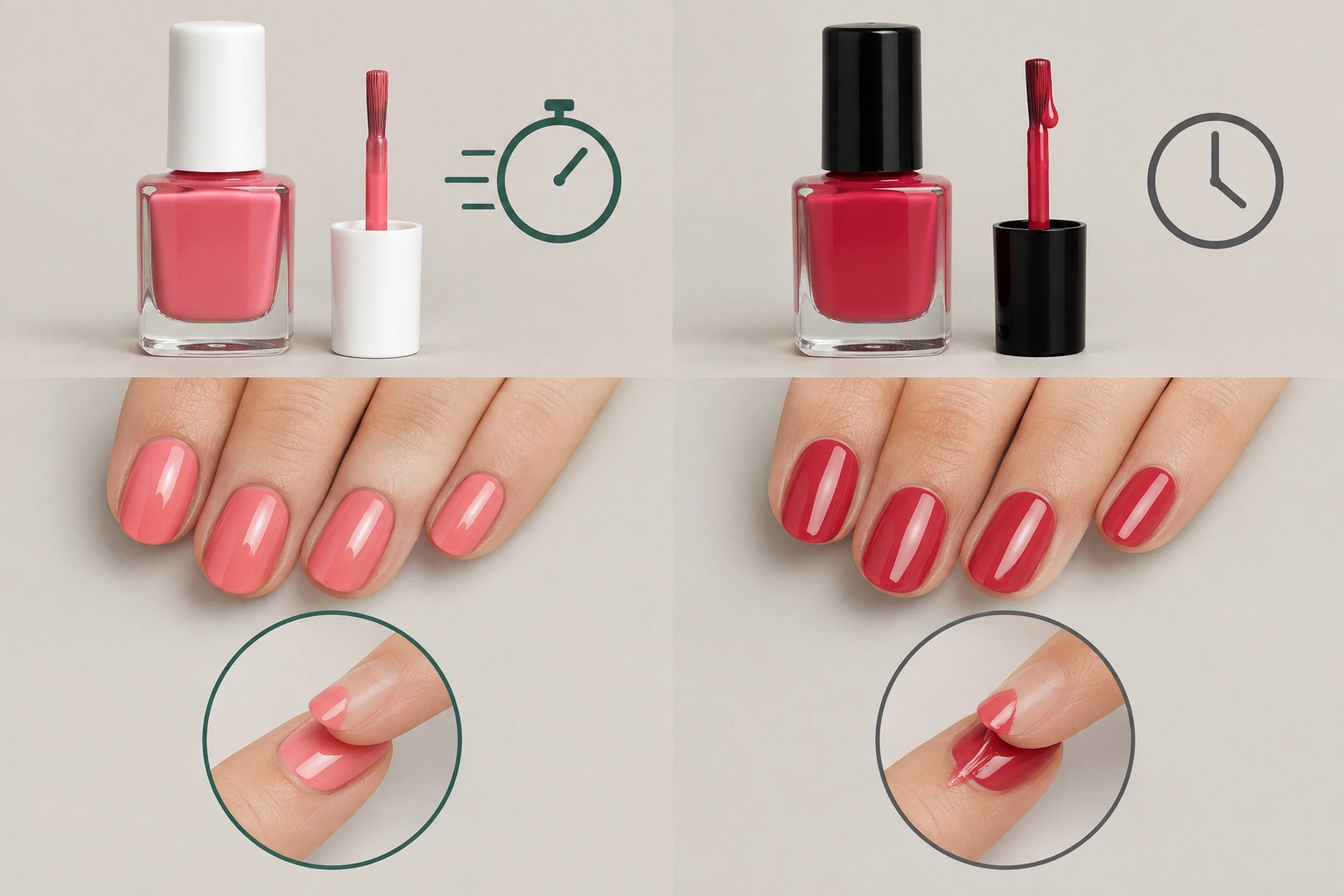
Here’s the practical difference for beginners:
| Feature | Quick Dry Nail Polish | Regular Nail Polish |
|---|---|---|
| Drying speed | Usually faster | Usually slower |
| Surface feel | Sets sooner | Takes longer to feel set |
| Smudge risk | Lower if applied well, but still possible | Higher if you rush |
| Durability | Can be less long-lasting | Often wears a bit better |
| Best for | Fast at-home manicures | Slower routines or more forgiving application |
The biggest benefit of quick-dry polish is time. If you like painting your nails before a short errand or between tasks, it can be genuinely useful. Regular polish is easier to live with if you don’t mind waiting longer and want a little more forgiveness while you paint.
That said, quick-dry polish is not magic. If you apply it too thickly, it can still stay soft underneath. A thin, even application matters more than the label on the bottle.
Why Your Polish May Still Smudge or Dent
If your quick-dry manicure still gets ruined, the formula may not be the main problem.
The most common reason is thick coats. A thick coat traps more polish underneath, and that slows drying no matter how fast the formula is supposed to be. Too many layers can do the same thing. If you apply color too heavily, even a quick-dry polish can stay soft long after the surface looks finished.
This is also why polish can feel dry to the touch before it is truly ready for normal use. The top may seem set, but the layers below can still be soft enough to dent.
Another common issue is using your hands too soon. Beginners often test polish too early by pressing, picking up a bag, or reaching for a phone. Those small movements are enough to leave marks.
Humidity and airflow can also affect drying. A warm, well-ventilated room generally helps polish dry more evenly than a damp, still space. For a practical room setup tip, this guide to faster nail polish drying explains why environment matters.
Quick Dry Nail Polish vs Quick Dry Top Coat
These two products are related, but they solve slightly different problems.
A quick-dry nail polish is the color formula itself. It’s made so the polish you apply on the nail dries more quickly.
A quick-dry top coat goes on top of your color polish. Its job is to help the finished manicure set faster on the surface and often add shine and some protection.
For many beginners, the top coat is the smarter first buy if you already own regular polish shades you like. It can make your manicure feel faster without replacing your whole collection. A quick-dry color polish makes more sense if you want the color coat itself to speed up and you’re often short on time from the start.
Simple recommendation:
– Choose a quick-dry top coat if you want the easiest upgrade to your current routine.
– Choose quick-dry nail polish if you want the color formula itself to dry faster.
– If you only want to buy one product, the top coat is usually the more flexible option for beginners.
What Makes Nail Polish Dry Faster
A few beginner-friendly factors matter most:
Thin coats
Thin coats dry better than thick ones. This is the single easiest way to improve drying time without buying anything new.
Fewer layers
Every extra layer adds more polish that has to dry. If you can get the coverage you want in two thin coats instead of three thick ones, that usually helps.
Formula type
Quick-dry formulas are designed to dry faster because of how they’re made. That does not mean every quick-dry product performs the same, but the formula itself matters.
Airflow and room conditions
Polish tends to dry more comfortably in a dry, ventilated space. A stuffy room or high humidity can make waiting feel longer.
Application technique
Careful application helps more than people expect. If polish floods the cuticle or goes on unevenly, you may end up with thicker spots that take longer to set.
If you want a deeper look at practical drying tips, our guides on how to dry nail polish faster and how to make nail polish dry faster cover the basics step by step.
Best Ways to Make Any Nail Polish Dry Faster
You do not need special equipment to improve drying time. These habits help most beginners right away:
- Apply thin coats instead of one heavy coat.
- Wait a little between coats so the first layer is not overly wet.
- Keep your hands still after painting, even if the polish feels dry on top.
- Use a quick-dry top coat if you want to shorten the finishing stage.
- Paint in a room with decent airflow, not in a damp bathroom right after a shower.
- Avoid thick “fix-up” layers after the manicure is done, since they can slow everything down again.
One simple rule helps a lot: if you can still see polish pooling or looking glossy and heavy, it probably needs more time. That is especially true with darker colors and multiple coats.
Air-Drying vs Fast-Dry Products
If you’re deciding between just letting polish air-dry and buying a fast-dry product, the choice usually comes down to how much time and patience you have.
Air-drying is the simplest option. You don’t need anything extra, but it usually takes longer and asks more of your patience. It can work fine if you’re not in a rush and you can avoid using your hands for a while.
Fast-dry products are better if you want the manicure to become usable sooner. They don’t make polish instantly hard, but they can reduce the waiting time and lower the chance of light smudging when used correctly.
A good rule of thumb:
– Choose air-drying if you don’t mind waiting and want the simplest routine.
– Choose fast-dry products if you want quicker surface drying and less downtime.
– Use both with thin coats for the best chance of a smooth result.
Pros and Cons of Quick Dry Formulas
Quick-dry polish has clear advantages, but it is not perfect.
Pros
- Faster surface drying
- Less waiting around
- Helpful for busy schedules
- Good for people who bump their nails often after painting
Cons
- May be more brittle
- May not last as long as regular polish
- Can still smudge if applied too thickly
- Sometimes dries so quickly that you have less time to correct mistakes
That last point matters for beginners. Slower polish can be easier to fix if you make a small mistake. Quick-dry formulas often give you less time to adjust the shape or clean up the edges.
How Long to Wait Before Normal Activities
Even with quick-dry polish, give your manicure more time than the surface feel suggests.
Here is a simple practical timing guide you can use in real life:
- Surface-dry: often around 5 to 15 minutes for many quick-dry formulas, though this can vary.
- Safe for light use: often around 15 to 30 minutes for gentle tasks like sitting still, lightly moving around, or avoiding contact with objects.
- Safer for normal activity: often 30 minutes to 1 hour or more, especially if you want to do things like shower, wash dishes, put on shoes, or handle bags.
These are only rough beginner-friendly ranges, not guarantees. Thicker coats, more layers, humidity, and slower formulas can all stretch the wait.
If you only remember one thing, remember this: the first few minutes are not the whole story. Quick-dry polish can reduce the wait, but it does not make the manicure instantly ready for everything.
When to See a Nail Technician or Dermatologist
If your polish keeps peeling, staying tacky for unusually long periods, or causing repeated irritation around the nail area, it is worth asking a professional. A nail technician can help you troubleshoot application issues, and a dermatologist can check for skin reactions or nail concerns that are not just about polish technique.
For general cosmetic safety information, the FDA’s cosmetics guidance is also a useful reference point.
FAQ: Quick Dry Nail Polish for Beginners
Does quick dry nail polish really dry faster than normal polish?
Yes. It is made to dry faster than regular polish, mainly because the formula is designed to let solvents evaporate more quickly.
Is quick dry polish fully dry when it feels dry?
Not always. It may feel dry on the surface before the layers underneath are fully hardened.
Why does my quick dry polish still dent?
The most common reasons are thick coats, too many layers, or using your hands too soon after painting.
Is a quick dry top coat better than quick dry color polish?
If you already own polish colors you like, a quick-dry top coat is often the easier first buy. It helps finish the manicure faster without changing your whole polish routine.
Are quick dry polishes less long-lasting?
They can be. NailKnowledge notes that quick-dry polishes tend to be more brittle and not as long-lasting as regular polish.
Do quick dry products damage nails?
There is no reason they should be more drying to the nails simply because they dry quickly; the solvents evaporate rather than staying on the nail. Still, how you apply and remove polish matters for nail care overall.
What is the easiest way to make polish dry faster at home?
Use thin coats, avoid piling on extra layers, and let each coat set before moving on. That simple approach helps more than rushing the final result.
Quick-dry nail polish can absolutely save time, but it works best when you pair it with good application habits. Thin coats, patience between layers, and realistic expectations will do more for your manicure than any label on the bottle.

