
How Long Should You Wait Between Coats of Nail Polish?

If you’re painting your nails at home, the safest beginner rule is simple: wait until each coat is touch-dry before adding the next one. That usually means the surface should feel dry to a light tap, not tacky or soft. If the polish still feels sticky, give it more time.
Thin coats dry faster than thick ones, so the easiest way to speed up a manicure is to apply less polish per layer. A base coat, color coat, and top coat all need a little breathing room between steps. Rushing that pause is one of the fastest ways to end up with smudges, dents, or a wrinkled finish.
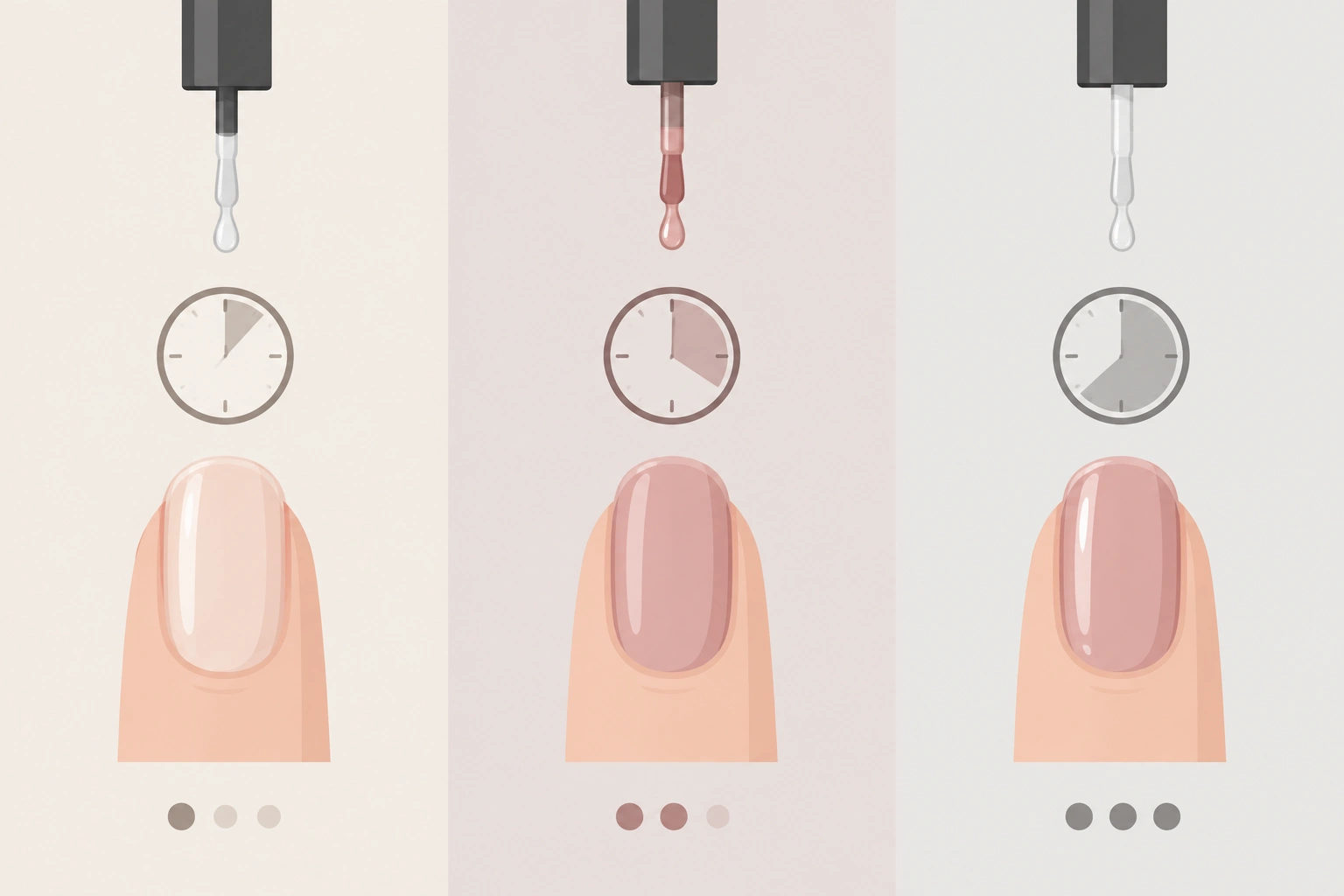
For a smoother result, think in layers, not one heavy coat. If you want a deeper dive into polish storage and wear, you may also find how long opened nail polish lasts helpful later on.
Quick Answer: How Long to Wait Between Nail Polish Coats
A practical starting point for beginners is to wait a few minutes between thin coats and longer if the coat is thick or still feels soft. The goal is not full hardness before the next layer. It is simply to let the first layer set enough that the second one does not drag it around.
Here is a more concrete beginner timing guide:
| Coat type | Practical wait range |
|---|---|
| Thin base coat | about 1–2 minutes |
| Thin color coat | about 2–3 minutes |
| Thicker color coat | about 4–6 minutes, or longer if it still feels soft |
| Top coat | about 3–5 minutes before careful handling, longer before normal use |
These are starting ranges, not exact rules. If a coat is visibly thick, add more time. If it is still tacky, wait until it is touch-dry.
Here is the easiest way to think about it:
- Base coat: wait until it feels dry to a light touch.
- Color coat: wait the same way, but be extra careful if the coat is opaque and slightly thicker.
- Top coat: let it dry on the surface, then avoid pressure for a while longer.
If you want a simple comparison, this table gives a beginner-friendly reference point.
| Coat type | Practical wait rule | Why it matters |
|---|---|---|
| Base coat | Wait until touch-dry | Helps the color go on smoothly |
| Thin color coat | Wait until it no longer feels tacky | Reduces streaking and dragging |
| Thick color coat | Wait longer than a thin coat | Thick polish traps softness underneath |
| Top coat | Wait until the surface sets | Protects the manicure from dents |
| Quick-dry polish | Follow the product directions, then still be gentle | Speeds surface drying, but does not make polish fully hard immediately |
If you are using regular polish and the room is warm and dry, drying is usually a bit faster. In humid conditions or with heavier coats, you will usually need more patience.
Why Each Coat Needs Time to Dry
Nail polish dries from the outside in. That means the top can look ready while the layer underneath is still soft. If you add the next coat too soon, the new polish can sink into the one below it and leave marks.
This is why beginners often think a coat is dry when it only feels dry on top. A polish layer that seems fine to the eye may still shift under light pressure. That is also why thick coats are so risky: they can trap wet polish underneath a skin that looks finished.
A little waiting time between coats helps each layer settle before the next one goes on. That gives you a smoother surface, better color, and fewer mistakes to fix later.
How to Tell When a Coat Is Ready for the Next One
Use a light-touch test, not a firm press. Gently touch the edge of one nail or the very tip of the free edge with another fingertip or the side of a finger. You are checking for tackiness, not trying to press the polish down.
A safe way to test it:
- Wash or dry your hands so they are clean.
- Touch the very edge or side of one nail lightly.
- Lift away right away.
- If the polish feels dry and does not drag, string, or leave a mark, it is usually ready.
Look for these signs:
- The polish no longer feels sticky.
- The surface looks settled, not wet or glossy in a heavy way.
- A very light touch does not leave a fingerprint or line.
If you press hard to test it, you may dent the polish even if it was almost ready. Keep the check very gentle. If you are unsure, wait a little longer. That small pause is usually easier than fixing a smudge.
For more on drying habits and polish wear, Essie’s nail care guidance is a useful place to explore product directions and finish types.
How Long to Wait for Base Coat, Color Coat, and Top Coat
The timing is similar across the manicure, but each layer has a slightly different job.
Base coat
The base coat should be dry enough that it no longer feels wet before color goes on. If it is still slippery, the color coat can streak or slide.
Color coat
Color is where beginners often rush. If you are applying a second color coat, make sure the first one has set. A thin first coat usually needs less time than a heavy one.
Top coat
The top coat locks everything in, so it is worth giving it a little extra care. It may feel dry on the surface sooner than the layers below it, but that does not mean you should use your hands normally right away.
A helpful rule: thin layers, light touch, and a little patience at every step. That combination usually gives better results than trying to speed through the whole manicure.
Thin Coats vs Thick Coats: What Changes Drying Time
Thin coats dry faster and look cleaner. Thick coats may cover in fewer passes, but they are more likely to stay soft underneath.
Here is the trade-off:
- Thin coat: faster drying, fewer bubbles, less smudging
- Thick coat: more coverage at once, but higher risk of streaks, wrinkling, and dents
If your polish looks patchy after one thin coat, that is normal. The better fix is usually a second thin coat, not one heavy coat. Two thin coats almost always behave better than one thick one.
This also helps with color evenness. A thick coat can pool at the edges and take much longer to settle. A thin coat spreads more evenly and is easier to control.
What Happens If You Apply the Next Coat Too Soon
When the next coat goes on too early, you may see one or more of these problems:
- Smudging: the first layer shifts under the brush
- Streaking: the new coat pulls the old one into lines
- Wrinkling: the top dries faster than the soft layer below
- Dents: the polish is soft enough to mark easily
- Bubbling: trapped product or air shows through the finish
These problems are frustrating because they often appear after you think the manicure is done. Then you have to wait longer, smooth things out, or start over. A short pause between coats is usually the easier choice.
If you want a polish that is made to move a little faster, a quick-dry formula can help. Still, even fast-drying products need some care between layers. For a related drying tip, see whether cold air helps nail polish dry.
How to Help Nail Polish Dry Faster Between Coats
The best speed-up method is also the simplest: apply thinner coats. That gives each layer less polish to dry, which helps the manicure set more evenly.
A few other beginner-friendly tips can help:
- Use light, even strokes.
- Let each brush pass do the work instead of going over the same spot many times.
- Keep your hands still after each coat.
- Use drying drops or a drying spray only as directed, especially after the final coat when you want the surface to set a little faster.
- Make sure the room is not overly humid.
Quick-dry products can be useful, especially if you are short on time. But they do not make polish fully hard immediately. They often help the surface set faster, which is helpful, but you should still avoid heavy use of your nails too soon.
Air drying is the easiest method, but it is also the slowest. Drying drops or spray can save time, especially near the end of the manicure. If you like simple product guidance, FDA consumer information on cosmetics is a good general reference for safe product use and labeling habits.
What Can Change Drying Time
Several real-world factors can make nail polish dry faster or slower:
Polish formula
Some formulas are designed to dry faster than others. Regular polish usually needs more patience than quick-dry polish.
Coat thickness
Thicker coats hold more solvent and take longer to settle. Thin coats dry more predictably.
Humidity
Drying is usually slower in humid conditions. A bathroom after a hot shower is usually not the best place to paint nails.
Ventilation
A little airflow can help polish set more evenly. Strong airflow is not necessary, but a stuffy room can make drying feel slower.
Application style
If you keep brushing over the same area, you can disturb a layer that has started to set. Smooth, controlled strokes are better than repeated correction.
When in doubt, trust the polish, not the clock. A few extra minutes are worth it if the coat still feels soft.
Simple Layering Order for a Smoother Manicure
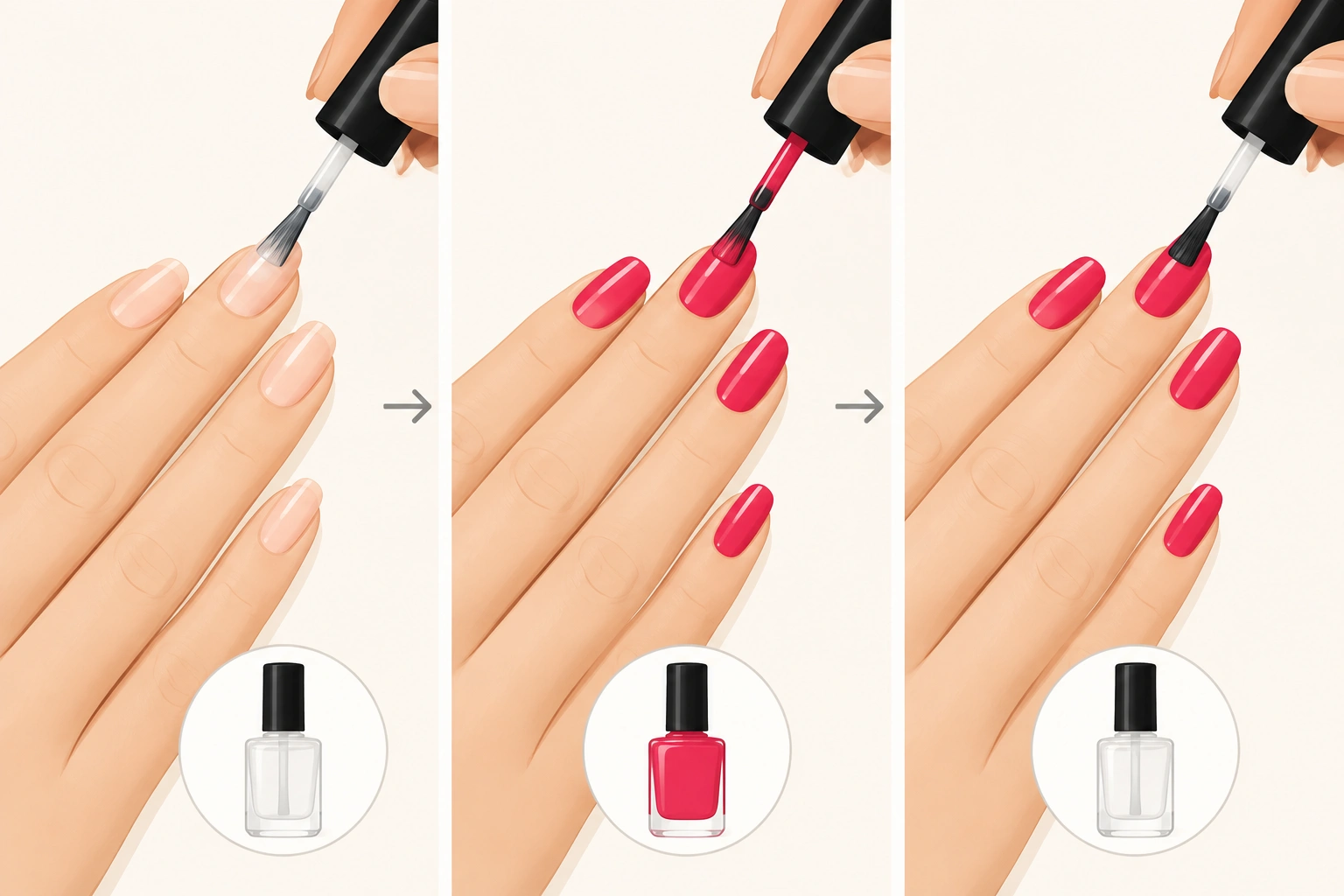
A basic manicure at home follows this order:
- Clean and dry your nails.
- Apply a thin base coat.
- Wait until it is touch-dry.
- Apply the first color coat.
- Wait again before the next color coat.
- Apply a second thin color coat if needed.
- Finish with a top coat.
- Let the manicure set before using your hands normally.
The key checkpoint is between each layer. If the polish still feels tacky, pause before moving on. That small habit makes the whole manicure easier to manage.
If you are learning how polish behaves over time, you may also want to read how long nail polish lasts after you finish this guide.
When to See a Nail Technician or Dermatologist
If polish keeps wrinkling, peeling, or refusing to dry even when you apply thin coats and wait between layers, a nail technician can help you troubleshoot the routine. They can often spot application issues quickly.
See a dermatologist if you notice repeated skin irritation, redness, itching, or other reactions around the nails after using polish or remover. That is not a normal part of a manicure and may need professional attention.
FAQs
How do I know if nail polish is dry enough for the next coat?
Use a very light touch. If the surface feels dry and does not drag or stick, it is usually ready. If you are unsure, wait a bit longer.
Should I wait longer between color coats than between base and top coat?
Usually, the same basic rule applies: wait until the layer is touch-dry. Thicker color coats may need more time than a base coat.
Can I put on a second coat right away?
Only if the first coat has set enough not to move under the brush. If it still feels soft, the second coat can cause streaks or dents.
Do quick-dry polishes need waiting time between coats?
Yes, though often less than regular polish. They may dry faster on the surface, but they still need a little time before the next layer.
Why does my nail polish wrinkle when I add another coat?
That usually happens when the lower layer is still soft and the top layer dries faster. The trapped softness shifts underneath and creates texture.
Is it better to use one thick coat or two thin coats?
Two thin coats are usually better. They dry more evenly and are less likely to smudge, wrinkle, or stay tacky underneath.
Does humidity really slow nail polish drying?
Yes. Humid air can make polish take longer to set, so you may need extra waiting time between coats.
Can drying drops replace waiting between coats?
They can help speed things up, especially after the final coat, but they do not fully replace careful layering and light-touch checking.
Final beginner rule to remember
If the coat is not touch-dry, it is not ready. Thin coats and a little patience will give you a cleaner manicure than rushing through the layers.

