
Can You Use a Fan to Dry Nail Polish? A Beginner-Friendly Guide

If you’ve just painted your nails and want them to dry faster, the short answer is yes — you can use a fan to help dry nail polish. But there’s an important catch: a fan usually helps the surface dry a little faster. It does not make regular polish fully dry all the way through.
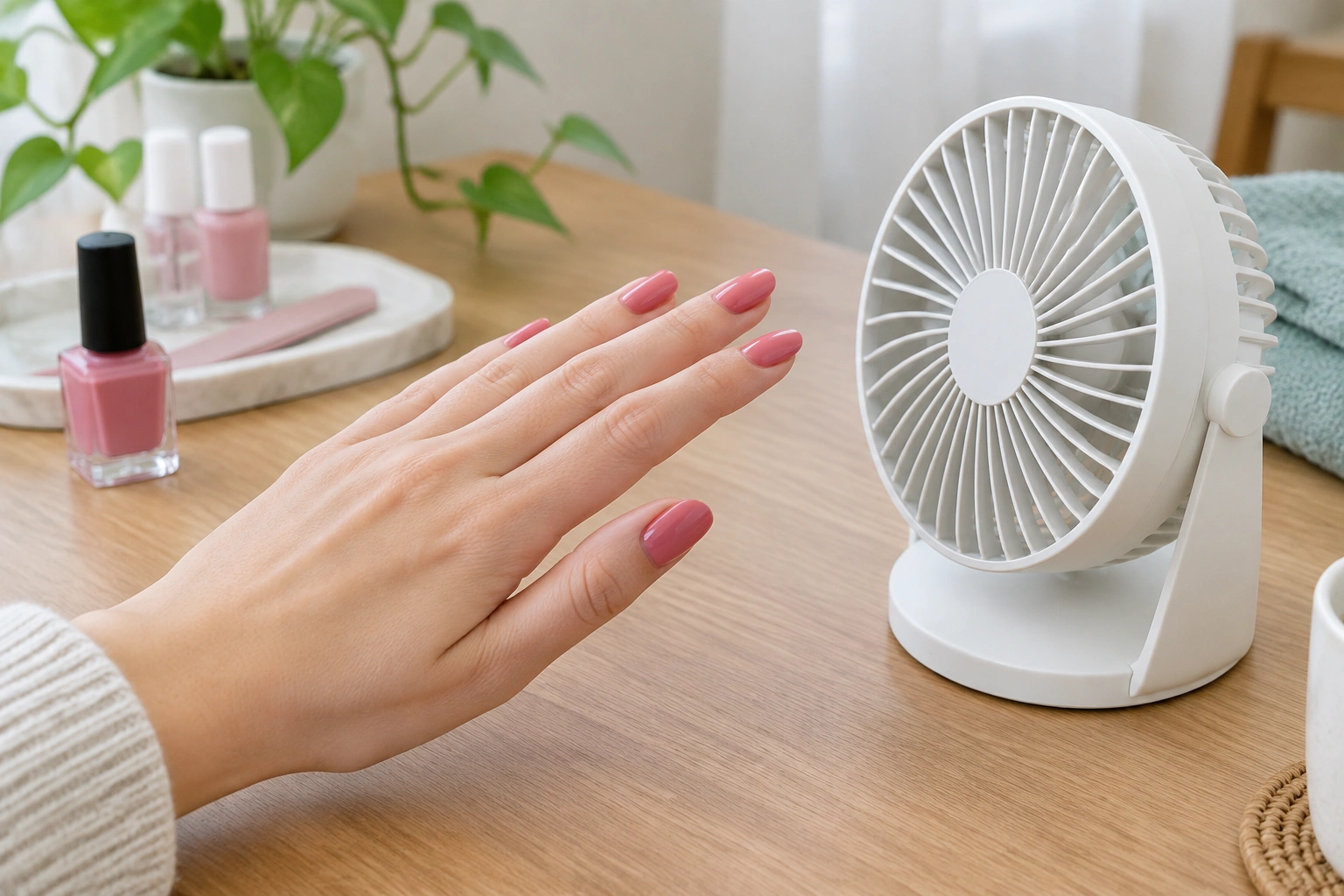
That means a fan can be useful, but it is not a magic fix. If your coats are thick, your nails can still dent or smudge even if they feel cool and less sticky on top. For a beginner, the safest way to think about a fan is this: it may help, but it still needs patience.
How Nail Polish Actually Dries: Surface Dry vs. Fully Cured
Nail polish dries in layers. The top can feel dry before the layers underneath are ready. That’s why a manicure can seem fine, then get ruined when you press on it too soon.
Here’s the simple version:
- Surface dry means the top feels less wet or tacky.
- Fully dry means the polish is much more set and less likely to dent.
- Fully cured is a term usually used for gel polish, which needs a lamp to harden properly.
A fan can help move air across the polish and may reduce the sticky feeling on the surface. But it does not force regular polish to cure the way a lamp cures gel. If you want a deeper breakdown of why polish stays soft, our guide on how to dry nail polish that won’t dry can help.
What a Fan Can and Cannot Do for Fresh Nail Polish
A fan is best for one thing: making fresh polish feel less wet on top.
That can be helpful if you want to:
- lower the tacky feeling
- reduce the chance of brushing against something lightly
- get from “freshly painted” to “carefully usable” a bit faster
But a fan has limits. It cannot fix:
- thick coats
- old or gummy polish
- a skipped top coat
- gel polish that has not been cured
It also won’t protect you from dents if you rush into normal activities too soon. If you need a more complete fix for slow-drying polish, see our guide on how to fix nail polish that won’t dry.
How to Use a Fan Safely on Fresh Nails
If you want to try a fan, keep the setup simple.
A beginner-friendly method
- Paint thin, even coats.
- Let each coat settle for a moment before adding the next.
- Turn on a gentle fan, not a strong blast.
- Hold your hands about 6 to 12 inches from the airflow so the air reaches the nails without blowing dust around.
- Keep your fingers still while the fan runs.
- Afterward, let the nails rest before using your hands normally.
A few practical rules
- Use cool air, not warm air.
- Keep the fan at a comfortable distance.
- Avoid pointing a strong stream directly at the nails.
- Make sure the area is clean, because airflow can carry lint or dust onto wet polish.
As a rule of thumb, a fan is usually most useful for the first 5 to 10 minutes after painting regular polish. That can help the surface feel less tacky, but it is not the same as being fully dry.
If you’re deciding between airflow options, our article on should you use cold air to dry nail polish covers that choice in more detail.
What Not to Do Right After Painting Your Nails
This is where many beginner manicures go wrong.
Even if the polish feels a little drier after the fan, avoid these common mistakes:
- grabbing your phone and pressing it into the nails
- digging through a bag or drawer
- putting on tight socks or shoes
- typing hard on a keyboard
- resting your nails on a table edge
- touching your nails “just to check”
A good rule of thumb is to avoid pressure-based tasks for at least 15 to 30 minutes after painting, and longer if your coats are thick. If you need to use your hands, try to do it gently and keep pressure off the nails as long as you can.
For toenails, be especially careful with socks and shoes. Even if polish seems mostly dry, tight footwear can still smudge it.
Fan vs. Other Drying Methods
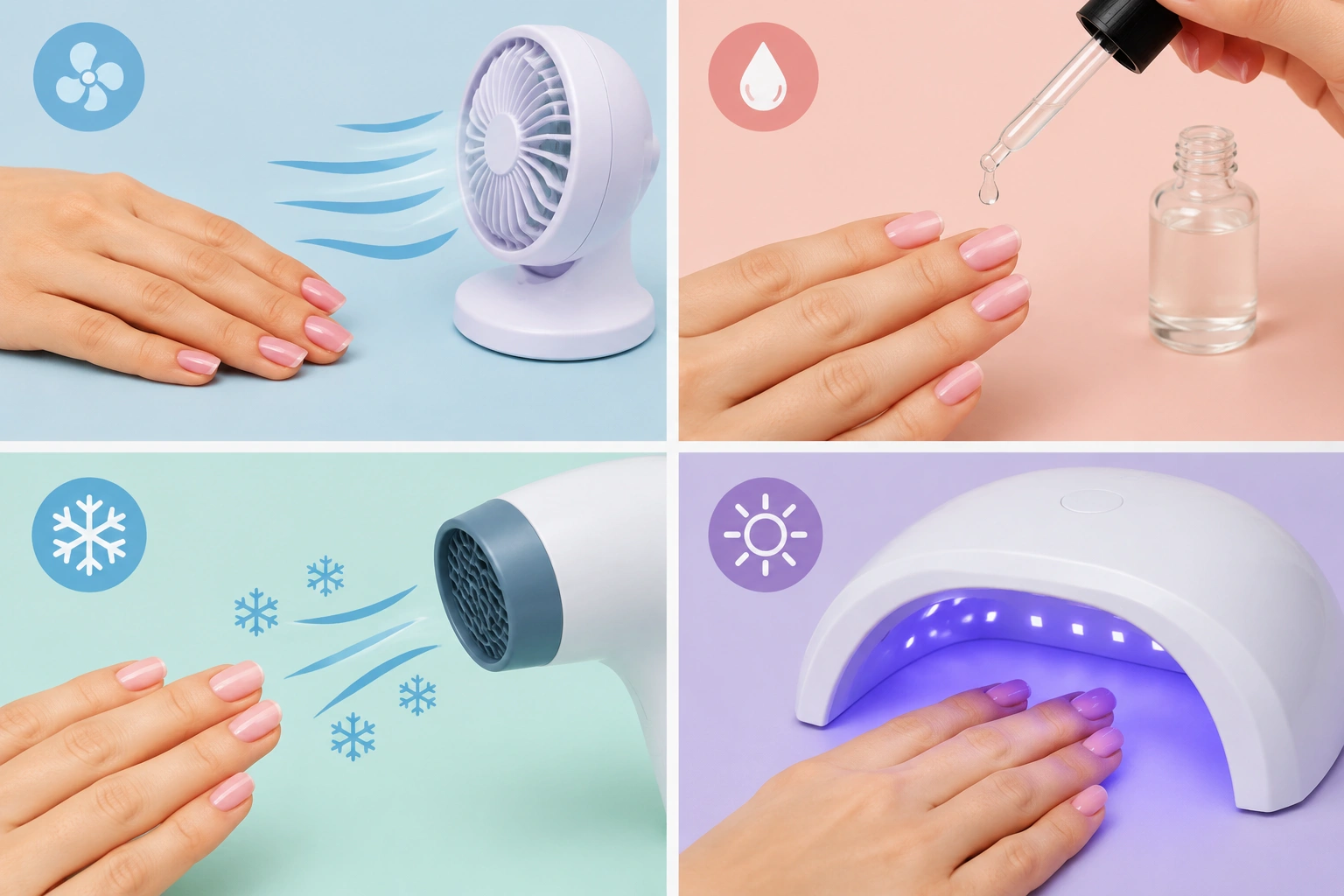
A fan is convenient, but it is not always the best option. Here’s how it compares.
| Method | What it does well | Main limitation |
|---|---|---|
| Fan | Helps the surface feel less tacky | Does not fully dry regular polish |
| Air drying | No tools needed | Usually the slowest option |
| Cold air | Can help surface dry a bit more than still air | Still not a cure for regular polish |
| Quick-dry drops or spray | Often more effective for speeding up drying | Costs more than a fan |
| UV/LED lamp | Required for gel polish | Not for regular polish |
A fan makes the most sense when you want a low-cost, easy way to help your manicure set a little faster. For regular polish, quick-dry drops or spray may be more helpful if you want a stronger speed-up. If you’re using gel, a fan is not the right tool at all.
For gel-specific guidance, our article on can a UV lamp dry regular nail polish explains why lamps and polish types do not mix the same way.
Does the Answer Change for Regular Polish vs. Gel Polish?
Yes, it does.
Regular nail polish
Regular polish can benefit a little from fan drying because airflow may help the top layer set faster. That said, it still needs time. Thin coats dry better than thick ones, and a top coat usually helps the finish feel more complete.
Gel polish
Gel polish is different. It does not just “air dry.” It needs to be cured under a UV or LED lamp. A fan may make it feel cooler, but it will not replace proper curing.
So if you are using gel polish, a fan is not your drying method. The lamp is.
How Long to Wait Before Normal Activities
This is the part that protects your manicure.
A useful beginner benchmark is:
- Light activity: after about 15 to 30 minutes, many manicures are less likely to smudge from very gentle movement
- Normal use: wait at least a few hours, and longer if the polish was applied thickly or still dents easily
Even if you used a fan, treat your nails gently for a while. A sensible rule is to assume the polish is still vulnerable if it can dent easily or feels soft.
For example, if you’ve just finished painting and used a fan, it may be fine to sit quietly and let your hands rest. It is not the best time to open a can, zip up tight clothing, or put on shoes that press on the toes.
If you’re painting toenails, be especially careful with socks and shoes. Pressure can smudge polish even when it seems mostly dry.
Common Mistakes That Make Polish Stay Tacky Longer
A fan can only do so much if the manicure itself is working against you.
Thick coats
Thick polish dries slowly. The outside may feel better, but the inside stays soft longer.
Warm air
Warm air is usually not the best choice for fresh polish. It may not help the polish set as evenly as cool airflow, so a gentle cool fan is the safer practical option.
Skipping a top coat
A top coat helps create a smoother finish and can improve wear. If speed matters, choose one made for quicker drying rather than a slow, heavy formula.
Rushing between coats
If you pile on the next layer too soon, the polish underneath may stay soft for much longer.
Using a dusty area
Fans can move tiny bits of lint or dust. A clean space matters more than people think.
Simple Better-Than-Fan Tips for Faster Drying at Home
If you want better results than a fan alone can give, keep your method simple.
Use thin coats
This is the biggest beginner win. Two thin coats usually dry better than one thick, heavy coat.
Choose a faster-drying formula
Quick-dry polish or a quick-dry top coat can save frustration if you often smudge your manicure.
Try quick-dry drops or spray
These are often more effective than airflow alone because they are made to help the polish set more quickly.
Keep your hands still
This sounds basic, but it matters. The less you handle things right away, the fewer dents you’ll get.
Finish with patience
Even when polish feels dry enough to move around, it may not be ready for pressure. Give it more time than your instincts want to.
For readers comparing product choices, brand guidance can be useful too. You can browse general polish care tips from essie as a starting point for product directions and finish recommendations.
When to See a Nail Technician or Dermatologist
If your polish consistently stays sticky, bubbles, peels, or seems to never set properly, a nail technician can help you check whether the issue is application, product age, or technique.
See a dermatologist if you notice nail pain, redness, swelling, or skin reactions around the nails. Drying problems are usually a manicure issue, but irritation around the nail area should not be ignored.
For general consumer safety advice around cosmetic use and product handling, the FDA is a reliable place to look for broader guidance.
FAQ: Fan Drying Nail Polish
Can you use a fan to dry nail polish?
Yes. A fan can help the surface dry a little faster, but it does not fully dry regular polish or cure gel polish.
Does a fan really dry nail polish faster?
Usually only a little. It may reduce the tacky feeling on top, but it is not as effective as products made for faster drying.
Will a fan stop smudges?
It can help somewhat, but not completely. Thick coats and early pressure can still cause dents or smears.
How long should I keep my nails under a fan?
A short burst of about 5 to 10 minutes is a practical rule of thumb for regular polish. It may help the surface feel less tacky, but it is not a replacement for full drying time.
Is cold air better than warm air?
Cool air is the safer choice for fresh polish. Warm air is not ideal for a new manicure.
Can I dry gel polish with a fan?
No. Gel polish needs a UV or LED lamp to cure properly. A fan is not a substitute.
What if my polish is still tacky after using a fan?
Let it sit longer, avoid touching anything, and check whether the coats were too thick. If this happens often, try thinner coats or a quick-dry product.
Is a fan better than air drying alone?
Usually yes, a little. Moving air can help the surface feel drier than still air, but the improvement is limited.
Bottom Line
So, can you use a fan to dry nail polish? Yes — but think of it as a small helper, not a full solution. It can make the top layer feel less sticky, yet it won’t fully dry regular polish or cure gel. For the best beginner results, use thin coats, gentle cool air, and extra patience before you get back to normal activities.
