
How to Fix Nail Polish That Won’t Dry: A Beginner’s Practical Guide

If your manicure still feels sticky, dentable, or soft underneath, don’t panic. This is one of the most common beginner nail problems, and in many cases, it can be saved.
The key is to figure out why the polish is staying wet. Sometimes the issue is the formula. Sometimes it’s the way the polish was applied. And sometimes the polish is actually drying, but only on the surface, which makes it feel confusing and frustrating.

As a licensed nail technician, I like to keep this simple: if the polish is only a little tacky, you may be able to help it along. If it is thick, smudged, or still moving around on the nail, you may need to stop and redo it. The sections below will help you decide which.
Quick decision path: if the polish is only tacky, wait and use airflow; if it dents easily, try a quick-dry product; if it is wrinkled, bubbled, or heavily smudged, remove and redo.
Why Nail Polish Sometimes Won’t Dry
Nail polish dries as the solvents evaporate. When something slows that process down, the polish can stay wet longer than you expect.
Here are the most common reasons this happens:
Thick coats trap solvent
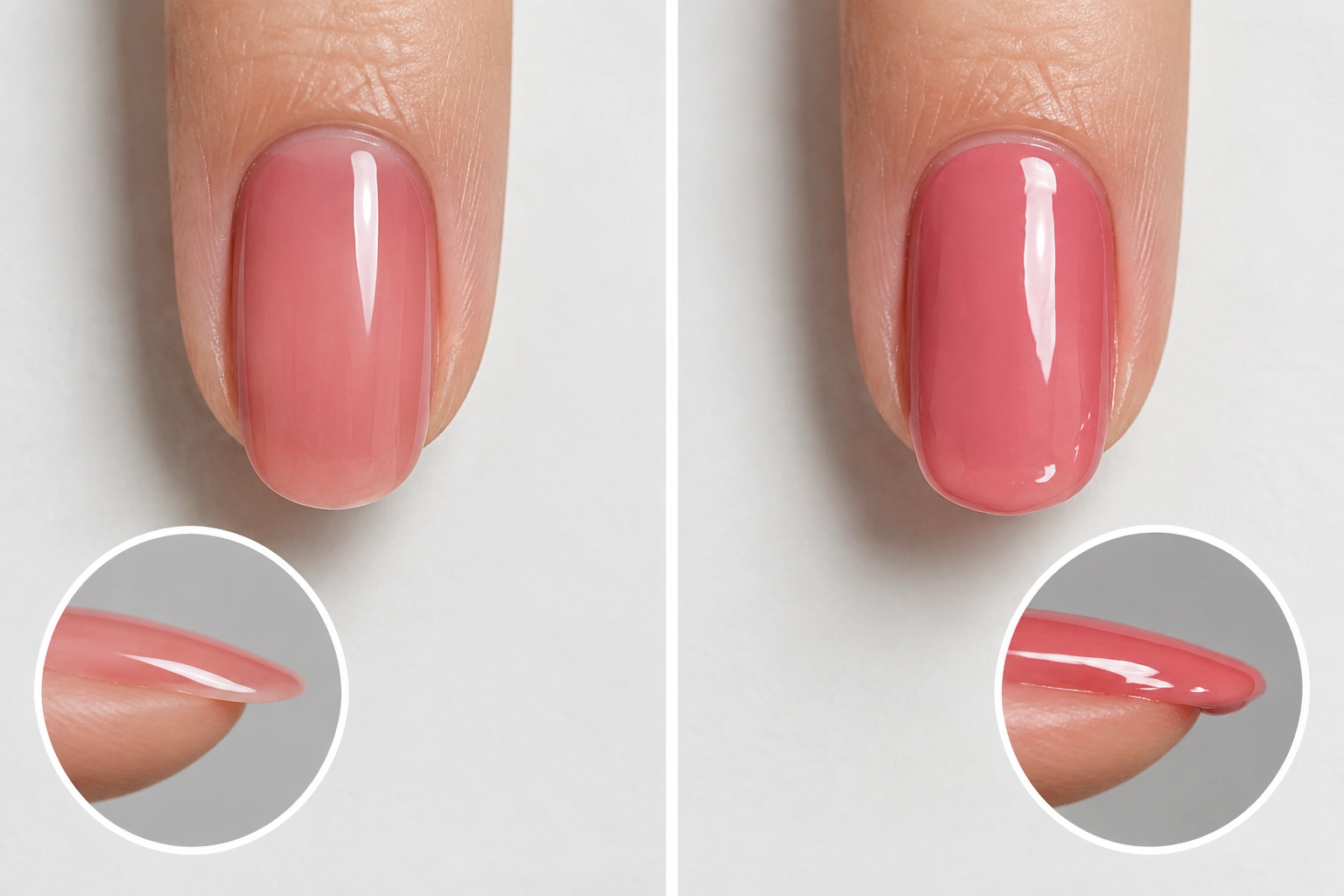
A thick coat may look smoother at first, but it often takes much longer to dry. The top can seem set while the layer underneath stays soft.
This is especially common when beginners try to get full coverage in one pass. A better approach is usually thinner coats, even if you need an extra layer for opacity.
Too many layers slow everything down
Base coat, color coat, and top coat all add to the drying load. If each layer is applied heavily, the manicure can stay soft for a long time.
A simple example: two thick color coats plus a thick top coat can behave very differently from three thin, even layers. The second version usually dries more reliably because each layer has less product to release.
Old or thickened polish can misbehave
Polish that has been open for a while may get thick, stringy, or streaky. That can make it harder to apply evenly, which in turn makes drying less predictable.
If the bottle is old enough that the polish drags, clumps, or leaves ridges, the formula itself may be part of the problem. In that case, a little polish thinner may help, but very old polish often needs to be replaced.
Humidity and temperature can slow drying
A damp room can make polish take longer to set. Very cold conditions can also make the manicure feel sluggish.
This is one reason a manicure may dry fine in one room and stay sticky in another. The polish itself may not be “bad”; the environment may just be working against it.
The top coat may be the issue
A regular top coat protects the manicure, but it can also add another layer that needs time to settle. If you apply it too soon over still-wet color, it can trap softness underneath.
That’s where a quick-dry top coat can help. It is designed to help the surface set faster than a standard top coat, which is useful when you need a manicure to become touch-safe sooner.
What to Do Right Now to Help It Dry
If your nails are already painted and still not dry, the goal is to help the polish set without disturbing it.
Start with the safest rescue sequence
- Stop touching the nails.
- Use gentle airflow.
- Apply quick-dry drops or a quick-dry top coat if you have one and the manicure is still salvageable.
- Wait longer than you think you need to.
That order matters because every touch can leave a dent, and airflow is usually simpler than trying to manage wet nails in water.
Use gentle airflow
A fan on a low setting can help move solvent away from the surface of the polish. Keep the airflow gentle and steady.
Avoid blowing hard on your nails. Strong airflow can cause bubbles, uneven texture, or tiny dust particles landing in the finish. A soft breeze is the safer choice.
Keep your hands still
This sounds obvious, but it matters. Every time you test the polish by touching it, pressing it, or picking up your phone, you risk dents and smudges.
Set your hands somewhere comfortable and leave them alone for a bit. If you need to move, move carefully and keep your nails away from hard edges.
Try a quick-dry product if you have one
Quick-dry drops and quick-dry top coats can help reduce waiting time. They are especially useful when the manicure is already applied and you want to avoid restarting.
Quick-dry drops are usually best when the polish is already on the nail and you want a simple finishing step. A quick-dry top coat can be helpful if the manicure is still in the early stages and you need the final layer to set faster.
If you want more general drying help, these guides may also be useful: best ways to dry nail polish quickly and how to dry nail polish faster.
Give it more time than you think
A manicure can feel dry on the surface and still be soft underneath. If the polish dents when you press it against a bag, a blanket, or a phone edge, it needs more time.
As a practical benchmark, beginners often do better waiting several minutes between thin coats and longer after the final coat before using their hands normally. That does not mean the polish is fully cured, but it can reduce the chance of obvious dents and smudges.
How to Tell If It’s Dry on Top but Still Soft Underneath
This is where many beginners get tripped up.
Dry to the touch is not fully dry
If you lightly tap the nail and nothing transfers, the surface may be dry enough to touch. But that does not mean the polish is ready for normal use.
A polish can feel okay on top and still dent if pressure is applied. That is why people sometimes ruin a manicure even after it seems safe. Surface dryness is only the first stage, not the finish line.
Signs the inside is still soft
Look for these clues:
- The nail dents when you press it lightly
- The finish feels rubbery or easily marked
- The polish wrinkles if it catches on fabric
- The edge smears when you bump it against something
If you see those signs, the polish needs more time. Do not add another layer just to “seal it in.” That usually makes the problem worse.
A simple test
Instead of pressing the center of the nail, watch how it behaves when you gently move your hands. If the polish stays smooth while your hands are still but marks easily with contact, it is surface-dry, not fully set.
That difference matters because the outside may look finished while the layers underneath are still releasing solvent.
Common Mistakes That Make Polish Take Even Longer
If your polish is already slow-drying, avoid the habits that trap you in the problem.
Don’t keep adding more polish
Adding another coat over a wet one can trap softness underneath. It may also make the nail look thicker and more uneven.
If you already have too much product on the nail, the answer is usually not more product.
Don’t use heat to rush it
Heat can make polish bubble or dry unevenly. A hair dryer on high heat is especially risky.
If you want airflow, use a fan or very gentle cool air instead. The goal is even drying, not blasting the surface.
Don’t keep checking it
Repeated touching is one of the fastest ways to ruin a manicure that is almost dry. Each test can leave a tiny mark, and those marks add up.
If you are impatient, set a timer and walk away from the polish. That is often safer than “just checking once more.”
Don’t apply thick coats to fix patchiness
Patchy color can tempt you to pile on more polish. A better fix is usually thinner, more even coats in the first place.
If the polish is already on and looks streaky because the coats were too heavy, the manicure may not improve with more layers.
When the Problem Is the Polish Itself
Sometimes the issue is not your technique. Sometimes the polish has simply gone past its best state.
Old polish may need thinning
If the bottle is thick, stringy, or hard to spread, a proper nail polish thinner may help restore a better consistency. This can make application smoother and more even.
Only use a product made for polish thinning. Do not guess with random household liquids. If the formula is very old, thinning may not be enough.
Thickened polish vs. polish that is beyond rescue
If polish is only slightly thickened, stringy at the brush, or a little hard to spread, thinning may still be worth trying. But if it is gummy, lumpy, separated in a way that will not mix back together, or so old that it applies in ridges and drags across the nail, it may be beyond rescue.
At that point, thinning is usually not worth the effort. Replacing the bottle is often the better choice.
Separated or gummy polish may not behave well
When polish separates badly, becomes lumpy, or goes on with a sticky drag, it can dry unevenly too. That can leave you with a manicure that never feels quite right.
In that case, the bottle may be the real problem, not your application. Replacing the polish is often less frustrating than trying to rescue a formula that has gone off.
Regular polish vs quick-dry formulas
A regular polish usually gives you a little more working time, which can be helpful for beginners. A quick-dry formula can be more convenient if you want the manicure to set faster.
The trade-off is simple: regular polish may be easier to adjust, while quick-dry products are more helpful when speed matters.
Quick Comparison: What to Try First
| Option | Speed | Safety | Likely Effectiveness | Best Use |
|---|---|---|---|---|
| Quick-dry drops | Fast | Usually gentle | Often helpful | When polish is already on and tacky |
| Quick-dry top coat | Fast | Good if applied carefully | Helpful for finished color layers | When you want the final layer to set faster |
| Fan drying | Moderate | Safe if gentle | Often useful | When you want low-risk airflow |
| Cold water method | Moderate | Can work, but easy to smudge if you move your hands too much | Mixed | Worth trying only if you can keep your nails still; airflow is usually simpler |
| Waiting longer | Slowest | Safest | Very reliable | When the manicure is only a little soft |
| Starting over | Immediate reset | Safest for the final result | Best for badly smudged nails | When the manicure is too damaged to save |
The cold water method can help some people when the polish is already close to set and they can keep their hands very still. The risk is that moving your fingers around, bumping the nails, or touching them too soon can smudge the finish before it has a chance to settle. For most beginners, gentle airflow is easier to control.
If you want a more focused guide on speed methods, this article may help: quickest way to dry nail polish.
Fixing the Manicure vs Removing and Redoing It
Sometimes the best fix is not a fix at all.
Save it if the problem is small
You can usually keep going if:
- The polish is only slightly tacky
- There are no deep dents
- The finish still looks smooth
- The layers are thin enough to continue drying
In that case, gentle airflow, patience, and a quick-dry product may be enough.
Start over if the damage is obvious
Redo the manicure if:
- The polish is deeply smudged
- The surface is wrinkled or bubbled
- The color is uneven from heavy coats
- The nail has obvious dents that won’t level out
At that point, more “fixing” usually makes the manicure messier. Removing and reapplying may save time in the long run.
If you need a fresh start, this guide can be helpful later: how to make nail polish dry quickly.
How to Prevent Slow-Drying Polish Next Time
A few small habits make a big difference.
Use thinner coats
Thin coats dry more predictably than thick ones. They also reduce the chance of the top setting before the lower layer has had time to release solvent.
If coverage looks sheer after the first coat, that is normal. Build it gradually instead of trying to finish in one heavy pass.
Let each layer settle
Give each coat a chance to stop moving before adding the next one. This helps prevent trapped softness and smudging between layers.
You do not need to rush from base coat to color to top coat. A little patience here usually saves a lot of frustration later.
Keep polish bottles in good condition
Wipe the neck of the bottle clean and close it tightly after use. That helps keep polish from thickening too quickly.
If a bottle is already thick or difficult to work with, consider using thinner or replacing it rather than fighting the formula.
Match your method to your goal
If you want the fastest possible finish, use a quick-dry product. If you want more working time, regular polish may be easier to control.
That choice is less about “better” and more about what helps you apply the polish cleanly without making it too thick.
When to See a Nail Technician or Dermatologist
If polish problems happen every time, even when you apply thin coats and use fresh product, a nail technician can help you troubleshoot your routine.
If you also notice nail changes unrelated to polish, such as pain, discoloration, or lifting, a dermatologist is the better person to ask. Nail polish drying slowly is usually a product or application issue, but not every nail concern is.
FAQs
Why does my nail polish feel dry on top but soft underneath?
That usually means the surface has set, but the lower layers are still releasing solvent. It is common after thick coats or too many layers.
How many coats are too many?
There is no perfect number for every polish, but the more product you stack on, the longer drying usually takes. If you need several heavy coats for coverage, the application may be too thick.
Is a fan better than cold water?
A fan is often the simpler and safer choice because it helps airflow without handling wet nails. Cold water can work for some people, but it is easier to dent the polish if you move your hands too much.
Can I put on another top coat to make it dry faster?
Usually no. Adding more polish over a wet manicure can trap softness underneath and make drying slower, not faster.
When is a manicure beyond saving?
If the polish is deeply smudged, wrinkled, bubbled, or dented across several nails, it is usually better to remove and redo it than keep trying to patch it.
What if my polish is old and thick?
Try a proper polish thinner first if the formula is only slightly thick. If the polish is very gummy, stringy, or inconsistent, replacement is often the better choice.
Is quick-dry polish better than regular polish?
It depends on your goal. Quick-dry options are helpful when speed matters. Regular polish can give you more working time, which some beginners prefer.
Can humidity really affect drying?
Yes, it can. A damp environment may slow the way polish sets, especially if the coats are already thick.
Should I use acetone to help polish dry?
No. Acetone is typically used for removal, not for helping a fresh manicure dry. Using solvents on wet polish can damage the finish.
What is the safest first step if my nails are still sticky?
Stop touching them, use gentle airflow if available, and give the polish more time before deciding whether to add a quick-dry product or start over.

