
How to Dry Nail Polish Faster Without Ruining Your Manicure

If your polish looks shiny but still dents when you touch it, you are not alone. The good news is that there are a few simple ways to help nail polish dry faster at home, and most of them are easy enough for beginners.
The quickest safe approach for regular nail polish is usually a mix of thin coats, a quick-dry top coat or drying drops, and enough waiting time before you use your hands normally. If you want a no-cost option, a fan can help move air across the nails. If you want a more reliable shortcut, a quick-dry top coat is often the first thing to try. For regular polish, these methods can shorten the wait, but they do not make polish instantly ready. For gel polish, the rules are different because gel needs curing, not air drying.
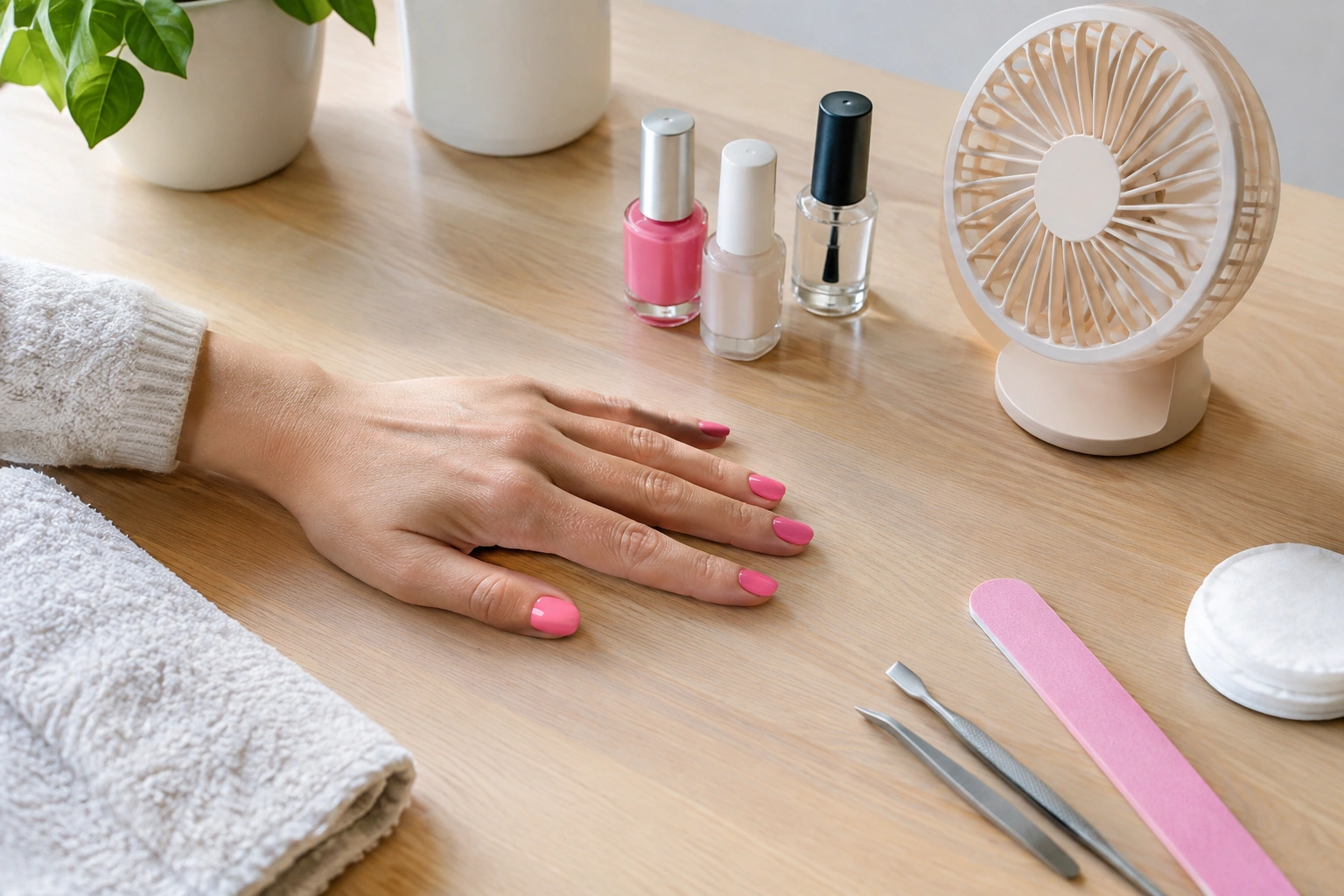
How Long Nail Polish Takes to Dry
Regular nail polish usually dries in stages, not all at once. The exact timing depends on the formula, how thick the coats are, and how many layers you used.
A simple way to think about it:
- Touch-dry: the top feels dry, but it can still dent or smudge.
- Safe for light use: you can be careful with your hands, but avoid pressure, heat, and water.
- Fully dry: the manicure can handle normal daily movement with much less risk of marks.
As a beginner rule, a manicure may feel dry on the surface within a short time, but it can still need more time before you use your hands normally. Thicker coats and extra layers usually need longer.
What Actually Speeds Up Drying at Home
If you want to dry polish faster without a salon lamp, focus on methods that either help the surface set sooner or help the polish dry more evenly overall.
Fan drying
A fan is one of the simplest options. It moves air across the nails, which can help the surface dry more evenly than sitting still. This is a useful choice if you already have a small fan nearby and want a no-cost routine.
Fan drying can help the top layer feel drier sooner, but it does not fully speed up the deeper layers in a dramatic way.
Cold water
Some people use the cold-water method, where they wait briefly and then dip their nails in cool water. Compared with room-temperature air drying, it may help the surface firm up a little faster after the polish has already started to set.
Use care here. Cold water is not broadly recommended for very fresh polish, because it can leave dents or marks if the manicure is still soft. Think of it as a finishing step, not a general drying method.
Air drying
Plain air drying is the simplest method, and it works fine if you are not in a hurry. It is slower than using a drying product, but it is predictable and low effort.
For more general polish guidance, Essie’s nail care resources can be useful when you want to compare product types and routine basics.
Quick-Dry Products: Top Coats, Drying Drops, and Sprays
If speed matters, products made for drying usually do more than household tricks.
Quick-dry top coat
A quick-dry top coat is often the most practical upgrade for regular polish. It seals the manicure and can help the surface feel ready sooner. It also adds shine and a smoother finish.
This is a strong choice if you want one product that does several jobs at once: finish, seal, and speed up drying.
Drying drops
Drying drops are small and easy to use. They are a good option if you want something lightweight and quick to apply. They may be especially convenient if you already have a favorite base coat and color polish and just want a faster finish.
They can be easier than a top coat when you do not want to add another visible layer or change the finish much.
Drying spray
A drying spray can be useful when you want a fast, simple step at the end of your manicure. It may feel cleaner than a dropper-style product, especially if you do your nails often.
Which one should you choose?
Here is the simplest way to decide:
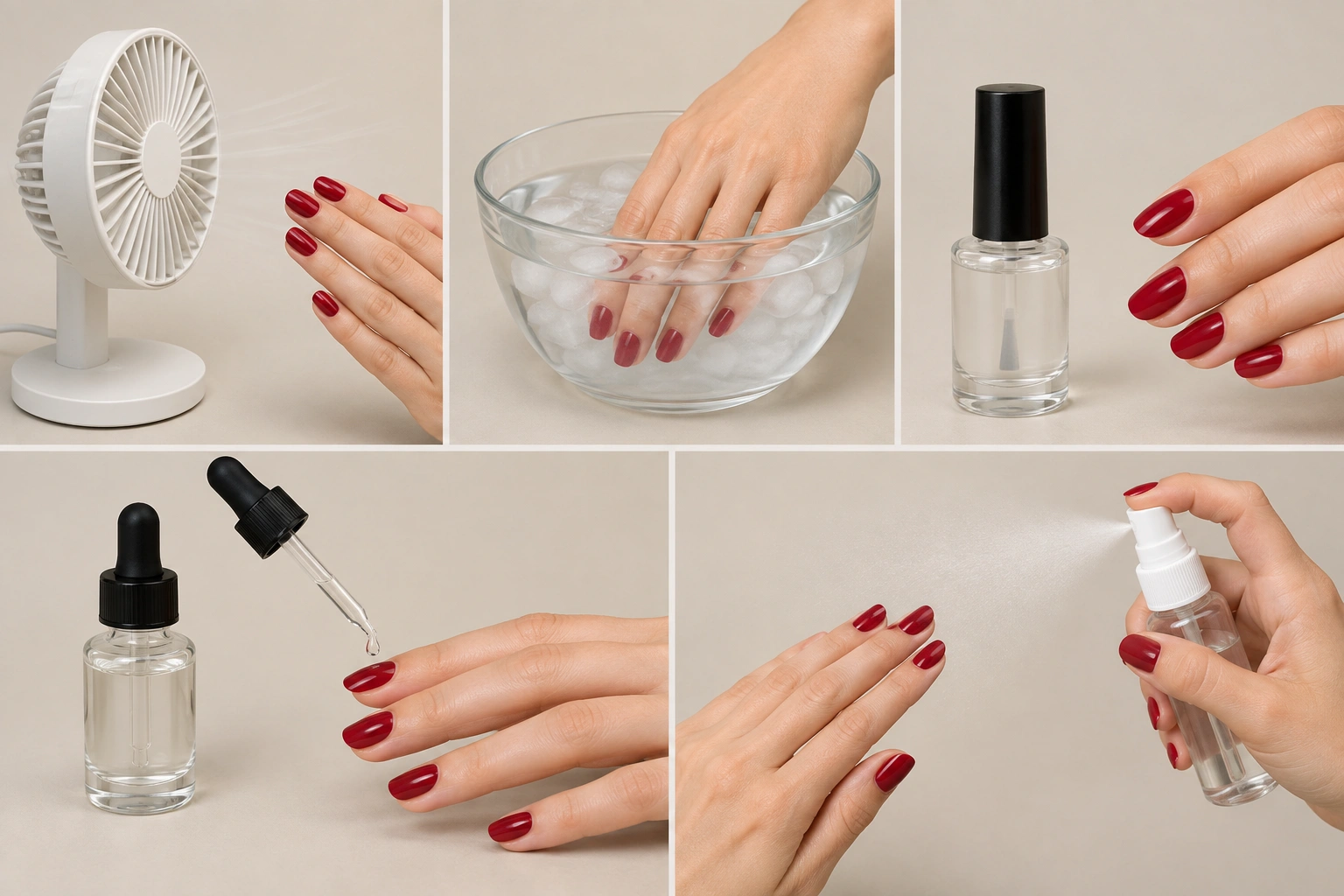
- Choose a quick-dry top coat if you want the most all-around help for regular polish.
- Choose drying drops if you want a small, easy add-on.
- Choose a drying spray if you prefer a quick mist at the end.
For very thick polish or a manicure with several coats, none of these products can fully undo heavy application. Thin layers still matter most.
If you want to compare drying methods more broadly, this guide on whether quick-dry nail polish really dries faster can help you think through the trade-offs.
Comparison Table: Which Drying Method Fits Your Routine?
| Method | Speed Help | Cost | Reliability | Best For | Main Limitation |
|---|---|---|---|---|---|
| Fan drying | Mild to moderate | Low | Moderate | Beginners who want a simple no-cost option | Helps the surface more than the deeper layers |
| Cold water | Mild | Low | Moderate | People who want a quick finishing step | Can dent polish if used too soon |
| Quick-dry top coat | Strong | Medium | High | Regular polish and smoother results | Needs an extra product |
| Drying drops | Moderate to strong | Medium | High | Quick at-home manicures | Works best when applied as directed |
| Drying spray | Moderate to strong | Medium | High | Fast, easy finishing | Product use matters; follow the label |
How to Make Polish Dry Faster Before You Paint
The fastest drying routine starts before the color goes on.
Use thin coats
Thin coats dry faster than thick ones because each layer has less polish to set. This is one of the easiest ways to improve drying time without buying anything.
If your first coat looks streaky, resist the urge to pile on a thick second coat. A thin second coat is usually better than one heavy coat that stays soft for too long.
Keep the number of coats practical
More coats mean more drying time. That does not mean you should skip coverage, but it does mean every extra layer should earn its place.
A base coat, two thin color coats, and a top coat is a common beginner-friendly routine. If your polish is very sheer, you may need another coat, but keep each layer light.
Let each coat settle
Even a short pause between coats can help. You do not need to wait forever, but you also should not rush the next layer on while the first one is still wet and sliding around.
Use a base coat and top coat wisely
A base coat helps create a smoother surface, and a top coat helps seal the manicure. For regular polish, that top coat is where many people notice the biggest improvement in how soon the manicure feels set.
What Not to Do While Your Nails Are Setting
A few common habits make polish take longer to settle or make it more likely to smudge.
Avoid thick, glossy-looking puddles of polish
If the color looks heavy or uneven, it probably needs more drying time. Thick polish can feel fine on top while staying soft underneath.
Skip heat from a hair dryer
Heat is not a reliable shortcut here. It can make polish behave unevenly and may cause bubbling or other finish problems.
Do not touch your nails to “check” them too often
Pressing a nail to see whether it is dry usually creates the very dent you were trying to avoid. If you need to test, use the lightest possible touch on one corner after waiting a bit.
Avoid chores that put pressure on the nails
Opening cans, digging through a bag, buckling straps, or washing dishes too soon can all leave marks. Even if your manicure seems dry, treat it gently for a while.
For general safety and product-use guidance, the FDA is a useful place to check if you are ever unsure about cosmetic product handling or labels.
How to Tell Whether Your Nails Are Actually Dry
A manicure can feel ready before it is truly ready. These simple checks are more useful than a hard squeeze test.
Look for a glossy but stable surface
If the polish still shifts, wrinkles, or shows a mark when you barely touch it, it needs more time.
Check one nail first
Pick a less noticeable nail and test it with the lightest possible contact. If it leaves a mark, the rest likely need more time too.
Watch for pressure marks
If fabric, hair, or a sleeve leaves an impression, the manicure is not fully set yet. That is a sign to pause before doing anything active.
Give extra time after multiple coats
Three layers of polish usually need more patience than one. Even if the top looks dry, the lower layers may still be soft.
Regular Polish vs. Gel Polish: What Changes
This matters because the drying advice is not the same for every product.
Regular nail polish
Regular polish dries in open air, so thin coats, fan drying, quick-dry top coats, and drying drops can all be useful.
Gel polish
Gel polish is different. It is designed to cure under a lamp, so air-drying tricks are not the right solution. If you are using gel, follow the product instructions instead of trying to treat it like standard polish.
If you are wondering whether a UV lamp can help with regular polish, this article on whether a UV lamp dries regular nail polish explains the difference clearly.
Simple Drying Routine for a Smudge-Free Finish
Here is an easy beginner routine you can use after painting your nails:
- Apply thin coats of polish.
- Let each coat settle before adding the next.
- Finish with a quick-dry top coat if you have one.
- If you prefer a no-cost method, sit near a fan and keep your hands still.
- Avoid water, heat, and pressure until the manicure feels stable.
- Check one nail gently before going back to normal activities.
If you want a second practical breakdown, this guide on how to dry nail polish faster covers the same basics from another angle, which can be helpful if you are comparing routines.
FAQs
What is the fastest way to dry nail polish at home?
For regular polish, a quick-dry top coat is usually the most reliable option. If you want a no-cost method, a fan can help the surface set more evenly.
Does cold water help nail polish dry faster?
It can help a little after the polish has started to set, but it is not a good choice for very fresh polish. If the manicure is still soft, cold water can leave dents or marks.
Does a fan dry nail polish faster?
A fan can help move air across the nails and may speed up surface drying. It is useful, but it does not replace waiting for the layers underneath to set.
Why does nail polish feel dry but still smudge?
The top layer can dry before the polish underneath. That is why a manicure may seem ready even when it is still soft enough to dent.
Are drying drops better than a quick-dry top coat?
They do different jobs. A quick-dry top coat usually gives more all-around help for regular polish, while drying drops are a simple add-on that may be easier for some people to use.
Can I use a hair dryer to dry nail polish faster?
It is not the best choice. Heat can lead to uneven drying or bubbling, so it is usually better to use a fan or a product made for drying polish.
How do I know when my nails are fully dry?
They should not dent when lightly tested, and they should handle normal movement without leaving marks. If you are unsure, wait longer before doing anything hands-on.
Does this advice work for gel polish?
Not really. Gel polish needs curing under a lamp, so regular air-drying tricks are meant for standard nail polish, not gel.
What slows nail polish down the most?
Thick coats, too many layers, and rushing into chores too soon are common reasons polish stays soft longer.
Should I wait longer if I used three coats?
Yes. More coats usually mean more drying time, even if the surface looks finished.
Final Thought
If you want a cleaner manicure with less smudging, use thin coats, choose a quick-dry product when you have one, and give the polish enough time to set before normal hand use. That simple routine usually helps more than trying to rush the finish.
