
Can a Nail Salon Fix a Broken Nail? What to Expect and When It’s Safe

Yes — in many cases, a nail salon can fix a broken nail. The catch is that the repair method depends on what broke, how far it broke, and whether the nail is still stable.
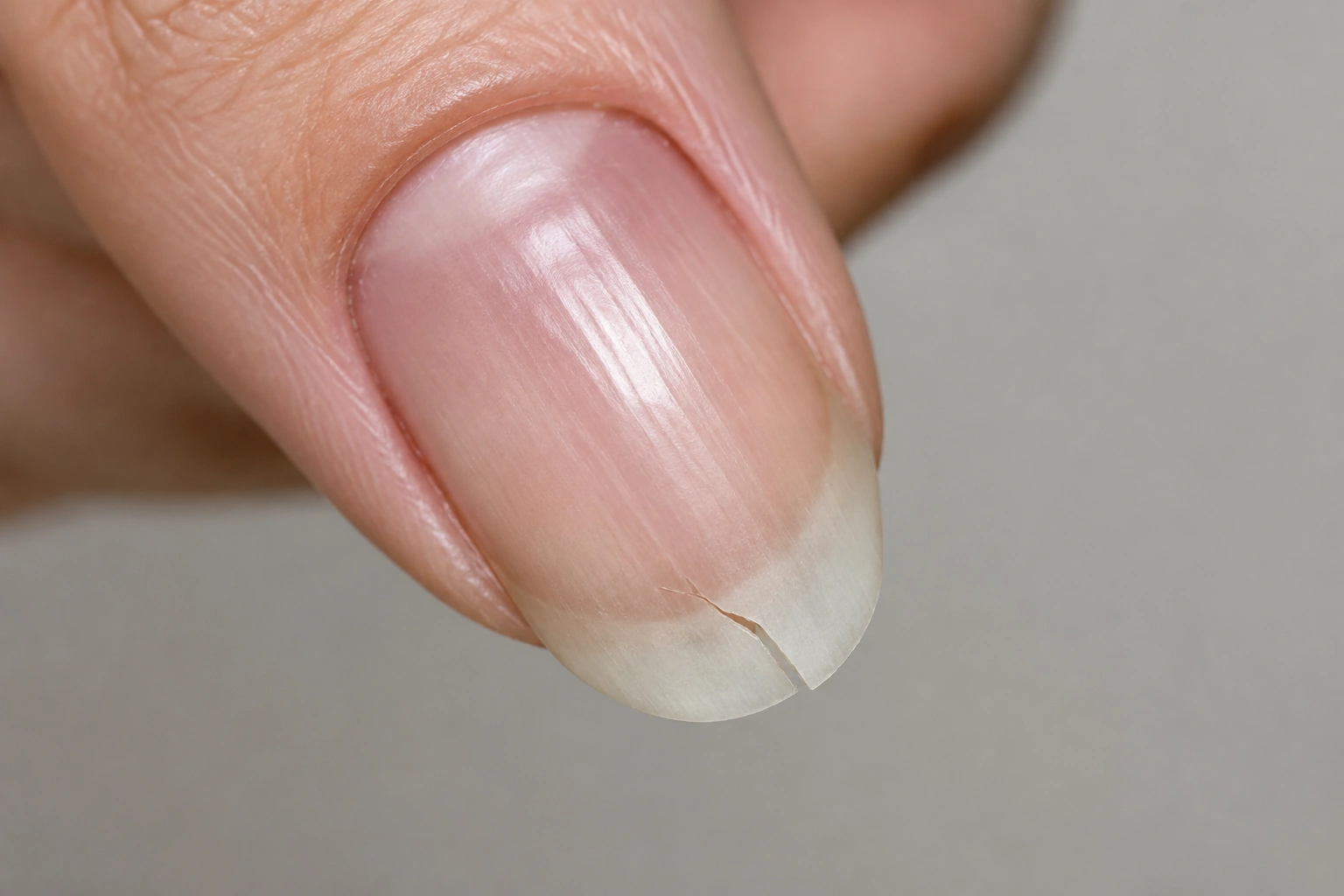
A small crack near the free edge is usually a straightforward salon repair. A split that runs deep into the nail, a lifted enhancement, or a break with bleeding is a different situation entirely. In those cases, the safest choice may be a temporary protection method, full removal, or medical care rather than a cosmetic fix.
If you’re trying to decide whether to book now or wait, use this simple rule: if the nail is painful, bleeding, swollen, or looks infected, don’t treat it like a routine salon issue. If it’s cosmetic damage only, a licensed nail technician can often help.
Which Broken Nails Can Usually Be Repaired at a Salon?
Most salons can handle breaks that are annoying but still structurally manageable. Think of problems like:
- a chip at the tip
- a small crack that hasn’t split the nail bed
- a broken corner on a natural nail
- a lifted gel, acrylic, or dip edge
- a partial break where the remaining nail is still attached and stable
These are the kinds of issues where a technician can usually patch, smooth, reinforce, or replace the damaged area without starting from scratch.
A good way to judge the break is to ask: Can I safely keep the nail from snagging until I get to the salon? If yes, there’s a decent chance it can be repaired. If the break is jagged, moving, or painful every time you bump it, the nail may need more than a simple cosmetic fix.
When a Broken Nail Is Too Severe for a Salon Fix
Some breaks should not be treated as a standard manicure problem.
Skip the salon repair and get medical attention if you have:
- bleeding that doesn’t stop
- severe pain
- a nail that is partly torn off and unstable
- visible nail bed exposure
- swelling, pus, or drainage
- redness that is spreading
- signs of infection around the finger or toe
A salon can improve appearance, but it should not be asked to work over an active injury or possible infection. That’s especially true if the break happened in a way that damaged the skin underneath the nail.
If you’re unsure whether the injury is cosmetic or medical, err on the cautious side. The American Academy of Dermatology and NIH guidance on nail problems are useful references for general nail-health concerns, while the FDA’s cosmetics page is a helpful reminder that nail products are cosmetic products, not medical treatment.
How Salons Repair Natural Nails, Gel, Acrylic, and Dip Nails
The repair method changes based on the material on the nail. That’s why two people with “broken nails” may get completely different fixes.
Natural nails
For a natural nail, a technician may use a nail wrap, silk wrap, builder gel, or a small amount of adhesive and reinforcement to bridge the break. If the break is at the tip and the nail plate is still intact, the goal is usually to stabilize it, then shape it so it blends with the rest of the hand.
For a deeper crack, the technician may shorten the nail so the damaged area is removed, then reinforce the remaining nail. That often looks better and lasts longer than trying to save every bit of length.
Gel nails
A gel manicure can often be repaired by smoothing the damaged area, rebuilding the surface, and reapplying product so the nail looks even again. If the gel has lifted, the technician may remove the loose section before repairing it. Trying to “seal down” a lifted area usually is not the best move, because the repair can look bulky and may not hold well.
Acrylic nails
Acrylic repairs are often more flexible because the technician can patch the broken section, rebalance the shape, or replace the full nail if the break is too severe. If the acrylic has snapped but the natural nail underneath is okay, a partial repair may be enough. If the break has compromised the bond or the shape is unstable, a full replacement is often cleaner and more durable.
Dip powder nails
Dip repairs depend on whether the natural nail underneath is still intact. If the dip has split but the base nail is fine, the salon may smooth the surface and reinforce the break. If the dip is lifting or the natural nail underneath is damaged, the technician may remove the damaged area and rebuild it more carefully.
A quick comparison of common repair choices
| Situation | Common salon fix | Best for | Trade-off |
|---|---|---|---|
| Small chip or tip crack | Patch, file, and reinforce | Minor cosmetic damage | May be visible up close |
| Natural nail break | Wrap, builder gel, or trim and reshape | Stable breaks on bare nails | Often means losing some length |
| Gel lift or chip | Remove loose product and rebalance | Gel manicures with minor damage | Needs careful blending |
| Acrylic break | Patch or replace section | Broken enhancement with stable base | Full replacement may be faster |
| Dip split | Smooth, reinforce, or rebuild | Surface damage with intact nail | Not every split can be saved |
What to Ask for When You Call or Visit the Salon
The best way to avoid the wrong appointment is to describe the break clearly.
You can say:
- “I broke a natural nail near the tip.”
- “My gel nail lifted and cracked.”
- “My acrylic snapped, but the nail underneath seems okay.”
- “I have a broken nail and need to know if it should be repaired or removed.”
If you can, mention:
- which finger or toe is affected
- whether it hurts
- whether there is bleeding
- whether the nail is loose
- whether the break is on a natural nail or an enhancement
- how soon you need it fixed
That last point matters more than people realize. A salon may choose a quick same-day repair for an event, or a more durable service if you want the nail to last until your next fill or manicure.
If you want help using salon language more confidently, this guide on what to ask for at a nail salon can make the conversation easier.
How Much a Broken Nail Repair Usually Costs
Pricing varies a lot by location, salon level, and how much work the repair takes. A tiny patch is usually cheaper than replacing a full acrylic nail or rebuilding a damaged enhancement. Some salons charge per nail, while others treat it as part of a larger service.
A practical way to think about cost is this:
- minor patch or small cosmetic repair: often around $5 to $15 per nail
- enhancement repair or rebuild: often around $10 to $25 per nail
- full replacement or removal and redo: often $20 to $40+ per nail, and sometimes more if the salon treats it as part of a larger service
These are only example price bands. Actual pricing can be lower or higher depending on your region, the salon, the product used, and whether the technician has to remove loose material before repairing it.
If the break is small and you already have an appointment coming up soon, a repair may be worth it simply to prevent the damage from spreading. If the nail is badly compromised, paying for a patch that won’t hold is usually poor value.
How Long a Salon Nail Repair Typically Lasts
A repair can last anywhere from a few days to a few weeks, or until your next fill or manicure, depending on the break and the service used.
Durability usually depends on:
- how deep the break is
- whether the nail is natural or enhanced
- whether the technician removes loose product first
- how much daily stress the nail gets
- whether you keep snagging it after the repair
A temporary patch is usually meant to last just long enough to protect the nail until it can be properly fixed, often for a few days to a couple of weeks. A stable enhancement repair can often last until the next fill or maintenance appointment if the nail is not repeatedly stressed. That’s why a technician may shorten the nail more than you expected — less length often means less leverage and a better chance the repair survives.
Will the Repair Match the Rest of the Manicure?
Usually, yes — but “match” does not always mean invisible in every light.
A good nail technician can blend shape, color, and shine so the repair looks consistent with the rest of the set. That said, a repaired nail may still be slightly different up close, especially if:
- the original manicure is grown out
- the break removed part of the length
- the color is custom mixed
- the nail needed a stronger overlay to hold
If appearance matters for an event, ask the salon whether they can do a close color match and whether the repair will be noticeable from arm’s length. That’s a more realistic standard than expecting a perfectly undetectable fix.
Should You Get the Nail Fixed Right Away or Wait for Your Next Appointment?
This is the decision point most people get stuck on.
Fix it right away if:
- the nail keeps snagging
- the break is getting worse
- you need to protect the nail from further splitting
- the damaged nail is on a hand you use constantly
- you have an event or work commitment soon
Wait for your next appointment if:
- the break is tiny and stable
- the nail is not painful
- you can keep it protected
- your next fill or manicure is only a few days away
Don’t wait if:
- the nail is bleeding
- the nail bed looks exposed
- the break is deep and unstable
- the area is swollen or looks infected
A temporary at-home patch can buy you time, but it should not be used as an excuse to ignore a worsening injury.
What to Do Before Going to the Salon With a Broken Nail
A little preparation makes the repair easier and reduces the chance of making the break worse.
Do this:
- Keep the nail clean and dry.
- Trim only loose, dangling debris if it is clearly snagging.
- Avoid filing aggressively at home.
- Do not use polish remover on an actively broken or lifted enhancement unless a professional told you to.
- Bring the exact product name or the original packaging if you have an enhancement and know what was used.
- Bring a photo if the damage is hard to describe.
What not to do: don’t glue the nail shut with a heavy layer of adhesive and don’t rip off a loose enhancement. Those shortcuts can turn a manageable repair into a bigger one.
For general prep habits that help a technician work cleanly, you may also find this internal guide on salon nail prep and cleanser useful.
Aftercare to Help the Repair Last Longer
Once the nail is fixed, the goal is simple: protect the repair long enough for it to do its job.
That means:
- wearing gloves for wet cleaning
- keeping nails out of the habit of prying lids or scraping labels
- using the pads of your fingers more than the tips
- filing away any new snags early
- booking a follow-up if the repair starts lifting
The repaired nail is usually strongest when you treat it like a vulnerable spot, not like a brand-new hard surface. Most repeat breaks happen because the same stress gets applied again before the nail has a chance to grow out.
Salon Repair vs. DIY Repair
A DIY fix can be useful as a temporary bridge, but it is not the same as a professional repair.
DIY repair
Best for:
– getting through a few hours
– protecting a small snag
– covering the nail until you can reach the salon
Trade-offs:
– less durable
– easier to overdo with glue
– more likely to look uneven
– can trap damage if the break is deeper than it seems
Salon repair
Best for:
– matching the rest of the manicure
– stabilizing a real break
– deciding whether the nail should be patched, shortened, or replaced
Trade-offs:
– costs more than a quick home fix
– takes an appointment
– may involve losing some length to make the nail stable
If your main goal is safety and a clean finish, the salon usually wins. If your main goal is buying time for a few hours, a careful temporary fix may be enough.
When to See a Nail Technician or Dermatologist
See a nail technician when the damage is cosmetic, stable, and not painful. See a dermatologist or medical provider when the nail injury is painful, bleeding, swollen, or possibly infected.
That distinction saves time and prevents the common mistake of treating a medical problem like a beauty problem. Nail salons are excellent for repairs, blending, and maintenance. They are not the right place for every broken nail.
FAQ: Broken Nail Repair at a Salon
Can a nail salon fix a broken natural nail?
Often, yes. If the nail is stable and not bleeding, a technician may use a wrap, builder gel, or a trim-and-reinforce approach.
Can a salon fix a broken acrylic, gel, or dip nail?
Usually, yes — if the enhancement is still mostly attached and the damage is not too severe. Lifted or unstable product may need removal and rebuilding.
How long does a salon repair last?
It depends on the break and the repair method. A temporary patch may last a few days to a few weeks, while a stable enhancement repair may last until your next appointment.
Will the repair be noticeable?
It can be blended well, but close inspection may still reveal a difference in shape, thickness, or color.
Is it better to repair now or wait?
Repair now if the nail is catching, worsening, or painful. Waiting is reasonable only for minor, stable damage that you can protect.
Should I go to the salon if the nail is bleeding?
No. Bleeding, severe pain, swelling, or signs of infection are reasons to seek medical care instead of a cosmetic repair.
Can a salon repair make the nail as strong as before?
Sometimes it can make it usable again, but not every repair restores the nail to its original strength. If the break is deep, the nail may still need time to grow out.
How much does a broken nail repair cost?
There is no single standard price. Minor repairs are usually cheaper than full replacements or rebuilds, and pricing depends on the salon and the amount of work needed.
Final thought
A broken nail is often fixable at a salon, but the smartest repair is the one that matches the damage. Small cracks and chips are usually salon territory. Deep breaks, bleeding, and infection are not. When in doubt, protect the nail, describe the problem clearly, and let a licensed professional decide whether to patch, rebuild, replace, or refer you out.

