Will a Nail Salon Work on Toenail Fungus? What to Expect Before You Book

Toenail fungus changes the conversation at the salon. A nail technician may be willing to do some cosmetic care, but a reputable salon should not claim to treat or cure the infection. In plain English: a salon can sometimes help the nail look neater, but it cannot replace medical treatment for onychomycosis.
Before you book, disclose the issue, ask how the salon handles sanitation, and be prepared for the salon to refuse service if the nail looks visibly infected or unsafe to work on. In many cases, the salon may decide on arrival that only limited cosmetic care is appropriate, or that no service should be performed.
That distinction matters because salon tools, foot baths, and filing can spread fungus if hygiene is weak. Yale Medicine’s nail-salon guidance is a good reminder that this is not just a cosmetic issue.
If you are deciding whether to book, think in terms of three choices: a modified cosmetic pedicure, postponing until you have medical guidance, or seeing a podiatrist or dermatologist first. The best choice depends on how the nail looks, whether it hurts, and whether the salon can explain its sanitation practices clearly.
Can a Nail Salon Work on Toenail Fungus?
Yes, sometimes—but only in a limited cosmetic sense, and many salons will refuse visibly infected nails for safety reasons.
A salon may agree to trim, lightly smooth, or clean up a nail only if the condition appears mild, stable, and safe to manage under the salon’s policies. But that is not treatment. A nail salon cannot diagnose the cause of the nail change, prescribe antifungal medication, or cure the infection. If a salon says it can “treat” toenail fungus, that should raise a red flag.
A helpful way to think about it is this:
- Cosmetic care = making the nail look tidier or more comfortable
- Medical care = addressing the fungal infection itself
That line matters because fungal infections usually need medical evaluation and a treatment plan, not just a salon service. If the nail is thick, crumbling, lifting, or spreading to other nails, cosmetic care alone is usually not enough.
What a Nail Salon Can and Cannot Do
A salon can sometimes do the parts of a pedicure that are basically grooming:
- trim a nail only if it is safe to cut
- lightly smooth rough edges
- clean the surrounding skin
- apply polish for appearance, if the nail surface is stable enough
A salon cannot responsibly do the following:
- diagnose whether the nail problem is fungus
- prescribe or apply medical antifungal treatment as a cure
- promise that polish, filing, or soaking will eliminate the infection
- do aggressive filing, cuticle cutting, or other work that could break the skin
- remove the nail or try to “fix” a painful, inflamed, or obviously worsening nail as if it were routine
There is also a practical limit to coverage. Polish may hide discoloration for a while, but it does not remove the fungus. If the nail is thick or lifting, polish can even make the nail harder to monitor because you lose visibility of changes underneath.
For readers who want to understand the difference between cosmetic upkeep and a more specialized service, our guide on what to ask for at a nail salon can help you phrase your request clearly.
Is It Safe to Get a Pedicure With Toenail Fungus?
Sometimes it can be, but “safe” depends on the details.
The main risk is cross-contamination. If a salon uses the same clippers, files, buffers, or foot-bath setup on multiple clients without proper disinfection, fungus can spread to other nails, other people, or salon surfaces. That is why sanitation is not a bonus feature—it is the deciding factor.
A reputable salon may still decline service if the nail looks active or severe. That is not rude; it is a reasonable infection-control decision.
A simple rule of thumb
A salon visit is more reasonable when:
- the nail change is mild or only suspected
- there is no pain, drainage, or open skin
- the salon can explain how it disinfects tools and foot baths
- the technician is willing to modify the service within policy
A salon visit is less reasonable when:
- the nail is thick, crumbly, or lifting significantly
- more than one nail is involved and worsening
- the toe is painful or the skin looks irritated
- you are trying to hide a clearly infected nail rather than manage it safely
Comparison: Salon Pedicure vs. Medical Treatment
| Option | What it does | Best for | Main trade-off |
|---|---|---|---|
| Standard salon pedicure | Cosmetic grooming and polish | Healthy nails or very mild, stable nail changes | May not be appropriate if the nail is infected or unstable |
| Modified salon service | Limited cleaning, trimming, or polishing with extra caution | Mild or treated fungus when the salon can work hygienically | Appearance improvement without treating the infection |
| Medical care from a podiatrist or dermatologist | Diagnosis and antifungal treatment plan | Active, spreading, painful, or uncertain nail problems | Less cosmetic focus, but addresses the cause |
A medical pedicure is not the same as a standard salon pedicure. The term can vary by provider, and it is not a routine cosmetic service. If your goal is actual treatment, that is the lane to look at—not a regular salon chair.
When a Reputable Salon Should Refuse or Modify Service
A good technician is not being difficult if they say no. They are making a judgment about safety.
A salon should strongly consider refusing or modifying service if the nail is:
- very thick or distorted
- crumbling at the edge
- lifting from the nail bed
- painful to touch
- oozing, bleeding, or surrounded by irritated skin
- obviously spreading from one nail to several
In those cases, a limited service may still be possible only if the technician can avoid aggressive filing, cuticle cutting, or anything that could create a break in the skin. If they cannot do that safely, the better choice is to postpone.
One practical test: if you would feel uneasy touching the nail with a clean tissue at home, it is probably not a routine pedicure nail.
What Hygiene and Sanitation Practices to Ask About
This is the part that protects you, the technician, and the next client.
Ask the salon how it handles:
- single-use tools for files, buffers, or other disposable items
- disinfection of reusable tools between clients
- foot bath sanitation after each client
- cleaning of surfaces like chairs, trays, and armrests
- whether they use sterilization for metal tools when appropriate, not just a quick rinse
WebMD specifically advises people to be sure their nail salon sanitizes nail tools, and that is a smart baseline question to ask before any pedicure. You are not being fussy; you are checking for basic infection control.
If a salon gets defensive, vague, or says “we’ve never had a problem,” that is not enough. Good sanitation should be explainable in plain language.
For a deeper look at product and prep hygiene, our article on nail salon prep and cleanser basics may also be useful when you are comparing service standards.
How to Tell the Technician Without Embarrassment
You do not need a dramatic explanation. Keep it simple and early.
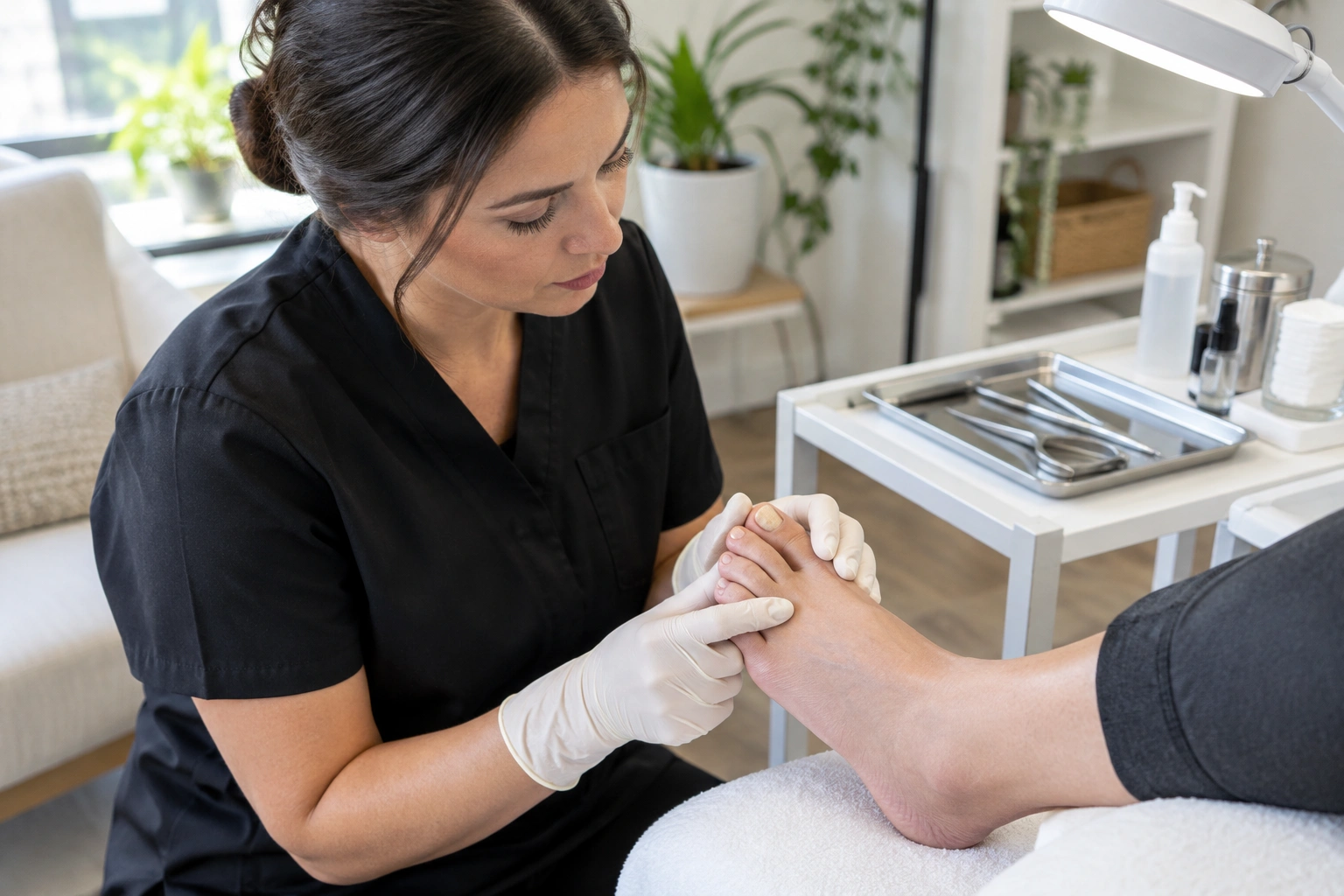
Try this:
“I have one toenail that may have fungus. Can you tell me whether you’re comfortable doing a modified pedicure, or would you prefer I see a doctor first?”
That sentence does three useful things:
- It gives the technician time to decide safely.
- It shows you are not trying to hide the issue.
- It invites a yes, no, or modified-service answer without pressure.
If you wait until you are already in the chair, the technician may feel cornered. Mention it when you book or when you arrive before the service begins.
Modified Pedicure vs. Postponing the Appointment
A modified pedicure makes sense when the goal is basic grooming and the nail problem is mild, stable, and not painful. In that case, the salon may be able to trim carefully, avoid aggressive tools, and skip anything that could spread contamination.
Postpone when the nail looks active or the skin around it is not intact. That is the safer choice if the technician would need to work too close to a damaged area.
A useful trade-off to keep in mind:
- Modified service gives you a cleaner look now, but does not solve the fungus
- Postponing protects you and others, and gives medical treatment a chance to work
If your main concern is how the nail looks for a special event, a limited cosmetic service may be tempting. If your main concern is health or spreading, postponing is usually the wiser move.
When to See a Nail Technician or Dermatologist
See a nail technician only for cosmetic care when the nail change is mild and clearly stable, and the salon can explain its hygiene practices.
See a dermatologist or podiatrist instead if:
- the nail is painful
- the nail is lifting from the nail bed
- the discoloration is spreading
- several nails are involved
- the nail is thick, brittle, or crumbling
- you are unsure whether it is fungus at all
Medical professionals can diagnose onychomycosis and guide treatment. That matters because not every thick or discolored toenail is fungus, and not every nail problem should be handled like a routine salon issue.
The CDC’s fungal disease resources are a useful place to start if you want a broader public-health view of fungal infections and how they spread.
How to Avoid Spreading Toenail Fungus
If you have suspected or confirmed fungus, your goal is to avoid moving it around.
Practical steps help:
- keep your own clippers and file separate from other people’s
- do not share footwear or nail tools
- wear clean, breathable socks and change them regularly
- avoid picking at the nail or surrounding skin
- tell the salon in advance so they can decide whether to proceed safely
Shared equipment at nail salons can spread fungal organisms when tools are used on multiple clients without proper sterilization. That is why even a small lapse matters.
The NIH’s MedlinePlus nail fungus overview is a reliable place to read more about fungal infections in general, especially if you want a medical overview before booking.
What to Expect Before You Book
Before you schedule, ask yourself four questions:
- Does the nail look mild or clearly infected?
- Can the salon explain sanitation clearly?
- Am I asking for cosmetic grooming or actual treatment?
- Would a podiatrist or dermatologist be the safer first stop?
If the answer to the first question is “clearly infected,” the safest move is usually medical care first. If the nail change is mild and you mainly want neatness, a modified salon service may be reasonable—provided the salon is careful.
FAQs
Will a nail salon refuse service if I have toenail fungus?
They might. A careful salon may refuse if the nail looks active, severe, or risky to work on.
Can a salon cure toenail fungus?
No. A salon can help with appearance or basic grooming, but it cannot cure the fungus.
Should I tell the technician before the appointment?
Yes. Telling them ahead of time gives them a chance to decide whether to modify the service or recommend medical care.
Is it safe to cover fungal toenails with polish?
Polish may improve appearance, but it does not treat the infection. If the nail is lifting or crumbly, polish can also make it harder to monitor changes.
What sanitation should I ask about?
Ask about single-use tools, disinfection of reusable tools, and cleaning of foot baths and surfaces between clients.
When should I see a doctor instead of a salon?
If the nail is painful, spreading, lifting, or you are unsure what is causing the change, see a podiatrist or dermatologist first.
If you are still unsure, the safest path is usually the simplest one: disclose the issue, ask about sanitation, and choose the setting that can handle the nail without pretending it is something it is not.