
Can You Go to a Nail Salon for an Ingrown Toenail? What’s Safe, What’s Not

An ingrown toenail can make even a simple pedicure feel like a big decision. The short answer is: sometimes, but only if the toenail is mild and not showing signs of infection. A nail salon may be able to give gentle cosmetic care and temporary comfort, but it is not the place for medical treatment or “removal” of the ingrown edge.
If the toe is red, swollen, warm, draining, or very painful, skip the salon and see a podiatrist, doctor, or urgent care clinic first. That rule matters because the wrong kind of trimming or pressure can turn a small problem into a bigger one.
Can You Go to a Nail Salon With an Ingrown Toenail?
Yes, in some mild cases you can go to a nail salon, but only for very limited care. Think of a salon visit as cosmetic grooming, not treatment.
A careful pedicure may help if the toe has:
- slight tenderness only
- no redness spreading around the nail
- no swelling that is getting worse
- no drainage or pus
- no open skin that looks raw or broken
That said, a salon cannot solve the root problem the way a podiatrist can. A salon may make the toe feel better for a while, but if the nail keeps growing into the skin, the discomfort usually comes back.
A helpful way to decide is to ask: “Am I looking for comfort and neatness, or do I need the toe medically assessed?” If the answer is medical assessment, the salon should not be the first stop.
What an Ingrown Toenail Is and Why It Matters
An ingrown toenail happens when the edge or corner of the nail presses into the surrounding skin. That pressure can cause pain, redness, and swelling. If the skin becomes irritated enough, bacteria can get in and the toe may become infected.
Why does this matter for a salon visit? Because pedicure tools are designed for grooming, not for working inside inflamed skin. Even a well-meaning technician can make the area more irritated by trimming too closely, pressing on the toe, or trying to “dig out” the edge.
The more inflamed the toe is, the less cosmetic care makes sense. Mild irritation may tolerate gentle grooming. A toe that is already angry, swollen, or draining needs medical care.
For general nail and foot safety guidance, the FDA’s consumer information on nail salons is a useful place to review sanitation basics: FDA nail salon safety guidance.
What a Nail Salon Can Safely Do
A nail technician may be able to help with gentle, non-invasive grooming if the ingrown toenail is mild and uninfected. That can include:
- carefully cleaning around the toe
- trimming the nail straight across only if the nail is not tender, the skin is not inflamed, and the toe tolerates touch
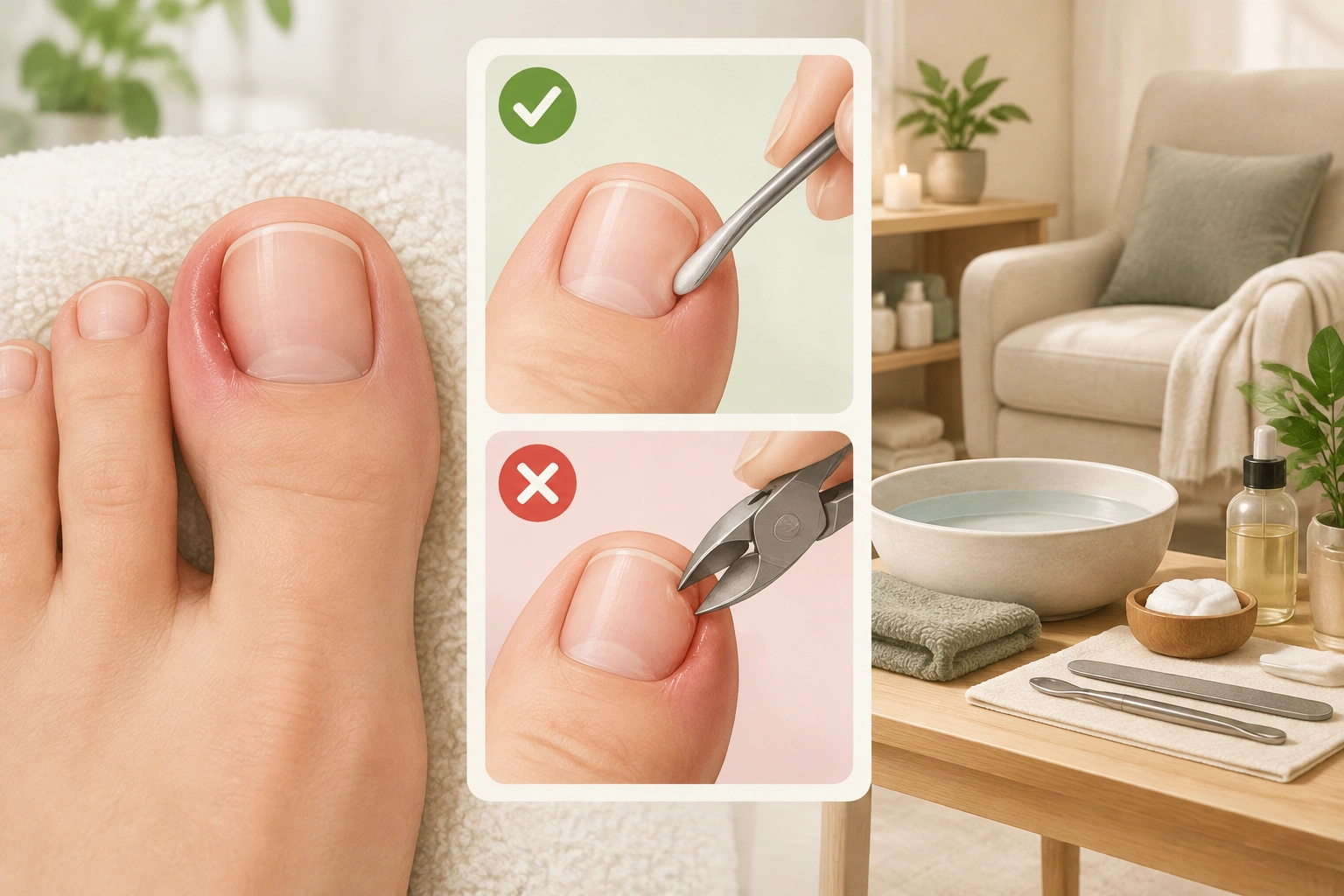
- smoothing sharp edges without digging into the corner
- avoiding pressure on the sore side of the nail
- giving the toe a neat cosmetic finish without trying to “fix” the ingrown part
This kind of service is about reducing irritation, not curing the condition. That distinction matters. If a salon is treating the toe like a routine pedicure, the technician may be able to keep things gentle. If the toe needs actual intervention, the salon is the wrong setting.
A practical example: if the nail edge is slightly uncomfortable but the skin is intact and calm, a cautious trim may be fine. If the toe hurts when you walk or the skin is visibly inflamed, even a light pedicure may be too much.
If you want to know how to ask for careful service in a salon setting, this guide on what to ask for at a nail salon can help you phrase your request clearly.
What a Nail Salon Should Not Do
This is where people can get into trouble. A nail salon should not:
- cut into the skin around the nail
- dig under the nail corner
- try to “remove” the ingrown portion
- cut away part of the nail bed
- work on a toe that appears infected
- keep going if the area is painful, bleeding, or increasingly swollen
A pedicurist should not treat an ingrown toenail as if it were a medical procedure. A salon can expose a vulnerable toe to unnecessary irritation or infection risk if the skin is already broken or inflamed.
That is the clearest boundary to remember: if the service crosses from grooming into cutting tissue, it is no longer salon care.
Nail Salon vs Podiatrist: Which One Makes More Sense?
Here is the simplest comparison.
| Situation | Nail Salon | Podiatrist / Doctor |
|---|---|---|
| Mild soreness, no redness, no swelling | May offer gentle cosmetic grooming | Usually not urgent, but still an option if it keeps recurring |
| Redness, swelling, warmth | Not a good choice | Better choice |
| Drainage, pus, or broken skin | Avoid | Needs medical evaluation |
| Want a neat pedicure only | Reasonable if the toe is calm | Not necessary unless symptoms worsen |
| Repeated ingrown toenails | Not a real fix | Better for long-term treatment |
A salon may be acceptable if the goal is light grooming and the toe is calm. A podiatrist is the better choice when you need the cause addressed, the toe is worsening, or the problem keeps coming back.
Healthify notes that you can see a GP, nurse practitioner, or podiatrist for help with an ingrown toenail, and a podiatrist can refer you onward if needed. That makes sense for anyone who is unsure whether the toe is just irritated or actually infected. You can read their patient guidance here: Healthify ingrown toenail advice.
Signs Your Ingrown Toenail May Be Infected or Severe
Do not book a salon visit if you notice any of these:
- redness spreading beyond the nail edge
- swelling that is obvious or getting worse
- warmth around the toe
- drainage or pus
- throbbing pain
- bleeding from the nail fold
- skin that looks open, raw, or broken
- trouble walking because of the pain
If the toe is already inflamed, a salon can easily make it more irritated. And if there is infection, the priority shifts from appearance to treatment.
A good rule: if you would hesitate to let someone press on the toe, do not let them work on it cosmetically.
Quick Checklist: Mild Case, Salon Visit, or Medical Care First?
If the ingrown toenail seems mild, use this checklist before booking a pedicure:
- Salon visit may be acceptable if the toe is only slightly tender, the skin is intact, and there is no redness, swelling, drainage, or warmth.
- Postpone the salon if the toe is sore enough that trimming or pressure would bother it, or if the skin around it looks irritated.
- Seek medical care first if there is pus, bleeding, spreading redness, increasing swelling, warmth, severe pain, trouble walking, or a history that makes foot infections riskier.
If you are still unsure, choose the safer option and wait. A pedicure can always be rescheduled; a worsening toe is harder to undo.
How to Tell the Salon Before Your Appointment
If you are still considering a salon visit, tell them before you arrive that you have an ingrown toenail. That gives the salon a chance to decide whether the appointment is appropriate.
Be specific. Say something like:
- “I have a mild ingrown toenail.”
- “There is no drainage or open skin.”
- “I only want gentle grooming, not cutting into the corner.”
- “If this is not appropriate, I’d rather reschedule.”
That conversation protects you. It also helps you gauge the technician’s judgment. If they seem eager to “remove” the problem, that is a red flag. A good technician knows where the line is and will not promise medical results.
What Pedicure Services to Avoid
With an ingrown toenail, avoid services that involve aggressive pressure or close cutting around the nail. That includes:
- deep corner trimming
- scraping under the nail edge
- cuticle pushing that irritates the skin
- hard filing over a tender area
- callus work that rubs the sore toe
- any service that causes stinging or bleeding
You are not being difficult by asking for gentler service. You are protecting a vulnerable area.
A realistic trade-off: you may leave with a less “perfect” pedicure, but you lower the chance of making the toe worse. That is a worthwhile compromise when the nail is already irritated.
Hygiene and Sanitation Questions to Ask the Salon
If you do go in, sanitation matters. Nail salon tools and foot baths should be clean, and the salon should be able to explain how they sanitize equipment.
Ask:
- Are tools sterilized or single-use when appropriate?
- Do you use fresh liners for foot baths?
- How do you clean between clients?
- Can you avoid working on the sore side of the nail?
This is not about being picky. It is about reducing avoidable risk, especially when the skin around the nail may already be compromised.
For broader information on salon hygiene and infection-control basics, the CDC’s consumer health pages are a solid reference: CDC infection prevention information.
Simple Home Care While You Decide What to Do Next
If the ingrown toenail is mild and you are waiting to see whether it settles or worsens, keep the toe calm:
- soak the foot in warm water if it feels soothing
- dry the area carefully afterward
- keep the toe dry after soaking and after washing
- wear roomy shoes with a wide toe box
- avoid tight socks that press on the nail
- do not cut deeper into the corner yourself
- avoid picking at the skin
- do not dig under the nail edge or try to lift it out
These steps are meant to reduce friction, not to force the nail out. If the toe improves, great. If it does not, that is useful information too.
Poorly cut toenails, poorly fitted shoes, tight socks, fungal nail infections, foot injuries, and sweaty feet can all be associated with ingrown toenails. So prevention is usually about reducing pressure and trimming nails in a way that does not encourage the edge to curve into the skin.
When to Postpone the Salon Visit and Get Medical Care First
Postpone the salon and see a podiatrist, doctor, or urgent care clinic first if:
- the toe is red and swollen
- there is pus or drainage
- pain is making it hard to walk
- the skin looks infected or broken
- the problem keeps returning
- you have diabetes, poor circulation, immune compromise, or another condition that makes foot wounds riskier
- you have a history of recurrent foot or nail infections
A salon can be part of cosmetic maintenance. It should not be the place you go when the toe is already moving toward infection.
If you are unsure, use this final test: if the toe needs treatment, not grooming, choose medical care first.
When to See a Nail Technician, Podiatrist, or Doctor
A nail technician may be appropriate only when the toe is mild, calm, and clearly not infected. A podiatrist or doctor is the better choice when the nail keeps recurring, the skin is inflamed, or you need a real treatment plan rather than temporary relief.
If you are considering a dermatologist, it usually makes sense only when the nail problem is tied to a skin condition, a rash, unusual nail changes, or another dermatologic issue that needs evaluation. For most ingrown toenails, though, a podiatrist or doctor is the more direct choice.
That is the cleanest way to think about it: nail salon for gentle cosmetic support, medical professional for diagnosis and treatment.
FAQ
Can a nail salon cut out an ingrown toenail?
No. A salon should not cut into the skin or remove the ingrown portion as if it were a procedure. That is medical work, not routine grooming.
Is it safe to get a pedicure if my ingrown toenail hurts?
Only if the pain is mild and there are no signs of infection. If it hurts to walk, the toe is swollen, or the skin is broken, skip the pedicure.
Should I tell the salon before the appointment?
Yes. Tell them in advance so they can decide whether gentle grooming is appropriate and avoid services that could irritate the area.
What if the salon says they can fix it?
Be cautious. A salon may be able to offer temporary comfort, but it should not promise to fix an ingrown toenail the way a podiatrist can.
What is the biggest red flag?
Drainage, pus, spreading redness, or worsening swelling. Those signs mean you should stop thinking about cosmetic care and get medical advice.
Bottom Line
If your ingrown toenail is mild, dry, and not infected, a nail salon may be able to provide gentle cosmetic care. If it is red, swollen, draining, or very painful, the salon is the wrong place. In that case, a podiatrist, doctor, or urgent care clinic is the safer next step.
The safest decision is usually the simplest one: grooming for mild irritation, medical care for anything that looks inflamed or infected.

