
How to Teach Kids Nail Care: A Practical Home Guide for Parents

Teaching children nail care works best when it feels like a normal hygiene habit, not a chore or a punishment. The first goals are simple: clean hands, trimmed nails, and gentle handling of the skin around the nails. Once those basics feel familiar, kids are much more likely to cooperate and carry the habit into school age and beyond.
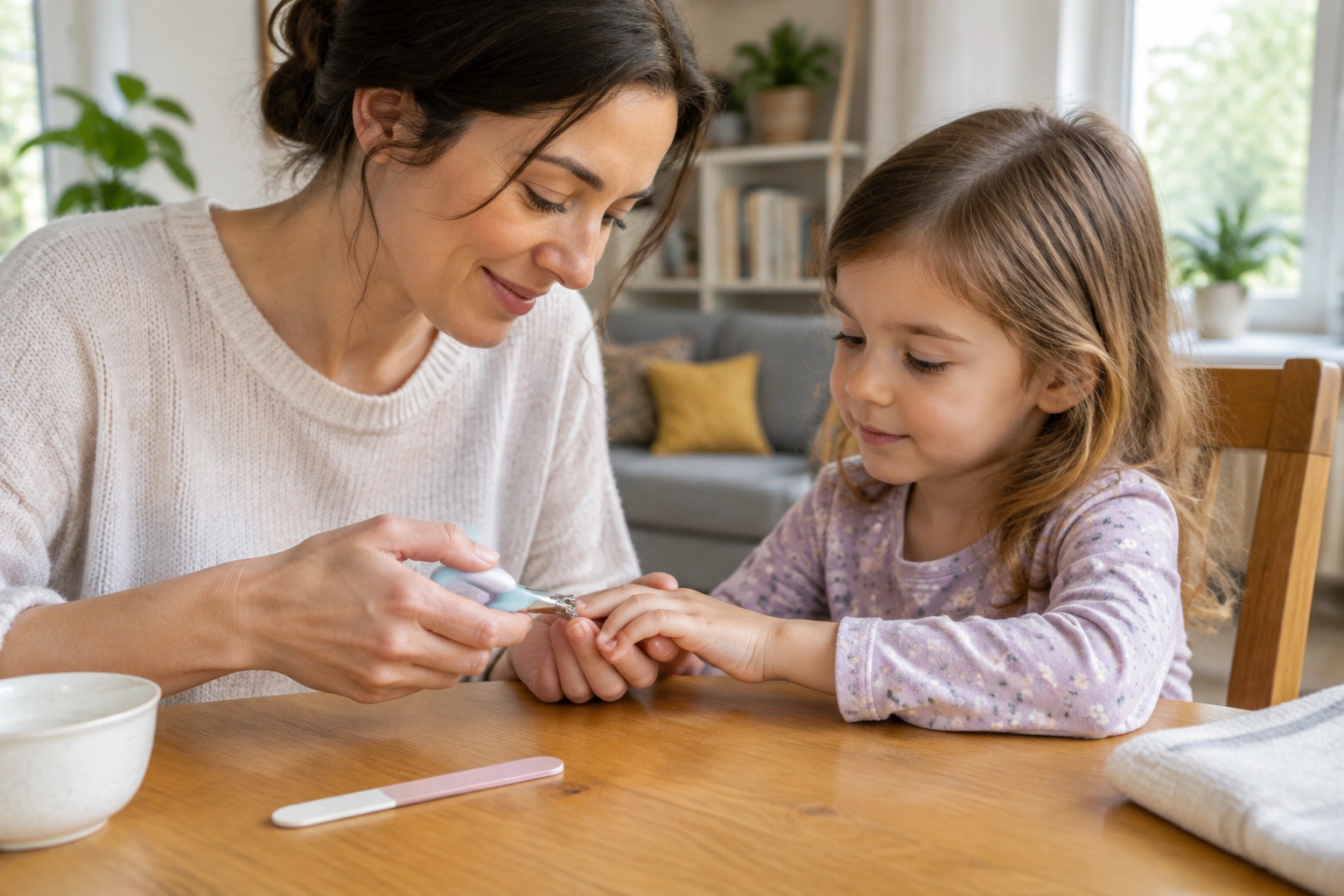
That matters because short nails stay cleaner and break less often, and good hand drying helps reduce the chance of nail problems from staying wet too long. The American Academy of Dermatology also recommends that an adult trim a child’s nails until the child is able to do it safely and comfortably on their own, which gives parents a practical benchmark for supervision and safety. You can read that guidance in the AAD’s healthy nail care advice for children.
What Kids Can Learn at Different Ages
Children do not need the same level of responsibility at every stage. A realistic approach keeps the routine safe and avoids turning nail care into a battle.
Infants and young toddlers: full adult control, simple habits
At this stage, the adult does the trimming and most of the handling. The child’s job is just to get used to the routine. You can start simple nail hygiene habits early by washing hands regularly, drying them well, and checking nails during bath time or diaper changes.
For infants and young toddlers, the safest goal is to keep nails short enough that they do not scratch the face or skin. If the child is very wiggly, trim one or two nails at a time and finish later rather than forcing the whole hand in one sitting.
Toddlers: watch, help, and keep it brief
Toddlers are usually learning to tolerate the routine, not manage it themselves. At this age, the job is mostly yours: wash their hands, trim the nails, and smooth any sharp edges. A toddler may be happiest if nail care happens right after a bath, when nails are a little softer and the whole process feels familiar.
A practical target is comfort, not perfection. If you can trim a few nails at a time, that still counts as progress. For a child who squirms, try one hand, then a short break, then the other hand later.
Preschoolers: simple participation
Preschoolers can begin to help by holding still, showing you their fingers, or washing their hands before the trim. This age is ideal for teaching the “why” in very simple terms: “Clean nails help keep dirt out,” or “We file the sharp part so it doesn’t scratch.”
This is also a good age to introduce the idea that nail care happens on a schedule. Children usually do better when they know what comes next.
School-age kids: supervised independence
By the time children are older, they can often learn to file their own nails and may begin trimming with supervision. Some children may be ready to do parts of the routine themselves earlier than others, but the adult should still check technique and step in when the child cannot keep the tool steady, cannot see the edge clearly, or tends to cut too close.
A good rule: if the child can’t keep the tool steady, can’t see the edge clearly, or tends to cut too close, the adult should still take the lead.
Choose the Safest Nail Care Tools for Your Child
The best tool is the one that fits the child’s age, nail size, and tolerance for handling. For families, the choice usually comes down to clippers, scissors, files, and sometimes electric trimmers.
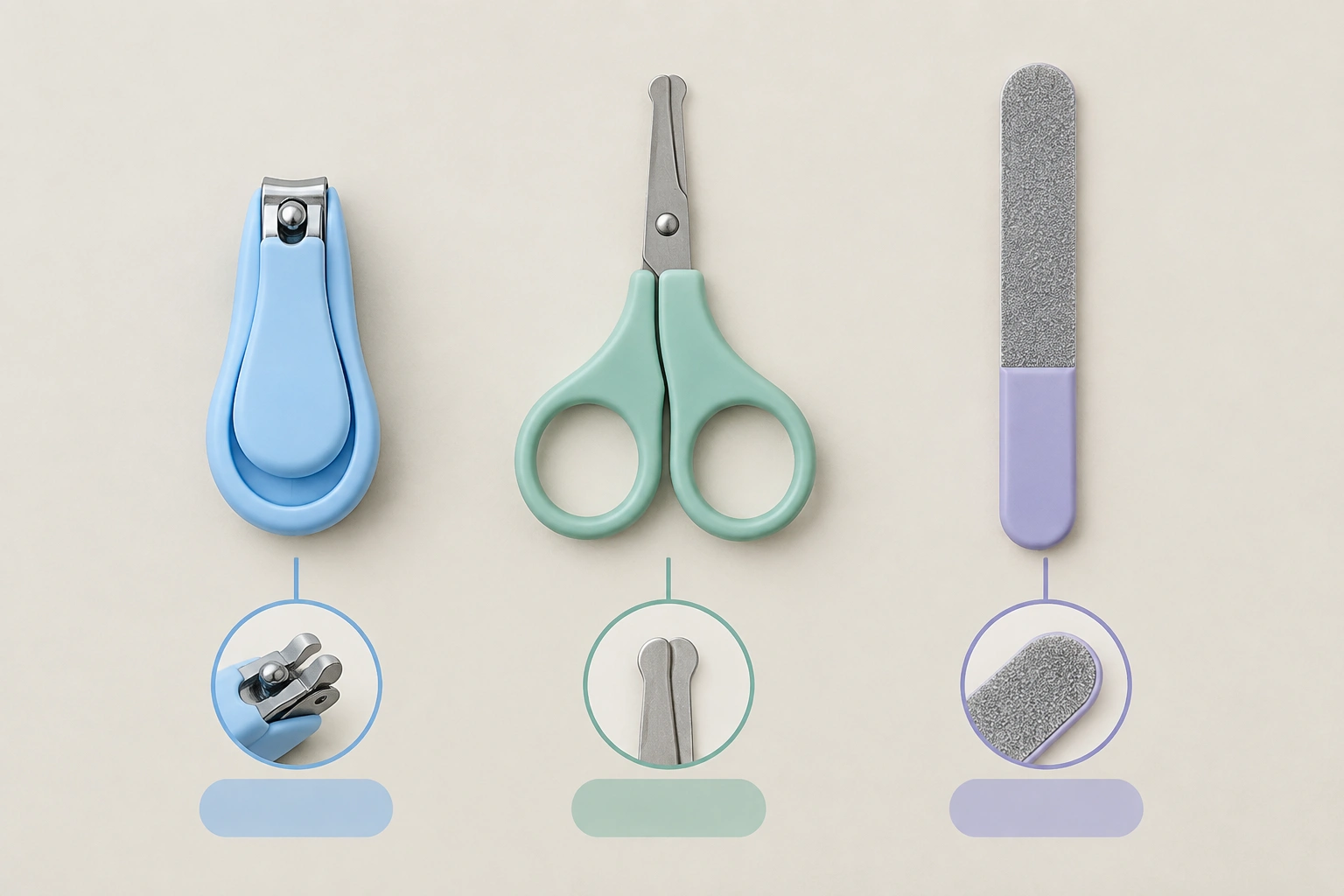
| Tool | Best for | Main advantage | Main drawback |
|---|---|---|---|
| Nail clippers | Most children, especially for quick shortening | Fast and easy to control on thicker nails | Can remove too much if the nail is tiny or the child moves suddenly |
| Nail scissors | Very small nails or more detailed control | Better visibility near the edge | Requires steadier hands and more caution |
| Nail file | Smoothing sharp edges, finishing after trimming | Gentle and useful when you only need to soften roughness | Slower for shortening long nails |
| Electric nail trimmer | Some infants or children who strongly resist clipping | Can feel less abrupt than a clipper | Still needs adult supervision and may be slower than clippers |
For many families, clippers do the main shortening, and a file handles the finishing touch. That combination is often easier than trying to make every nail perfect in one pass. Nail scissors can be easier for very small nails or when you want more visibility near the edge, while clippers are usually faster and better for sturdier nails. Electric trimmers may be helpful for some babies or children who dislike the snap of clippers, but they are still an adult-led tool, not a child’s independent option. If you want a deeper look at basic tool care and maintenance, our guide to daily nail care ideas for healthier, stronger nails is a useful companion.
What to avoid in kid tools
Skip oversized adult tools if they feel awkward in your hand or too forceful on tiny nails. Also avoid sharp scraping around the skin. Children’s nails do not need aggressive grooming. Child-safe nail files are a good finishing tool, but anything that cuts, scrapes, or pushes back the skin should be used very gently or avoided.
Teach the Basic Nail Care Routine Step by Step
A simple routine helps children learn what to expect. Keeping the steps in the same order makes the process feel predictable.
1. Wash hands first
Hand washing clears away dirt and makes it easier to see the nail edges. It also gives you a natural transition into the routine: clean hands, then nail care. If the child has been playing outside, this step matters even more.
2. Trim only what you need to trim
Cut or snip the nail to a comfortable length, but do not go so short that the fingertip feels exposed. Short nails are cleaner, but overcutting can leave the skin vulnerable and the edges uneven.
3. Smooth rough edges with a file
A file is especially useful after trimming, when the edge may feel sharp against a sweater, face, or sibling’s arm. Filing also helps if a child only needs minor shaping after playtime.
4. Check for hangnails, dirt, or damage
Look for rough edges, dirt under the nail, or any signs of redness and swelling around the nail fold. If you spot a hangnail, trim it carefully rather than pulling it.
5. Dry hands well
This is an easy step to forget, but it matters. Dry hands and nails are part of good routine care, and keeping the area clean and dry may help lower the chance of irritation or infection. That does not mean every wet hand becomes a problem; it simply means dryness is part of good routine care.
A plain hand cream can help if the skin around the nails is dry, but avoid cuticle-cutting products or aggressive cuticle removers for children.
How Often to Trim and File Kids’ Nails
There is no single schedule that works for every child, because nail growth and activity levels vary. A better rule is to check nails regularly and trim when they start to collect dirt, snag on clothing, or feel sharp.
As a general rule of thumb:
- Fingernails: check about once a week, and trim roughly every 1 to 2 weeks for many children
- Toenails: check every 2 to 4 weeks, and trim as needed when they start to feel long or press against shoes
For some children, especially active kids, fingernails may need attention more often. Toenails usually grow more slowly, but they still need monitoring.
A helpful habit is a quick weekly check. If the nails are still neat, you may only need a file. If they are long enough to scratch or trap dirt, it is time for a trim.
Safe Trimming Rules That Prevent Cuts and Ingrown Nails
This is the part that protects children from the most common mistakes.
Cut straight across
For fingernails, trim straight across and then gently round the top corners with a file if needed. This approach is usually safer than digging into the sides. It reduces the chance of leaving a jagged corner that catches on fabric or skin.
Toenails are usually best trimmed straight across as well, rather than rounded too deeply into the corners.
Don’t cut too short
Short is good; too short is not. If you can see the fingertip clearly beyond the nail, you may have gone too far. Cutting too close can make the nail tender and can encourage the child to avoid future trims.
Leave the cuticles alone
Cuticles protect the nail root, so it is best not to cut or push them back aggressively. If the skin around the nail is dry, a little regular hand cream can help, but the cuticle area itself should stay protected.
Stop if the child is moving too much
A wiggly child and a sharp tool are not a safe combination. If the child cannot stay still, pause and try again later rather than forcing the trim.
How to Make Nail Care Calm, Quick, and Less Scary
The best teaching tool is repetition without drama. Children relax when the routine is short, predictable, and connected to something pleasant.
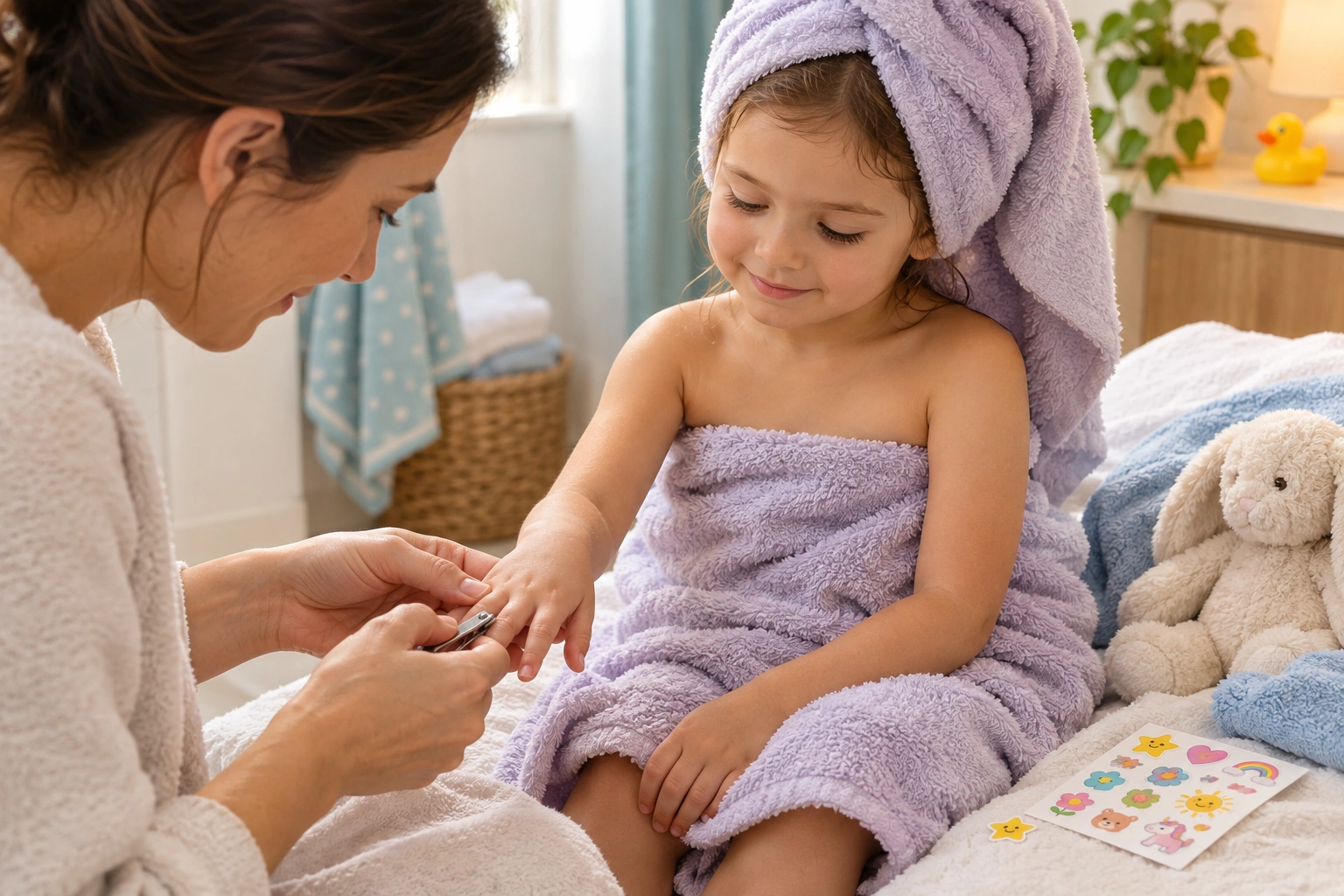
A bath is often a good time because the child is already clean and settled. Some parents also pair nail care with a song, a story, or a short countdown so the child can track progress.
If a child is fearful or squirmy, positioning can help. Younger children may do best sitting on a parent’s lap with the child’s back against the adult’s chest, or lying down for a few nails at a time. Older children may prefer sitting beside you at a table with their hand supported on a towel. Support the hand you are trimming so the tool is steadier.
Praise the behavior you want to see. “You held your hand still” is more useful than a vague “good job,” because it tells the child what worked. For some kids, a sticker after each hand is enough to build cooperation.
If the child starts to pull away, stop safely rather than chasing the hand. It is better to pause, reset, and try again later than to turn nail care into a struggle. For children who need distraction, a short video, a favorite song, a counting game, or letting them choose which finger goes next can make the process easier.
If you want to make the habit feel positive, keep the tone matter-of-fact. Calm confidence from the adult usually does more than long explanations.
Ways to Help Kids Stop Biting or Picking Their Nails
Nail-biting and picking often show up when a child is bored, anxious, or focused on something else, like homework or screen time. The goal is to replace the habit, not just scold it.
Make the nails less tempting
Keep nails trimmed and smooth so there is less to bite or pick at. Rough edges and hangnails are easy triggers.
Offer a replacement habit
A child who bites during homework may do better with a fidget item, a stress ball, or a pencil grip. The replacement should be simple and available at the moment the habit usually happens.
Notice the pattern
If biting happens during car rides, reading, or screen time, that gives you a clue about when to intervene. A reminder before the trigger starts often works better than correcting the child after the habit is already underway.
Keep the message neutral
Shaming usually makes nail-biting worse. A better script is: “Let’s smooth that edge so it’s not tempting,” or “Here’s something for your hands to do instead.”
What to Do When a Child Resists Nail Trimming
Resistance is common, especially in children who dislike touch, feel anxious about tools, or have had a bad experience before.
If your child is upset, do not turn the session into a long struggle. Try one of these adjustments instead:
- Change the timing: after a bath, after dinner, or when the child is rested
- Shorten the task: trim one hand now and the other later
- Let the child watch you trim your own nails first
- Give a small job, like holding the file or choosing which hand goes first
- Use a predictable script so the child knows what is coming
- Support the hand on a towel or your lap so it feels steadier
- Pause immediately if the child jerks, twists away, or starts crying hard
If a child is highly sensitive to touch, gentle filing may be easier than clipping at first. Filing takes longer, but it may feel less startling. The trade-off is speed versus comfort.
Signs of Nail Problems That Need Medical Advice
Home care is usually enough for routine trimming and cleaning, but some nail changes deserve attention from a pediatrician.
Watch for:
- Pain that does not go away
- Swelling or redness around the nail
- Bleeding that happens often
- Nails that look unusually thick
- Discoloration that does not clear
- Signs of infection, such as warmth, drainage, or worsening tenderness
- Repeated injury to the same nail
- Repeated ingrown nails
- Persistent nail-biting that causes skin damage or frequent bleeding
Persistent pain, thickening, discoloration, or repeated ingrown nails are not routine and should not be brushed off as normal grooming issues. Nationwide Children’s notes that peeling, splitting, or brittleness can result from injury, infection, or poor nutrition. That does not mean every brittle nail is serious, but it does mean persistent changes should not be ignored. If the child has ongoing pain, thickening, discoloration, or repeated damage, home care is no longer the only answer.
Common Nail Care Mistakes to Avoid
A few habits cause most of the avoidable problems:
- Cutting nails too short
- Digging into the corners of the nail
- Cutting or pushing cuticles
- Using tools that are too large or too sharp for the child
- Trimming when the child is too upset to stay still
- Turning nail care into a punishment
- Ignoring persistent nail-biting or repeated nail damage
The biggest shift is mental: nail care should feel like grooming and hygiene, not a test the child can fail.
When to See a Pediatrician, Nail Technician, or Dermatologist
For routine child nail care, home trimming is usually enough. If you are unsure about a nail that keeps breaking, looks infected, or seems painful, a pediatrician should be your first stop. Call the pediatrician sooner if you see swelling, redness, warmth, drainage, worsening tenderness, repeated ingrown nails, persistent discoloration, or thickening, or if the child keeps complaining that the nail hurts.
A nail technician may be fine for simple cosmetic grooming only when the child is calm and the issue is clearly routine, but they are not the right first contact for pain, infection, or repeated nail problems. A dermatologist may be helpful if a skin or nail condition keeps coming back or the pediatrician thinks a specialist should take a look.
If you want more ideas for building a simple, healthy routine at home, our article on safe manicure options for kids can help you separate playful grooming from care that is actually safe and age-appropriate.
FAQ
At what age can kids trim their own nails?
Many children need adult help until they are old enough to do it safely and comfortably on their own. Some school-age kids can start helping with filing or trimming under supervision, but many still need help with toenails or tricky edges.
Should I cut or file my child’s nails?
Use both when needed. Clipping is usually better for shortening, while filing is best for smoothing sharp edges. Younger or more sensitive children may do better with filing plus occasional trimming.
Are cuticles supposed to be cut?
No. Cuticles protect the nail root, so it is best not to cut or push them back aggressively.
How do I stop my child from biting nails?
Keep nails short and smooth, notice when the habit happens, and offer a replacement like a fidget toy. Neutral reminders work better than punishment.
How often should I trim fingernails and toenails?
A good rule of thumb is to check fingernails about weekly and toenails every 2 to 4 weeks, then trim sooner if they get sharp, snag, or collect dirt.
When should I call a pediatrician?
Call a pediatrician if the nail is painful, swollen, discolored, thickened, or shows signs of infection, or if the problem keeps coming back. Persistent pain, thickening, discoloration, and repeated ingrown nails are not routine.

