
Are Diamond Deb Nail Files Still Made? What to Know Before You Buy

If you have an old metal nail file that seems to last forever, there is a good chance you have heard the Diamond Deb name. Some people have used the same file for decades. That makes replacing one surprisingly confusing.
So, are Diamond Deb nail files still made?
The answer needs a little explanation. New nail files called “Diamond Deb” are still sold today. However, many current products use Diamond Deb to describe a style of metal file. I could not verify that the original legacy Diamond Deb company is still making the exact classic files people remember.
Here is what I found, how modern versions compare, and what I would check before buying one.
Quick Answer
Yes, Diamond Deb nail files are still made and sold in some form, including stainless-steel and diamond-coated versions. However, “Diamond Deb” is now also used as a style or product description by different manufacturers. If you want the original vintage Diamond Deb file, check the brand, packaging, country of origin, and seller carefully before buying.
Are Diamond Deb Nail Files Still Made Today?
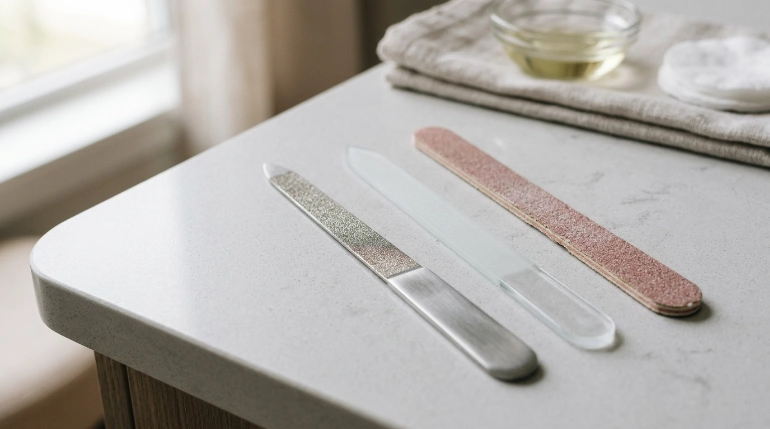
You can still buy new files advertised as Diamond Deb nail files.
For example, professional foot-care supplier Podiacare currently has a Diamond Deb file available in several sizes, including 6-inch and 8-inch versions. Its listing describes the tool as suitable for nails, hard skin, and thick toenails.
Other companies sell similar products under their own names. BeautyTrack currently markets a 6-inch Diamond Deb nail file made from stainless steel, while YNR sells a stainless-steel Diamond Deb file with an abrasive coating.
That tells us something important:
The Diamond Deb type of nail file definitely still exists.
What is less clear is whether every new file labeled “Diamond Deb” comes from the same original manufacturer that produced the older files many people remember.
The Important Difference: Brand Name vs. File Style
This is where most of the confusion starts.
When someone asks whether Diamond Deb nail files are still made, they may be asking one of two different questions:
- Can I still buy a metal nail file called a Diamond Deb?
- Can I still buy the exact original Diamond Deb brand my mother or grandmother owned?
The answer to the first question is clearly yes.
The second question is much harder to confirm.
Current searches show several manufacturers and retailers using terms such as:
- Diamond Deb nail file
- Diamond Deb-style nail file
- Diamond Deb foot dresser
- Diamond Deb metal file
- Diamond-coated nail file
Canonbury, for example, specifically calls its current product a “Diamond Deb-Style Nail File,” which is a strong clue that the term can describe a recognizable file design rather than one single brand.
So I would not assume that a modern file is an original legacy Diamond Deb simply because those words appear in the product title.
Why Are Old Diamond Deb Nail Files So Popular?
The appeal is easy to understand if you have used a good reusable metal file.
Unlike a basic disposable emery board, a quality metal nail file can be thin, firm, washable, and long-lasting.
Older Diamond Deb files also developed a strong reputation among people who kept them for many years. Vintage examples still appear on resale marketplaces, alongside new generic or differently branded versions.
A metal file may appeal to you if you want:
- A rigid file that does not bend easily
- A thin edge for precise shaping
- A washable surface
- Something reusable instead of disposable
- More filing power for thick nails
- A tool that takes up very little room
But durability alone does not make a nail file safe for every nail.
The abrasive surface still matters.
Are Modern Diamond Deb Files the Same as Vintage Ones?
Not necessarily.
This is the biggest point I would keep in mind when shopping.
A vintage Diamond Deb and a modern product carrying the same wording may differ in:
| Feature | Vintage Diamond Deb | Modern Diamond Deb-Style File |
|---|---|---|
| Manufacturer | May be an older legacy maker | Varies by seller and brand |
| Material | Usually metal | Commonly stainless steel |
| Abrasive surface | Varies by age/model | Diamond-like or abrasive coating |
| Length | Several sizes existed | Commonly about 4–8 inches |
| Reusable | Yes | Usually yes |
| Washable | Generally | Often, if manufacturer allows |
| Availability | Mostly resale/vintage | Widely available from several sellers |
| Price | Can be higher because of age | Usually more affordable |
| Exact authenticity | Easier with original packaging | Can be difficult to establish |
A listing saying “Diamond Deb” does not automatically mean you are getting the same construction, abrasive grit, or manufacturing quality as an older file.
That does not automatically make the modern version bad.
It simply means you should judge it as the product it is rather than expecting it to be identical to a 30-, 40-, or 50-year-old file.
How to Tell What You Are Actually Buying
When I look at these listings, I pay more attention to the specifications than the product title.
1. Look for an Actual Brand Name
Check whether the seller identifies a manufacturer.
A title like:
Diamond Deb Nail File — Brand X
is much more useful than:
Professional Genuine Diamond Deb Nail File.
Words such as “professional,” “genuine,” or “original” do not prove who manufactured the tool.
2. Check the Material
Many current versions use stainless steel.
That is useful because a properly manufactured stainless-steel file can be rigid, washable, and reusable.
Still, check the manufacturer’s cleaning instructions before soaking or disinfecting it.
3. Read the Abrasive Description
Some files are described as:
- Diamond coated
- Diamond dust coated
- Abrasive metal
- Fine grit
- Medium grit
- Coarse grit
These are not automatically interchangeable.
A coarse file designed for thick toenails may feel far too aggressive on thin fingernails.
4. Check the Size
Diamond Deb-style files appear in several lengths.
A short file may work well in a manicure kit. A longer file gives you more grip and filing surface, especially for toenails.
5. Be Careful With “Vintage” Claims
If your goal is to replace an old original, look for clear photos of:
- Branding stamped on the file
- Original sleeve or packaging
- Country-of-origin markings
- Length
- Surface condition
- Rust or corrosion
- Worn abrasive areas
Do not pay a premium based on the word vintage alone.
Are Diamond Deb Nail Files Good for Natural Nails?
They can be.
The key is using the right pressure and abrasive level.
A sturdy metal file may remove nail material more quickly than a very fine emery board. That can be useful on strong or thick nails, but it also means you can over-file a thin nail faster.
The American Academy of Dermatology recommends smoothing rough nail edges with a file or emery board and advises filing in one direction rather than repeatedly sawing back and forth. You can see the full dermatologist guidance in the AAD’s nail-trimming recommendations.
For normal fingernails, I would start gently.
Stop if the nail becomes:
- Noticeably thinner
- Tender
- Hot or sensitive
- Rough and peeling
- Split around the edge
More pressure does not necessarily give you a better shape.
Diamond Deb vs. Emery Board vs. Glass File
Which file is best depends on what you want it to do.
Diamond Deb-Style Metal File
Best for someone who wants a thin, washable, durable tool.
Pros:
- Reusable
- Strong
- Easy to store
- Good filing power
- Often suitable for thicker nails
Limitations:
- Some versions can feel aggressive
- Quality varies between manufacturers
- The coating can eventually wear
- Not every “Diamond Deb” listing is the original product
Emery Board
Best for inexpensive everyday shaping.
Pros:
- Cheap
- Easy to find
- Available in many grit levels
- Lightweight
Limitations:
- Wears out
- Often porous
- Usually difficult to properly disinfect for repeated use between different people
Glass Nail File
Best for gentle shaping of many natural fingernails.
Pros:
- Smooth filing feel
- Reusable
- Washable
- Useful for precision shaping
Limitations:
- Can break if dropped
- May work more slowly on very thick toenails
There is no single winner for everyone.
Your nail thickness and the amount of shaping you need matter more than the name printed on the tool.
Expert Tip: If you are buying a Diamond Deb replacement because you loved an older file, compare the size, abrasive texture, thickness, and shape of your old file with the new one. Matching those features is often more useful than matching the words in the product title.
How to Use a Diamond Deb Nail File Safely
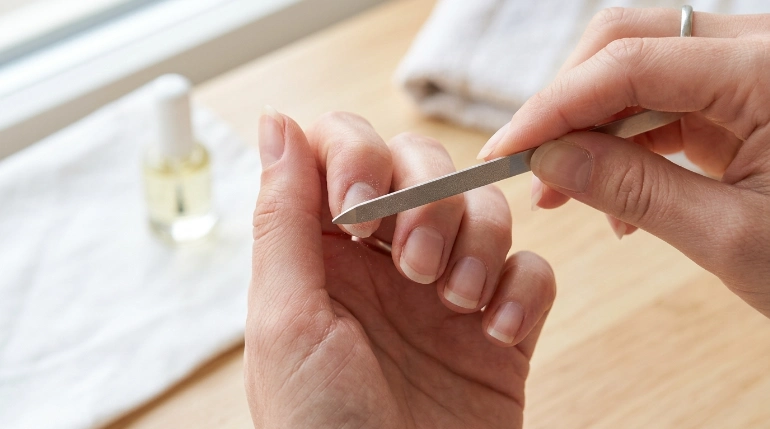
A durable file can still damage a nail if you use too much pressure.
Here is the simple method I recommend.
1. Start With Clean Nails
Remove dirt from the nail edge and make sure you can clearly see what you are filing.
2. Trim Excess Length First
If a nail is very long, do not try to grind away all the extra length with a file.
Trim it first with appropriate nail clippers, then use the file to refine the shape.
3. Use Light Pressure
Let the abrasive surface do the work.
Heavy pressure can remove more nail than you intended.
4. File in a Controlled Direction
Work gradually along the free edge of the nail.
The AAD specifically recommends filing in the same direction because aggressive back-and-forth filing can weaken nails.
5. Check the Edge Frequently
Run a fingertip gently across the edge.
Stop once it feels smooth.
You do not need to keep filing after the rough areas are gone.
How to Clean a Reusable Metal Nail File
Reusable tools need cleaning too.
The CDC recommends cleaning nail grooming tools before use and notes that shared salon tools require appropriate sterilization practices. Its nail hygiene guidance also explains why clean tools matter for reducing exposure to germs.
For a personal metal file, follow the manufacturer’s directions first.
In general:
- Remove visible nail dust.
- Wash the file if its manufacturer says it is washable.
- Clean around textured areas where debris collects.
- Rinse as directed.
- Dry it completely.
- Store it somewhere clean and dry.
Do not assume every coating can tolerate the same chemical disinfectants.
Professional salon disinfection is also different from simply washing a personal nail tool at home. State cosmetology rules can have specific requirements. California’s Board of Barbering and Cosmetology, for example, publishes detailed health and safety requirements for disinfecting salon tools.
Should You Share a Diamond Deb Nail File?
I would keep personal nail files personal whenever possible.
The fact that a tool can be washed does not mean casually sharing it is a good idea.
Nail tools can collect skin and nail debris. The CDC specifically advises cleaning nail grooming tools before use and highlights proper infection-control practices when tools are shared commercially.
If you work professionally, follow your state licensing board’s sanitation and disinfection requirements rather than relying on a home cleaning routine.
What Does a Diamond Deb Nail File Cost?
There is no single price because today’s market includes several different categories.
You may find:
- Low-cost modern Diamond Deb-style files
- Professional reusable stainless-steel files
- Multipacks
- Podiatry-focused files
- Older vintage Diamond Deb files
- Collectible unused vintage stock
Current listings show inexpensive new professional-style versions as well as vintage examples listed at noticeably higher prices.
For that reason, I would not pay extra simply because a seller uses the Diamond Deb name.
Pay for the qualities you actually need: a good abrasive surface, solid construction, appropriate grit, useful size, and clear cleaning instructions.
Common Mistakes to Avoid
- Assuming every Diamond Deb listing is the original brand. The name is used on files from several sellers and manufacturers today.
- Buying the coarsest file available. Thick toenails and thin natural fingernails need very different levels of abrasion.
- Filing too aggressively. Stop when the nail edge is smooth.
- Using a dirty file. Nail debris can remain trapped on textured surfaces.
- Putting the tool away wet. Dry reusable metal tools completely before storing them.
- Sharing personal nail tools casually. Keep your nail-care tools separate when possible.
- Filing damaged or painful skin. A nail file is a grooming tool, not a treatment for infection or injury.
- Trying to file away a suspicious nail problem. Thickening, major color changes, pain, or swelling may require professional evaluation.
When to See a Nail Technician or Dermatologist
A nail technician can help with normal cosmetic shaping and routine manicures when your nails and surrounding skin look healthy.
A dermatologist is the better choice when something seems medically wrong.
The CDC lists swelling around the nail, pain, and nail thickening among possible signs of nail infection, while the AAD recommends having unexplained changes in nail color, texture, or shape evaluated.
Consider seeing a dermatologist if you notice:
- Persistent swelling
- Increasing pain
- Red or irritated skin
- Drainage or pus
- A nail becoming unusually thick
- Major color changes
- A nail lifting away from the nail bed
- A new dark streak or unexplained discoloration
- Changes that continue despite normal nail care
Do not try to grind away a nail problem simply because the file is strong enough to remove the damaged-looking area.
A file can change the appearance of the nail. It cannot diagnose or treat the reason the nail changed.
FAQs
Are Diamond Deb nail files still made?
Yes, new files advertised as Diamond Deb nail files are still sold today. However, the name is also used for Diamond Deb-style files produced by different brands, so a new listing is not necessarily the same original legacy product.
Is the original Diamond Deb nail file still available?
Vintage originals appear on resale marketplaces. I could not verify an active official manufacturer page showing that the exact classic legacy Diamond Deb file is still being produced by its original maker. New Diamond Deb-style alternatives are much easier to find.
Why do so many different brands sell Diamond Deb nail files?
“Diamond Deb” appears to be used widely in today’s marketplace to describe a familiar style of abrasive metal nail file. Some manufacturers even explicitly label products “Diamond Deb-style.”
Are Diamond Deb files made with real diamonds?
Do not assume so from the name alone. Some current listings describe a diamond-dust or diamond-style abrasive coating, but materials can vary by manufacturer. Check the exact product specifications before buying.
Can I wash a Diamond Deb nail file?
Many stainless-steel versions are marketed as washable or reusable, but you should follow the cleaning instructions for your specific file. Dry metal tools thoroughly after cleaning.
Are Diamond Deb nail files good for toenails?
Some are specifically sold for thick toenails and professional foot care. A coarse file may be useful on thick nails, but use gentle pressure and never aggressively file a painful, infected, or unexplained abnormal nail.
Is a Diamond Deb file better than a glass nail file?
Neither is automatically better. A Diamond Deb-style metal file can be stronger and more effective on thick nails. A quality glass file may feel gentler for routine natural fingernail shaping. Choose based on your nail type rather than the name of the tool.
Conclusion
So, are Diamond Deb nail files still made? Yes—but with an important catch.
Diamond Deb and Diamond Deb-style metal nail files are still being sold. You can find new stainless-steel versions from multiple manufacturers and professional foot-care suppliers. What I would not assume is that every modern product labeled Diamond Deb is identical to the classic file people remember from decades ago.
If you simply want a durable reusable metal nail file, you still have plenty of options.
If you specifically want an original vintage Diamond Deb, shop more carefully. Check the markings, packaging, manufacturer information, dimensions, condition, and seller photos before paying a premium.
Most importantly, choose a file that suits your nails. Use light pressure, keep the tool clean, and do not use aggressive filing to hide pain, swelling, infection, or unexplained nail changes.
A good nail file should make nail care easier—not create another nail problem.

