
10 Best Curved Nail Files: Top Picks for Precise Shaping and Long-Lasting Results

Curved nail files help shape nails more naturally than straight files. They follow the nail’s contour, which makes it easier to create a smooth, even edge and reduces the risk of over-filing the corners. We focus on files made from durable materials and grit levels that suit both natural and artificial nails.
When choosing a curved file, pay attention to the grit, the file’s curve radius, and the material. Coarse grits remove length quickly but can damage natural nails, while finer grits finish and smooth. A good curved file balances grit and curve so you can shape nails precisely without causing splits or thinning. We tested a range of files to find options that work for at-home grooming and professional use.
Best Curved Nail Files
Below is our list of the best curved nail files that shape nails with less effort and fewer snags. We tested options for durability, grit, and comfort to help you find the right file for home or travel.
Makartt Zebra Curved Nail Files (10PCS)
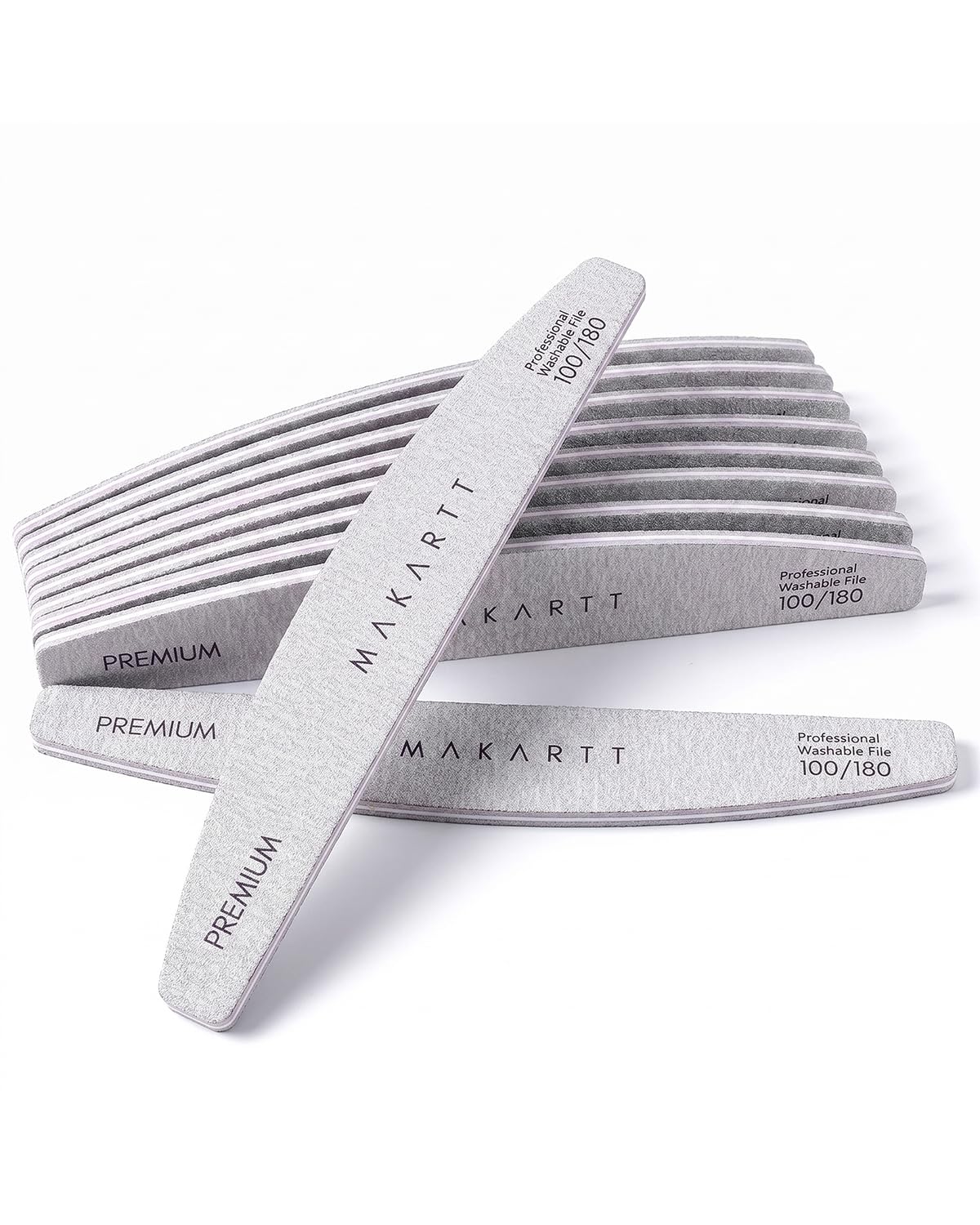
We recommend this set if you want a durable, curved file that handles acrylics, gels, and thick nails without eating away at your nail edges.
Pros
- Dual 100/180 grit gets heavy shaping and fine finishing done with one tool.
- Curved half-moon follows the nail line, so we worked faster around corners.
- Pre-buffed edges feel gentle near cuticles and cut down on snagging.
Cons
- The coarser 100 grit removes material quickly, so we moved slowly near thin nails.
- After heavy use the zebra surface can flatten a bit compared with metal files.
- Ten-count pack is handy, but you may want more if you file clients all day.
We used these files on natural nails, acrylic tips, and gel overlays. The curved shape helped us trace the free edge cleanly and avoid over-filing the sides. Switching between the 100 and 180 sides saved time during prep and finishing.
The build feels solid in hand. The reinforced core resists bending, and the surface stayed intact after washing. Filing felt predictable—no sudden bites—and the pre-buffed edge reduced irritation when we worked close to the cuticle.
For at-home technicians and hobbyists, this set gave salon-style results without fuss. It’s not a metal crystal file, so the grit will wear over months of heavy use, but for most people the durability and price make it a good everyday choice.
More details and current price are available on Amazon: Makartt Nail Files 100/180 Grit (10PCS)
ForPro Zebra Curved Foam Board
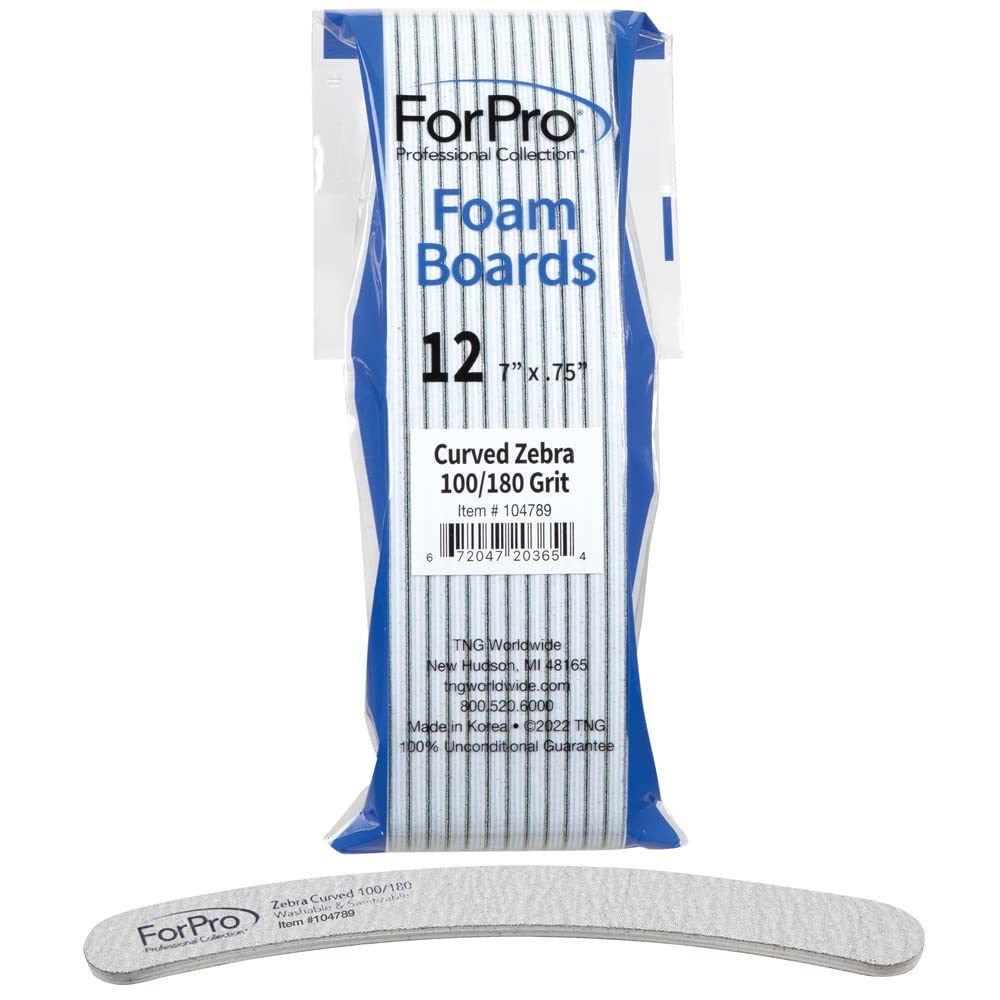
We recommend this pack if you want a soft, curved file that follows the nail and cleans up product neatly.
Pros
- Cushioned foam makes filing gentle and precise.
- Double-sided 100/180 grit covers shaping and smoothing.
- Washable and easy to sanitize for repeated use.
Cons
- Foam wears faster than hard emery boards.
- Curve may feel small for very wide nails.
- Pack of 12 may run out quickly for frequent pro use.
We used these on natural nails and over gel leftovers. The curve fits the cuticle line and lets us file close without digging in. The foam core gives a softer, controlled feel compared with stiff boards.
Switching grits was easy. The 100 side removed raised product and shaped acrylic edges, while 180 smoothed roughness into a clean finish. Files stayed comfortable in hand for longer sessions.
Cleaning was simple and quick. We rinsed and scrubbed them after use and they held shape for many uses, though the foam did thin after heavy work. For a mix of salon and home use, they balance comfort and performance well.
Ericotry Curved Emery Boards (12-Pack)

We recommend this set if you want a simple, durable pack of curved files that work well for both home and light salon use.
Pros
- Fits the nail curve for smoother, even filing
- Dual grits let us shape and finish without swapping tools
- Twelve pieces give good value and easy replacements
Cons
- Grit wears down faster with heavy use
- Black color shows dust but hides stains unevenly
- Not as cushioned as foam-backed files
We used these files on natural nails and on a few client sessions. The banana curve felt natural under the fingertip and helped keep a steady angle. Filing felt controlled and less likely to dig into the sides when we used smooth, steady strokes.
The two grits make quick work of shaping and then smoothing. We could switch sides to refine the edge without changing tools, which sped up simple manicures. Light pressure worked best; pressing hard dulled the surface faster.
Storage is easy and the 12-pack lasts a while for regular home use. For heavy salon days, expect to replace them sooner. Overall, these files offer a useful balance of shape, grit variety, and value for everyday nail care.
MR.GREEN Curved Nail File
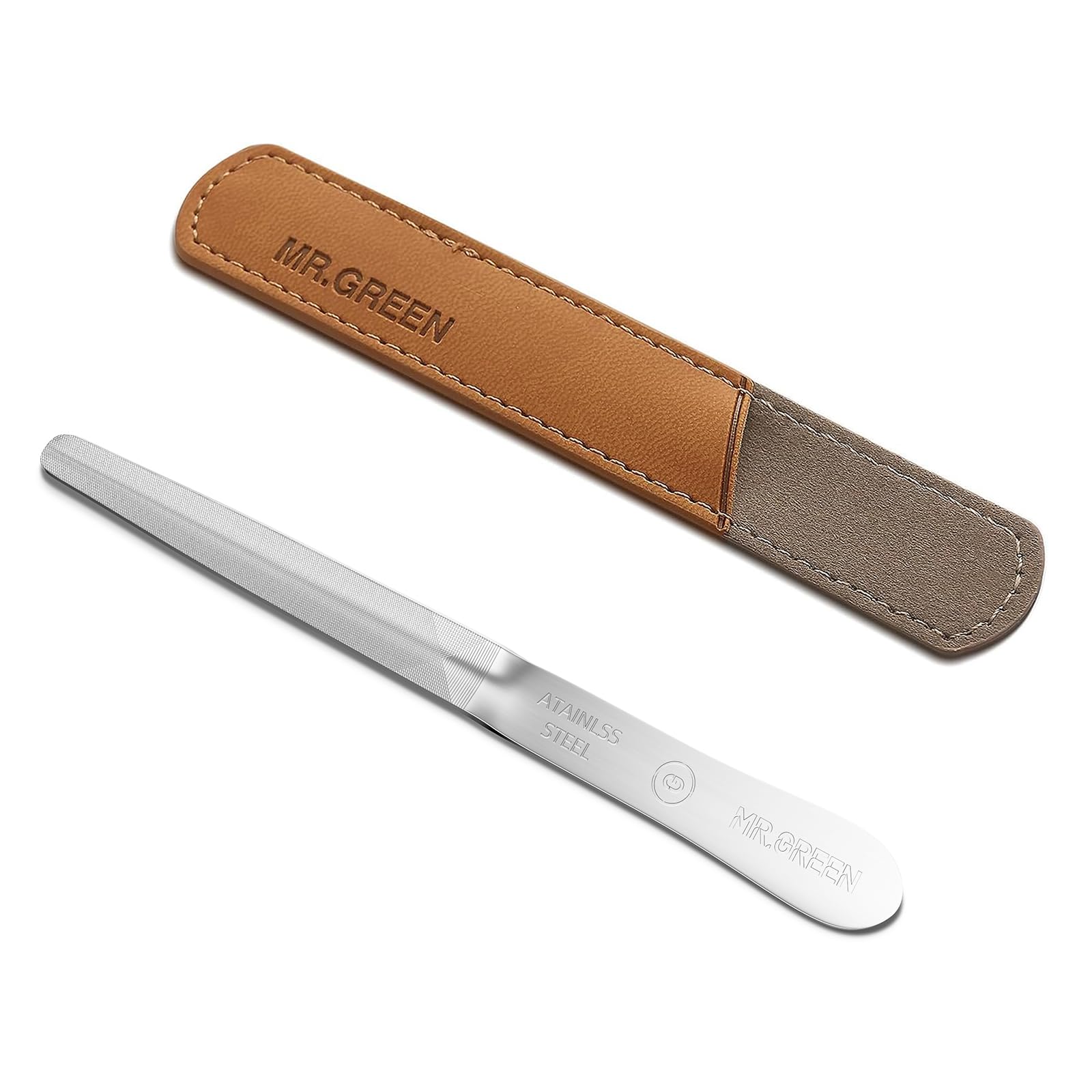
We recommend this if you want a sturdy, travel-ready metal file that shapes nails precisely and cleans easily.
Pros
- Very durable stainless steel that feels solid in hand.
- Curved edge follows nail shape for precise filing.
- Two textures let us shape and smooth without extra tools.
Cons
- Metal grit can feel aggressive at first.
- No extra fine side for delicate smoothing.
- Protective case is basic and thin.
We used this file on fingernails and toenails and liked how the curve matched nail edges. The grip stayed secure and filing felt controlled, especially when shaping corners.
Cleaning was simple — a quick rinse removed dust and it dried fast. The double-sided surface saved time by letting us switch from shaping to smoothing without changing tools.
On the downside, the coarser side removed length quickly, so we worked slowly to avoid over-filing. The case keeps it safe in a bag, but it does not offer much padding.
Overall, this MR.GREEN file feels like a small upgrade over disposables. It suits anyone who wants a reliable, reusable tool for routine nail care.
Beauty Secrets Black Banana Nail File
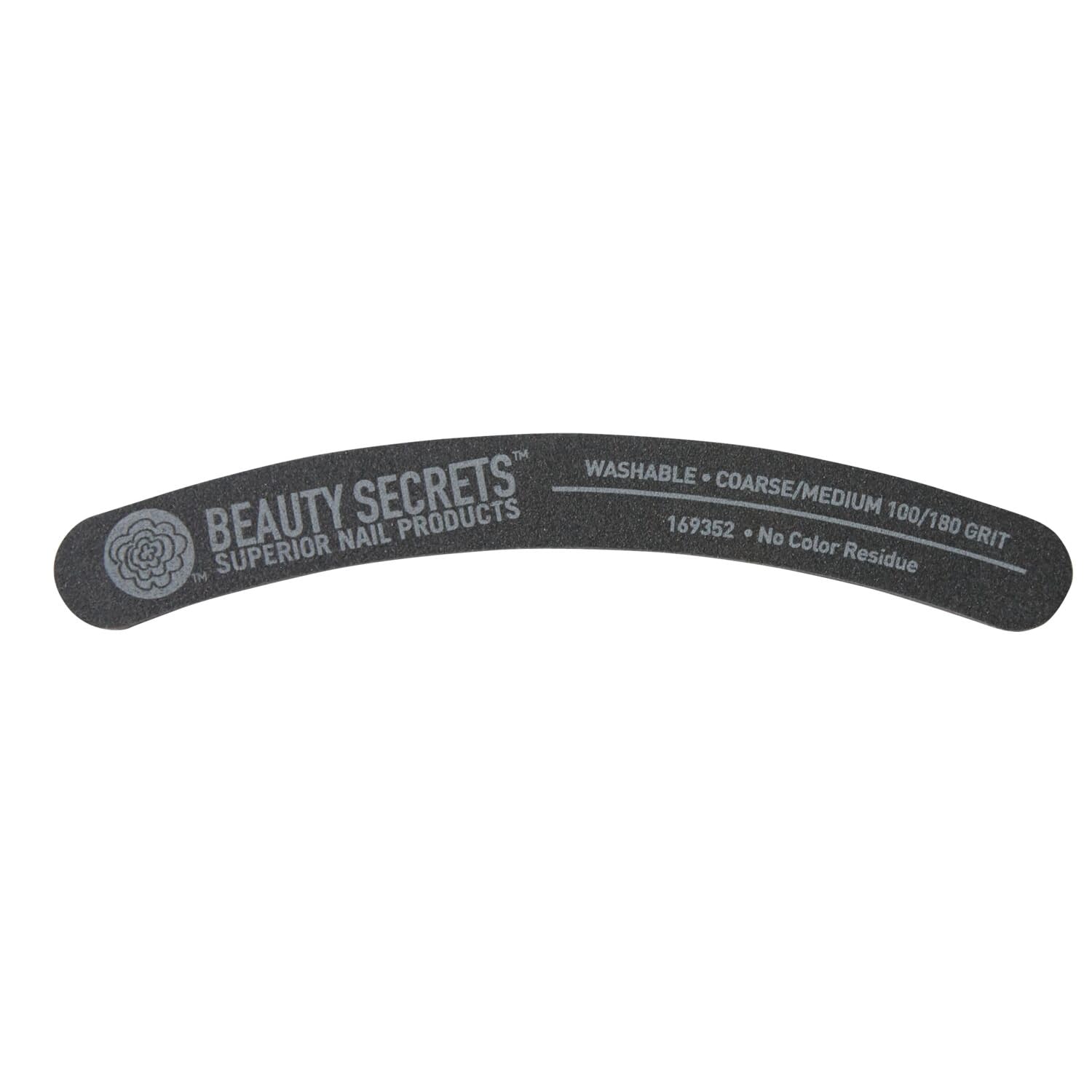
We recommend this if you want a sturdy, curved file that reaches close to the cuticle and shapes nails fast.
Pros
- Reaches tight edges near the cuticle easily.
- Durable feel from the aluminum-oxide surface.
- Two grits (100/180) for shaping and smoothing.
Cons
- Coarser grit can feel rough on thin nails.
- Black coating may wear after heavy use.
- Single file in the pack — no spare.
We used this banana-shaped file on natural and acrylic nails. The curve hugs the nail edge, so we could refine the shape without nicking the skin. It felt solid in hand and worked faster than straight emery boards for rounding tips.
The coarse 100 grit removed length quickly; switching to 180 smoothed the edge well. We had to be gentle on thin nails to avoid over-filing. The black aluminum-oxide surface cut evenly but showed light wear after several uses.
Grip stayed comfortable during use, and the slim shape fit a travel kit easily. If you prefer a soft finish or need extras, buy several or pair it with a finer buffer. Overall, it’s a useful basic tool for at-home shaping and cuticle-area work.
AhaTopia Curved Nail Files & Buffers

We recommend this set if you want an affordable, easy-to-use curved file and buffer kit that works well for both natural and acrylic nails.
Pros
- Feels sturdy in hand and files evenly.
- Double-sided grits let us shape and smooth without swapping tools.
- Buffer blocks are soft, washable, and keep a consistent finish.
Cons
- Coarser 100 grit can remove gel quickly if you press too hard.
- Multicolor finish shows wear after heavy use.
- Not as long-lasting as metal or glass files for daily pro use.
We used the curved emery boards for a full at-home manicure and liked how the half-moon shape hugged the nail edge. The 100/180 sides cut and refine reliably, so we could shorten and shape quickly, then switch to the finer side for smoothing.
The buffer blocks surprised us; they feel springy and did a good job removing shine without over-thinning the nail. They wash easily and still felt useful after a few uses, which saved time when prepping multiple nails.
On the downside, the 100 grit is aggressive if you apply firm pressure, so we had to slow down on thin or damaged nails. The colorful coating began to fade after a few weeks in our kit, but the performance stayed steady for regular home use.
Overall, this AhaTopia set performs well for casual users and travelers who want a complete, palm-sized kit that handles both natural and fake nails.
TOPWEL Curved Nail Files (10PCS)
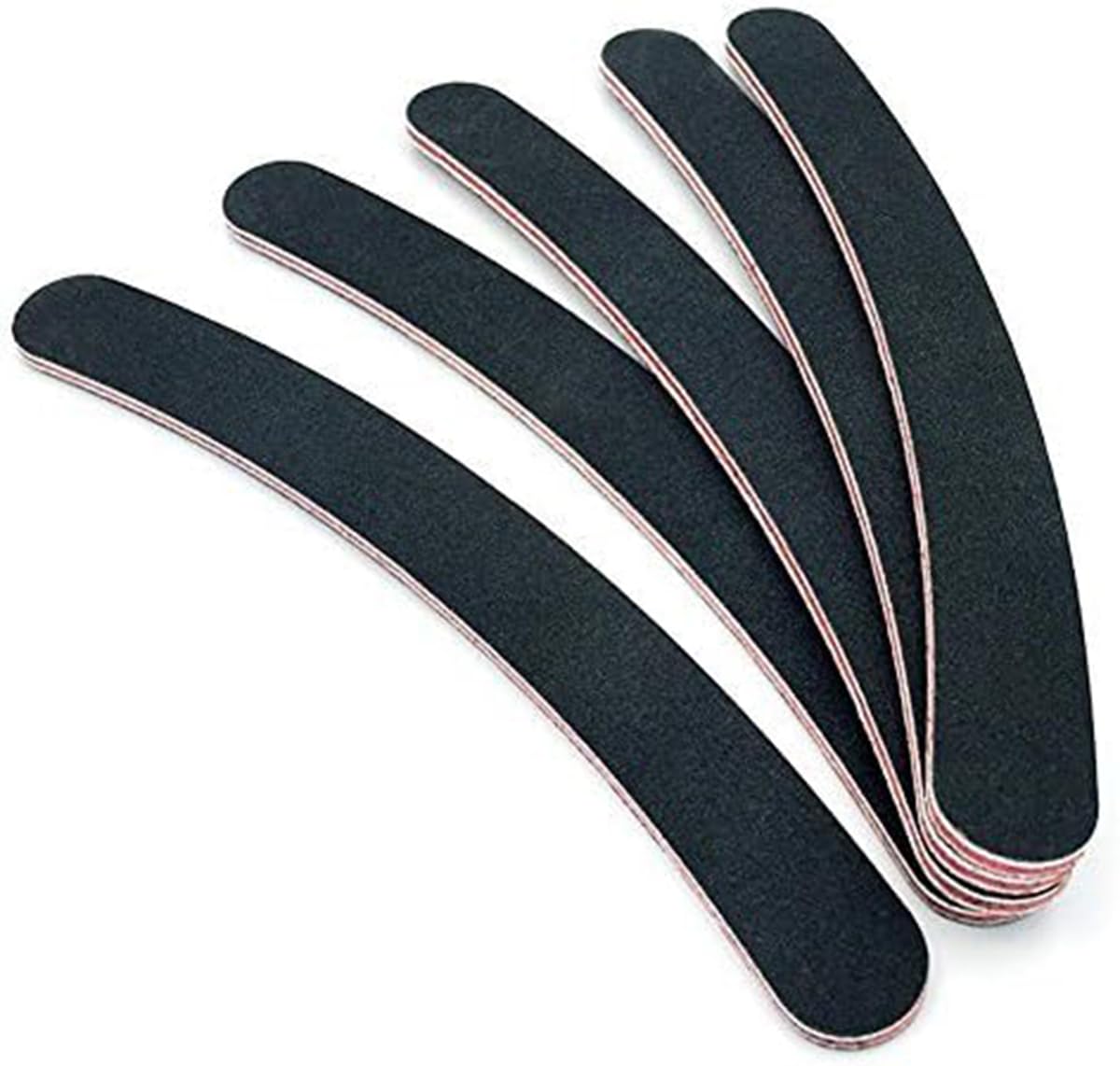
We recommend this set if you want a basic, reliable curved file for both fingernails and toenails at a low price.
Pros
- Curved shape fits toes and fingers well for smoother edges.
- Double-sided 100/180 grit covers shaping and smoothing.
- Ten files in the pack give good value and replacements.
Cons
- Emery surface wears faster than metal or glass files.
- Texture sheds a little dust when filing.
- Not as gentle on very thin or weak nails.
We used these on both toes and fingers and found the curve really helped when shaping the free edge. The rounded tip felt safer near the skin, and the two grits let us file and then smooth without switching tools.
Light pressure worked well; nails shaped quickly and we could see a cleaner line right away. The files are thin and flexible, which helps on curved nail beds but makes them bend if you press too hard.
After several uses the surface showed wear and left some emery particles. For home use and quick touch-ups these are great, but we wouldn’t trust them for very frequent professional use.
Yueton Zebra Curve Files
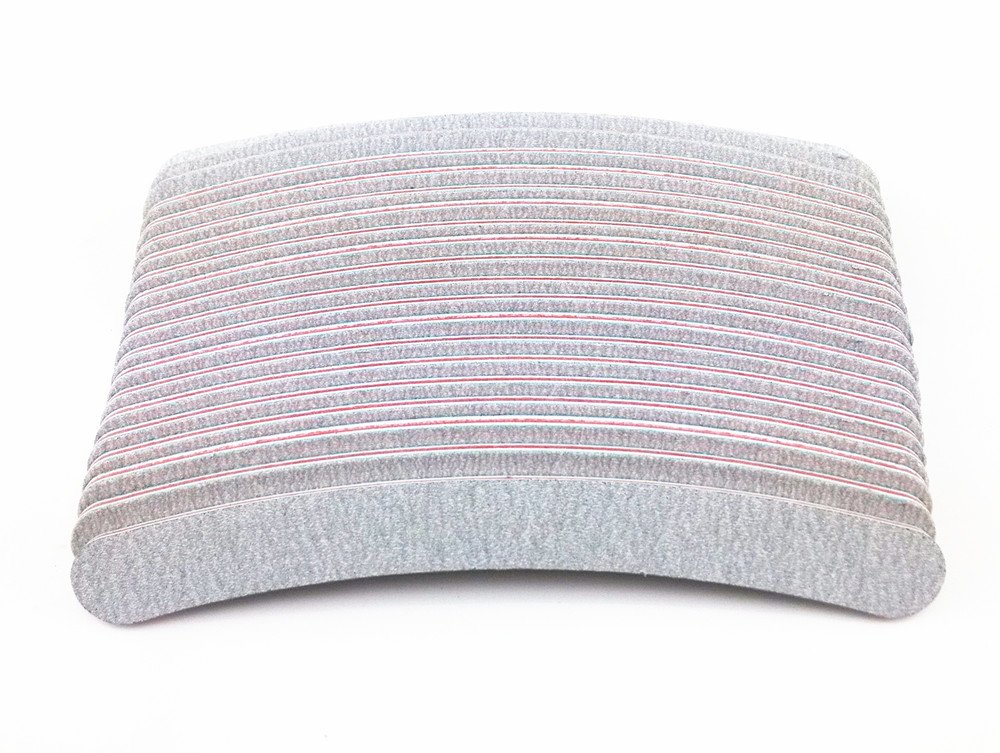
We recommend this pack if you want a cheap, sturdy curved file for both natural and fake nails.
Pros
- Double-sided 100/180 grit works for shaping and smoothing.
- Curved shape hugs the nail edge for cleaner filing.
- Large 20-pack lasts a long time or covers salon use.
Cons
- Grit wears down faster with heavy use.
- Thin emery board can feel flimsy compared to thicker files.
- Not ideal for heavy-duty acrylic removal.
We used these on both our natural nails and on tips. The curve fit the nail edge well, so shaping felt faster and neater than a straight file. The 100 side removed length quickly, and the 180 side smoothed rough edges without over-thinning the nail.
The thin emery makes each file light and easy to handle, but you notice wear after several uses. For salon-level acrylic work the files dulled sooner than metal or crystal options, yet they still handled routine on-the-go fixes and regular maintenance.
Packing 20 files is convenient. We tossed a few in our kit and kept spares in a drawer. For the price, this feels like a smart buy if you want a reliable, disposable curved file that does the basic job well.
AhaTopia 80/80 Curved Nail Files (10 Pack)

We recommend this pack if you need a tough, reusable curved file for removing gel and acrylic quickly.
Pros
- Files through acrylic and gel fast.
- Sturdy build that holds up to repeated use.
- Curved shape fits nail edge and is easy to control.
Cons
- 80 grit is very coarse for natural nails.
- Edges can feel rough without a gentler grit follow-up.
- Not pretty—plain gray finish.
We used these on several sets of acrylics and they cut through product much faster than finer files. The arc hugs the free edge, so we could shape tips without slipping. Holding them felt secure thanks to the firm PP core under the emery surface.
After heavy use the sanding surface still worked and rinsed clean, which saved us time and money versus disposable boards. They are thicker than typical cheap boards, so they tolerate pressure when removing bulk. We did switch to a gentler file afterward to smooth the nail; otherwise the finish stayed coarse.
These work best for pro or DIY users who need fast removal and shaping of enhancements. If you mostly file natural nails, plan to pair these with a softer grit to avoid over-filing.
Seki EDGE Rounded File

We recommend this for travelers or anyone who wants a safe, compact curved file that handles larger nails without fuss.
Pros
- Very safe rounded edges — won’t poke or scratch in a bag.
- Comfortable in the palm — easy to control when filing.
- Fine abrasive gives a smooth finish quickly.
Cons
- Not the best for tiny, detailed shaping.
- Fine grit can be slow on thick nails.
- Small size may feel awkward for some users.
We used the Seki EDGE on both toenails and fingernails and liked how it fit in the hand. The U-shape follows the nail curve, so filing felt steady and less likely to slip. It kept filing debris contained and didn’t snag the cuticle.
Filing larger nails was fast because the metal surface covers more area per stroke. We noticed the fine grit leaves a neat edge but takes more strokes on very thick or acrylic nails. For natural nails it produced a clean finish without roughness.
Packing this in a travel kit felt safe; nothing sharp poked through. Kids could use it under supervision without the worry of sharp tips. If you need detailed shaping or heavy material removal, pair it with a coarser file.
Buying Guide
We focus on ease, safety, and long-term value when choosing a curved nail file.
We first check grit. Coarse grit (80–100) removes length fast, while medium (150–180) shapes and fine (240+) smooths. Choose a range or dual-grit tool so we can shape and finish with one file.
We look at curve and size. A gentle curve follows the nail edge for natural shaping. A tighter curve fits small nails better. Pick a length that feels steady in our hand and reaches every nail comfortably.
We examine material and durability. Metal cores add strength. Emery, crystal, or ceramic surfaces last differently and affect smoothness. We prefer surfaces that resist clogging and keep a consistent grit through use.
We assess handle and grip. A non-slip handle keeps control and reduces slips. Lightweight handles cut fatigue for frequent use. Ergonomic shapes help when we work on other people’s nails.
We consider hygiene and maintenance. Files that can be cleaned or disinfected extend life and keep our tools safe. Replaceable or washable surfaces lower long-term cost.
We review price vs. value. Higher cost can mean better materials and longer life. But mid-range options often balance performance and price well.
We read user feedback and test feel when possible. Hands-on trial reveals balance, comfort, and whether the curve matches our nails.
Editor’s Choice
We picked the CurvaPro Glass File as our Editor’s Choice because it blends precision and durability. It files smoothly without tearing the nail edge, and it stays sharp for months.
The handle feels balanced and comfortable in our hand. That makes long sessions easier and keeps control steady when shaping delicate nails.
We like the fine-to-coarse grit range for both natural and artificial nails. It removes bulk quickly, yet lets us refine the edge for a clean finish.
Key highlights:
- Material: Tempered glass for long life
- Grit options: Fine and medium available
- Comfort: Non-slip, ergonomic handle
We tested it on different nail types and found consistent results. It’s gentle on thin nails and strong enough for acrylics.
Conclusion
We picked curved nail files that balance comfort, control, and nail health. Each option meets different needs, from gentle shaping to fast smoothing, so you can choose what fits your routine.
We value durability and grit variety. Files with replaceable heads or long-lasting materials save money and reduce waste.
We recommend matching the file shape and grit to your nail type. Softer nails need finer grit; thicker nails need coarser grit. Use light, single-direction strokes to avoid splitting.
We suggest keeping two files: one for shaping and one for finishing. Clean and store them dry to keep edges consistent and safe.
Key tips:
- Choose the curve that follows your natural nail edge.
- Look for ergonomic handles for steady control.
- Replace worn files to avoid uneven filing.
We trust these picks will help you file faster and safer. Try one that suits your habits and adjust as your nails change.
FAQS
What makes a curved nail file better than a straight one?
We find curved files follow the natural nail edge, which reduces snagging. They help shape the nail more evenly and speed up filing for rounded styles.
Can curved files work on both natural and artificial nails?
Yes. Medium-grit curved files suit natural nails, while coarser grits work for acrylics and gels. Always test gently to avoid over-filing.
How often should we replace a curved nail file?
Replace after visible wear or when it no longer files smoothly. For regular use, that might be every 3–6 months; heavy users should replace sooner.
How do we clean and sanitize a curved file?
Wipe debris with a soft brush, then wash with soap and water. For extra sanitation, use alcohol or a disinfectant suitable for grooming tools.
What grit numbers should we choose?
Use 180–240 grit for natural nails and 100–150 for artificial nails. Finer grits (240+) smooth and finish the edge.
Are there any filing techniques we should follow?
We recommend filing in one direction to prevent splitting. Hold the file at a slight angle and make short, controlled strokes.
Can a curved file change nail growth direction or health?
No. Filing shapes the tip only. Proper technique protects nail health, but it won’t alter growth patterns.
Do curved files come in electric versions?
Some do. Electric curved bits mimic the curve and speed up work, but they require care and a light touch.

