
Can a Nail Salon Fix an Ingrown Toenail? What’s Safe, What’s Not, and When to See a Podiatrist

An ingrown toenail happens when the nail edge grows into the surrounding skin, which can cause redness, tenderness, swelling, and sometimes infection. That’s why the short answer is: a nail salon usually cannot truly fix an ingrown toenail the way a medical professional can.
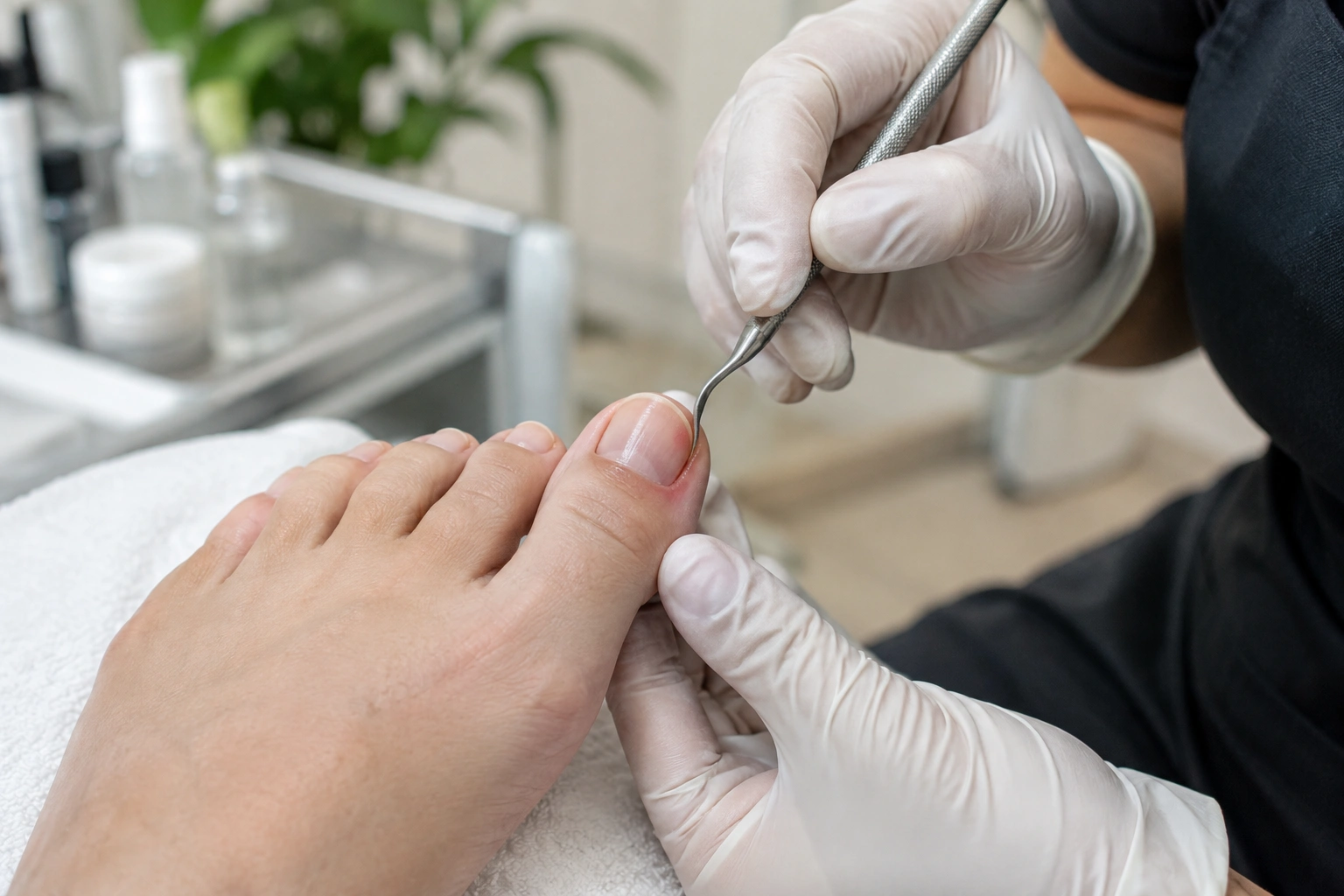
A salon may be able to gently improve comfort in a mild case by carefully cleaning, filing, or shaping around the area without cutting into irritated skin. But if the nail is embedded, the skin is broken, or there are signs of infection, a salon is the wrong place to try to “remove” it. In those situations, a podiatrist or doctor is the safer choice.
Think of it this way: salon care is cosmetic and temporary; medical care addresses the problem itself. If you’re trying to decide what to do today, the key question is not “Can someone touch it?” but “Is it mild enough that touching it won’t make it worse?”
What a Nail Salon Can Safely Do
A careful nail technician may be able to help only when the toe is mildly irritated and the skin is intact. In that narrow situation, the salon’s role is limited to comfort and grooming, not treatment.
What that may look like in practice:
- lightly trimming and shaping the nail edge
- smoothing a sharp corner that is pressing into the skin
- avoiding the sore side entirely
- cleaning the area gently without digging under the nail
That is very different from “fixing” the ingrown nail. A salon can sometimes reduce pressure for a short time, but it cannot change the way the nail is growing in the long term. A podiatrist’s treatment is designed to do that.
If you want a broader sense of how to communicate clearly at a salon, our guide on what to ask for at a nail salon can help you explain what you need without overdoing it.
A mild case is the only scenario where salon care might be reasonable, and even then, the technician should stay conservative. If the toe hurts when touched, the safer move is to skip any work on that area.
What a Nail Salon Should Not Do
A nail salon should not cut into swollen, red, bleeding, or draining skin. It should also not try to dig out the nail edge, slice away tissue, or perform anything that resembles a medical procedure.
That matters because aggressive cutting can:
- worsen pain immediately
- create a wound where there wasn’t one
- increase the chance of infection
- leave the nail edge sharper or more irregular
A pedicurist should not treat an ingrown toenail as if it were just a cosmetic issue. If the toe looks irritated or open, a routine pedicure is not the place to experiment.
How to Tell If It’s Mild or Needs Medical Care
A useful rule is to separate pressure without skin damage from true inflammation or infection.
Likely mild enough to discuss with a salon
- slight redness
- mild tenderness
- no drainage
- no open skin
- no significant swelling
- pain that is noticeable but not escalating
In that kind of case, a technician may be able to avoid the area and keep the rest of the nail tidy.
Needs a podiatrist, doctor, or urgent care
- pus or drainage
- spreading redness
- obvious swelling
- severe pain
- bleeding
- fever
- the nail edge appears deeply embedded
- the problem keeps coming back
If the toe is infected, a doctor may consider antibiotics as part of treatment. That is not something a nail salon can handle, and it’s one reason “just getting it cleaned up” can be the wrong instinct.
People with diabetes, poor circulation, or a weakened immune system should be extra cautious. A small toe problem can become more serious more quickly in those situations, so medical care should come first.
When to Skip the Salon and See a Podiatrist or Doctor
If you are asking whether a salon can “fix” the ingrown toenail, the real answer often depends on whether you want temporary relief or actual correction.
Choose medical care instead of salon care when:
- the nail is repeatedly growing into the skin
- the toe is swollen or draining
- the pain is affecting walking or shoes
- you see spreading redness
- the skin is open or bleeding
- you have diabetes, circulation problems, or immune risk
- you already tried trimming it and it got worse
A podiatrist can assess the nail and decide whether a more definitive treatment is needed. Mayo Clinic notes that for a slightly ingrown nail, a health care provider may carefully lift the nail edge and place cotton, dental floss, or a splint under it so the nail can grow above the skin edge, usually in 2 to 12 weeks. That kind of care is beyond the scope of a cosmetic salon.
If you’re unsure which professional to see, a podiatrist is usually the best fit for a painful or recurring ingrown toenail. A primary care doctor or urgent care clinic can also help if infection is a concern.
What to Do If You Still Want a Pedicure but Should Leave the Ingrown Toe Alone
If you mainly want the rest of the pedicure, tell the salon up front that the affected toe should be left untouched. A technician may still be able to work on the other toes, clean the foot gently, and apply polish elsewhere as long as the sore toe is not disturbed.
A simple request works best:
- “Please avoid the ingrown toenail completely.”
- “You can do the other toes, but leave that one alone.”
- “No cutting, digging, or pressure on the sore side.”
If the salon seems unsure, it’s better to skip the service on that foot than to let anyone improvise around the painful toe.
What to Do at Home for Short-Term Relief
While you’re waiting for care, the safest home steps are the ones that reduce pressure and avoid digging.
Helpful short-term steps
- soak the foot in warm water if the skin is not open or severely irritated
- wear roomy shoes or sandals that do not press on the toe
- keep the nail trimmed straight across, not rounded into the corners
- avoid picking, lifting, or cutting into the sore edge
- protect the toe from friction if shoes rub it
Home care can be enough for many mild cases. Alberta Health notes that most ingrown toenails can be treated at home, and that trimming toenails straight across helps prevent them from growing into the skin.
What not to do
- don’t dig under the nail with tools
- don’t rip off the corner
- don’t cut the nail extremely short
- don’t squeeze the toe into tight shoes “to see if it settles down”
If the toe is getting worse instead of better after a day or two of gentle care, that’s a sign to move on to medical treatment rather than keep experimenting.
How to Talk to a Nail Technician Before Booking
If the toe is only mildly irritated and you’re considering a salon visit, call first and be specific. A good conversation can tell you a lot about whether the salon understands the limits of cosmetic care.
Ask:
- “Do you work on toes with mild ingrown irritation?”
- “Will you avoid the sore side completely?”
- “Do you use sterilized tools for foot services?”
- “If the skin is broken or swollen, will you decline the service?”
You’re not looking for a technician who promises to remove the problem. You’re looking for someone who knows when to stop. If the answer sounds casual, rushed, or overly confident, that’s a red flag.
For general salon communication, our guide on how to ask for the right nail service can help you frame the conversation clearly and calmly.
How to Prevent Ingrown Toenails From Coming Back
Prevention is where salon habits and home habits really matter.
The most reliable habits are simple:
- trim toenails straight across
- avoid cutting the corners too short
- keep nails at a moderate length, not extremely short
- choose shoes with enough toe room
- avoid repeated pressure from narrow or pointed footwear
- don’t tear or peel nail edges
A lot of recurring ingrown toenails start with the same pattern: the nail is cut too short, the corner is rounded too aggressively, and then tight shoes push the edge into the skin. Once that cycle starts, the toe becomes more sensitive each time.
If you regularly get pedicures, tell the technician not to round the corners deeply. A clean, straight shape is usually safer than a “perfectly curved” look on toenails.
Salon vs. Podiatrist: Which Is the Better Choice?
Here’s the practical comparison.
| Situation | Nail salon | Podiatrist / doctor |
|---|---|---|
| Mild redness, no drainage | May gently groom around it | Can evaluate and prevent worsening |
| Open skin, pus, swelling | Should not treat it | Best choice |
| Recurring ingrown toenail | Temporary cosmetic help at most | Better for long-term correction |
| Need actual treatment | Not appropriate | Appropriate |
| Diabetes or circulation issues | Higher caution; usually avoid | Safer choice |
The trade-off is straightforward. A salon may be convenient and less intimidating, but it can only offer limited cosmetic help. A podiatrist may feel like a bigger step, yet that’s the route that actually addresses pain, infection risk, and recurrence.
If your toe is only slightly irritated and you mainly want the rest of the pedicure done, a salon visit may still be reasonable as long as the affected area is left alone. If you want the problem solved, medical care is the better path.
When to See a Nail Technician or Podiatrist
If you’re dealing with a toe that is mildly sore but not infected, a nail technician may be able to help with careful grooming around the area. If the nail is recurrent, deeply embedded, or the skin looks inflamed, a podiatrist is the better professional to see.
The simplest decision rule is this: if the toe is broken, draining, very swollen, or very painful, skip the salon. If it’s only mildly irritated and you mainly need the rest of your nails maintained, ask the salon to avoid the sore edge entirely and keep the service conservative.
FAQ: What If the Salon Says They Can Fix It?
If a salon says they can “fix” an ingrown toenail, be cautious. A technician can sometimes help with gentle grooming in a mild case, but they should not promise to remove the ingrown edge, cut into the skin, or treat infection. If the toe is painful, swollen, draining, or open, that’s a sign to see a podiatrist or doctor instead.
FAQs
Can a nail salon cut out an ingrown toenail?
No salon should cut into the skin or try to remove the ingrown part like a medical procedure. That can worsen pain and increase infection risk.
Can I get a pedicure if I have an ingrown toenail?
Only if it’s very mild, the skin is intact, and the technician can avoid the affected area. If there is swelling, drainage, or broken skin, skip the pedicure.
Can I still get polish on my other toes?
Usually yes, if the salon can leave the affected toe alone and the skin is not broken or draining. Tell the technician clearly not to touch the sore toe.
What should I ask before booking?
Ask whether the salon will avoid the sore side, use sterilized tools, and stop the service if the skin looks irritated or open.
Can a salon trim the nail to relieve pressure?
Sometimes, in a mild case, a technician may carefully smooth or shape the edge. But they should not dig into the nail or cut into the skin.
When should I go to urgent care?
Go sooner if there is pus, spreading redness, severe pain, fever, or if you have diabetes, poor circulation, or immune concerns.
Will home care fix it?
Home care can help mild cases feel better temporarily, but it won’t always solve a nail that is deeply embedded or repeatedly ingrown.
Should I go back to the same salon afterward?
Only if the salon was careful, hygienic, and willing to avoid the problem area. If they minimized the issue or pushed for aggressive trimming, it’s worth finding a different technician.
What if the salon refuses service?
That’s normal. A refusal can be a useful sign that the toe needs medical care, or that the technician is avoiding a hygiene or liability problem. If they decline, don’t push for them to work on the ingrown edge—move to a podiatrist, primary care doctor, or urgent care if the toe is painful or worsening.

