Can a UV Lamp Dry Regular Nail Polish? What Beginners Need to Know

If you own a UV lamp and a bottle of regular nail polish, the short answer is no, not in the way you probably mean. A UV lamp is made for curing gel polish, while regular nail polish usually dries by air as its solvents evaporate.
That means a lamp is not a reliable shortcut for a standard manicure. In practical terms, a UV or LED lamp does not meaningfully dry regular nail polish faster, and it should not be used as a substitute for air-drying. If you want the simplest answer for a beginner: use a UV or LED lamp with gel polish, and let regular polish dry on its own or with quick-dry help.
For a broader drying overview, you may also want to compare this with our guide on how long regular nail polish takes to fully dry and our practical tips for using a fan to dry nail polish.
Drying vs. Curing: Why Regular Polish and Gel Polish Behave Differently
The easiest way to understand this topic is to separate two words that people often mix up:
- Drying means the liquid parts leave the polish and the coating hardens over time.
- Curing means the polish is designed to react to light from a lamp and become firm that way.
Regular nail polish is built to dry in open air. Gel polish is built to cure under a UV or LED lamp. Those formulas are not interchangeable.
A simple comparison helps:
| Feature | Regular Nail Polish | Gel Polish |
|---|---|---|
| How it hardens | Air-drying through solvent evaporation | Curing under UV or LED light |
| Works with a lamp? | Not reliably | Yes |
| Best for beginners who want simplicity | Yes | Only if you follow the gel system correctly |
| Main risk if used wrong | Smudges, dents, slow drying | Under-curing or improper wear if the system is incomplete |
This is why a UV lamp can seem magical with gel polish but disappointing with regular polish. The lamp is not just “heat” or “dry air.” It is part of a specific chemical system.
What Happens When Regular Nail Polish Dries
Regular polish contains liquids that need to leave the nail before the coating becomes firm. That process is called solvent evaporation. In plain English, the polish dries as the liquid ingredients slowly disappear into the air.
That is why these details matter so much:
- Thin coats dry faster than thick coats
- Warm, still air can slow things down if the coat is too heavy
- Touching the nail too soon can leave dents even if the surface looks dry
Think of it like paint on a wall. A surface may feel dry first, but the layer underneath can still be soft. With nails, that soft layer is what causes the classic “my manicure was ruined by one tiny bump” moment.
A UV lamp does not replace evaporation. If the polish formula is not made for lamp curing, the light does not give it the missing chemistry it needs.
Will a UV Lamp Help at All, or Is It Just Unnecessary?
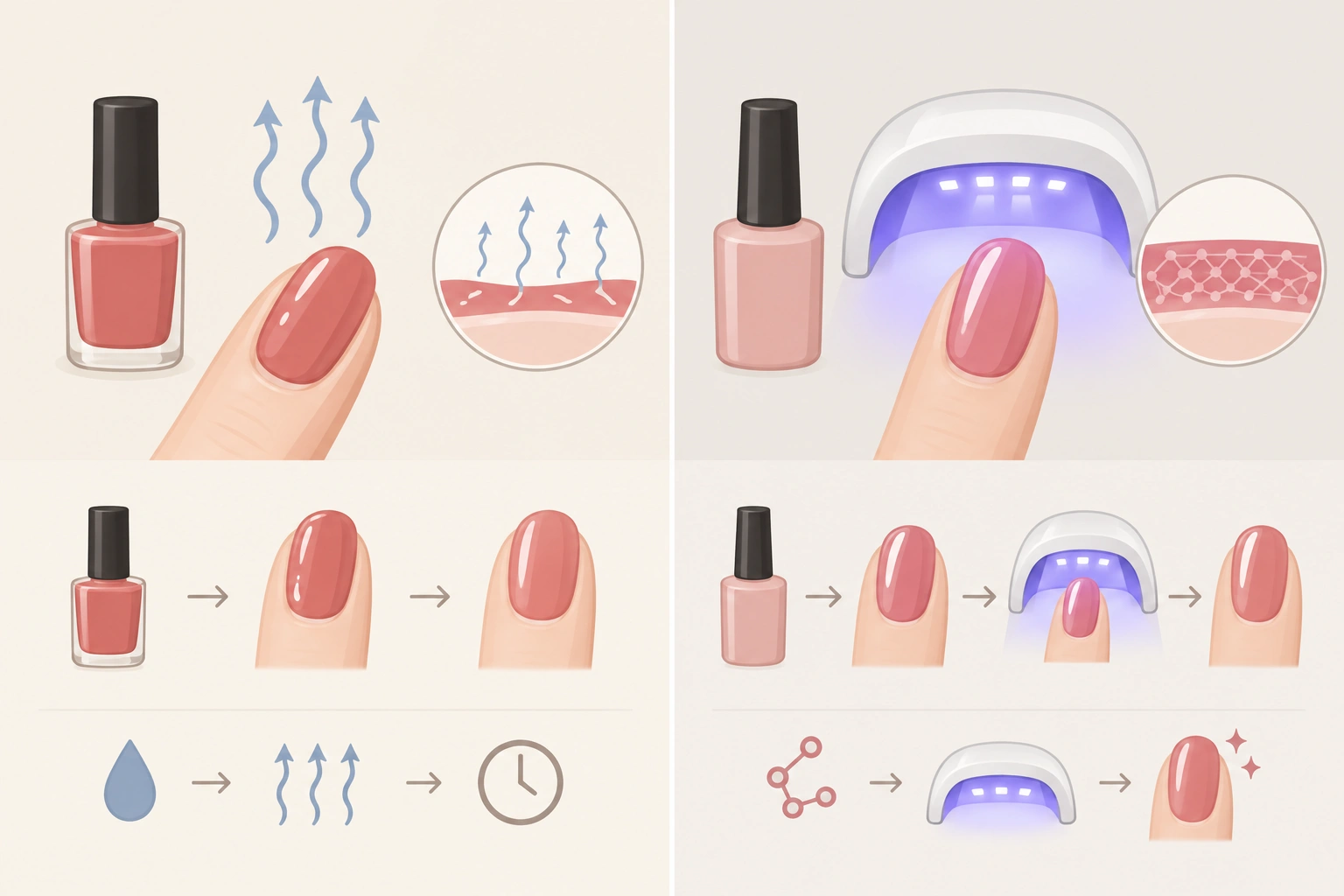
For regular nail polish, a UV lamp is generally unnecessary and not a dependable drying method.
It may seem like it helps because the nail feels warmer or because you are waiting under the lamp instead of doing nothing. But that does not mean the polish is actually drying the right way. In practice, the manicure can still smudge once you touch something or stack your hands too soon.
There is also no good reason to expose your skin to UV light if the lamp is not providing a real benefit. If you already own a lamp, save it for gel products made for that system.
So the practical answer is simple:
- If it’s regular polish, skip the lamp
- If it’s gel polish, use the lamp as directed by the product
- If you want faster drying, use products made for regular polish
Fastest Safe Ways to Dry Regular Nail Polish
If your goal is a manicure that sets faster without switching to gel, these are the methods that actually help.
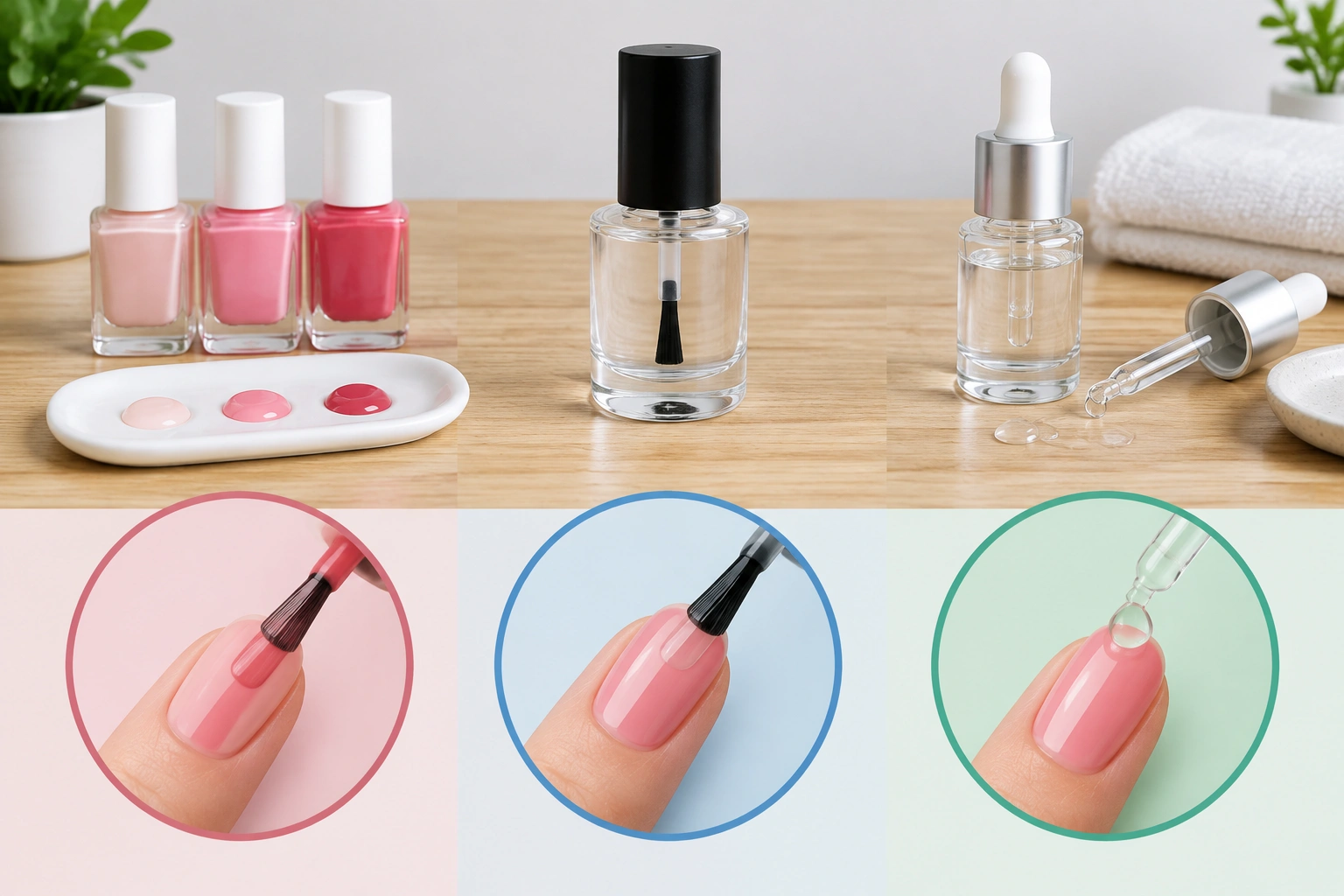
A simple beginner drying routine
- Apply a thin first coat. Keep it light and even.
- Wait about 2 to 5 minutes. The surface should lose its wet shine before the next coat.
- Apply a second thin coat.
- Wait again for a few minutes.
- Finish with a quick-dry top coat. Use it according to the label directions.
- Avoid heavy contact for at least 10 to 15 minutes. Be extra careful with fabric, pressure, and water.
- Treat the manicure gently for longer. It may feel dry before it is fully hard enough for normal use.
Use thinner coats
This is the biggest beginner fix. Two thin coats almost always behave better than one thick coat or several heavy ones. Thick layers trap more liquid, so they stay soft longer and dent more easily.
A good rule is to paint each coat just opaque enough to do its job, then stop.
Try a quick-dry top coat
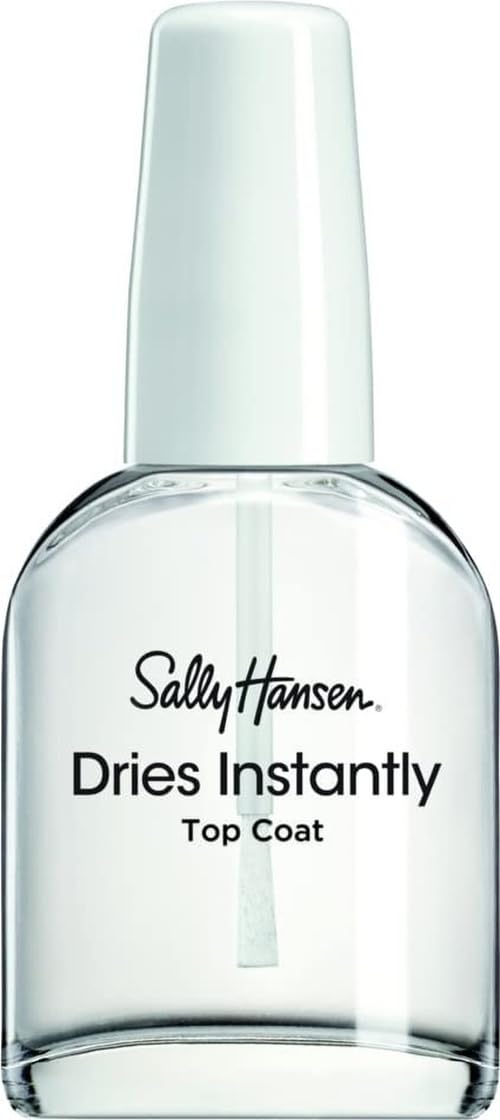
A quick-dry top coat is one of the most useful beginner products. It is made to help seal the manicure faster than a standard top coat.
Trade-off: it usually works better for speed, but you may prefer a regular top coat if you want a specific finish or already own one. If drying time is your main concern, quick-dry wins.
Use quick-dry drops or spray
Quick-dry drops can help regular polish set more efficiently. They are usually easier to use than people expect: apply the manicure, wait briefly, then follow the product directions.
A quick-dry spray or drops are often a better match for regular polish than a lamp because they support the drying process the polish already uses. Use them according to the label, since some sprays and drops are meant for regular polish only.
Keep your hands still and avoid heavy use
Even when polish feels dry, it can still be vulnerable. Avoid:
- washing dishes right away
- putting on tight shoes too soon
- digging through a bag with freshly painted nails
- pressing nails against fabric, keys, or phone cases
The more you baby the manicure for the first while, the cleaner it will look later.
How Long Regular Nail Polish Usually Takes to Dry
Drying time varies by formula, coat thickness, and how carefully you apply it. For beginners, a helpful rule of thumb is:
- Surface dry: often within about 10 to 20 minutes
- Safer for light use: often after about 20 to 30 minutes
- Hard enough for normal use: can take much longer, especially with thicker coats
A manicure can look ready before it is truly safe. That is why beginners often smudge polish after they think they are done.
If you want a more detailed breakdown, our guide on how long regular nail polish takes to fully dry covers the practical side of waiting without guessing.
For everyday use, the safest habit is to assume your nails need more time than they first appear to need.
Common Mistakes That Make Polish Take Longer to Dry
A slow manicure is often caused by technique, not the polish bottle.
Applying coats too thickly
This is the most common mistake. Thick polish takes longer to lose its solvents, so it stays soft underneath even if the top looks fine.
Rushing the next coat
If the first coat is still wet, the next one can drag it around and create a soft, uneven layer. That makes drying slower and the finish less smooth.
Using a lamp instead of waiting
A lamp feels like an active fix, but with regular polish it usually does not solve the real problem. The polish still needs time and airflow.
Touching the nails too soon
A light tap can leave a mark that you will not notice until later. Many people think the polish “failed,” when it was really just disturbed before it finished setting.
Forgetting that top coat choice matters
A standard top coat is not the same as a quick-dry top coat. If you want speed, choose the product designed for speed.
Regular Polish vs Gel Polish: Which One Fits Your Routine?
If you already own a UV or LED lamp, it is natural to wonder whether you should just switch to gel. Here is a simple decision rule:
- Choose regular polish if you want the easiest non-lamp routine, easy removal, and a simple at-home manicure.
- Choose gel polish if you want to use your lamp on purpose and are willing to follow a gel system from base coat to top coat.
The trade-off is straightforward. Regular polish is simpler and less equipment-heavy. Gel polish is more lamp-dependent and requires the right products together.
If you are tempted to use a lamp only because it is already on your counter, that is usually not a strong reason to switch. It makes more sense to choose the polish type that matches the routine you actually want.
For readers comparing drying methods, our article on whether you can use a hair dryer to dry nail polish is a helpful next step, especially if you are trying to speed things up without moving to gel.
When to See a Nail Technician or Dermatologist
Most drying problems are just product-application issues. But if your nails or skin react badly to polish, remover, lamps, or repeated salon-style use, it is worth getting professional advice.
See a nail technician if you want help choosing between regular polish and gel, or if your manicure keeps smudging because of application habits you cannot spot on your own.
See a dermatologist if you notice persistent irritation, redness, itching, or nail changes that do not go away. Nail products are not suitable for everyone, and a professional can help you figure out whether the issue is technique, product choice, or something else.
FAQs About UV Lamps and Regular Nail Polish
Can a UV lamp dry regular nail polish faster?
Not reliably. Regular polish is designed to dry by evaporation, so a lamp is not the best tool for the job.
Is it bad to put regular nail polish under a UV lamp?
It is usually unnecessary, and it may give you a false sense that the polish is ready when it still needs time. Save the lamp for gel products made for it.
What is the fastest way to dry regular nail polish?
Use thin coats, choose a quick-dry top coat, and give the manicure enough time before using your hands normally.
Can I use LED lamps on regular nail polish?
Not in the same way you would with gel polish. LED lamps are also meant for curing compatible gel formulas, not standard polish.
Does a fan help regular nail polish dry?
A fan can help move air around, which is more useful than a lamp for regular polish. It still does not replace proper drying time.
Should I buy gel polish if I already own a UV lamp?
Only if you want to commit to a gel routine. If you prefer simple application and easy removal, regular polish plus quick-dry products is usually the better fit.
Bottom Line
A UV lamp is made for gel polish curing, not for making regular nail polish dry properly. If you are using standard polish, the best results come from thin coats, patience, and quick-dry products made for air-drying formulas. That approach is safer, simpler, and far more reliable than hoping a lamp will solve the problem.