
Can Baby Oil Remove Nail Polish? What Actually Works at Home

If you’re standing in your bathroom cabinet wondering can baby oil remove nail polish, the short answer is: sometimes a little residue, but not reliably enough to replace nail polish remover. Baby oil may loosen minor smudges or help lift tiny bits of leftover polish, but it is not a strong solvent for most nail polish. If you need full removal, especially for regular polish with multiple coats, glitter, or anything gel-based, a dedicated remover will usually work faster and more completely.
Baby oil may be a little gentler on dry skin than repeated scrubbing, and it can moisturize the skin around the nails, but it does not meaningfully dissolve polish. For natural nails, acetone is the fastest option, non-acetone remover is the gentler regular-polish option, and baby oil is best treated as a fallback for very light cleanup only.
Can Baby Oil Remove Nail Polish?
Baby oil can sometimes loosen nail polish, but it usually does not remove it in the way most people mean. Nail polish is designed to form a durable film on the nail. Oils sit on top of that film rather than breaking it down efficiently.
That means baby oil is most likely to help in these situations:
- a thin layer of regular polish
- small smudges on the skin around the nail
- a manicure that is already chipped and lifting
- cleanup after part of the polish has come off
It is much less useful when the polish is intact and well-adhered. If you have ever tried to wipe off a fresh coat with oil and found it mostly smeared around, that is the expected result.
For readers who want the shortest path: if your goal is complete removal, baby oil is usually not the best tool. If your goal is gentle cleanup with whatever is already available, it is worth trying once before moving on.
How Baby Oil Interacts with Nail Polish
Baby oil is an oil-based product, so it does not behave like acetone or other polish removers. Acetone dissolves polish quickly because it can break down the coating itself. Oil does not do that well. Instead, it may reduce friction between the polish and the cotton pad or skin, which can make the polish look like it is coming off more easily than it really is.
That distinction matters. Sometimes what you are seeing is not true removal; it is a softened top layer or a bit of polish sliding around. If you keep rubbing at that point, the nail and surrounding skin can get irritated without much payoff.
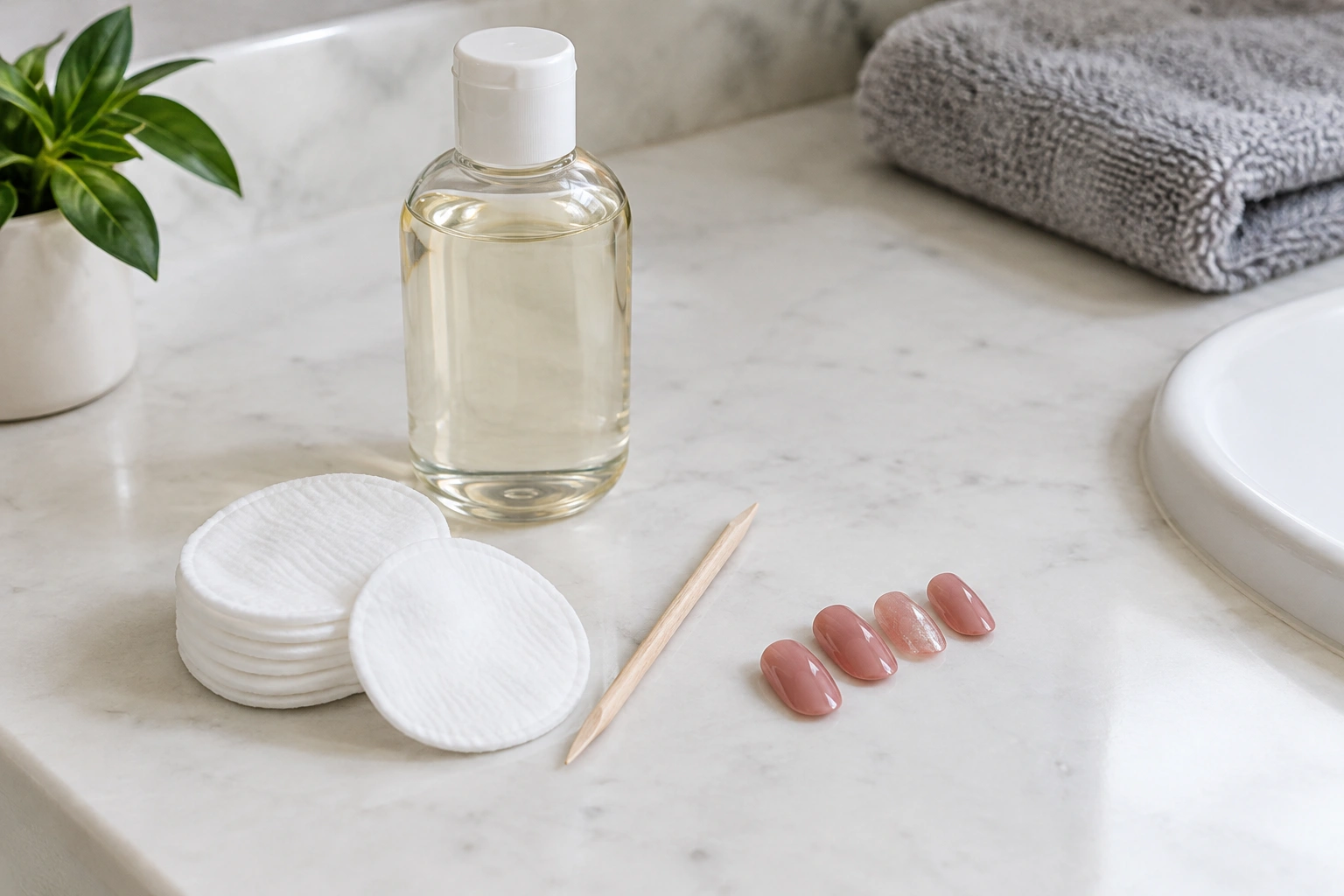
Baby oil can also leave an oily film behind. That film may make the nail feel smoother and less dry, but it also means the nail surface is not clean yet. If you plan to repaint afterward, that residue needs to be removed first.
What Types of Nail Polish It May or May Not Remove
Baby oil is most likely to have any effect on regular lacquer that is already weak, chipped, or thinly applied. It may also help lift polish from the skin around the nail, which is where people often notice the biggest improvement.
It is a poor choice for:
- gel polish: gel is designed to resist simple wiping and usually needs soaking or filing plus remover
- glitter polish: glitter formulas are notoriously stubborn because the particles cling tightly
- dip powder and acrylic systems: these are not realistic candidates for baby oil alone
- nail strips or wraps: oil may help with some adhesive edges, but it is not a dependable remover for the product itself
If you are dealing with a shiny gel manicure, baby oil will almost certainly disappoint. If you are removing a chipped regular polish from natural nails and you are only trying to get through the evening, it may help a little.
A useful rule: the more durable the manicure, the less baby oil will do.
How to Try Baby Oil Safely
If you want to test baby oil, do it in a way that avoids unnecessary rubbing. This is best treated as a low-success fallback for small residue only, not a general polish-removal method.
What you need
- baby oil
- cotton pad or cotton ball
- a cuticle stick or wooden orange stick
- a dry tissue or clean cloth
A simple method
- Put a small amount of baby oil on the cotton pad.
- Press it onto one nail for 20 to 30 seconds.
- Wipe gently in one direction.
- If polish lifts, repeat once more rather than scrubbing hard.
- Use the cuticle stick only for tiny edges that are already loose.
- Wash the nail afterward with mild soap and water.
If the polish barely changes after a couple of passes, stop. More rubbing rarely turns baby oil into a better remover. It usually just makes your fingertips greasy and your cuticles irritated.
If you only need to clean up polish on the skin around the nail, baby oil can be more useful. Apply a little to a cotton swab and trace along the skin edge, then wash the area clean.
How Long It Takes and What Results to Expect
Baby oil does not have a standard “soak time” the way remover does. A short press-and-wipe attempt is usually enough to tell you whether it is doing anything.
Here is what you can realistically expect:
- Within seconds: maybe a small amount of surface smearing
- After one or two attempts: slight lifting on weak or chipped polish
- After repeated rubbing: more residue, not necessarily more removal
If the polish has not budged after a minute or two of careful work on one nail, that is a sign to switch methods. Continuing to rub is more likely to stress the nail plate and surrounding skin than to improve the result.
For stubborn polish, a dedicated remover saves time and usually leaves the nail cleaner. That matters if you are repainting right away.
Baby Oil vs. Acetone and Non-Acetone Removers
Here is the practical comparison most readers need.
| Method | Effectiveness | Speed | Gentleness | Best for | Main drawback |
|---|---|---|---|---|---|
| Baby oil | Low | Slow | Gentle on skin, but greasy | Light cleanup, tiny smudges, partial lifting | Often leaves polish behind |
| Acetone remover | High | Fast | More drying | Regular polish, glitter, stubborn layers | Can dry nails and skin |
| Non-acetone remover | Moderate | Moderate | Usually less drying than acetone | Regular polish when you want a milder option | Slower than acetone |
| Rubbing alcohol | Low to moderate | Moderate | Can be drying | Small polish traces or cleanup | Inconsistent on full polish |
| Cuticle oil / other oils | Low | Slow | Gentle | Very light residue or adhesive edges | Not a true remover |
The main trade-off is simple: baby oil is gentler, but much less effective. Acetone does the job quickly, but it can be drying. Non-acetone removers sit in the middle and are often the better compromise if you want something less harsh than acetone but more reliable than household oil.
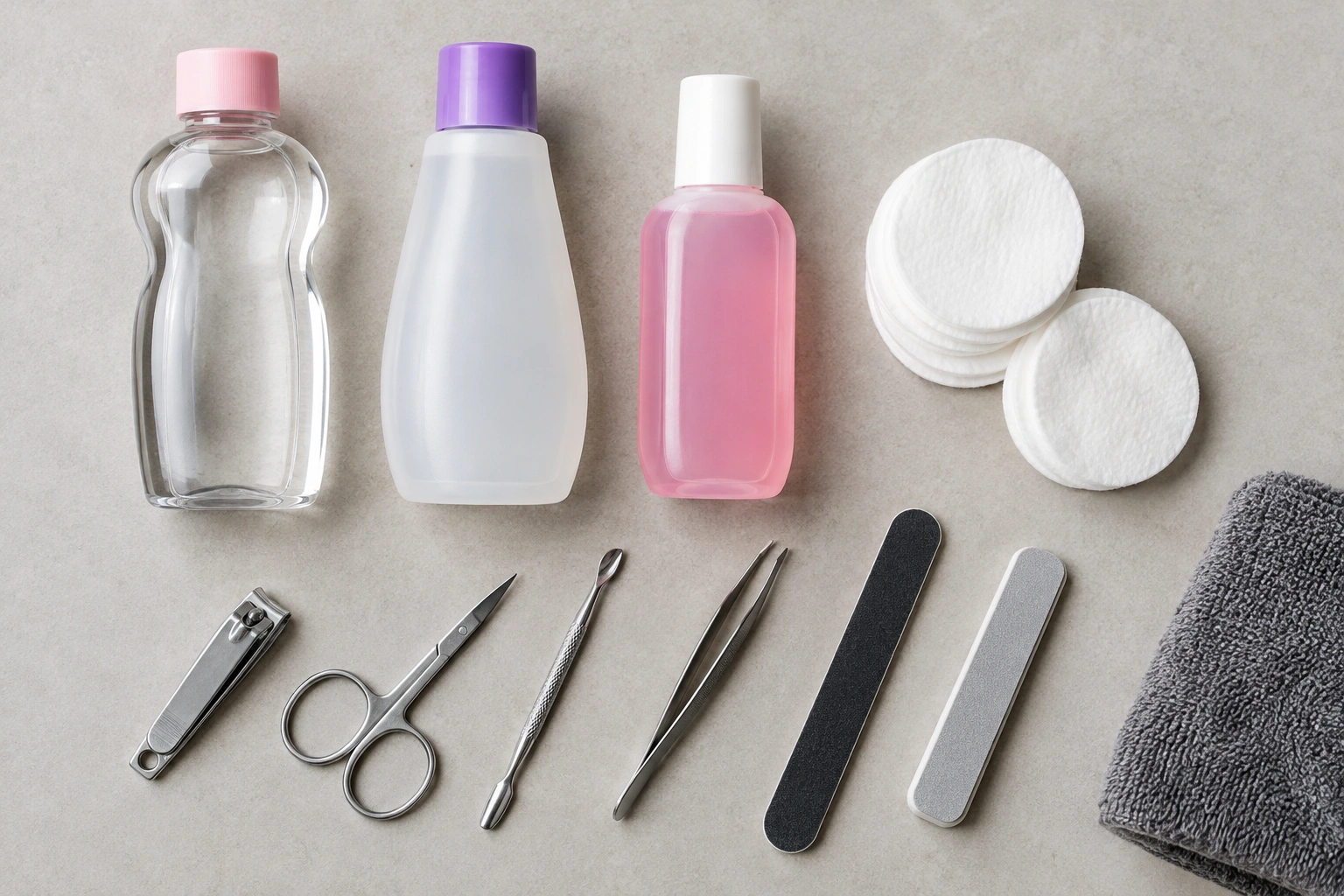
Baby oil may moisturize the skin and nails a bit, but it does not meaningfully dissolve polish. That is why it can be helpful for cleanup yet still fail at full removal.
Safety, Nail Health, and Residue Cleanup
Baby oil is generally gentle on natural nails and surrounding skin, which is part of why people try it. It is not likely to cause the same dryness you might notice from repeated acetone use. That said, gentle does not automatically mean effective.
One thing to watch is over-rubbing. Even a mild product can irritate cuticles if you keep pressing and wiping. Thin, peeling, or already-damaged nails are especially easy to aggravate.
There is also the residue issue. Oil left on the nail can interfere with repainting. If you are planning a fresh manicure, clean the nail plate thoroughly after any oil-based attempt. A quick wash with soap and water is a good first step, and some people also wipe the nail with a bit of alcohol afterward to remove lingering oil before applying base coat.
What to Do If Baby Oil Does Not Work
If baby oil only smears the polish or removes a little from the edges, switch methods rather than pushing further.
Best next steps
- Use acetone if you want the fastest, most reliable removal.
- Use a non-acetone remover if you want a gentler option for regular polish.
- Check whether the manicure is gel, dip, or acrylic before trying again. Those products usually need their own removal method.
- Clean the nail after any oil attempt so the next product can work properly.
If you have no remover at all, a household alternative like rubbing alcohol may remove a little more than baby oil, but it still will not match a proper remover. Think of these options as temporary workarounds, not ideal solutions.
One useful decision rule: if you have already spent a few minutes on one hand and the polish still looks mostly intact, stop. That is the point where the method is no longer gentle or efficient.
When to See a Nail Technician or Dermatologist
If your nails are peeling, painful, or unusually sensitive, it may be better to let a professional handle polish removal, especially for gel, dip, or acrylic products. A nail technician can remove product with less guesswork, and a dermatologist is the right person if you notice persistent redness, irritation, or nail changes that are not improving.
This is less about polish removal itself and more about protecting nails that are already compromised. When the nail plate is fragile, repeated DIY attempts can make the situation worse.
Bottom Line
So, can baby oil remove nail polish? Only in a limited, unreliable way. It may help loosen light residue or lift small smudges, but it is not a true replacement for nail polish remover. If you want the gentlest possible attempt, try it once with a cotton pad and minimal rubbing. If you want the polish gone cleanly, move to a dedicated remover instead.
The practical takeaway is simple: save baby oil for tiny cleanup jobs, use non-acetone remover for a milder regular-polish option, and reach for acetone when speed and completeness matter most.
For readers who want more context on how oil behaves on painted nails, see how nail oil interacts with polish. If you are dealing with a gel manicure specifically, this gel polish review and removal context may also help you understand why stronger removal methods are usually needed.

