
Can Castor Oil Help With Nail Fungus? What to Know Before You Try It

If you suspect nail fungus, it makes sense to look for something low-cost, simple, and easy to use at home. Castor oil often comes up in that search because it is inexpensive, widely available, and associated with skin-softening and moisturizing benefits.
The short answer: castor oil may be worth trying as a supportive home care step, but it is not a proven cure for onychomycosis, the medical term for nail fungus. Nail fungus is stubborn because the nail plate is hard for topical products to penetrate. That means even products with known antifungal activity can take a long time to work, and many home remedies do little more than improve the look and feel of the nail.
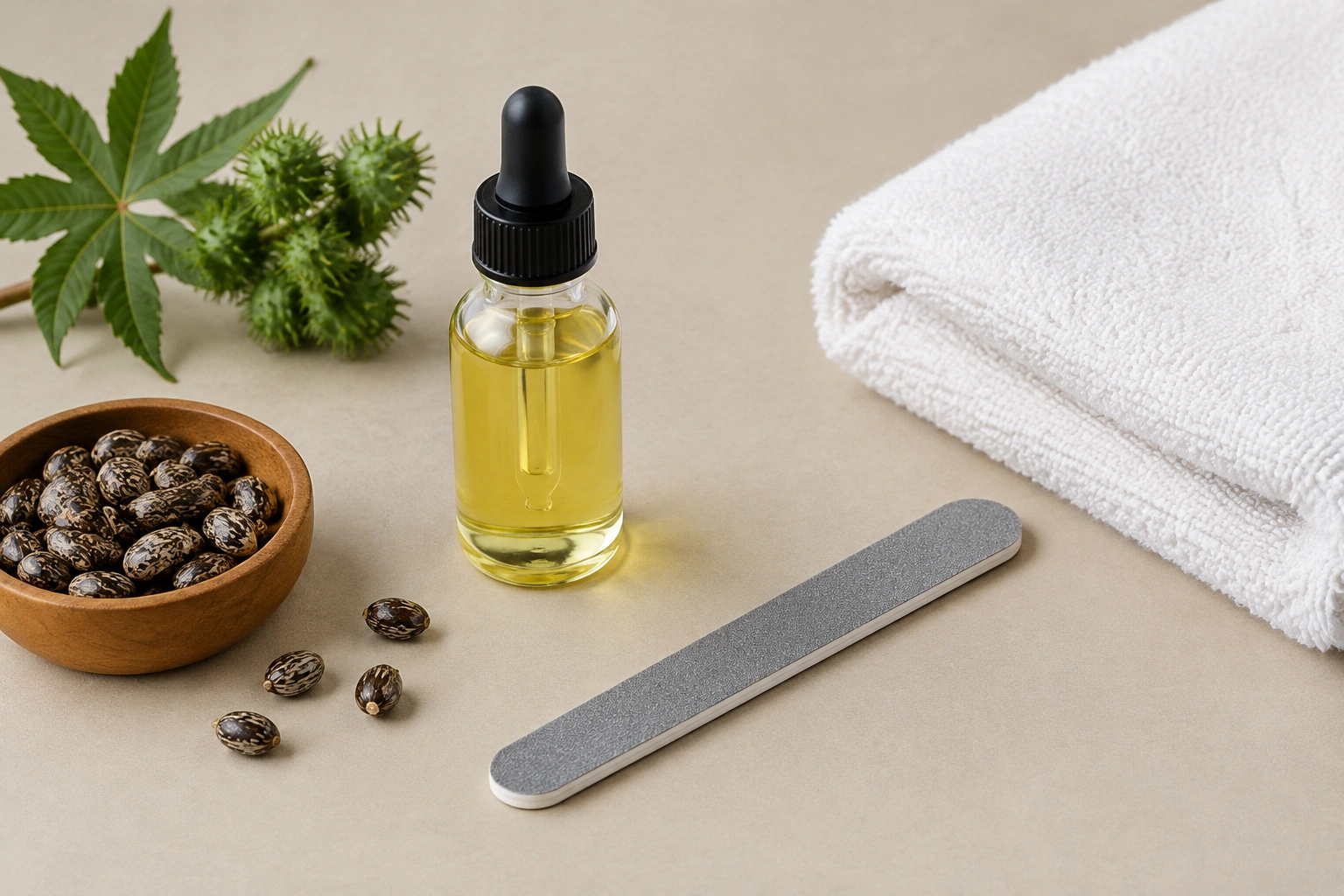
Castor oil sits in a gray area. Some people report improvement, and there is a plausible reason people keep trying it. But the evidence for castor oil by itself is limited, while stronger support exists for specific antifungal ingredients derived from castor oil, especially undecylenic acid.
If your goal is to see whether a natural, low-cost option can help early or mild changes, castor oil may be reasonable to test. If your goal is to reliably clear a thick, discolored, spreading nail infection, castor oil alone is unlikely to be enough.
What Nail Fungus Is and Why It’s Hard to Treat
Nail fungus usually starts subtly. A toenail or fingernail may become yellow, white, brown, or dull. The nail can thicken, become brittle, crumble at the edge, or lift away from the nail bed. Some people notice debris under the nail or a rough, uneven surface.
The reason it is so hard to treat is structural. The nail plate acts like a barrier. Topical ingredients have to work their way through hard keratin before they can reach the fungus. That is why nail fungus treatment often takes months, not days, and why cosmetic improvement does not always mean the infection is gone.
This matters when evaluating castor oil. A product can feel soothing on the surrounding skin and still fail to reach the deeper part of the nail where fungus is living.
Can Castor Oil Help With Nail Fungus?
Castor oil may help in a limited, indirect way, but it should not be treated like a proven antifungal medication.
Here is the most practical way to think about it:
- It may soften dry, rough, brittle nail edges and surrounding skin.
- It may make the nail look healthier while you are using it.
- It is not well established as a treatment that kills nail fungus.
In other words, castor oil may condition the nail and surrounding skin, but it should not be expected to clear the infection on its own. A nail can appear smoother or less cracked because it is better moisturized, yet the fungus can still be present underneath.
There is also a related point that often gets missed: some people confuse castor oil itself with undecylenic acid, a fatty acid derived from castor oil that is used in some over-the-counter antifungal products. Those are not the same thing. The antifungal evidence is stronger for undecylenic acid than for plain castor oil.
What the Evidence Says About Castor Oil’s Antifungal Potential
The evidence for castor oil as a direct nail fungus treatment is weak.
Anecdotal reports exist, including people who say their long-standing toenail fungus improved after applying castor oil consistently. That kind of report is useful as a clue, but it is not the same as clinical proof. People may also be doing other things at the same time, such as trimming the nail, improving foot hygiene, or simply giving a slow-growing nail time to grow out.
Laboratory research does not support castor oil as a strong antifungal agent. Some lab studies of oils have not shown castor oil to be a reliable inhibitor of fungal growth at the concentrations tested, but that is still not the same as proving it is ineffective in every real-world setting. The overall takeaway remains cautious: the evidence is not strong enough to call castor oil a dependable antifungal treatment.
By contrast, undecylenic acid is a fatty acid derived from castor oil that is used in some over-the-counter antifungal products and has a much clearer antifungal role than castor oil itself. If you are specifically looking for antifungal action, that distinction is important.
For readers who want a broader background on natural options, the American Academy of Dermatology explains why nail fungus often needs persistent treatment and why home remedies have limits.
How to Use Castor Oil on an Infected Nail
If you want to try castor oil, use it as a careful supportive routine rather than a one-step cure.
A simple application method
- Wash the nail and surrounding skin well, then dry completely.
- Remove any old polish or nail product.
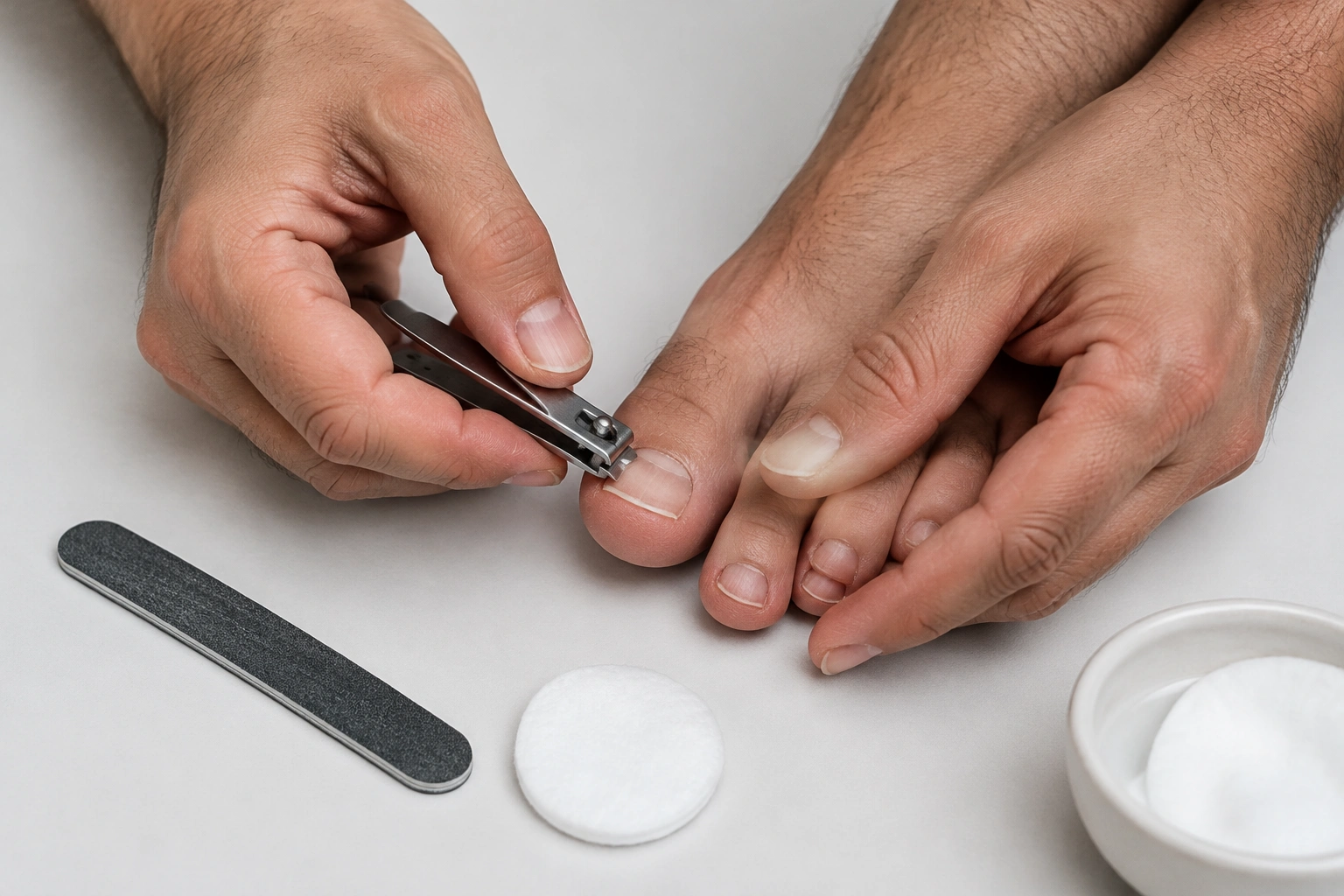
- Trim the nail straight across if it is long. Shorter nails are easier to clean and easier for any topical product to reach.
- Gently file thickened areas if the nail allows it. Do not make the skin raw.
- Disinfect nail tools after use and do not share them.
- Apply a small amount of castor oil with a clean applicator or clean fingertip to the nail surface and the skin around it.
- Massage it in for a minute or two.
- Let it absorb before putting on socks, shoes, or gloves.
A clean, dry nail gives you a better chance of seeing whether the oil is doing anything useful. If the nail is dirty, damp, or covered in old polish, you are mostly sealing in the problem rather than treating it.
If you want to combine castor oil with another topical product, be cautious. Layering multiple home remedies can increase irritation without improving results. Keeping the routine simple is usually smarter, and castor oil is best viewed as supportive care alongside proven antifungal treatment, not a replacement.
How Often to Apply It and How Long Results May Take
Consistency matters more than intensity.
A practical schedule is once or twice daily, depending on how your skin tolerates it. More frequent application is not automatically better, especially if the skin around the nail becomes greasy, itchy, or irritated.
Expect a slow timeline. Toenails grow slowly, so visible change can take months. Fingernails usually show improvement faster than toenails, but even then, you are waiting for new nail to grow in. If the nail is significantly affected, it may take many months before you can judge whether the routine is helping.
A useful rule: if the nail looks slightly smoother after a few weeks, that is only a cosmetic signal. It is not proof the fungus is gone. Real improvement means the new nail growing from the base looks clearer and healthier over time.
If you have used castor oil consistently for a reasonable trial and there is no meaningful improvement, stop relying on it alone and get the nail evaluated rather than continuing indefinitely.
Should You Use Castor Oil Alone or Alongside Other Treatments?
Castor oil makes the most sense as a supportive add-on for mild, early, or uncertain cases—not as the main treatment for a stubborn infection.
Here is how it compares with other options:
| Option | Effectiveness for nail fungus | Speed | Safety | Best use case |
|---|---|---|---|---|
| Castor oil | Limited evidence for direct antifungal action | Slow | Usually gentle, but irritation is possible | Mild cosmetic support or a low-cost trial |
| Tea tree oil | More commonly used in natural nail care, but still not a guaranteed cure | Slow | Can irritate skin if used undiluted | People who want a better-known natural option and can tolerate careful use |
| OTC antifungal products | Better support when the ingredient is truly antifungal | Still slow | Generally predictable when used as directed | Mild cases or early infections |
| Prescription antifungal medication | Strongest option for many persistent cases | Slow, but often more effective | Requires medical guidance; side effects vary | Thick, widespread, or stubborn nail fungus |
| Watchful waiting | No treatment effect | No active improvement | Safest if the nail issue is not fungus | Very mild cases or when diagnosis is uncertain |
One important nuance: not every “natural” product is equal. If you want something derived from castor oil with actual antifungal use, undecylenic acid is more relevant than plain castor oil. Some over-the-counter antifungal products use undecylenic acid as the active ingredient, but that does not make castor oil itself an antifungal medicine. If you are shopping for treatment rather than a cosmetic oil, that is the direction to look.
For readers comparing natural oils more broadly, Nailprime’s guide to essential oils for nail fungus can help you understand where castor oil fits among commonly used oil-based approaches.
Safety, Side Effects, and Who Should Be Cautious
Castor oil is generally considered low risk for external use, but “low risk” is not the same as risk-free.
Possible issues include:
- Skin irritation
- Itching or redness
- An allergic reaction
- Stinging if the skin around the nail is broken
If the cuticle area is cracked, inflamed, or raw, any oil can sting or feel uncomfortable. Stop using it if the skin becomes more irritated after application.
People with diabetes, poor circulation, neuropathy, or immune problems should be extra cautious about self-treating nail changes. In those situations, a nail problem can become more complicated, and delays matter more.
Also, if the nail is very thick, painful, lifting, or changing rapidly, do not assume it is “just fungus.” Other nail conditions can mimic fungal infection.
When Castor Oil Is Not Enough and You Should See a Doctor
Castor oil is not the right plan when the nail problem is clearly beyond mild.
See a podiatrist or dermatologist if:
- the nail is thick, painful, or crumbling
- the discoloration is spreading
- more than one nail is involved and it is getting worse
- the nail is lifting from the nail bed
- you have diabetes or poor circulation
- home care has not helped after several months
- you are not sure the problem is fungus at all
This is especially important because the best treatment depends on severity. A mild case may respond to an OTC antifungal ingredient used correctly. A more established infection may need prescription treatment to have a realistic chance of clearing.
Realistic Expectations: Cosmetic Improvement vs True Fungus Clearance
This is the part that saves people the most frustration.
A better-looking nail is not always a fungus-free nail.
Castor oil may make the nail surface look shinier, smoother, or less dry. That can be helpful, especially if the nail has become brittle. But cosmetic improvement can happen without eliminating the underlying infection. The nail may simply be easier to live with while the fungus remains active.
True clearance is more likely when:
- the nail grows out normally from the base
- discoloration does not keep advancing
- thickness gradually decreases
- the surrounding skin stays calm
- the nail continues improving over time, not just for a week or two
If the nail looks great for a moment and then keeps thickening or discoloring again, the treatment is not doing enough.
Bottom Line
So, can castor oil help with nail fungus? Possibly, but mostly as a low-cost supportive option rather than a proven antifungal cure.
If you want something gentle and inexpensive to test on a mild case, castor oil is reasonable as long as you keep expectations realistic and stay consistent. If you want the best chance of actually clearing nail fungus, look toward treatments with stronger antifungal evidence, especially products specifically formulated for that purpose.
If the nail is thick, painful, spreading, or not improving, it is time to move beyond home care and get the nail evaluated.
FAQ
Can castor oil kill nail fungus?
There is not strong evidence that plain castor oil reliably kills nail fungus in humans. It may help moisturize and soften the nail area, but that is different from clearing an infection.
How long should I use castor oil before deciding it is not working?
Give it enough time to judge new nail growth, not just surface changes. For toenails, that usually means months, not days or weeks.
Can I mix castor oil with tea tree oil?
You can, but mixing remedies can also increase irritation. If you try it, patch test first and keep the routine simple. Don’t assume combining products will make the treatment stronger.
Is undecylenic acid the same as castor oil?
No. Undecylenic acid is a fatty acid derived from castor oil, but it is not the same as plain castor oil. It has much better antifungal support than castor oil alone.
Should I use castor oil on a nail that is very thick or lifting?
That kind of nail usually needs a medical opinion. Castor oil is unlikely to be enough on its own.
What if I’m not sure it’s fungus?
That is another reason to get the nail checked. Discoloration, thickening, and crumbling can come from other causes besides fungus.
Does castor oil work better on fingernails or toenails?
If it helps at all, fingernails may show cosmetic change sooner because they grow faster. Toenails usually take much longer to reflect any improvement.
Can I use castor oil to prevent nail fungus from getting worse?
It may help keep the nail and surrounding skin more conditioned, but there is no solid evidence that it prevents fungal progression on its own. Hygiene, dryness, and proper treatment matter more.

