
Can You Go Back to a Nail Salon If You’re Not Happy With the Result?

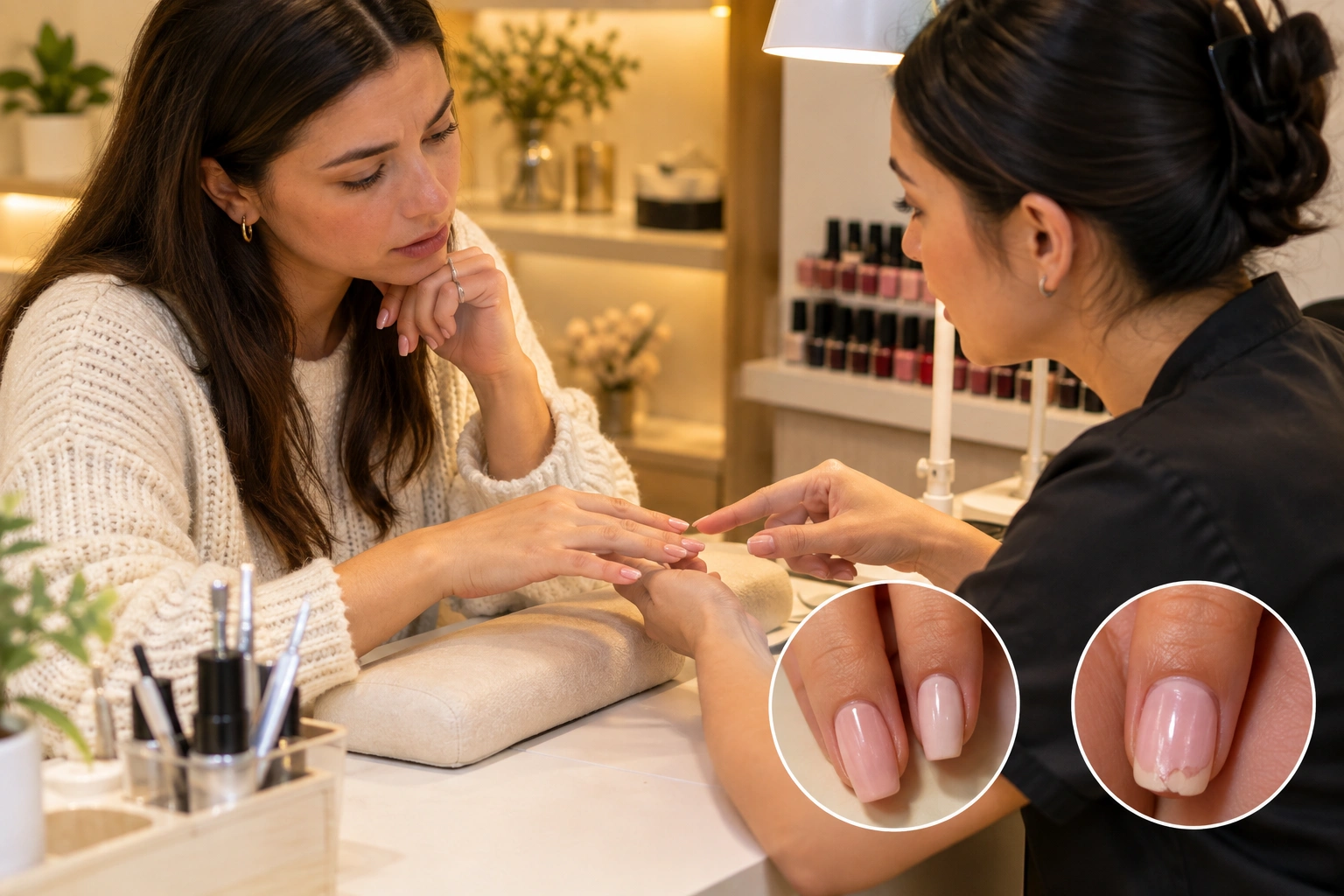
Yes — in most cases, you can go back to the nail salon if you’re not satisfied. In fact, that is often the best first step when the issue is something the salon can reasonably inspect and correct, such as uneven shaping, a chipped gel manicure, crooked acrylics, or a pedicure that was not finished as requested.
What you usually should not expect is an automatic refund. Many salons are more likely to offer a repair, a redo, or a manager review after they see the nails in person. One industry source advises clients to come in promptly so the salon can inspect the nails before discussing a refund, which is a useful clue about how these situations are often handled in practice Young Nails.
Salon policies can vary a lot. Some salons post written redo or refund windows, while others handle complaints case by case. That means the best outcome may depend on the salon’s stated policy, the timing of your complaint, and who reviews it.
If you want the smoothest outcome, think of this as a problem-solving conversation, not a confrontation. The more clearly you can explain what went wrong, the easier it is for the salon to decide whether the issue is a fix, a redo, or something that falls under normal wear.
When It Makes Sense to Return to the Nail Salon
A return makes sense when the result is clearly off from what was promised or what you reasonably paid for. That includes things like:
- polish that chips very quickly after the appointment
- uneven length or lumpy product
- a shape that is obviously different from what you requested
- lifting, gaps, or rough edges right away
- a pedicure that feels unfinished or messy
- pain, burning, or visible irritation during or after service
- hygiene concerns, such as dirty tools or a visibly unsanitary station
A simple way to judge it: if another nail tech could look at the nails and immediately see the problem, it’s worth bringing back. If the issue is mostly “I changed my mind,” that is less likely to qualify for a free fix.
For example, if you asked for square nails and got a soft almond shape, that is a service mismatch. If you asked for a sheer pink and it looks slightly different in daylight than it did in the salon, that may be more of an expectation issue.
If the concern is about a broken nail rather than a bad application, this guide on whether a nail salon can fix a broken nail can help you think through repair options.
What Counts as a Salon Error vs Normal Wear or Personal Preference
This is the decision point that matters most.
More likely a salon error
These are the kinds of issues salons are usually better positioned to fix:
- the shape is uneven or clearly not what you asked for
- polish is flooded into the cuticle area
- acrylic or gel is applied crooked
- one nail is noticeably shorter or thicker than the others
- the finish is patchy, streaky, or incomplete
- the technician missed part of the service you paid for
More likely normal wear or personal preference
These are harder to argue as salon mistakes:
- a chip caused by rough use after leaving
- nail length you later decided feels too long
- a color that looks different in different lighting
- a shape you now prefer to change, even though it was applied correctly
- minor wear after several days, depending on the service and how you used your hands
The practical rule is this: the sooner the issue appears, the easier it is to connect it to the service itself than something discovered after a week of normal activity.
If your concern is about hygiene or a health-related issue, this article on going to the nail salon with athlete’s foot explains why safety concerns need a different level of caution than a simple cosmetic complaint.
How Soon to Contact the Salon
Contact the salon as soon as you notice the issue. Same day is ideal. The longer you wait, the harder it is for the salon to tell whether the problem came from the service or from what happened afterward.
That timing matters because many salons have informal redo windows, even if the policy is not posted clearly. Some will only consider a free correction if you call quickly and return for inspection. If you wait several days, they may still help, but they are more likely to view it as wear, damage, or a preference change.
If the problem is serious — for example, pain, a burned cuticle area, or a badly applied service — don’t sit on it hoping it improves. Contact them right away and keep your message factual.
What to Bring: Receipt, Photos, and Notes
A good complaint is easier to resolve when it is backed up by simple evidence.
Bring or save:
- your receipt or payment record
- clear photos taken in good lighting
- the date and time of the appointment
- the service you booked
- any text messages or booking confirmation
- a short note about what you asked for
Photos help most when they show the issue clearly and close up. If possible, take one photo right after the service and another after the problem appears. That gives the salon a before-and-after reference.
Keep the evidence organized. You do not need a dramatic case file. Just make it easy for the salon to verify what happened.
If you paid by card and later need to dispute the charge, those same records become important. Card issuers usually want documentation that shows the issue, the attempt to resolve it, and the date of service.
How to Ask for a Fix Without Sounding Rude
The goal is to be calm, specific, and fair. You are more likely to get help if you describe the issue in plain language instead of leading with blame.
A useful structure is:
- say what the problem is
- say when you noticed it
- say what you would like done
- offer to bring photos or come in for inspection
For example:
“Hi, I had a gel manicure yesterday, and I noticed that two nails are already lifting and one is uneven. I wanted to ask if I could come in for you to look at it and see about a fix.”
That works better than:
“These nails are terrible. I want my money back.”
The first version gives the salon a path to help. The second puts them on the defensive before they have even seen the nails.
If you are worried about being too direct, remember this: polite does not mean vague. A technician cannot fix “I’m unhappy,” but they can fix “the index finger is crooked and the polish is flooded near the cuticle.”
Should You Ask for a Redo, a Refund, or Both?
In most cases, ask for the most practical solution first.
Ask for a redo or repair when:
- the issue is visible and fixable
- you still want the service
- the nails can be corrected without starting over completely
Ask for a refund when:
- the service is unusable or far from what was promised
- the salon refuses a reasonable correction
- the problem is serious enough that you do not want the same technician to redo it
Ask for both only if:
- you are open to a fix, but want to preserve your right to a refund if the fix is not acceptable
- the salon’s policy allows a correction first and then a refund review
A redo is usually the more realistic first request. Refunds are less common because salons often prefer to inspect the nails and correct the problem rather than reverse the service entirely.
A full redo makes more sense when the issue affects the whole set — for example, a bad shape on every nail or an acrylic set that looks uneven throughout. A minor fix is better when only one or two nails need adjustment.
If the salon offers a partial compromise, such as fixing only one nail or giving you a discount instead of a full redo, ask whether that solution actually addresses the part of the service that went wrong. It may be reasonable for a small issue, but it may not be enough if multiple nails or the entire set are affected.
Who to Contact: Technician, Manager, or Owner
If you trust the original technician and the issue looks minor, contacting them first can be the fastest route. They may be able to fit you in quickly and fix the problem without a lot of back-and-forth.
If the issue feels more serious, or if you are uncomfortable speaking directly to the technician, ask for the manager or owner. That is especially helpful when:
- the salon already showed resistance
- the problem involves a refund request
- the technician is not available
- you need a decision from someone with authority
If you are in person, ask politely but clearly: “Could I speak with the manager or owner about a service issue?”
That keeps the conversation focused on resolution, not emotion.
What Usually Happens When a Salon Agrees to Fix the Issue
The most common outcome is a free correction, not a cash refund. Depending on the problem, the salon may offer:
- a quick repair on one or two nails
- reshaping or smoothing
- a polish redo
- a full service redo
- store credit or a discount on a future visit
Before you leave, it helps to confirm a few details so there is no confusion later:
- whether the correction is free
- when you should return
- whether the original technician will do the fix or whether someone else will handle it
- whether the offer covers all affected nails or only the most obvious one
- whether the salon considers the issue resolved after the redo or still wants a manager review
Sometimes the salon will want to inspect the nails before confirming anything. That is normal. It helps them see whether the issue is a service error or something that happened afterward.
If they offer a redo, ask one clarifying question: “Will this be a full correction or just the affected nails?” That avoids confusion when you return.
What to Do if the Salon Refuses to Help
If the salon says no, stay calm and move to the next step methodically.
1. Ask once more, clearly
Restate the issue and your request in one sentence. Sometimes the first answer is a reflex, not a final decision.
2. Escalate to the owner or manager
If you only spoke with the technician, ask for someone with authority to review the service.
3. Save all evidence
Keep your receipt, photos, and messages.
4. Consider a card dispute if appropriate
If you paid by card and the service was clearly not delivered as agreed, your card issuer may have a dispute process. Outcomes usually depend on the card network, the merchant’s stated policy, and the documentation you can provide, so check those terms quickly.
5. Leave a factual review if needed
If you do post a review, keep it specific and fair. Describe what happened, how the salon responded, and whether they offered a fix. That is more credible than an angry rant.
Do not skip the salon conversation and go straight to public complaints unless the situation is unsafe or the salon is refusing to engage at all.
Special Cases: Pain, Bleeding, Poor Hygiene, or Signs of Infection
This is the one situation where the advice changes.
If the service caused pain, bleeding, burning, significant swelling, or obvious skin irritation, treat it as a safety issue, not just a cosmetic complaint. The same goes for poor hygiene concerns, such as visibly dirty tools or an unsanitary station.
In that situation, separate the issue into two parts:
- Salon complaint issue: a bad application, a service mismatch, or a correction request
- Health or safety issue: injury, possible infection, or unsanitary conditions
If the problem is mainly cosmetic, you can still contact the salon for a fix or refund review. If the problem looks medical or potentially infectious, do not rely on a salon redo alone. Stop further services and seek medical advice if needed. Public health guidance from sources like the CDC and general skin-care advice from the American Academy of Dermatology can help you understand when a nail issue needs more than a salon fix.
If the service involved product use and you are worried about a reaction, the FDA’s cosmetics guidance is a useful place to check for general safety information.
Simple Scripts You Can Use
Phone or text
Hi, I had a manicure/pedicure yesterday, and I noticed a problem with the result. Two nails are uneven and one is lifting. Could I come in for you to take a look and see about a fix?
In person
I’m hoping you can help me with a service issue. The nails don’t match what I requested, and I noticed the problem right after I left. Could a manager take a look?
If you want a refund review
I’m happy to come in for inspection, but if the service cannot be corrected, I’d like to discuss a refund or another resolution.
If the issue is painful or unsafe
I need to let you know that the service caused pain and irritation. I’m not comfortable continuing until someone reviews what happened.
Which Contact Method Is Best?
If you are wondering how to reach the salon, the best method depends on the situation:
- Phone: Best for urgent issues and when you want a quick answer about whether to come in.
- Text: Best if the salon already uses text for bookings or you want a written record without a long back-and-forth.
- Email: Best for detailed complaints, photo attachments, and refund requests that need documentation.
- In person: Best when the salon wants to inspect the nails immediately or when a manager needs to see the issue firsthand.
If the issue is simple and you want the fastest response, phone or text is usually the easiest first step. If you already have photos and want a clear record, email can be better. If the salon asks to inspect the nails, going in person may be the most efficient option.
A Quick Decision Guide
Use this before you contact the salon:
- Clear mistake, noticed quickly? Go back and ask for a fix.
- Minor issue on one or two nails? Ask for a repair.
- Whole set is wrong or unusable? Ask for a redo.
- You no longer want the service at all? Ask about a refund, but expect inspection first.
- Pain, bleeding, or hygiene concerns? Raise it immediately as a safety issue.
- Salon refuses to help? Escalate calmly, save your evidence, and consider a card dispute if appropriate.
The main thing to remember is that you are not being unreasonable by speaking up. A professional salon should be able to review a problem, explain its policy, and offer a fair next step.

