
Can a Nail Salon Fix a Broken Nail? What to Expect, When It’s Safe, and Which Repair Works Best

A nail salon can often fix a broken nail — but only when the damage is minor enough to be a cosmetic repair. If the nail is cracked, chipped, split near the edge, or a broken enhancement needs patching, a technician may be able to reinforce it with gel, acrylic, silk or fiberglass wrap, nail glue, or a small tip.
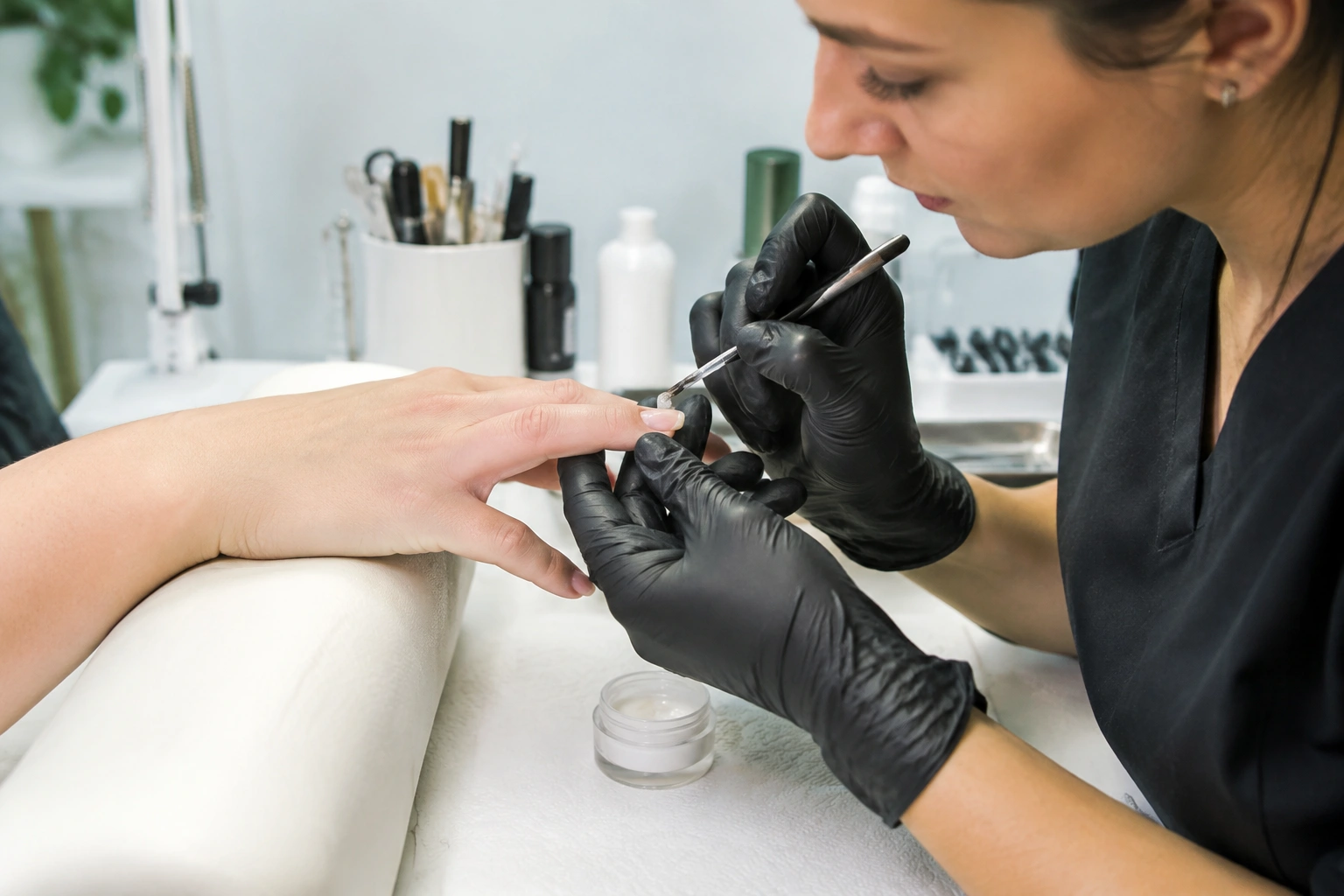
If the nail is painful, bleeding, black or purple, swollen, or partly torn away from the nail bed, that’s no longer a simple salon repair. In those cases, the safer move is medical care first, cosmetic repair later.
For a quick reference on nail safety and care, the American Academy of Dermatology has helpful general guidance on nail injuries and healthy nail habits. If you want a related read from NailPrime, see our guide on whether a nail salon can fix a broken natural nail and our article on what to know before going to a nail salon for an ingrown toenail.
What Kind of Broken Nails Can Be Repaired at a Salon?
Salons usually work best with damage that is annoying, but still stable. Think of a small split at the free edge, a chip that caught on clothing, or a crack in an acrylic or gel enhancement that has not reached the skin.
Common repair candidates include:
- A natural fingernail with a small crack
- A split that starts at the tip and has not traveled deep into the nail
- A broken acrylic or gel nail
- A chipped extension that needs rebuilding
- A toenail that is cracked but not bleeding
A useful rule: if the nail is still attached and the skin underneath is intact, a cosmetic repair may be possible. If the break has gone past the nail’s structural edge and into tender tissue, the salon may need to trim it down or decline treatment.
A technician’s job is not just to cover the break. The goal is to stabilize the nail so it does not keep splitting, snagging, or tearing farther.
When a Broken Nail Is Too Severe for Salon Repair
Some breaks are not salon problems. They are injury problems.
Do not book a cosmetic repair if the nail is:
- Bleeding
- Very painful or throbbing
- Partly lifted from the nail bed
- Black, purple, or otherwise discolored after trauma
- Swollen, warm, or draining
- Exposing skin or tissue
That’s the point where a nail salon should not try to “fix” it with product. A cosmetic overlay over an injured nail can trap moisture, irritate the area, or make it harder to notice worsening symptoms.
If you’re unsure, inspect the nail in good light. If you can see a gap between the nail plate and the skin, or if touching the area makes you wince, treat it as a medical issue first. The CDC has general wound-care and infection-prevention guidance that is worth reviewing when a nail break involves open skin.
When in doubt, choose the safer sequence: clean, protect, and assess before any salon service.
What to Do Right After a Break
If the nail hurts but is not bleeding, the immediate goal is to keep it from tearing more.
- Gently wash the area with soap and water if the skin is intact.
- Pat it dry.
- If the edge is sharp or snagging, cover it with a bandage, tape, or a small wrap.
- Do not pull on the nail or try to peel off a loose piece.
- If the nail is only hanging by a small section and feels unstable, protect it and wait for professional help rather than forcing it off.
If the break is clean and the nail is still mostly attached, a technician may be able to repair it. If the nail is splitting deeper with every snag, trimming it shorter may be the safest temporary move until you can be seen.
How Nail Salons Repair Broken Nails
A technician chooses the repair method based on three things: where the break is, how stable the nail still is, and what the final result needs to do.
Here’s what that usually looks like in practice:
Nail glue or resin for small cracks
For a tiny split or a snagging edge, a technician usually cleans the nail, removes oil and dust, then applies a small amount of glue or resin to hold the crack together. They may press the split closed, smooth the surface, and lightly buff the area so it blends better. This is usually the lightest repair and works best when the break is small and dry.
Silk or fiberglass wrap for reinforcement
A wrap is often used when the nail needs support without adding too much thickness. The technician typically trims and cleans the nail, cuts a small piece of wrap material, places it over the crack, and seals it with resin or another bonding product. After it sets, they buff and shape the nail so the repair lies flat. The client should expect a thin, reinforced layer rather than a thick rebuild.
Gel repair for a smoother finish
Gel can be used to build over a crack or restore the missing corner of a nail. In the chair, the technician usually preps the nail, applies gel in thin layers, cures it under a lamp, then files and refines the shape. Gel is often chosen when the repair needs to look smooth and polished, especially on a visible fingernail.
Acrylic repair for stronger structure
Acrylic is often chosen when the nail needs more structure, especially for extensions or a broken enhancement. The technician usually removes loose product, preps the area, then adds acrylic over the damaged section to rebuild length or thickness. After it hardens, they file it into shape and blend it with the rest of the nail. This can be a stronger option, but it may feel bulkier on a natural nail.
Tip replacement for a broken extension
If the nail extension itself snapped, the technician may remove the damaged tip, prep the nail underneath, and glue on a replacement tip or rebuild the missing section with product. They then blend the seam, file the length, and finish it to match the rest of the set. This is more common when the broken piece is part of an artificial nail rather than the natural nail itself.
For artificial nails, the big question is often whether the salon can patch the existing set or whether the damaged piece has to be removed and replaced. If the break is limited, a technician may be able to repair it on the spot. If the product has lifted, split badly, or no longer matches the structure of the set, removal and reapplication may be the cleaner fix.
Acrylic, Gel, Silk Wrap, or a Simple Patch: Which Repair Is Best?
Here’s the practical comparison most readers need.
| Repair method | Best for | Strength | Appearance | Flexibility | Typical downside |
|---|---|---|---|---|---|
| Simple glue patch | Tiny edge cracks, quick emergency fix | Low to moderate | Basic | Low | Can feel temporary and may not last long |
| Silk/fiberglass wrap | Small to medium cracks in natural nails | Moderate | Clean and thin | Better than acrylic | Needs careful application and upkeep |
| Gel repair | Visible cracks, smooth cosmetic finish | Moderate to strong | Very polished | Moderate | Can be too much for a very thin, fragile nail |
| Acrylic repair | Larger breaks, broken enhancements, stronger rebuild | Strong | Can blend well, but thicker | Lower flexibility | Can feel bulkier on a natural nail |
| Tip replacement | Missing corner or broken extension | Strong for extensions | Good for restoring length | Depends on system | Usually more involved than a patch |
A simple patch is the quickest fix, but it is not the most durable. Acrylic gives more structure, but that same strength can be overkill for a delicate natural nail. Silk or fiberglass tends to be a balanced choice when the goal is to keep the nail thin and wearable.
If you want a salon repair that looks natural on a real fingernail, a wrap or gel reinforcement is often the middle ground. If the break is on an enhancement, the technician may lean toward the same product system already on the nail so the repair behaves more predictably.
Repairing Natural Nails vs Acrylic, Gel, and Toenails
The best repair changes depending on what broke.
Natural fingernails
Natural nails are thinner and more flexible, so the repair needs to support the break without making the nail too heavy. A technician may trim the nail shorter, reinforce the crack, and shape it so the weak spot is less likely to catch.
If the break is deep, shortening the nail is often the smarter choice than trying to preserve every millimeter of length. That trade-off can be frustrating, but it usually prevents a worse tear later.
Acrylic or gel nails
Broken enhancements are often easier to patch than a damaged natural nail because the product itself can be rebuilt. A technician can fill, rebalance, or replace part of the enhancement so the set looks even again.
Still, the repair should match the system already on the nail. Mixing methods without a reason can create lifting or uneven wear.
Toenails
Toenail repairs are more limited. Toenails grow slowly, take more pressure from shoes, and are more prone to snagging if the edge is jagged. A salon may be able to smooth, trim, and protect a cracked toenail during a pedicure, but a deep or painful toenail injury should be assessed carefully before any cosmetic service.
How Much Broken Nail Repair Costs and How Long It Takes
Broken nail repair is usually a relatively small salon service, but the price can still vary a lot. A realistic range is often about $5 to $30 for a simple repair, with more involved fixes sometimes running higher depending on the salon and the amount of rebuilding needed. Local pricing varies by method and whether the repair is a standalone service or part of a manicure or pedicure.
A quick glue patch or small wrap is usually on the lower end. Gel, acrylic, or tip replacement can cost more because they take more product and more time. If the salon has to match the rest of a manicure or rebuild multiple nails, the total can rise.
Expect the visit to take anywhere from a few minutes for a small fix to longer if the technician needs to rebalance a set or rebuild shape. If the salon is also matching polish, blending color, or repairing multiple nails, the appointment naturally takes longer.
A good question to ask when booking is simple: “Is this a repair-only visit, or should I book a manicure so the fix blends with the rest of my nails?” That saves time and avoids surprises at checkout.
How Long a Salon Repair Usually Lasts
A repair can last well enough to get you through the next several days or weeks, but it is still a repair — not a brand-new nail.
Durability depends on:
- How deep the break was
- Whether the nail is natural or enhanced
- How much you use your hands
- Whether the repair was kept thin and balanced
- Whether you keep catching the edge on clothes, hair, or shoes
A small crack that was reinforced early usually behaves better than a split that kept tearing before the appointment. That is why timing matters. The sooner a clean break is stabilized, the less likely it is to spread.
Even a good repair may eventually need to grow out. If the nail keeps weakening in the same place, trimming it shorter may be the more realistic long-term solution.
What to Do Before Your Appointment
If the nail is cracked or snagging, the goal before your visit is simple: protect it from getting worse.
Do this:
- Gently wash the area with soap and water if the skin is intact.
- Pat it dry.
- Cover the nail with a bandage or tape if it catches on fabric.
- Avoid picking, filing aggressively, or trying to pry apart the crack.
- Keep polish remover, acetone, and harsh chemicals away from the break if possible.
If the nail is hanging by a thread, don’t try to force it off. That can turn a repairable crack into a much deeper tear.
If you need to wait a day or two for your appointment, a light protective wrap is usually better than repeated fiddling.
Aftercare: How to Keep the Repair From Lifting or Breaking Again
A repaired nail needs a little respect for the first few days.
Keep it dry when possible, especially right after the service. Avoid using the repaired nail as a tool to open cans, peel labels, or scrape surfaces. That kind of pressure is exactly what reopens a crack.
If the nail was repaired on a natural hand, wear gloves for cleaning or dishwashing. If it was a toenail repair, choose roomy shoes so the toe is not constantly pressed against the front of the shoe.
Watch the edge of the repair. If you feel a new snag, don’t peel at it. Call the salon or trim only what is loose and safe to remove.
For readers who want more salon-safety context, our guide on whether you can get HIV from a nail salon cut explains why clean handling and proper wound boundaries matter in nail services.
Salon Repair vs Home Repair vs Medical Treatment
Here’s the decision framework to use.
Choose a salon repair when:
- The break is small or moderate
- The skin is not broken
- There is no bleeding
- The nail is still attached and stable
- You want the nail to look polished again
Choose a temporary home fix when:
- The break is minor
- You just need to stop snagging until your appointment
- The nail is not painful or open
- You understand it is a short-term solution, not a true repair
Choose medical care when:
- There is blood, severe pain, swelling, or discoloration
- The nail is partly detached
- You suspect infection or a deeper injury
- The break involves the skin or nail bed
That’s the clearest way to think about it: salons handle cosmetic damage; clinicians handle injuries.
When to See a Nail Technician or Dermatologist
See a nail technician if the nail is cracked, chipped, or split but still stable and unbroken skin is intact. See a dermatologist or other medical professional if the nail is painful, bleeding, discolored, swollen, or lifting from the nail bed.
If you’re on the fence, don’t force a salon visit just because the nail looks ugly. A nail can be fixed cosmetically later; an injured nail bed deserves proper care first.
FAQ
Can a nail salon fix a broken nail?
Yes, in many cases. Salons can often repair small cracks, splits, chips, and broken enhancements if the nail is stable and there is no bleeding or open wound.
How long does a broken nail repair take?
A small repair may take only a short appointment, while a more involved rebuild takes longer. The exact time depends on the method and whether the technician is matching the rest of a manicure.
Is a silk wrap better than acrylic for a natural nail?
Not always. Silk or fiberglass wraps are usually thinner and more flexible, which can be helpful on a natural nail. Acrylic is stronger, but that extra strength can feel too heavy for some natural nails.
Should I go to a salon or a doctor for a broken nail?
Go to a salon for a cosmetic break that is stable and dry. Go to a doctor if the nail is bleeding, very painful, swollen, discolored, or partly torn from the nail bed.
Can a toenail be repaired at a salon?
Sometimes, yes. A salon may be able to trim, smooth, and protect a cracked toenail if it is not bleeding or infected-looking. Painful or deep toenail injuries should be checked medically first.
Will the repair look exactly like the other nails?
It can blend well, but it may not be invisible. The salon can often match shape and, if polish is applied, color closely enough for a clean finish. Even so, a heavily damaged nail may still look a little different or need to stay shorter until it grows out.
Is it okay to fix a broken nail at home first?
A temporary home measure can help prevent snagging while you wait for a salon visit. Just keep it gentle and avoid trying to repair a deep split, bleeding nail, or partially detached nail on your own.
A broken nail is frustrating, but it is not always a crisis. If the nail is stable, a salon can often make it wearable again. If it is painful or bleeding, skip the cosmetic fix and get the injury checked first.

