
Can You Bring Your Own Nail Polish to a Salon? What to Know Before You Go

If you’re wondering can i bring my own polish to a nail salon, the short answer is: often yes, but not always. Policies vary by salon, by service type, and sometimes even by technician. A regular manicure may be easy to accommodate, while gel, dip, or specialty systems can be more restricted.
The safest approach is simple: check before your appointment. That one step helps prevent awkwardness, protects your time, and helps the salon prepare for the service you actually want.
Can You Bring Your Own Nail Polish to a Salon?
Yes, many salons will allow it, especially for a standard manicure or pedicure with regular polish. In fact, some salons openly say clients may bring their own color as long as the bottle is usable and matches the service booked. Other salons are more selective and may only accept certain products or may decline outside polish altogether.
That variation is normal. A salon is not just applying color; it is also responsible for the service process, the products used, and the result. If your bottle is old, incompatible, or not suited to the service, the technician may suggest using salon polish instead.
In practice, regular polish is often the easiest outside product to bring, while gel, dip, and other specialty systems are more likely to be restricted.
A good general approach is to confirm first if the salon has not already said yes.
Why Some Salons Allow Outside Polish and Others Don’t
Salons that allow client-supplied polish usually do so because it is practical. If you bring a shade you love, the technician can still complete the service without the salon having to stock every color in the world. Some salons also view it as a convenience for clients who are very particular about shade, finish, or formula.
Others decline outside products for more practical reasons:
- Product compatibility: A salon may use a specific system that works best with its own base coat, top coat, or curing lamp.
- Service consistency: Technicians often prefer products they know behave predictably.
- Liability and policy: If a product performs badly, chips quickly, or reacts poorly with the system, the salon may not want that risk attached to the service.
- Sanitation and handling: Even if the bottle is yours, the salon still has to decide whether it is comfortable using it in their workflow.
This is why a salon can be perfectly professional and still say no. It is usually a policy decision, not a personal one.
For general product safety and cosmetic ingredient context, the FDA’s cosmetics guidance is a useful reference point, especially if you are thinking about ingredients or labeling concerns.
Which Types of Polish Are Most Likely to Be Accepted
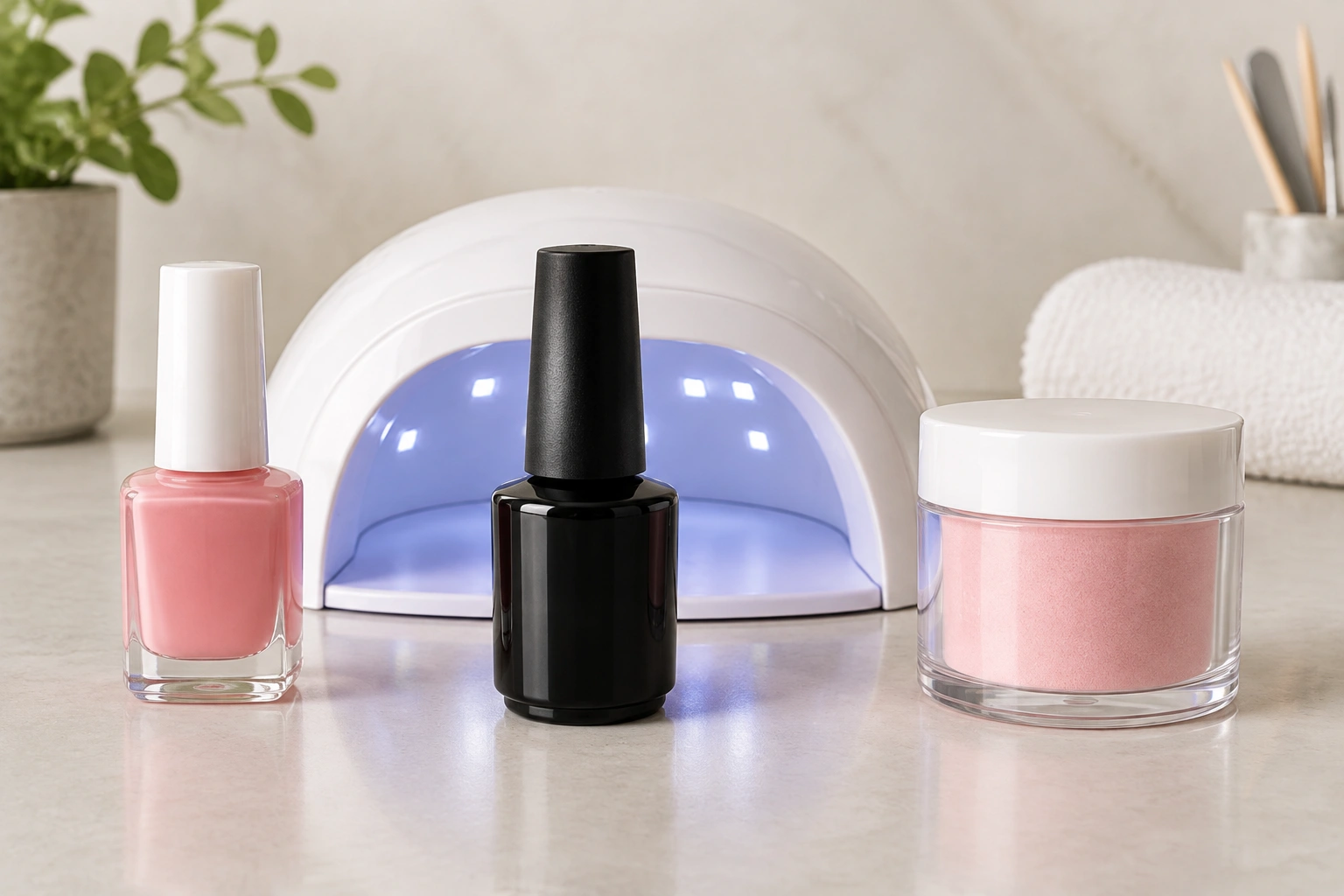
Not all nail products are treated the same way. If you want the best chance of a smooth appointment, match the product to the service.
| Product type | Likely salon acceptance | Why |
|---|---|---|
| Regular nail polish | Most likely | Easy to apply, no curing system needed |
| Gel polish | Sometimes | Must match the salon’s gel system and lamp |
| Dip powder | Less likely | Usually tied to a specific professional system |
| Specialty formulas | Depends | Brands, ingredients, and application methods vary |
Regular polish is the simplest option
If you are bringing a classic lacquer for a manicure or pedicure, many salons are comfortable with that. It is the least complicated option because it does not require a special lamp or a matching system.
Gel polish needs more caution
Gel is where policies get stricter. A salon may use its own gel line or prefer products that are known to cure properly under its lamp. If your gel bottle is from a different brand, the technician may still say no simply because they cannot guarantee the result with their setup.
If you want to understand the difference between curing methods and drying expectations, this guide on whether a UV lamp can dry regular polish may help you avoid a common mix-up.
Dip and other specialty systems are the most restricted
Dip powder, builder-type products, and other salon systems are more likely to be controlled by salon policy. Those services often rely on a full product set, not just one bottle you brought from home.
If your salon allows regular polish but not gel, dip, or another system, the simplest option is usually to bring a regular polish and book the matching service instead.
If your goal is a specific finish rather than a specific bottle, regular polish is usually the easiest request to accommodate.
How to Ask the Salon Before Your Appointment
A quick call or message is usually enough. Keep it simple and specific.
You can say:
“Hi, I have a manicure appointment and wanted to ask whether I can bring my own regular polish. It’s a standard polish, not gel. Is that okay for your service?”
If you are bringing gel, say so directly:
“Do you allow client-supplied gel polish, or do you only use salon products?”
That wording works because it gives the salon the exact information they need: the service type, the product type, and your question. It also avoids sounding like you are assuming or negotiating.
If you have a sensitivity or ingredient preference, mention that briefly. You do not need to overexplain. A simple note like “I prefer to use my own polish because of ingredient preferences” is enough.
For salons that publish policy details, their FAQ or booking page is often the best source. A salon guide like Lemon Drop Nail Bar’s BYOP policy shows how some businesses spell out that the bottle should be usable and suited to the booked service.
Will Bringing Your Own Polish Change the Price or Service?
Sometimes, but not automatically.
Many salons still charge the normal manicure or pedicure price even if you bring the polish. That makes sense because the appointment still takes time: nail prep, shaping, cuticle work, application, cleanup, and finishing all still happen. Salons usually do not charge less just because you bring polish, since the labor and appointment steps are still the same.
A discount may happen in some places, but you should never assume it. Ask in advance if pricing matters to you.
What may stay the same
- Nail prep and shaping
- Base coat and top coat application, if the salon uses them
- Drying or curing time
- The technician’s labor
What may change
- The salon may skip using its own polish inventory
- The technician may inspect your bottle before agreeing to use it
- The salon may refuse the product if it is not compatible
- A specialty service may be switched to a different product system
One practical way to think about it: bringing your own polish may save the salon product cost, but not necessarily service time. That is why the price often stays the same.
A salon article from Liberation Nails notes that many salons do not mind outside polish and may see it as saving time and money. That said, this is a business-specific perspective, and each salon still sets its own pricing rules.
What to Bring So the Polish Actually Works
If you want the appointment to go smoothly, bring more than just a bottle when needed.
For regular polish
Bring:
– Your polish
– A matching top coat if you want the finish to match your usual wear
– A base coat if the salon asks for one or if your polish is known to stain
For gel polish
Bring:
– The gel color
– Any required matching base coat or top coat, if the salon allows outside gel systems
– Information about the brand, if the salon asks
For other systems
Bring only what the salon has explicitly approved. Some systems are designed to be used as a full set, and a single bottle may not be enough.
Base coat, top coat, gel, dip, and other add-ons should only be brought if the salon approves them for that specific service. A bottle that is missing its matching components may not perform the way you expect. If the salon uses a different lamp or product line, even a good polish can become a poor fit.
Hygiene, Quality, and Compatibility Checks Before You Go
Before you pack your polish, look at the bottle.
If it is old, thick, separated, or nearly empty, the technician may have trouble applying it smoothly. That does not mean the product is unsafe to use in every case, but it may not give a clean finish. Thick polish can drag, streak, or take longer to level. A nearly empty bottle can also be frustrating because there may not be enough product for even coverage.
Check for:
- Separation that does not mix back together easily
- A stringy or gummy texture
- A strong change in smell
- A bottle so low that application will be difficult
- Missing label information if the salon wants to know the brand or formula
For ingredient or sensitivity concerns, the American Academy of Dermatology has helpful general information on nail and skin care. If you are worried about a reaction, a salon visit is not the place to experiment with an unknown product.
Also, remember that some salons may inspect your bottle for condition, expiration, or contamination before agreeing to use it. They may also decline outside products because they cannot control how the formula behaves with their service process. That is especially true with gels and specialty systems.
Etiquette for Bringing Your Own Products
Bringing your own polish is usually fine when you handle it like a normal service request, not a demand.
A few small habits make the appointment easier:
- Ask first instead of surprising the technician at the chair
- Bring a clean, usable bottle
- Be clear about whether it is regular polish or gel
- Accept it if the salon says no
- Don’t expect the technician to troubleshoot a bad formula for free
The most professional approach is calm and specific. If the salon can use your bottle, great. If not, you still have a plan.
A helpful comparison is this: bringing your own polish is a preference, not a requirement the salon must accommodate. Treating it that way keeps the conversation easy.
What to Do If the Salon Says No
If the salon does not allow outside polish, you still have a few good options.
Option 1: Use the salon’s polish
This is the simplest route. You get the service done without changing your appointment.
Option 2: Choose a different salon
If using your own polish is important because of brand preference, ingredient preference, or color matching, look for a salon that clearly welcomes outside products.
Option 3: Bring your polish only if the salon approves a specific service
Some salons may accept regular polish but not gel, or allow your bottle only if it is in good condition. That can be a workable compromise.
If the salon says no, try not to push the issue in the moment. A refusal usually reflects policy, not attitude.
When It Makes Sense to Bring Your Own Polish
Bringing your own polish is most useful when one of these applies:
- You need an exact color for an event
- You already own a shade you love and want to use it again
- You prefer a particular brand or finish
- You have ingredient or formula preferences
- You want to avoid choosing from a limited salon color selection
It is less useful when:
- You want the fastest possible appointment
- You are booking gel, dip, or another system with stricter product rules
- Your bottle is old or hard to work with
- You have not checked the salon’s policy yet
A salon guide from Beyond Polish points out that bringing your own polish can be especially helpful if you prefer certain polish requirements, such as non-toxic, vegan, or cruelty-free formulas. That is a real advantage when the salon’s selection does not match your preferences.
A Simple Decision Framework
If you are still deciding, use this quick filter:
- Regular polish + salon says yes: bring it
- Gel or specialty product + salon has not confirmed: ask first
- Bottle is old or questionable: replace it or use salon polish
- You care most about convenience: use the salon’s products
- You care most about a specific shade or formula: bring your own, but only after checking policy
That framework keeps the decision practical and avoids last-minute surprises.
When to See a Nail Technician or Dermatologist
If your reason for bringing your own polish is a suspected allergy, recurring irritation, or a reaction to a product, a salon visit alone may not be enough. A licensed nail technician can help with service options and product compatibility, but a dermatologist is the right professional for skin or nail symptoms that keep coming back or worsen after product use.
If you already know you are sensitive to certain ingredients, tell the salon before the appointment and keep the explanation brief and factual.
Final Takeaway
So, can you bring your own nail polish to a nail salon? Often yes — but only if the salon allows it and the product fits the service. Regular polish is usually the easiest request. Gel, dip, and specialty systems need more caution. The best move is to confirm the policy, and bring a bottle that is clean, usable, and appropriate for the appointment.
That one small bit of planning can save you from awkwardness at the chair and help you leave with the result you actually wanted.

