
Can You Get Nail Fungus from a Nail Salon? What to Know Before Your Next Visit

Yes, you can get nail fungus from a nail salon — but it is not automatic, and it is not something that happens in every salon visit. The risk depends on how tools are cleaned, whether foot baths are properly maintained, and whether the salon avoids cross-contamination between clients.
As a nail technician, I think the most helpful way to look at this is practical: nail fungus is possible anywhere fungi can move from one surface to another, but a careful salon lowers that risk a lot. The biggest concern is not the polish itself; it is contaminated tools, wet environments, and any service that creates tiny openings in the nail or surrounding skin.
If you want a broader salon-safety checklist beyond fungus specifically, my guide on what to ask for at a nail salon can help you speak up with confidence.
How nail fungus can spread in salon settings
Nail fungus, also called onychomycosis, is caused by fungi that can get into the nail plate, nail bed, or surrounding skin. In a salon, the most realistic transmission path is simple: a contaminated tool or surface touches one client, then touches another client without enough cleaning in between.
That is why shared equipment matters. The fungi involved in nail infections can survive on tools and in damp environments. Shared nail files, clippers, cuticle nippers, and buffers are the items I pay closest attention to because they move from client to client and come into direct contact with skin and nail edges.
Another route is foot-bath contamination. A foot bath or whirlpool basin can become a problem if it is not thoroughly cleaned between clients or if disposable liners are not used correctly. The water itself is not the issue by default; the issue is what may be living in the basin, jets, or surrounding surfaces.
A small cut, rough filing, or aggressive cuticle trimming can also make infection more likely because it creates a more open pathway. That does not mean every manicure or pedicure is risky. It means the service should be done carefully, with clean tools and a light touch.
It is also worth separating real transmission from a common misconception: nail fungus does not usually spread from polish bottles or from the air alone. The bigger risk is contact with contaminated tools, surfaces, or prep steps, not the bottle of polish sitting on the table.
Pedicure vs. manicure: which poses more risk?
Pedicures usually carry more exposure risk than manicures, mainly because feet spend more time in warm, moist shoes and are more likely to have tiny skin cracks, calluses, or existing athlete’s foot. A fungal infection of the foot can also spread to the nail, and a nail infection can spread back to the foot.
That said, manicures are not risk-free. A manicure can still spread fungus if tools are contaminated or if cuticle trimming causes small breaks in the skin. The difference is usually about exposure conditions, not the service name itself.
Here is the simple rule I use when I evaluate risk:
- Pedicure risk rises when the salon uses shared foot baths, reuses tools carelessly, or works on feet with visible skin irritation.
- Manicure risk rises when the salon uses the same implements on multiple clients or trims cuticles aggressively.
If you are choosing between the two services and your main concern is infection risk, a careful manicure is often easier to control. But a well-run pedicure can still be reasonable if the salon uses proper sanitation and disposable or freshly disinfected components.
Fungal infection, bacterial infection, or nail damage?
Not every discolored or damaged nail is fungus. A few symptom clues can help you tell the difference.
Fungal nail changes often develop slowly and may cause yellow, white, or brown discoloration, thickening, crumbling at the edge, debris under the nail, or gradual lifting.
Bacterial nail infections are more likely to look inflamed. You may see redness, swelling, pain, warmth, or drainage around the nail, especially if the skin has been broken. Greenish discoloration can sometimes happen with certain bacterial problems, but that is not something to diagnose on your own.
Non-infectious nail damage usually follows trauma or pressure. A nail that was bumped, over-filed, or irritated by shoes may turn dark, split, peel, or develop a white spot without any infection at all. Staining from polish can also change nail color without changing the nail’s structure.
If the change started right after a pedicure or manicure, it may be more likely to be trauma or staining than fungus. Fungus usually takes time to become visible.
Salon tools and surfaces that can carry fungus
Not every salon item is equally concerning. The highest-risk items are the ones that touch skin or nail debris directly.
Higher-concern items
- Nail clippers
- Cuticle nippers
- Metal pushers
- Emery boards
- Buffers
- Foot bath surfaces and jets
- Any reusable tool that was not cleaned between clients
Lower-concern items
- Sealed, single-use tools
- Fresh disposable liners
- Clean towels used once and laundered properly
- Closed polish bottles that are handled cleanly
The tricky part is that some tools can look clean even when they are not properly sanitized. A shiny clipper is not the same as a disinfected clipper. And a buffer or emery board is especially worth questioning, because these are often porous or hard to truly sanitize once they have been used.
If a salon is using the same emery board on multiple clients, that is a red flag in my book. I would not call that a small issue.
Disinfection vs. sterilization: what safe cleaning really means
This is one of the most misunderstood parts of salon hygiene.
Cleaning removes visible debris.
Disinfection lowers the number of germs on a tool or surface.
Sterilization is a higher-level process that eliminates more microorganisms than disinfection.
For nail services, the practical question is not whether a salon uses a fancy word. It is whether the salon has a real, repeatable process for the tools it reuses. Reusable metal tools should be cleaned and disinfected properly between clients. Some salons go further with sterilization methods such as an autoclave for certain implements, which is a stronger level of processing.
Single-use tools reduce cross-contamination because they are discarded after one client. That does not make them automatically perfect, but it does remove one major pathway for spreading fungi between people.
A salon can look spotless and still cut corners on sanitation. So when you judge a salon, look for process, not just appearance.
How to spot a hygienic nail salon
A safe salon is usually consistent, not just neat. Here is the checklist I recommend using before you sit down:
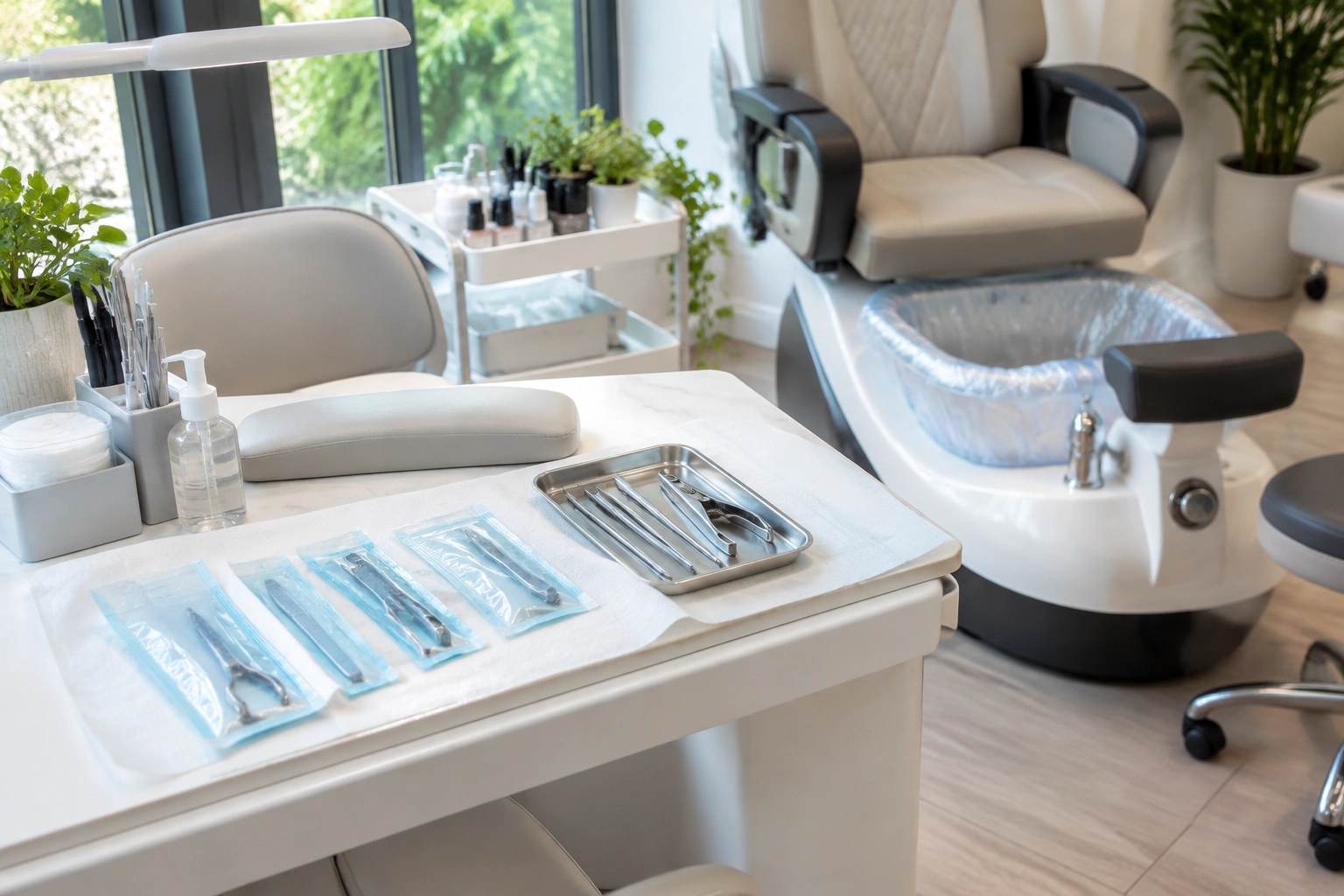
- Tools are opened from sealed packaging in front of you, or you see a clear disinfection system.
- Metal tools are not tossed back into a drawer after use.
- Foot baths are lined or cleaned between clients.
- Staff wash hands and use gloves when the service calls for it.
- Workstations are organized, with debris removed between appointments.
- The salon can explain, in plain language, how reusable tools are cleaned.
- Single-use items are actually discarded after one client.
- You can see sealed tool pouches, labeled disinfectant containers, fresh basin liners, or a visible basin-cleaning routine.
A good question to ask is: “How do you clean your tools between clients?” The answer should be specific, not vague. If someone says “we spray them,” that is not enough detail for me to feel comfortable. If they explain the cleaning, disinfection, and storage steps clearly, that is a much better sign.
For a salon visit that also includes polish or prep products, my guide to nail prep cleanser may help you understand what should be happening before polish goes on.
What you can do to lower your risk
You do not need to avoid nail services altogether to be careful. A few smart habits go a long way.
Bring your own tools
If you are comfortable doing so, bring your own nail file, clipper, and cuticle tools. That reduces exposure to shared implements. Just keep them clean and store them in a separate pouch so they do not pick up debris in your bag. Even then, a salon may still need to inspect or disinfect reusable items before use, and some single-use items should not be reused even if they are yours.
Decline questionable foot baths
If a pedicure station looks poorly maintained, has cloudy water residue, or seems to rely on the same basin without clear cleaning steps, skip it. A better option is a salon that uses liners or clearly sanitizes the basin between clients.
Avoid aggressive cuticle work
Cuticle trimming should be conservative. The more the skin is cut, the more entry points you create. If you want a neater look, ask for gentle pushing rather than deep trimming.
Do not ignore your own foot health
If you already have athlete’s foot, cracked skin, or a nail that is lifting, you have more reason to be cautious.
Warning signs of nail fungus after a salon visit
Nail fungus usually does not show up as a sudden, dramatic change. It tends to develop gradually. Look for:
- Yellow, white, or brown discoloration
- Thickening of the nail
- Brittle or crumbly edges
- Nail lifting away from the nail bed
- Distortion in nail shape
- Debris under the nail
These signs can point to onychomycosis, but they are not proof by themselves. Nail trauma, polish staining, pressure from shoes, and some skin conditions can look similar.
Also, scraping away buildup is not a fix. Surface scraping cannot remove all of a fungal infection if it is established in the nail or the tissue beneath it.
How long it takes for symptoms to appear
This is where many people get confused. Nail fungus usually develops slowly, so symptoms may not appear for weeks or even months after exposure. That delay makes it hard to tie one salon visit to one infection with certainty.
So if you notice a nail change a few days after a salon appointment, do not assume fungus immediately. Watch the pattern. Is the discoloration spreading? Is the nail thickening over time? Is the nail lifting more at the edge?
A gradual change is more concerning for fungus than a sudden spot that appeared after the nail was bumped or over-buffed.
What to do if you suspect you got an infection
If something looks off, take a calm, practical approach.
- Stop picking, scraping, or aggressively filing the nail. That can irritate the area and make it harder to assess.
- Keep the nail clean and dry. Moisture encourages fungal growth.
- Take a clear photo now and again in a week or two. That helps you track whether it is changing.
- Do not cover the nail with polish, gel, or acrylic until it has been assessed.
- Avoid sharing tools or polish with other nails.
- Book a visit with a podiatrist or dermatologist if the change persists or worsens.
A clinician can help tell the difference between fungus, trauma, staining, and other nail problems. That matters because the treatment approach is different depending on the cause.
If you are planning another salon visit while you monitor a nail, it may help to review what is a full set at a nail salon so you can decide whether a more involved service is worth postponing.
If the nail looks normal right after a visit
If you are worried about exposure but the nail still looks normal, there is usually nothing dramatic to do immediately. Keep the nail clean and dry, avoid picking at it, and watch for gradual changes over the next several weeks rather than expecting instant symptoms.
When to see a nail technician or dermatologist
See a nail technician for service adjustments, but see a dermatologist or podiatrist when the nail problem looks medical rather than cosmetic.
Get medical evaluation sooner if you have:
– Pain
– Redness
– Swelling
– Drainage
– Rapid worsening
– A nail that is lifting extensively
– Diabetes, poor circulation, or a weakened immune system
Those factors make delays riskier. They can also make a simple-looking nail problem more serious than it first appears.
If you are unsure whether a salon is sanitary enough, trust the practical signs: clear tool handling, clean foot baths, and a staff member who can explain their process without hesitation. That is usually a better guide than the salon’s decor or price point.
Quick answer: should you avoid nail salons altogether?
Not necessarily. A careful salon visit can be reasonable, especially if you choose a place with clear sanitation habits and you avoid obviously risky practices. The goal is not fear. The goal is to reduce avoidable exposure.
If you want the shortest version of this guide, it is this: nail fungus from a salon is possible, but the risk is shaped by sanitation, tool handling, and how the service is performed. Choose the salon the way you would choose any close-contact service — by process, not by promises.
For more general nail-care maintenance after a service, you may also find how to prevent nail polish from chipping useful, since keeping the nail intact can help you avoid unnecessary damage between appointments.

