
Can You Go to a Nail Salon With a Wart? What to Do Before Your Appointment

If you have a wart and a nail appointment coming up, the safest practical answer is: sometimes, but only with caution—and sometimes not at all.
A small, intact wart on a finger may be manageable for a manicure if you tell the salon in advance, keep the area covered, and the technician can avoid direct contact. A wart on the foot or sole is more complicated, especially for pedicures, because water, shared surfaces, and footwork increase the chance of cross-contamination. If the wart is open, bleeding, painful, blistered, infected, or actively peeling after treatment, reschedule and get it checked first.
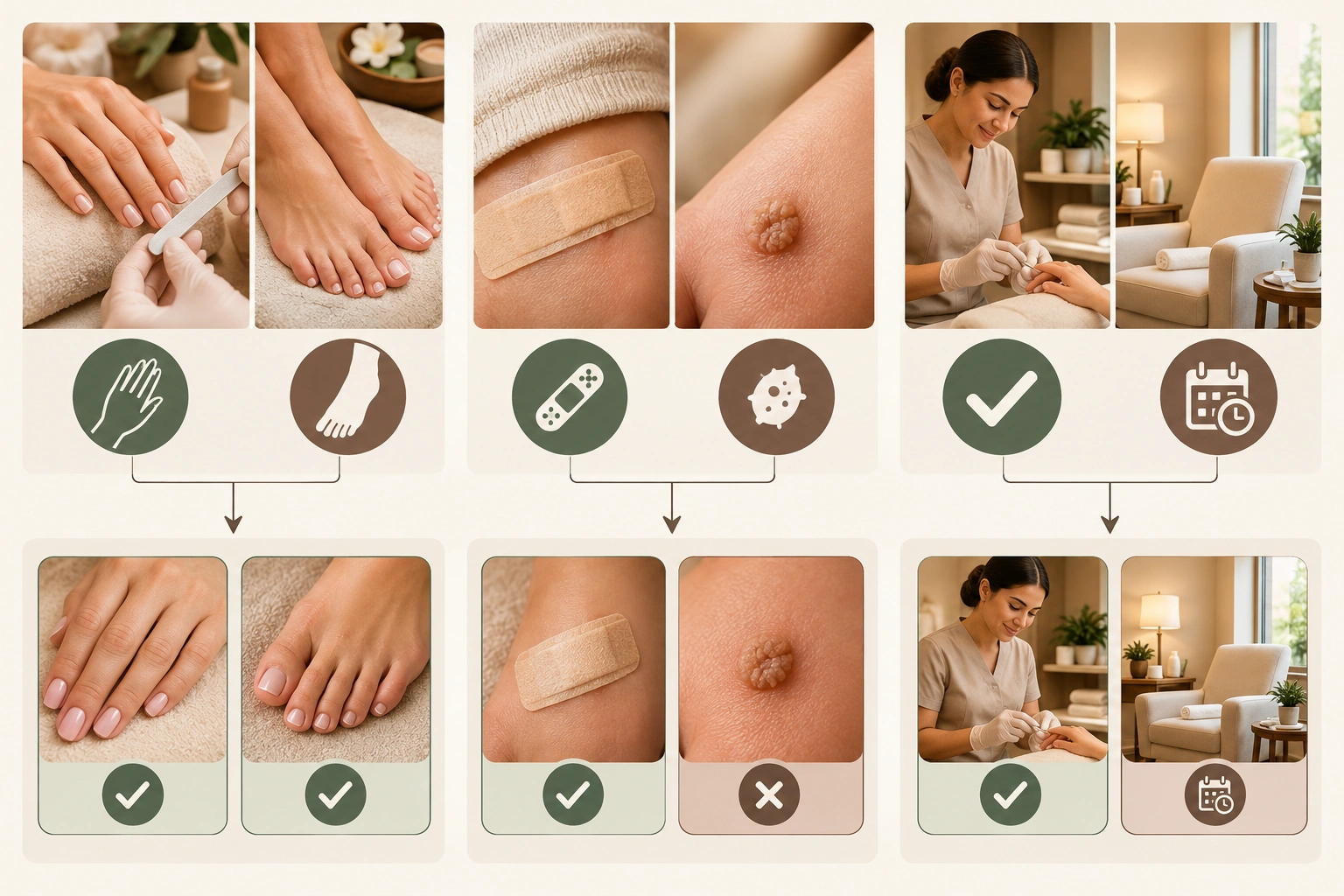
Warts are caused by HPV, and the virus spreads through contact with infected skin or contaminated surfaces. In a salon, that matters because tools, towels, footbaths, and filing can move skin debris from one person to another if hygiene is poor. The good news is that a careful salon can often reduce the risk a lot. The bad news is that no salon visit is completely risk-free if the wart is exposed or irritated.
Quick Answer: Can You Keep the Appointment?
Use this simple rule:
- Keep the appointment if the wart is small, intact, securely covered, and the technician can avoid it without touching broken skin.
- Call ahead and disclose it if you are unsure whether the salon can work around it.
- Reschedule if the wart is on a foot, is hard to cover, is near the area being filed or soaked, or is open or irritated.
That is the key distinction many people miss: the issue is not just whether you have a wart. It is whether the wart can stay protected through the service without exposing other people or getting worse itself.
If you want to compare the trade-offs quickly, this table helps:
| Situation | Manicure | Pedicure |
|---|---|---|
| Small wart on finger, covered well | Often manageable with disclosure | Not relevant |
| Wart on toe or sole | Usually less direct risk than foot service, but still disclose | Higher concern because feet, moisture, and tools are involved |
| Visible but intact wart | May be possible if avoided | May be declined depending on salon policy |
| Open, bleeding, blistered, or peeling wart | Postpone | Postpone |
| Wart that cannot stay covered | Postpone | Postpone |
For general salon communication tips, our guide on what to ask for at a nail salon can help you phrase things clearly before you book.
What a Wart Is and Why Salons Worry About It
A wart is a contagious skin growth caused by HPV. In plain terms, it is a virus-driven skin issue, not just a rough patch of skin. That matters in a salon because the virus can spread when skin is nicked, filed, or exposed to contaminated tools or surfaces.
Warm, moist spaces are especially concerning because they make it easier for skin debris and moisture to linger. That is one reason pedicure stations get extra attention. A footbath, a pumice stone, or aggressive filing can create the kind of environment where a virus can move from one surface to another more easily if sanitation is sloppy.
The practical takeaway is simple: if there is a wart, keep it from touching shared tools or surfaces as much as possible.
Is It Safe to Get a Manicure or Pedicure With a Wart?
The safest answer is not the same for every appointment.
Manicure: usually lower risk, but still not automatic
A wart on a finger or hand may be easier to work around if it is small, dry, and fully covered. A technician may be able to shape nails, apply polish, and avoid the area entirely. But if the wart is near the cuticle, on the side of the finger, or in a spot that will be pushed, buffed, or soaked, the risk goes up.
Pedicure: more caution needed
A wart on the foot, heel, sole, or toe is more concerning for a pedicure. That is especially true for a plantar wart, because the service often involves soaking, drying, filing, and close contact with the exact area that needs protection.
A practical rule to follow is to avoid a pedicure if the wart area is open, painful, blistered, infected, or actively peeling after treatment. Even when the skin is intact, tools, footbaths, and aggressive filing can create extra contamination and irritation risk if the salon cannot work around the wart cleanly.
Hand Wart vs. Foot Wart vs. Plantar Wart
Location changes the advice more than most people expect.
Hand wart
A hand wart may be easier to isolate during a manicure. If it is not on the fingers being worked on, and you can keep it covered, the appointment may still be reasonable. The technician still needs to know about it, though, because gloves, files, and hand contact can all become part of the decision.
Foot wart or toe wart
A foot wart matters more for pedicures because the service area overlaps with the affected skin. Even if the wart is small, the technician may need to soak, dry, and inspect the foot closely. That creates more opportunities for accidental contact.
Plantar wart
A plantar wart sits on the sole of the foot, where pressure, moisture, and friction are already high. That is the least convenient location for a pedicure because it is difficult to protect completely without interfering with the service.
A useful rule of thumb: the closer the wart is to the area being soaked, filed, or touched, the less salon-friendly it becomes.
When You Should Postpone the Appointment
Reschedule if any of these are true:
- the wart is open, bleeding, or raw
- the skin around it is blistered or peeling
- it hurts to the touch
- it is actively spreading or multiplying
- you cannot keep it covered securely
- the appointment is a pedicure and the wart is on the foot, toe, or sole
- you recently picked, shaved, or treated the area and the skin is irritated
That last point matters. If the skin barrier is damaged, the salon visit becomes a worse idea.
When in doubt, postponing is usually the cleaner choice. You are not just protecting the salon; you are also protecting the wart from extra friction and moisture that can make it harder to heal.
How to Prepare a Wart Before Going to the Salon
If you decide to keep the appointment, preparation matters.
Use a secure waterproof covering
A plain bandage may loosen in water, so the goal is a cover that stays put through the service. If the wart is on a finger or toe, the covering should be snug enough that it will not slide off when your hands or feet are washed.
That said, covering helps reduce exposure; it does not make the wart disappear. If the salon has to work directly over it, the safer move is still to reschedule.
Do not pick, shave, or file the area
Avoid trimming around the wart, shaving nearby skin, or trying to “smooth” it before the visit. Those habits can break the skin barrier and make spread more likely.
Keep the area dry before the appointment
Moisture can loosen coverings. If you are going to a pedicure, arrive with the wart area as protected and dry as possible, and do not remove the covering unless the technician asks and can do so safely.
What to Tell the Nail Technician Before Service
Say it early, briefly, and without apology.
You can use a simple script like:
“I have a wart on my [finger/toe/foot]. It’s covered, but I wanted to let you know before we start so you can avoid the area.”
That gives the technician the information they need without making the conversation awkward. It also lets the salon decide whether they can proceed under their hygiene policy.
A responsible salon may ask whether the wart is open, painful, or recently treated. They may also decide to modify the service or decline it. That is not personal; it is part of infection control.
If you are booking in advance, ask whether they can work around the area and what sanitation steps they use. Practical questions include whether they use single-use files or pumice where appropriate, fresh footbath liners, and clean towels for each client.
What Nail Salons May Do in Practice
In real life, salons usually fall into one of three camps:
- They proceed carefully and avoid the wart area entirely.
- They modify the service so the affected area is not touched.
- They refuse or reschedule if they think the risk is too high.
All three responses are reasonable. A nail technician is not being difficult if they say no to a service that could expose staff or other clients.
Common real-world responses include asking you to keep the wart bandaged, avoiding soaking that area, switching to a dry or no-soak approach, or declining a foot service altogether if the wart is on the sole or toe. Some salons will simply say they cannot work over a visible wart, even if it is covered, because of their hygiene rules.
A technician may also decide they can do the manicure but not touch the specific finger with the wart, or they may offer to modify the service so the area is left alone.
How to Protect Other Clients, the Technician, and Yourself
Use this short checklist:
- Keep the wart covered as securely as possible.
- Tell the technician before the service begins.
- Do not let the area touch shared tools or surfaces.
- Accept it if the salon wants to avoid the area, modify the service, or stop the service.
- Do not ask a technician to work directly over broken, irritated, or uncovered skin.
Basic infection-control practices in nail services also include changing gloves when needed, using clean or single-use abrasive items, and disinfecting reusable tools correctly between clients. Those steps are especially relevant if a wart is present or suspected.
If you are comparing home care versus salon care, home treatment first is often the better choice when the wart is active or hard to cover. A salon visit can wait; an irritated wart usually does not improve because you pushed through a manicure or pedicure.
When to See a Nail Technician or Dermatologist
See a dermatologist or other medical professional first if the wart is:
- painful
- rapidly changing
- spreading
- bleeding
- infected-looking
- repeatedly irritated by shoes, socks, or salon-style grooming
- located in a spot that makes any salon service impractical
For salon-specific concerns, a good nail technician can tell you whether they are comfortable working around the area. But if the skin is broken or the wart is changing quickly, medical advice should come before a beauty appointment.
That is especially true for plantar warts and toe warts, where pressure and moisture can keep the area irritated. If you are unsure, it is better to treat the wart as the priority and move the appointment later.
FAQ
Can a nail salon refuse service if I have a wart?
Yes. Many salons have hygiene policies that allow them to decline or modify a service if they believe there is a cross-contamination risk.
Should I cover the wart before I go?
Yes, if you are keeping the appointment. A secure waterproof cover is better than leaving it exposed, but it does not guarantee the service is appropriate.
Is a small wart less of a problem?
Smaller does not automatically mean safer. Location, skin condition, and whether the area can stay covered matter more than size alone.
Can I get a pedicure with a wart on my foot?
Sometimes, but it is the more cautious case. If the wart is on the sole, toe, or anywhere likely to be soaked or filed, rescheduling is often the better choice.
What if I already booked and just noticed the wart?
Call the salon before you go. That gives them a chance to tell you whether they can work around it or whether they prefer to reschedule.
Will the technician be offended if I mention it?
Usually not. Most technicians would rather know early than discover it mid-service. Clear disclosure is simply part of good salon etiquette.
Bottom Line
You can sometimes go to a nail salon with a wart, but only when the wart is intact, well covered, and unlikely to be touched, soaked, or filed. Hand warts are usually easier to work around than foot or plantar warts, and pedicures deserve the most caution. If the wart is open, irritated, painful, or hard to protect, reschedule and deal with it first.
The calm, professional move is to tell the salon ahead of time, let them decide whether they can safely proceed, and follow their hygiene rules if they require a cover, a service change, or a reschedule.

