
Can You Refill Nail Oil Pens? A Practical Guide to Safe Reuse

Nail oil pens are convenient, tidy, and easy to keep in a bag or desk drawer. But once the oil runs low, many people ask the same question: can you refill nail oil pens?
The short answer is yes, some can be refilled, but not all of them are meant to be opened. Refillable pens usually have a design that lets you access the reservoir or cartridge. Sealed, pre-filled pens are often disposable and should not be forced open.
If you want to reuse an empty pen, the first job is identifying the mechanism. That matters more than the oil itself, because the wrong opening method can crack the barrel, damage the brush tip, or make the pen leak after refilling.
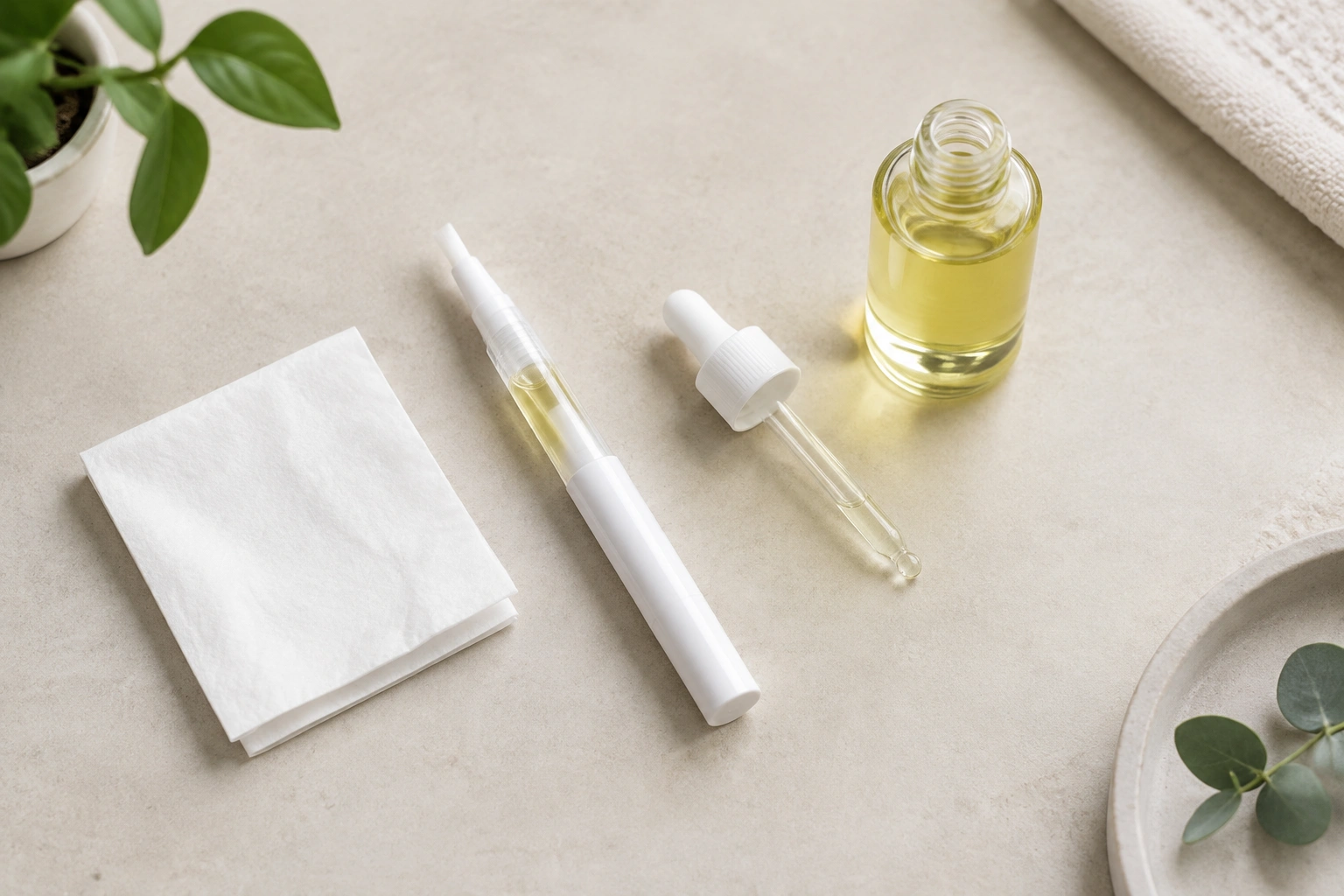
Can You Refill Nail Oil Pens?
Yes, but only if the pen is designed for it.
A refillable nail oil pen usually has one of these setups:
- A twist-off end cap or base
- A removable cartridge
- A barrel that can be filled with a dropper or syringe
- A brush-tip system that can be reopened without breaking the housing
A disposable nail oil pen is different. It may look similar from the outside, but the barrel is often sealed at the factory. If the pen does not unscrew, pry open, or separate at a clear seam, it is usually not intended for refilling.
That distinction matters because forcing open a sealed pen can ruin the applicator. Once the tip or internal seal is damaged, the pen may stop dispensing even if you manage to add oil.
Quick rule of thumb
If the packaging, brand instructions, or product page says the pen is refillable, that is your green light. If it does not mention refilling and the pen feels fully sealed, treat it as disposable.
How to Tell Whether Your Nail Oil Pen Is Refillable
You do not need to guess. A few practical checks can save time and prevent damage.
Look for a visible opening point
Refillable pens often have one of these common mechanisms:
- Screw-top base or cap: the bottom or top unscrews to reveal the reservoir
- Replaceable cartridge: the outer barrel opens and a small inner cartridge lifts out or clicks free
- Brush-tip pen with a removable housing: the brush assembly pulls out or unscrews so the barrel can be filled
- Sponge reservoir pen: the end cap opens and the inner sponge insert can be removed or saturated through a fill opening
If the pen has a clear seam where parts separate, that is a better sign than a smooth, fully sealed tube. A model page or package that mentions a cartridge, refill, or replacement tip is another clue that it was made for reuse.
Check the packaging or product page
Manufacturers usually say whether a pen is refillable. If the instructions mention a cartridge, refill, or replacement tip, the pen is likely reusable. If the product is sold as a pre-filled convenience item with no refill guidance, assume it is disposable unless the brand says otherwise.
Watch for warning signs that it is not meant to be opened
Do not try to force a pen open if you notice:
- No seams or removable parts
- A rigid, one-piece body
- A tip that looks permanently crimped in place
- Resistance that feels like plastic twisting against a fixed seal
Those are signs the pen may be a sealed dispenser. Forcing it can cause cracks or leaks.
Compare refillable vs disposable pens
| Feature | Refillable pen | Disposable pen |
|---|---|---|
| Opening method | Often unscrews or separates | Usually sealed |
| Best use | Repeated reuse | One-time convenience |
| Risk of damage when opening | Lower if designed for refilling | Higher if forced open |
| Cleaning before reuse | Usually needed | Not practical |
| Long-term cost | Lower if reused several times | Higher over time |
| Convenience | More maintenance | Easier to use and replace |
If you want a reusable option, buy the pen with refilling in mind from the start. That is much easier than trying to convert a sealed pen later.
What Type of Nail Oil Works Best in a Refillable Pen
The best refill is one that flows well through the tip and stays easy to dispense.
In practice, that usually means a light cuticle oil blend rather than a very thick oil. Many refillable pens work better with formulas based on carrier oils such as jojoba or sweet almond oil, sometimes blended with vitamin E oil. Jojoba is popular because it often feels lightweight and spreads easily, which can work well in a brush-tip pen.
What to avoid
Very thick oils can clog the tip or slow the flow. That includes dense blends that are heavy on waxy ingredients or overly rich add-ins. If a formula moves slowly in a bottle, it will usually move even more slowly through a pen.
Also avoid adding random ingredients just because they sound nourishing. Essential oils, fragrance-heavy mixes, and DIY blends with unknown stability can irritate skin or separate over time. If you make your own blend, keep it simple and cosmetic-focused.
A practical formula choice
If you want the least trouble, choose a pre-mixed cuticle oil that is already designed for nail use and flows easily. If you prefer a DIY blend, keep the texture light enough that it can wick through the brush tip without needing force.
How to Refill a Nail Oil Pen Safely
Refilling is straightforward when the pen is truly designed for it, but cleanliness matters.
What you need
- Your empty refillable nail oil pen
- Clean hands
- A small dropper or syringe
- The oil you plan to use
- A clean tissue or paper towel
- A flat work surface
Step-by-step refill process
-
Make sure the pen is empty or nearly empty.
If the pen still has old oil inside, it can mix with the new formula. That is not always a problem, but if the old oil smells off or looks cloudy, do not top it up. Clean it first or replace it. -
Open the pen according to its design.
- For a screw-top cartridge or base, unscrew the designated end and remove the cartridge if there is one.
- For a brush-tip pen, gently separate the barrel where the manufacturer intended it to open, then fill the reservoir without forcing the brush section.
-
For a sponge reservoir pen, open the fill point or remove the insert if the design allows it, then add oil slowly so the sponge can absorb it.
Never use force if the parts do not move easily. -
Keep the tip and reservoir clean.
Set the brush or applicator down on a clean tissue rather than a bathroom counter or makeup bag lining. -
Add the oil slowly.
Use a dropper or syringe to fill the reservoir without overfilling. Stop before the pen looks packed full. Leaving a little space helps prevent leaks.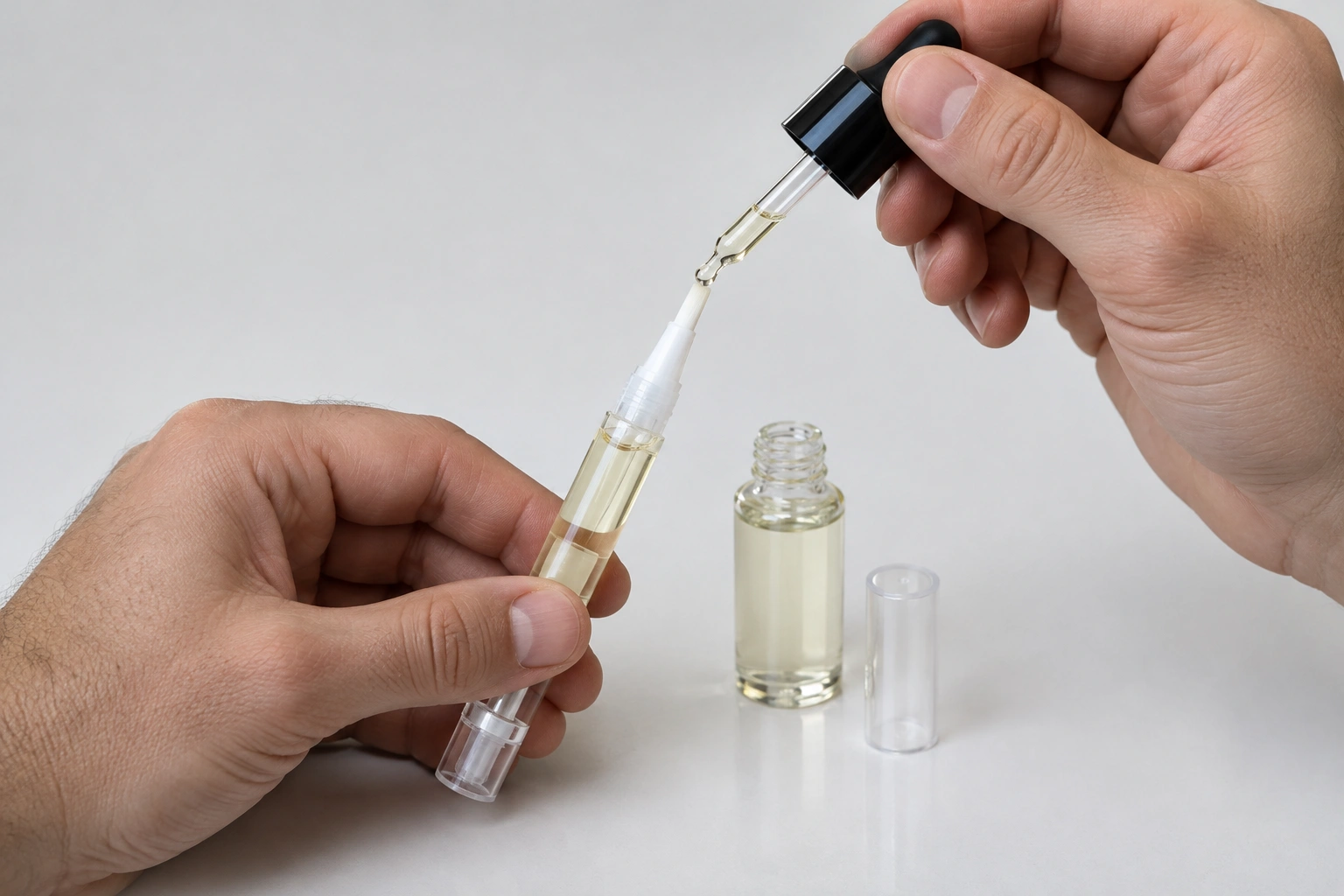
Add oil slowly to avoid overfilling the reservoir. -
Reassemble the pen securely.
Tighten the cap or base until it feels snug, but do not overtighten plastic parts. -
Wipe away any excess oil.
Clean the outside of the pen so it does not feel slippery in your hand or leak into your bag. -
Test the flow.
Hold the tip against a clean tissue and gently press or twist as the design requires. If the oil does not appear right away, the pen may need priming.
A refill does not need to be messy. If oil is dripping from the seams, the pen is probably overfilled or not sealed correctly.
How to Clean and Prime the Pen After Refilling
Cleaning and priming are separate tasks, and both matter.
Cleaning before refilling
If the pen is reusable and has residue inside, start by wiping the accessible parts with a clean tissue. This is enough when the pen only has a light film of oil left behind.
If residue is heavier and the design allows the tip or reservoir to be removed safely, you can flush the reachable parts with a small amount of compatible cleaner or warm water only if the manufacturer says that is safe for the material and mechanism. Then dry the parts completely before refilling.
If the old oil smells stale, appears separated, or has changed color, replace it rather than mixing it with fresh oil. If there is visible contamination, mold, or grime inside the pen, do not try to save it with a quick wipe—replace the pen instead.
Priming after refilling
Priming means getting the oil to move through the tip for the first time. Some pens need a few gentle turns, presses, or strokes before the brush becomes saturated.
If the pen seems dry after refilling:
- Hold it tip-down for a short time
- Gently work the mechanism as designed
- Tap the tip lightly on a tissue
- Give it time to wick before trying again
Do not squeeze hard or twist aggressively. That can flood the tip or force oil out of the seams.
How Many Times Can You Refill a Nail Oil Pen?
There is no exact universal number, because tip wear and seal quality depend on the brand, the plastic used, and how carefully the pen is cleaned. In general, many refillable pens can tolerate several refills before performance starts to drop.
A practical rule is to watch for these signs:
- The tip no longer dispenses evenly
- The seal starts to loosen
- The barrel begins to leak after refilling
- The brush or sponge feels worn, frayed, or compressed
Once those issues start, the pen is usually near the end of its useful life even if the barrel still opens.
Common Problems After Refilling and How to Fix Them
Even a refillable pen can misbehave if the oil is too thick or the reservoir is not assembled correctly.
The pen is not dispensing
This usually happens for one of three reasons:
- The tip has not been primed
- The oil is too thick
- The internal flow path is blocked
Try letting the pen sit tip-down for a short time and then test it on a tissue. If nothing happens, the formula may be too heavy for the applicator.
The pen is leaking
Leakage often means the pen was overfilled or not closed tightly enough. Wipe the pen clean, remove a small amount of oil if possible, and reassemble it carefully. Store it upright while you check whether the leak stops.
The oil looks cloudy or smells off
That is a hygiene issue, not a flow issue. Discard the contents and clean or replace the pen. Cosmetic oils can be contaminated if dirty tools, moisture, or residue get inside the barrel.
The tip feels clogged
A clogged tip usually points to a thick formula or residue from an older oil. If the pen design allows, clean the tip gently and switch to a lighter oil. If the tip remains blocked, replacement may be the better option.
The pen works once, then stops
That can happen when air gets trapped in the reservoir or the oil is not moving consistently through the applicator. A lighter formula and a more careful fill usually help. If the mechanism is worn, repeated refills may not solve the issue.
When to Refill vs Replace the Pen
Refilling makes sense when the pen is still in good condition and the mechanism works as intended. Replacement is the smarter choice when the pen starts to fail.
Refill if:
- The barrel opens cleanly
- The tip still dispenses oil properly
- The body is intact
- You like the formula and want to keep using the same pen
- The pen is clean and there is no contamination inside
Replace if:
- The pen is sealed and not designed to open
- The tip is cracked or worn
- The pen leaks after every refill
- The mechanism clogs repeatedly
- The inside looks dirty and cannot be cleaned safely
- The seal or tip has already been refilled enough times that performance is dropping
For salon clients and DIY users, the decision often comes down to convenience versus reuse. Refilling can reduce waste and may cost less over time, but a worn-out pen can become frustrating fast. Buying a new pen is usually more hygienic and convenient, especially if the old one has residue, a weak seal, or a damaged tip. If you spend more time troubleshooting than using the product, replacement is usually the better call.
How to Store a Refilled Nail Oil Pen
A refilled pen can work well when the oil is kept covered and the applicator stays clean.
Best storage habits
- Keep the cap on tightly
- Store the pen upright when possible
- Avoid leaving it open on a vanity for long periods
- Keep it away from damp bathroom storage if the cap does not seal well
If you carry the pen in a bag, check it occasionally for leaks. A small amount of oil on the cap is a sign the seal may not be tight enough.
When to See a Nail Technician or Dermatologist
If your nail skin becomes persistently red, itchy, or irritated after using a cuticle oil, stop using that product and check the ingredient list. A nail technician can help you choose a better applicator or formula for salon use, and a dermatologist can evaluate ongoing skin irritation or nail changes that do not improve.
Bottom Line
So, can you refill nail oil pens? Yes, some of them are designed for it, but many are sealed and should be replaced instead of opened. The safest approach is to identify the pen type first, use a light oil that flows well, refill slowly, and keep the pen clean and tightly closed. If the tip wears out or the mechanism fails, replacement is often the more practical choice.
FAQ
How can I tell if my nail oil pen is a screw-top, cartridge, or brush-tip design?
A screw-top pen usually has an end cap or base that visibly twists off. A cartridge design often has an outer shell and a smaller inner insert that lifts out or clicks free. A brush-tip design usually opens at a seam near the brush housing and uses a felt or brush applicator that needs priming after refilling.
Is refilling a nail oil pen worth it?
It can be, especially if the pen is reusable and the tip is still in good shape. Refilling is usually cheaper over time, but buying a new pen is often faster and cleaner if the old one is dirty, leaking, or hard to reopen.
How many refills does a nail oil pen usually handle?
There is no fixed number. Some pens handle several refills before the tip or seal starts to wear out, while others fail sooner. If the pen leaks, clogs repeatedly, or stops dispensing evenly, it is probably time to replace it.
What should I do if there is old residue inside the pen?
If it is only a light residue, wipe the accessible parts. If the design allows, you can flush removable parts and dry them completely. If the residue is dirty, smells off, or looks contaminated, replace the pen instead of trying to salvage it.
Can I refill a pre-filled cuticle oil pen?
Usually not unless the brand says it is refillable. Pre-filled pens are often sealed for convenience and may break if you try to open them.
How do I know if the oil is too thick for the pen?
If the pen dispenses slowly, clogs often, or only works after repeated priming, the oil may be too thick for that applicator. A lighter cuticle oil blend is usually easier to use.

