
Difference Between Base Coat and Top Coat: A Beginner’s Guide to Nail Polish Basics

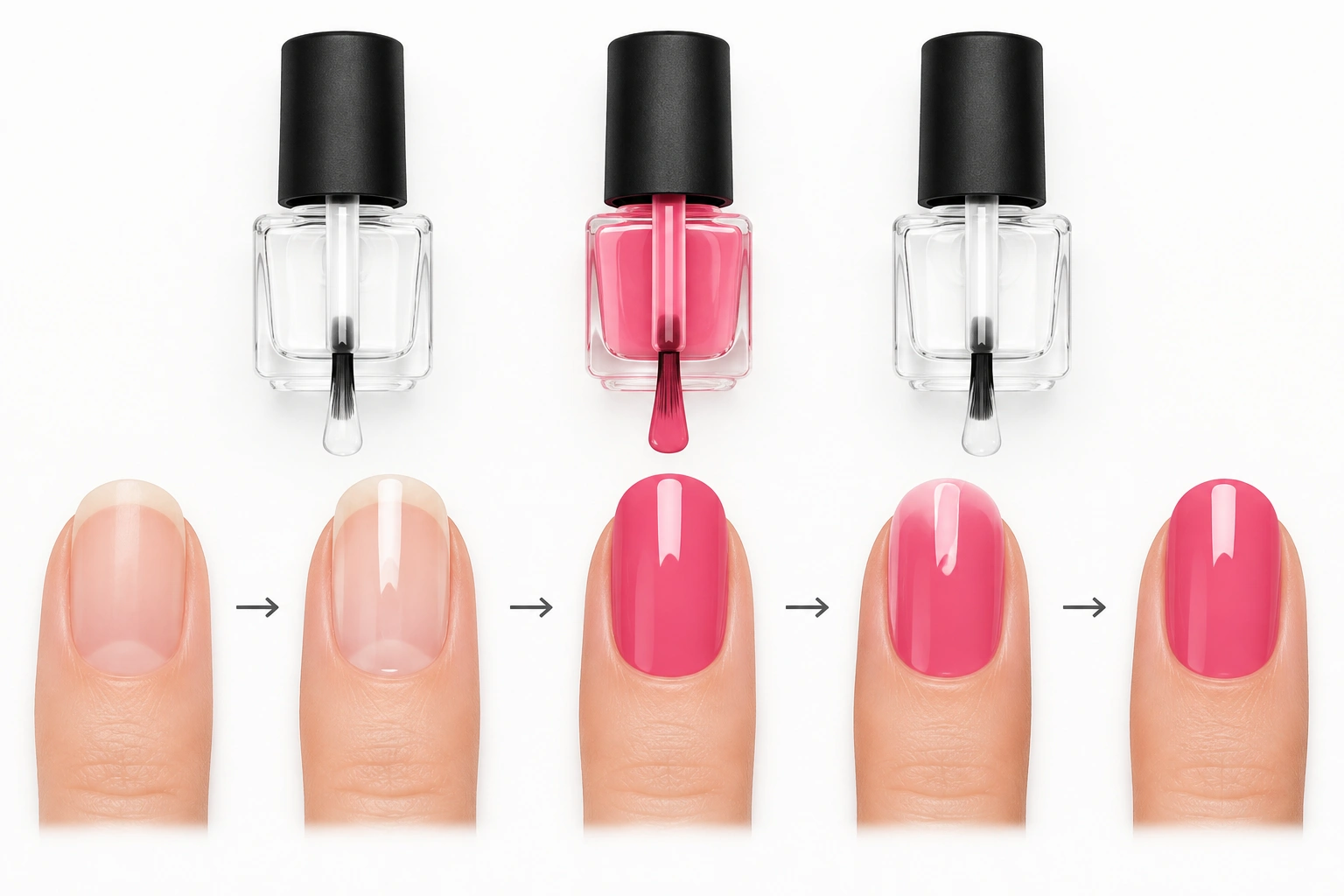
If you’re learning how nail polish works, the easiest way to remember the difference between base coat and top coat is this: base coat goes under color to help it stick and protect the nail, while top coat goes over color to seal the manicure and finish the look. They are not interchangeable, and each one solves a different problem.
Think of base coat as the prep layer and top coat as the finishing layer. If you skip base coat, polish may not grip as well and your nails may stain more easily. If you skip top coat, the manicure can lose shine faster and chips may show up sooner.
Quick Answer: Base Coat vs Top Coat
A base coat is the first clear layer you apply before nail color. Its job is to create a smoother surface, help polish adhere, and give your nail a barrier between the natural nail and pigment.
A top coat is the last clear layer you apply after color. Its job is to seal the manicure, add shine or another finish like matte, and help protect the polish from everyday wear.
If you only remember one rule, remember this: base coat first, top coat last.
What a Base Coat Does
A base coat is made to sit directly on the natural nail. It gives your manicure a better foundation, which is why it belongs at the beginning of the routine.
Base coat formulas are designed for adhesion and barrier function. In simple terms, they help polish grip the nail better and help keep pigment from reaching the natural nail as easily.
Helps polish grip the nail
Polish tends to wear better when it has a proper base underneath it. A base coat gives color something to cling to instead of letting it sit directly on the nail plate. That can make a manicure look smoother and wear more evenly.
Creates a barrier against staining
Dark and strongly pigmented colors can leave stains on natural nails, especially if you wear them often. A base coat acts like a buffer between the color and your nail. If staining is a concern, a stain-blocking base coat is worth looking for.
Can smooth the nail surface
Some base coats are made to help with ridges or uneven texture. A ridge-filling base coat can help even out the surface before color goes on.
May support weak or peeling nails
You’ll also see strengthening base coats. These are usually chosen by people whose nails feel soft, bend easily, or peel at the ends. They do not replace good nail care, but they can be a practical option if you want a firmer-feeling base under polish.
For general cosmetic safety and labeling guidance, it’s sensible to check product directions and ingredient lists from trusted sources such as the FDA’s cosmetics information.
What a Top Coat Does
A top coat goes over your color polish. It is the finishing layer that helps the manicure look polished and hold up better through normal daily use.
Top coat formulas are designed to harden and seal the surface of the manicure. That sealed layer can help improve chip resistance and protect the color from everyday wear.
Seals the color
Once your polish is dry enough to continue, a top coat locks in the color layer underneath it. That extra layer helps protect the manicure from light scuffs and surface wear.
Adds shine or changes the finish
Most people think of top coat as the glossy layer that makes polish look finished. That’s common, but it’s not the only option. A matte top coat removes shine and gives the manicure a flat finish instead. So top coat affects both protection and appearance.
Can help improve wear
A top coat often helps a manicure look fresher for longer because it protects the color layer from rubbing and dulling. Chip-resistant and long-wear top coats are common options if you want extra durability. A quick-dry top coat can also make the routine feel faster, which is useful for beginners who do not want to wait as long between steps.
Reapply top coat if the shine starts to fade or the tips begin to look worn. For many at-home manicures, a thin refresh coat every few days can help the finish look neater.
If you want a simple example, a glossy top coat keeps red polish looking bright and shiny, while a matte top coat turns the same red into a soft, non-shiny finish.
Base Coat vs Top Coat: Side-by-Side Comparison
Here’s the simplest way to compare them:
| Feature | Base Coat | Top Coat |
|---|---|---|
| Where it goes | Under nail color | Over nail color |
| Main job | Helps polish adhere and protects the nail | Seals the manicure and finishes the look |
| Best for | Staining, uneven nails, weak nails, better grip | Shine, matte finish, chip resistance, faster dry-down |
| Finish | Usually clear and plain | Glossy, matte, quick-dry, or gel-like look |
| Can replace the other? | No | No |
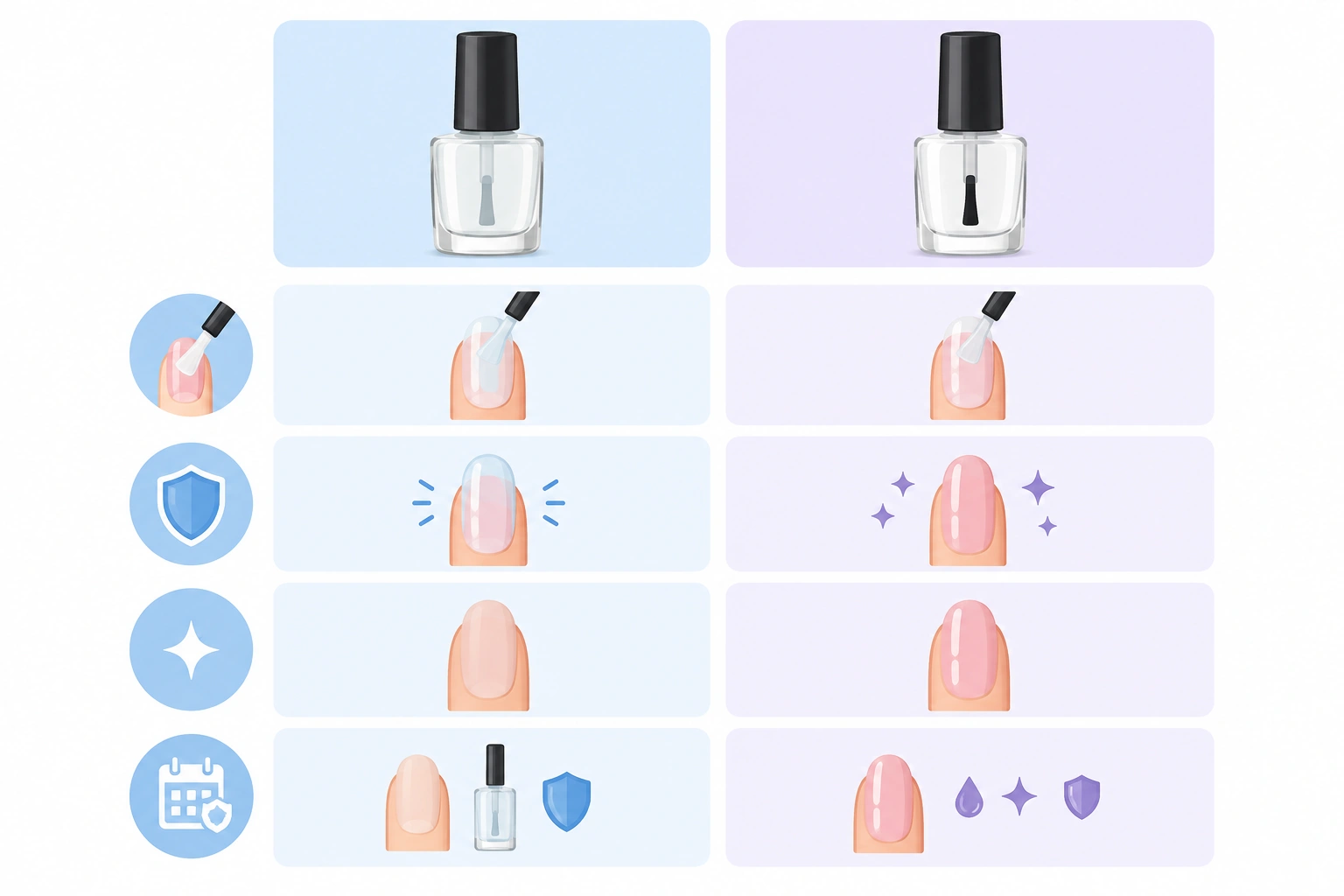
The biggest functional difference is not just where they go. It’s what they are designed to do. Base coat is made for the nail underneath. Top coat is made for the surface on top.
Which One Goes On First?
The order is simple:
- Prep your nails.
- Apply base coat.
- Let it dry as directed.
- Apply nail color.
- Add a top coat at the end.
If you reverse the order, the manicure will not work the way it should. A top coat is not made to sit under color, and a base coat is not meant to be the final sealing layer.
If you want a deeper look at drying time and why each layer needs a little patience, our guide on how long base coat takes to dry can help.
Do You Need Both Products?
For a basic manicure, both products are useful. If you want the best balance of wear, protection, and finish, using both is the most practical choice.
A simple rule for beginners: buy both if you want to prevent more than one issue at once. For example, if you deal with staining and chipping, or dullness and peeling, both products make sense. If you only have one main concern, start with the product that solves that problem first.
- If your nails stain easily, start with a base coat.
- If your nails already look fine but your polish dulls fast, start with a top coat.
- If your nails chip quickly and you want the most complete routine, buy both.
A beginner who paints nails with dark burgundy polish, for example, will usually benefit from both: base coat to reduce staining and top coat to seal the color.
How to Choose the Right Base Coat
Base coats are not all the same. Choose one based on the nail issue you want to solve.
Choose a strengthening base coat if nails feel weak
If your nails bend, peel, or split easily, a strengthening formula may be a better starting point than a plain base coat. It gives you a more targeted option for fragile nails.
Choose a ridge-filling base coat if the nail surface is uneven
If polish looks bumpy or catches on ridges, a ridge-filling base coat can help smooth things out before color goes on.
Choose a stain-blocking base coat for dark polish
If you wear reds, blues, or other highly pigmented shades often, stain-blocking is the feature to look for. This is especially useful if you like switching colors often and want your natural nails to stay clearer between manicures.
A related product category is the nail dehydrator and bonder, which serves a different purpose than a base coat. If you want to understand that difference too, see our guide to nail dehydrator vs bonder.
How to Choose the Right Top Coat
Top coats are usually chosen by finish and convenience.
Choose a glossy top coat for a classic manicure look
If you want that fresh, shiny salon-style finish, a standard glossy top coat is the simplest choice. It works well for everyday polish and keeps the color looking brighter.
Choose a quick-dry top coat if speed matters
If you do your nails at home and want to reduce waiting time, a quick-dry top coat is useful. It can make the routine feel easier for beginners who are still learning how long to wait between steps.
Choose a matte top coat for a non-shiny finish
If you want a softer, modern look, matte is the answer. It changes the appearance of the same polish color without changing the color itself.
Choose chip-resistant or long-wear formulas for extra durability
If your polish tends to chip fast, look for chip-resistant or long-wear top coats. These are common beginner-friendly choices when the main goal is keeping the manicure intact a little longer.
If you’re unsure how long to wait between layers, our article on how long to wait between coats of nail polish gives a simple timing guide.
Simple Beginner Application Order
Here is a straightforward manicure routine that keeps the products in the right place:
- Wash and dry your hands.
- Shape your nails.
- Gently clean the nail surface.
- Apply one thin coat of base coat.
- Let it dry.
- Apply your nail color in thin layers.
- Let color dry between coats.
- Finish with one thin coat of top coat.
Thin coats matter. Thick coats take longer to dry and are easier to smudge. Beginners often think more product means better coverage, but in nail polish, that usually creates the opposite problem.
Common Beginner Mistakes to Avoid
A few small mistakes can make a manicure wear worse than it should.
Skipping base coat
If you go straight to color, you may see more staining and less even wear. The polish also has less of a proper foundation.
Skipping top coat
Without a top coat, polish usually looks less finished and may lose shine faster. Chips can also become noticeable sooner.
Applying coats too thickly
Thick layers trap more wet polish underneath. That slows drying and makes dents, smears, and edge wear more likely.
Using clear polish as a full substitute
Clear nail polish may look similar, but that does not mean it performs the same way. A true base coat is made for adhesion and nail protection. A top coat is made for sealing and finishing. Clear polish usually does neither job as well.
Can You Use One as a Substitute for the Other?
Usually, no.
A top coat can look clear on bare nails, but it is not designed to act like a base coat. It may not give the same grip or barrier against staining.
A base coat can look clear too, but it is not designed to be the final protective layer. It usually will not give the same shine, matte effect, or surface sealing that a top coat provides.
So if you are wondering whether you can swap them, the practical answer is: you might get a temporary cosmetic result, but not the right function.
Simple Rules for Better Wear and Protection
Here are the easiest rules to remember:
- Use base coat first to help protect the nail and support adhesion.
- Use top coat last to seal the color and finish the manicure.
- Choose a base coat for staining, ridges, peeling, or weak nails.
- Choose a top coat for shine, matte finish, or faster dry-down.
- Keep coats thin for better drying and a cleaner result.
- Reapply top coat if you want to refresh shine during the week.
If you want a home manicure that looks more polished and lasts better, both products earn their place in the routine. Base coat builds the foundation. Top coat protects the finish.
When to See a Nail Technician or Dermatologist
If your nails are persistently peeling, lifting, painful, or changing in a way that seems unusual, it’s better to speak with a professional. Nail polish products are for cosmetic use, and they should not be used on broken, infected, or severely damaged nails without advice.
A nail technician can help you choose a more suitable base or top coat for your routine. A dermatologist is the right choice if the nail problem may be medical rather than cosmetic.

