
How Long Does a Base Coat Take to Dry Before You Paint Your Nails?

If you’re new to doing your nails at home, the short answer is this: a regular base coat usually dries in a few minutes, and a thin coat may be ready for color polish even sooner. A gel base coat, by contrast, must be cured under a UV/LED lamp. One verified brand example from Essie says a base coat on a clean, dry nail takes 1–2 minutes to dry. That is a helpful benchmark, but real drying time still depends on the formula, coat thickness, and your room conditions. You can read more general drying guidance in Essie’s nail polish drying tips.
For beginners, the goal is not to wait forever. It’s to wait long enough that the base layer is set on the surface before you add color. If you rush, the color coat can drag the base coat around and leave streaks or dents. If you use a gel system, the rules change, because gel base coats do not air-dry the same way regular polish does. For that reason, it helps to understand what “dry,” “tacky,” and “cured” actually mean before you paint.

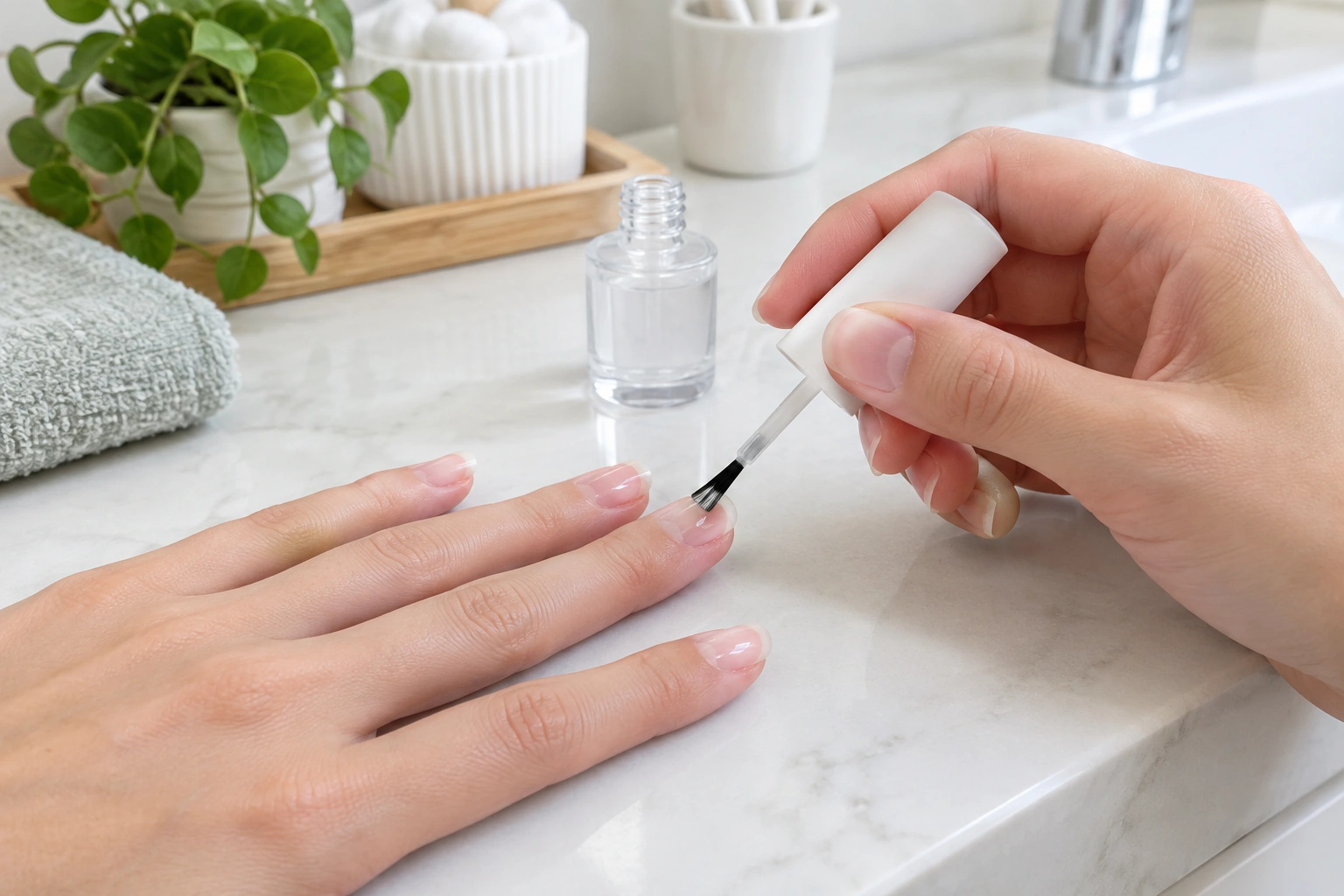
Quick Answer: How Long a Base Coat Usually Takes to Dry
For a regular base coat, expect it to feel dry to the touch in a few minutes when applied in a thin layer. A very thin coat on a clean, dry nail may be ready in about 1–2 minutes, based on Essie’s published guidance. Thicker coats usually need longer.
A simple beginner rule is this:
- Thin base coat: often ready in a few minutes
- Thick base coat: may still feel soft or sticky much longer
- Gel base coat: needs a lamp, not air drying
If you are unsure, give it an extra minute rather than starting color polish too early. That small pause is usually easier than fixing a smudged base layer.
What “Dry,” “Tacky,” and “Cured” Mean
These words get mixed up all the time, but they are not the same thing.
| Term | What it means | What you should do |
|---|---|---|
| Dry to the touch | The surface no longer feels wet or easily moves under your finger | Usually safe to continue with the next coat for regular polish |
| Tacky | Slightly sticky or grabby on the surface | May be normal for some formulas; check the product instructions |
| Fully dry | The layer has set all the way through | Less likely to dent or smear |
| Cured | Hardened under a UV/LED lamp | Required for gel base coats and gel systems |
For a regular base coat, you’re usually looking for dry to the touch, not “rock hard.” It can be ready even if it still feels a little tacky, as long as it is no longer wet or glossy. For gel, “dry” is the wrong word. Gel base coat is cured under a lamp, which is why gel polish curing times matter so much in that system.
What Changes Base Coat Drying Time
A base coat can seem fast one day and slow the next. That usually comes down to a few simple things.
Coat thickness
A thin coat dries faster than a thick one. That’s the biggest factor beginners can control. A heavy swipe may look like better coverage, but it traps more liquid and takes longer to set. It can also stay soft underneath even when the top feels dry.
If your base coat keeps taking too long, use less product on the brush and spread it in a thinner layer. You want a smooth film, not a puddle.
Formula type
Not all base coats behave the same way. Some are made to dry quickly in the air. Others are designed to work with gel systems and need a lamp. If you use a gel base coat without curing it properly, it may stay sticky or never set the way you expect.
Room temperature and humidity
A cool room can slow drying. Humid air can also make polish feel slower to set. You do not need a perfect salon setup at home, but a very damp bathroom or a chilly bedroom may add extra wait time.
Nail prep
A clean, dry nail gives the base coat a better surface to stick to. If there is lotion, oil, or moisture on the nail, the base coat can slide around or seem to stay wet longer. If you want to understand that prep step more clearly, see how long nail dehydrator takes to dry.
Regular Base Coat vs. Gel Base Coat
This is where many beginners get tripped up. A regular base coat and a gel base coat are not handled the same way.
| Feature | Regular base coat | Gel base coat |
|---|---|---|
| Dries by | Air drying | UV/LED lamp curing |
| Feel after application | May feel dry or slightly tacky | Often feels sticky until cured, depending on the system |
| Best for | Simple at-home manicures | Full gel manicure systems |
| Next step | Add color when dry to the touch | Cure under lamp before continuing |
In plain language, regular base coat air-dries, while gel base coat does not air-dry and needs a lamp. Regular polish systems can sometimes move on while the base is still a little tacky, but gel systems need proper curing first. If you are wondering whether gel can dry without that lamp, the short answer is no for most gel systems; see does gel polish dry without a lamp for a fuller explanation.
How to Tell When the Base Coat Is Ready for Color Polish
You do not need special tools to check. Use your eyes and one light touch.
A regular base coat is usually ready when:
- It looks smooth and no longer glossy-wet
- It does not slide when you look at the nail from the side
- A very light touch does not leave a visible mark
Here is the easiest beginner test: gently tap one nail with the pad of a finger. If it still feels wet, stringy, or easily moves, wait another minute. If it feels set and does not smear, you can move on to color.
Do not press hard. A hard press can dent even a base coat that is almost ready.
A practical decision rule
If the base coat is thin, matte, and dry to the touch, it is usually ready for regular nail polish. If it still looks shiny or feels soft, wait a little longer.
That simple check is more useful than counting seconds, because formulas vary. Color polish often takes longer to feel dry than the base coat, even though both may seem dry to the touch quickly.
Safe Ways to Make Base Coat Dry Faster
If you want to speed things up, keep it gentle. The goal is to help the surface set, not disturb the layer.
Apply a thinner coat
This is the most reliable fix. A thinner coat dries faster and is less likely to wrinkle under color polish. If your brush picks up too much product, wipe a little off before applying.
Use a fan
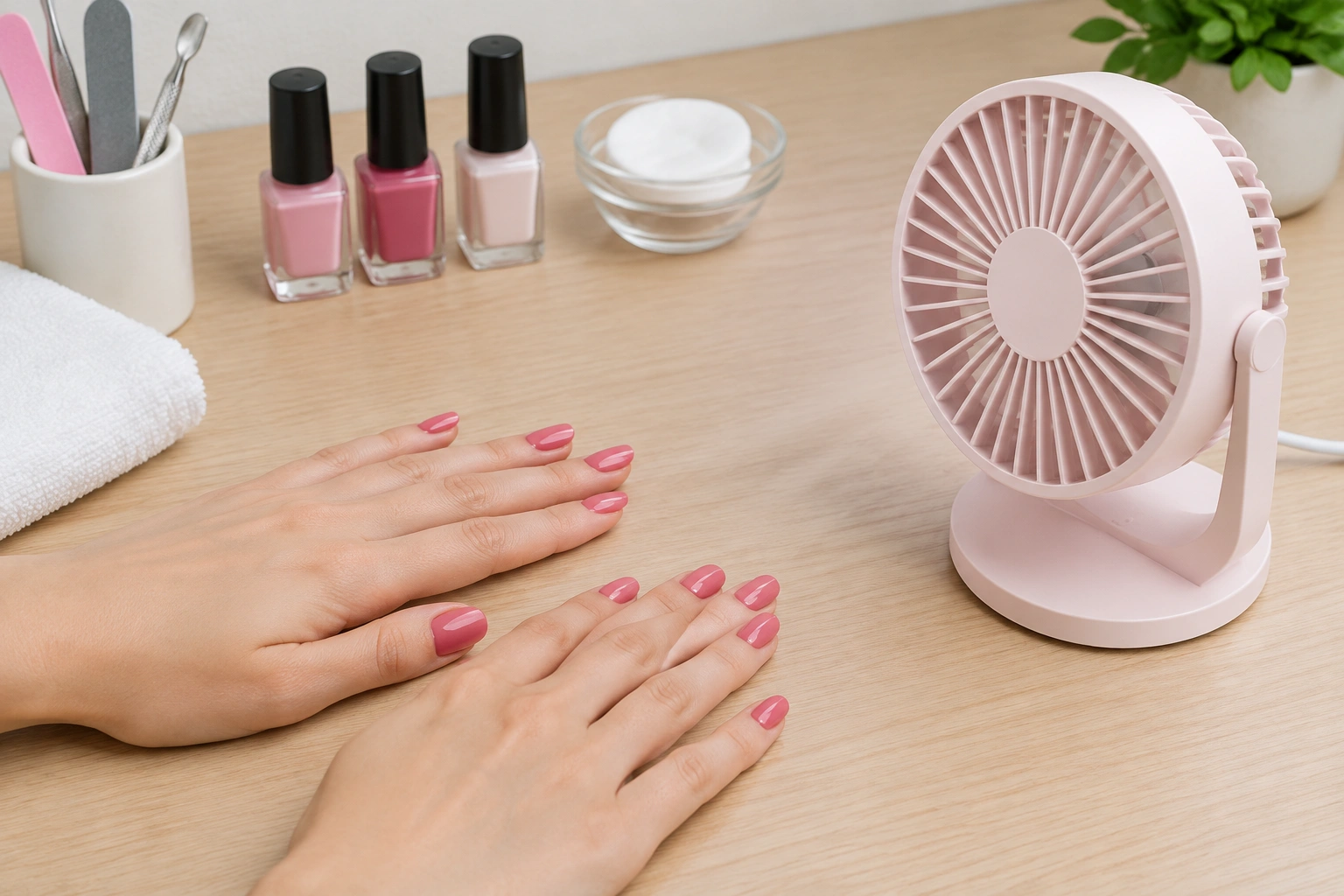
A fan can help move air across the nail and speed surface drying for regular polish. Keep the air flow light. Strong airflow is not necessary and may be annoying, but a small fan can make the wait feel shorter.
Use a quick-dry product made for polish
Quick-dry drops or sprays can help with some regular polish systems. Follow the product directions, because these products are meant to work with specific formulas and application habits. They are not a replacement for curing a gel base coat.
Leave more space between coats if your room is humid
If the air feels damp, give the base coat a little extra time. That is often easier than trying to rescue a smudged nail later.
For readers who want the full drying picture across all layers, how long nail polish takes to dry completely is a useful companion guide.

Why Your Base Coat Still Feels Sticky After Several Minutes
A sticky feel does not always mean something went wrong.
Some base coats are naturally a little tacky on the surface. That can be normal, especially in gel systems or with formulas designed to grip the next layer. In those cases, the product may still be doing its job even though it does not feel fully “dry” to your finger.
The key question is whether the tackiness is expected for your product.
- If it is a regular base coat: it should usually become dry to the touch in a few minutes
- If it is a gel base coat: it may stay tacky until it is cured under a lamp
- If it is very thick or still glossy: it probably needs more time
If the nail still looks wet after several minutes, do not force the next step. Wait a bit longer, or check whether you applied too much product.
Common Mistakes That Slow Drying or Cause Smudges
Most beginner problems come from a few avoidable habits.
Applying too much base coat
This is the biggest one. Thick layers dry slower and are easier to dent. A thin, even coat is better than a heavy one.
Moving to color too soon
Even if the base coat seems almost dry, starting color polish early can smear the whole layer. If you are unsure, wait one more minute. That small buffer is often enough.
Confusing regular polish with gel
A lamp will not magically fix a regular base coat that is meant to air-dry. Likewise, a gel base coat will not fully set just by sitting on the table. Use the system the product was designed for.
Painting in a cold, damp room
A chilly or humid space can slow everything down. You may not need a different product; you may just need a little more time.
When to See a Nail Technician or Dermatologist
If a base coat or polish repeatedly stays gummy, peels oddly, or causes redness, itching, or burning, stop using it and get advice from a nail technician or dermatologist. A product problem, a curing issue, or a sensitivity can all look similar at first. If you are using gel products, the FDA’s nail product guidance is a useful place to review basic safety considerations.
Bottom Line for Beginners
For a regular manicure, a base coat usually takes a few minutes to dry, and a thin coat may be ready in as little as 1–2 minutes. The safest approach is to wait until it feels dry to the touch before adding color. If you use gel, think in terms of curing, not air drying. Thin application, a clean nail, and a little patience will prevent most smudges.

