
Do Nail Files Need to Be Replaced? Signs It’s Time for a New One

If you have had the same nail file sitting in your manicure kit for months, you may be wondering: do nail files need to be replaced, or can you keep using them until they fall apart?
The answer depends largely on the type of file you own.
Disposable emery boards and many foam files wear out and eventually need to be thrown away. Glass, crystal, ceramic, and some metal files can last much longer if they stay intact and are cleaned correctly.
Knowing when to replace a file matters for more than getting a smooth manicure. A worn-out surface can make shaping harder, while a dirty or damaged tool can make your nail-care routine less hygienic.
Below, you’ll learn which nail files need frequent replacement, the warning signs to watch for, how to care for reusable files, and when it is smarter to throw a file away rather than trying to save it.
Quick Answer
Yes, nail files need to be replaced when the abrasive surface becomes smooth, clogged, damaged, dirty, or difficult to clean. Disposable emery boards usually wear out much sooner than glass, ceramic, or metal files. Replace any porous file that has contacted blood, broken skin, or an unhealthy nail rather than continuing to use it.
Why Nail Files Eventually Need to Be Replaced
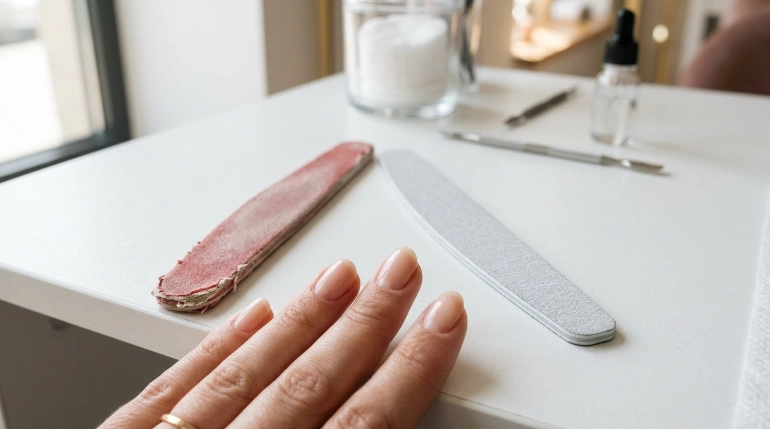
A nail file works because its surface contains tiny abrasive particles that gradually remove material from the nail edge.
Every time you file your nails, some of that abrasive surface wears down. Nail dust, polish residue, gel, acrylic, oils, and moisture can also collect on or inside the file.
Eventually, one of two things happens:
- The file stops shaping effectively.
- The file becomes difficult to keep clean.
With a cheap emery board, this can happen relatively quickly. A high-quality glass file may continue working for a very long time because its filing surface is built differently.
The important point is that replacement should be based on the condition of the tool, not simply the date you bought it.
If you are unsure how abrasive surfaces work, NailPrime’s guide to what nail file grit means explains why coarse and fine files behave differently.
How Often Should You Replace a Nail File?
There is no universal rule such as “replace every 30 days.”
How often you need a new file depends on:
- File material
- Grit
- How often you use it
- Whether you file natural or artificial nails
- How aggressively you file
- Whether it can be washed or disinfected
- Whether the surface becomes clogged
- How the tool is stored
Instead of following a strict calendar, inspect the file before using it.
Nail File Replacement Guide
| Nail File Type | Replacement Need | Main Reason to Replace |
|---|---|---|
| Emery board | Frequent | Grit wears down or surface becomes dirty |
| Foam/cushioned file | Moderate to frequent | Abrasive layer wears, tears, or becomes contaminated |
| Buffer block | Moderate | Sides become smooth, compressed, or damaged |
| Glass/crystal file | Infrequent | Chipping, cracking, breakage, or permanent surface damage |
| Ceramic file | Infrequent | Cracks, chips, or worn filing surface |
| Metal file | Infrequent | Rust, bending, rough damage, or loss of usable texture |
| Electric nail file bit | Depends on bit material | Dullness, damage, corrosion, or inability to clean properly |
Think of these as practical categories rather than expiration dates.
A disposable file may need replacing after relatively few manicure sessions if it becomes worn. A quality glass file could remain useful for years if you use, clean, and store it carefully.
7 Signs Your Nail File Needs to Be Replaced
You usually do not need a calendar reminder to know when your file is finished. The tool itself will tell you.
1. The Surface Feels Smooth
Run a clean finger gently over the unused portion of the file and then over the area you normally use.
If the center feels noticeably smoother, the abrasive particles have probably worn down.
You may also notice that filing suddenly takes much longer.
When you have to make dozens of strokes to accomplish what used to take a few, replacing the file is usually easier than pressing harder.
Do not compensate for worn grit by using extra pressure. More pressure gives you less control and may be unnecessarily rough on the nail.
2. The File Is Clogged With Nail Dust
A little nail dust is normal.
The problem starts when dust becomes packed into the abrasive surface and cannot be removed according to the manufacturer’s cleaning directions.
This is especially common when filing:
- Acrylic
- Builder gel
- Dip enhancements
- Gel extensions
Product dust can quickly reduce the effectiveness of an abrasive file.
3. The Edges Are Peeling or Fraying
Disposable files often show visible wear around their edges.
You may see:
- Peeling abrasive paper
- Exposed foam
- Splitting layers
- Bent corners
- Torn surfaces
Once the file starts falling apart, replace it.
A damaged edge can make controlled shaping more difficult.
4. It No Longer Produces a Smooth Nail Edge
Pay attention to your nails after filing.
A good file should allow you to shape an edge smoothly and predictably. If you keep finding rough spots, tiny snags, or uneven sections despite using your usual technique, examine the file.
The American Academy of Dermatology recommends keeping nails shaped and free of snags with an emery board and also advises using a file to smooth uneven edges. Their guide to trimming and filing nails also recommends gentle, controlled filing rather than repeatedly sawing across the nail.
Sometimes the problem is technique or an inappropriate grit. But if your technique has not changed and the file suddenly performs poorly, wear may be the cause.
5. A Glass or Ceramic File Is Chipped
Glass and ceramic files are durable, but durable does not mean indestructible.
Dropping one onto:
- Tile
- Concrete
- A hard sink
- A stone countertop
can chip or crack it.
A tiny cosmetic mark may not matter, but stop using the tool if the damaged area creates a sharp edge, unstable section, or irregular filing surface.
Do not keep using cracked glass simply because the abrasive area still works.
6. A Metal File Is Rusty or Damaged
Metal nail files can be long-lasting, particularly when made from corrosion-resistant materials.
However, replace one if you notice:
- Rust
- Deep scratches
- Bending
- Sharp damaged edges
- Flaking coatings
If you prefer durable reusable tools, our guide to metal nail files explains the features that matter when choosing one.
7. The File Has Been Contaminated
This is the most important replacement sign from a hygiene perspective.
The CDC recommends cleaning nail grooming tools, including files, before use in its nail hygiene guidance.
If a disposable or porous file has contacted blood, broken skin, visibly unhealthy nails, or potentially infected tissue, throwing it away is the safer choice.
Professional requirements can be even stricter. For example, the Texas Department of Licensing and Regulation’s manicure and pedicure sanitation guidance requires porous nail files to be discarded after contact with broken skin or unhealthy skin or nails.
Salon regulations vary by location, but the lesson for home care is simple: do not try to save a cheap porous file after questionable contamination.
Disposable vs. Reusable Nail Files
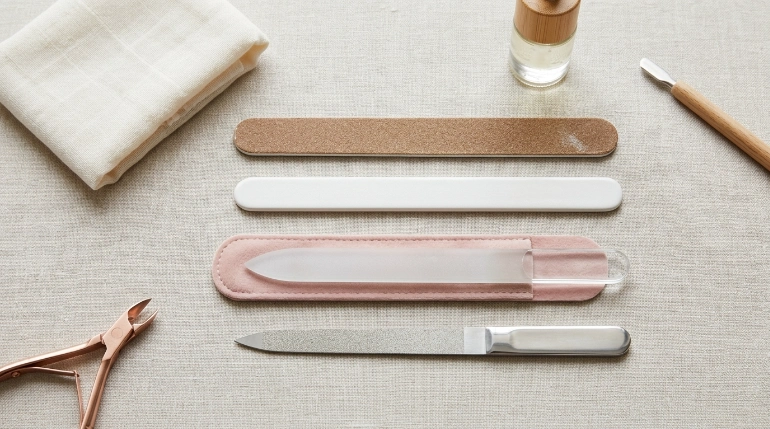
Not every file should be treated the same way.
Disposable Emery Boards
Traditional emery boards are affordable and convenient.
They are useful for:
- Occasional shaping
- Travel kits
- Purse manicure kits
- Keeping separate files for different people
Their biggest limitation is durability.
The abrasive coating gradually disappears, and the layered construction can absorb debris and moisture more readily than a hard, nonporous tool.
Once an emery board is worn or questionable from a hygiene standpoint, replacing it is usually the simplest decision.
Glass and Crystal Files
Glass nail files are popular because they combine a gentle filing feel with a durable abrasive surface.
They generally cost more than individual disposable boards, but you do not need to replace them nearly as often.
They are especially convenient for someone who files natural nails regularly and wants one main tool instead of repeatedly buying disposable boards.
NailPrime’s guide to nail files for real nails includes glass and other gentle file styles if you are deciding which material works best for natural nails.
Treat a glass file carefully and store it in a protective sleeve or case.
Metal Files
Metal files are another reusable option.
Their biggest advantages are durability and easy storage. However, the texture and aggressiveness vary considerably between products.
If you have thin, peeling, or fragile nails, use light pressure and choose a suitable texture rather than assuming every metal file is gentle enough.
Replace a metal tool if it rusts, bends, develops damaged edges, or can no longer be cleaned properly.
Buffers and Foam Files
Buffers deserve special attention because people often keep them long after they stop working.
A buffer has multiple abrasive surfaces attached to a soft core. Repeated use gradually polishes those surfaces smooth.
If you need much more effort to get the same result, the buffer has probably reached the end of its useful life.
Also avoid aggressive buffing simply because a worn buffer seems ineffective. Excessive filing or buffing can thin the nail plate.
Hygiene Matters as Much as Grit
A nail file does not have to look completely worn out to deserve replacement.
Hygiene can be the deciding factor.
The CDC’s nail hygiene recommendations emphasize cleaning grooming tools before use and avoiding practices that can spread germs.
For personal at-home care:
- Wash your hands before doing your nails.
- Remove visible nail dust from reusable tools.
- Clean reusable files only according to the manufacturer’s instructions.
- Let washable tools dry completely before storing them.
- Keep clean tools in a dry case or drawer.
- Do not casually share personal nail files.
If the manufacturer labels a file disposable, treat it as disposable rather than experimenting with soaking or disinfecting it.
Never assume that spraying a porous emery board with alcohol automatically makes it suitable for unlimited reuse.
The construction of the tool matters.
Should You Share Nail Files?
It is better to keep personal nail files personal.
A file comes into close contact with the nail edge and surrounding skin. Small cuts may not always be obvious.
Keeping individual files eliminates much of the uncertainty about who used the tool, whether they had a nail problem, and whether it was cleaned correctly.
This is especially important if someone has:
- A suspected fungal nail infection
- A wart near the nail
- Broken or bleeding skin
- Redness or swelling
- Drainage around the nail
- An unexplained nail disorder
If you live with several people, inexpensive files can simply be labeled or stored in separate manicure kits.
How to Make a Nail File Last Longer
You cannot prevent normal wear, but good care can extend the useful life of reusable tools.
1. Use the Right Grit
Using an extremely fine file for heavy product removal forces you to make far more strokes.
Using a very coarse file for delicate natural nails can be unnecessarily aggressive.
Match the grit to the job.
2. Use Light Pressure
Let the abrasive surface do the work.
Pressing harder does not turn an old file into a new one.
Light, controlled strokes are easier to manage.
3. Clean Reusable Files Properly
Follow the manufacturer’s directions because glass, metal, ceramic, foam, and coated files do not necessarily tolerate the same cleaning methods.
Avoid automatically soaking a tool unless its instructions say that you can.
4. Let Tools Dry Before Storage
Putting damp tools into a closed manicure bag can create an unpleasant, dirty environment.
Clean them, let them dry completely, and then store them.
5. Protect Glass Files
A sleeve or hard case helps prevent accidental chips and breakage.
Do not toss a glass file loose into a purse with keys, clippers, and other hard objects.
6. Stop When the Tool Is Worn
Trying to squeeze another month out of a $1 emery board is rarely worth the frustration.
Replacing inexpensive disposable tools when they stop performing well keeps your routine faster and more predictable.
Expert Tip: Keep one clean file for natural nails and a separate, coarser file for enhancement work. This prevents you from constantly using the wrong grit and makes it easier to notice when either file has become worn.
Can an Old Nail File Damage Your Nails?
A worn file does not automatically cause serious nail damage, but it can encourage poor technique.
For example, if a file barely removes material, you may start:
- Pressing too hard
- Filing for much longer
- Sawing aggressively
- Using the edge of the file incorrectly
Those habits can leave the nail edge feeling rough or make already-fragile nails harder to manage.
The American Academy of Dermatology’s healthy nail recommendations advise keeping nails clean, dry, shaped, and free of snags.
If your natural nails are thin or peeling, replace worn files sooner and choose a gentler grit rather than increasing pressure.
Common Mistakes to Avoid
Small habits can shorten the life of your files or make your manicure less hygienic.
Avoid these common mistakes:
- Keeping disposable files indefinitely. Cheap abrasive boards are not lifetime tools.
- Using more pressure when the grit wears out. Replace the file instead.
- Sharing personal nail files. Keep individual grooming tools when possible.
- Using a contaminated porous file. If blood or unhealthy tissue has contacted it, dispose of it.
- Putting damp files into a closed bag. Let washable tools dry first.
- Continuing to use chipped glass. Cracks and sharp edges are reasons to stop.
- Using the same grit for every job. Natural nails and thick enhancements can require very different abrasiveness.
- Aggressively buffing the nail plate. More buffing is not always better.
- Ignoring the manufacturer’s cleaning instructions. A cleaning method suitable for metal may not be suitable for a foam file.
Is It Cheaper to Buy Reusable Nail Files?
That depends on how often you do your nails.
Disposable emery boards usually have the lowest upfront price. If you file your nails only occasionally, that may be all you need.
A quality glass, ceramic, or reusable metal file costs more initially but may offer better long-term value because you replace it less often.
Consider more than purchase price.
Ask yourself:
- How often do I file my nails?
- Do I want a washable tool?
- Am I likely to drop a glass file?
- Do I travel frequently?
- Do I use natural nails, gel, dip, or acrylic?
- Do I prefer keeping disposable tools for hygiene?
For many home users, having one durable reusable file plus a few disposable emery boards is a practical setup.
You get a dependable everyday tool and inexpensive backups for travel or situations where you would rather discard the file afterward.
When to See a Nail Technician or Dermatologist
Replacing a nail file can fix a tool problem. It cannot fix a medical nail problem.
Stop filing the affected area and consider professional help if you notice:
- Persistent pain
- Swelling around the nail
- Pus or drainage
- Significant redness
- Thickening
- A nail separating from the nail bed
- Persistent yellow, green, brown, or unusual discoloration
- Bleeding that keeps recurring
- A new or changing dark streak
A licensed nail technician can help with routine shaping, enhancement maintenance, and product-related issues, but a technician should not diagnose or treat a suspected infection.
A dermatologist is the more appropriate choice when the nail or surrounding skin appears diseased, infected, painful, or persistently abnormal.
FAQs
Do emery boards need to be replaced?
Yes. Emery boards gradually lose their abrasive texture and can become clogged, frayed, or dirty. Replace one when it stops filing efficiently or cannot be kept acceptably clean.
How do I know when my nail file is worn out?
The clearest sign is reduced performance. If the filing area feels smooth and you need many more strokes than usual to shape your nails, it is probably time for a replacement.
How long does a glass nail file last?
There is no fixed expiration date. A well-made glass file can last much longer than a disposable emery board when it remains intact and is cleaned and stored correctly. Replace it if it becomes cracked, chipped, or otherwise damaged.
Can I wash a nail file instead of replacing it?
Only if the manufacturer says the file is washable. Many glass, ceramic, and metal files can be cleaned, but disposable or porous files may not tolerate the same methods. Follow the product’s instructions.
Should I throw away a nail file after using it on nail fungus?
For a porous or disposable file, discarding it is the simplest hygiene-conscious approach. Do not share that file with anyone else. If you suspect a fungal infection, consider seeing a dermatologist rather than relying on filing alone.
Can two people use the same nail file?
It is better for each person to have their own file, particularly with porous tools. Personal files reduce concerns about contamination and cross-use between people.
Do electric nail file bits need replacing?
Yes, eventually. Bits may become dull, damaged, corroded, or difficult to clean. Reusable bits should be maintained according to their manufacturer’s directions, while disposable sanding bands should be replaced as intended.
Conclusion
So, do nail files need to be replaced? Yes—but how often depends on the file.
Emery boards, foam files, and buffers usually require replacement more frequently because their abrasive surfaces wear down and their porous construction makes long-term cleaning more difficult.
Glass, ceramic, and metal files can stay in your kit much longer when they remain intact and are cleaned according to their instructions.
Instead of focusing on an arbitrary replacement date, check the condition of your file. If it has lost its grit, become permanently clogged, started peeling, cracked, rusted, or contacted questionable material that cannot be safely cleaned, replace it.
Your nail file is a simple tool, but keeping it clean, effective, and appropriate for your nail type makes at-home manicures easier and safer.
Take a minute to check the files in your manicure kit today. If one has clearly seen better days, replacing it is an easy upgrade to your nail-care routine.

