
Do Nail Polish Drying Drops Work? A Beginner-Friendly Guide

If you’ve ever ruined a fresh manicure by bumping a nail too soon, drying drops can sound like a small miracle. The honest answer is yes, nail polish drying drops do work for many people — but they work best as a helper, not as magic.
Most drying drops are designed to speed up the part of drying that happens at the surface. That means they can reduce tackiness, help polish feel dry to the touch sooner, and lower the chance of a light smudge. They usually do not instantly harden thick polish layers all the way through. If your coats are heavy, you may still need real drying time.
For beginners, that distinction matters. Drying drops can make home manicures easier to manage, but they won’t fix every application mistake. If you want a broader foundation on polish basics, you may also find this beginner nail polish guide helpful.
What Nail Polish Drying Drops Are
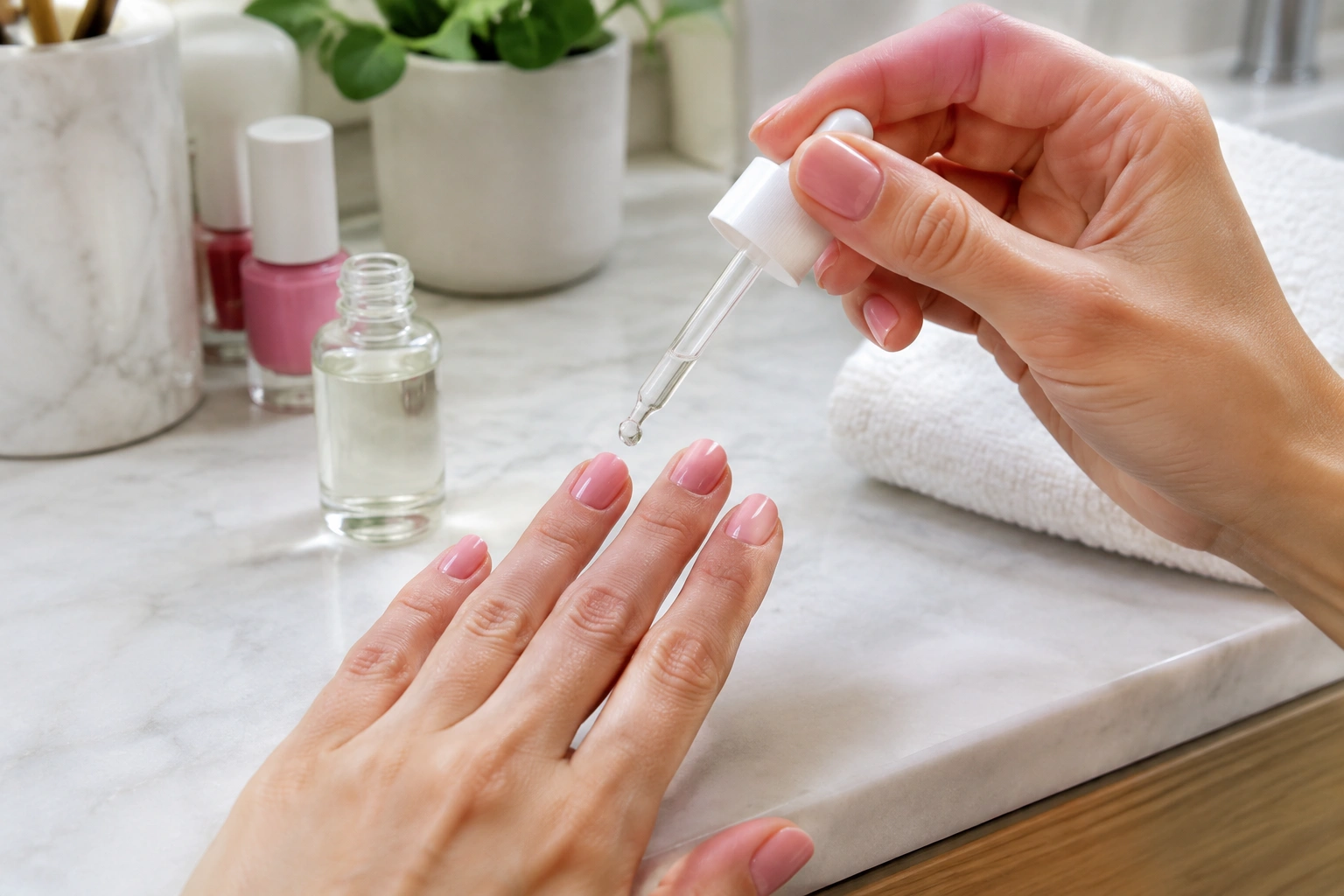
Drying drops are a finishing product you place on top of fresh nail polish after painting. They usually come in a small bottle with a dropper, which makes them easy to control. The goal is simple: help the polish lose its wet, tacky feeling sooner.
Think of them as a shortcut for the last stage of drying. They are not the same as base coat or top coat, and they are not meant to replace careful application. In most cases, they are used after your color and top coat are on.
A helpful way to think about them is this: drying drops support the manicure you already applied. They do not create a perfect manicure on their own.
How Drying Drops Help Polish Dry Faster
Most drying drops work by helping the solvents in nail polish evaporate more quickly. In plain language, that means they help the polish release the liquid parts that keep it wet. Some editorials and brand explanations describe this as speeding up surface drying, but the exact amount of time saved can vary a lot depending on the formula, how thick the polish is, and how you apply it.
That can be enough to matter in real life. If you need to get dressed, grab your keys, or use your hands soon after painting, shaving some waiting time off can be useful.
Some brands also make stronger claims. For example, Olive & June says its Dry Drops make nails dry to the touch in 80 seconds and work best when you paint thin coats. That is a good reminder that the product works best when the manicure itself is applied well. You can see the brand’s instructions on its Dry Drops page.
How Well They Work in Real Life
Here’s the most important beginner lesson: dry to the touch is not the same as fully dry or fully cured.
“Dry to the touch” means the surface no longer feels sticky when you lightly touch it. “Fully dry” means the polish has hardened enough that it is much less likely to dent, wrinkle, or smudge during normal use. For regular polish, that full hardening can still take longer than the surface feels ready.
Drying drops can help the top layer feel less sticky faster, which is useful because the surface is usually what gets smudged when you brush against clothing, a phone case, or a blanket. But the layers underneath may still be soft for a while.
That is why thick coats are a problem. If you pile on polish, the top may seem ready while the lower layers are still moving around. In practice, that means dents, wrinkles, or small lines can still happen even after using drying drops.
If your polish often feels dry on top but dents when you press it, the issue may be your application, not the drying product. Our guide on why nail polish may not dry explains the most common causes in simple terms.
Thin coats vs. thick coats
Drying drops are much more helpful with thin, even coats. That is because thin layers give the solvents less polish to work through. Thick coats trap more liquid underneath, so the drops can only do so much.
A beginner-friendly rule: if you can still see polish looking heavy or pooled around the edges, the coat is probably too thick for any drying product to rescue quickly.
Do They Work on Regular Polish, Top Coat, or Gel Polish?
Drying drops are mainly useful with regular nail polish and a regular top coat. That is where they can help reduce tackiness and speed up surface drying.
They can also be used on the final top coat, which is often the layer people want to dry faster. They do not replace the top coat’s job of sealing and protecting the manicure.
They are less useful on gel polish systems, because gel polish does not dry the same way as regular polish. Gel usually needs a specific curing process, so a drying drop is not a substitute for that. If you want the basic difference explained, our article on whether gel nail polish air dries is a good place to start.
How to Use Nail Polish Drying Drops Correctly
The best results usually come from using drying drops after your polish and top coat are applied. Follow the product label first, but the basic process is usually simple:
- Paint thin, even coats of polish.
- Let the final coat settle briefly so it is no longer sliding around.
- Place the recommended number of drops on each nail.
- Keep your hands still while the product works.
- Wait until the surface feels dry before touching anything.
The exact timing matters. If you apply drops too early, you can disturb the polish. If you apply them to a very wet, thick manicure, they may help a little but will not solve the whole problem.
A small practical tip: keep your hands flat for the first few minutes after application. That helps prevent accidental dents from gravity, fabric, or brushing against nearby surfaces.
Common Mistakes That Make Them Seem Less Effective
A lot of disappointment with drying drops comes from how the manicure was done, not from the drops themselves.
Using thick polish layers
This is the biggest one. Thick coats dry slowly no matter what product you add on top. Drying drops can help, but they are not designed to harden a heavy layer instantly.
Touching nails too soon
A manicure can feel “mostly dry” and still be soft enough to mark. If you test it too early, you may create the very smudge you were trying to avoid.
Skipping a top coat
Drying drops are not a replacement for a top coat. Without that final layer, the manicure may be more vulnerable to chips and wear.
Expecting every brand to perform the same
Formulas vary. Some products are better for quick surface drying, while others feel more noticeable in daily use. That is why one person may love a brand and another may think it barely helped.
If smudging is your main problem, our guide on how to prevent nail polish smudging while drying can help you avoid the most common mistakes.
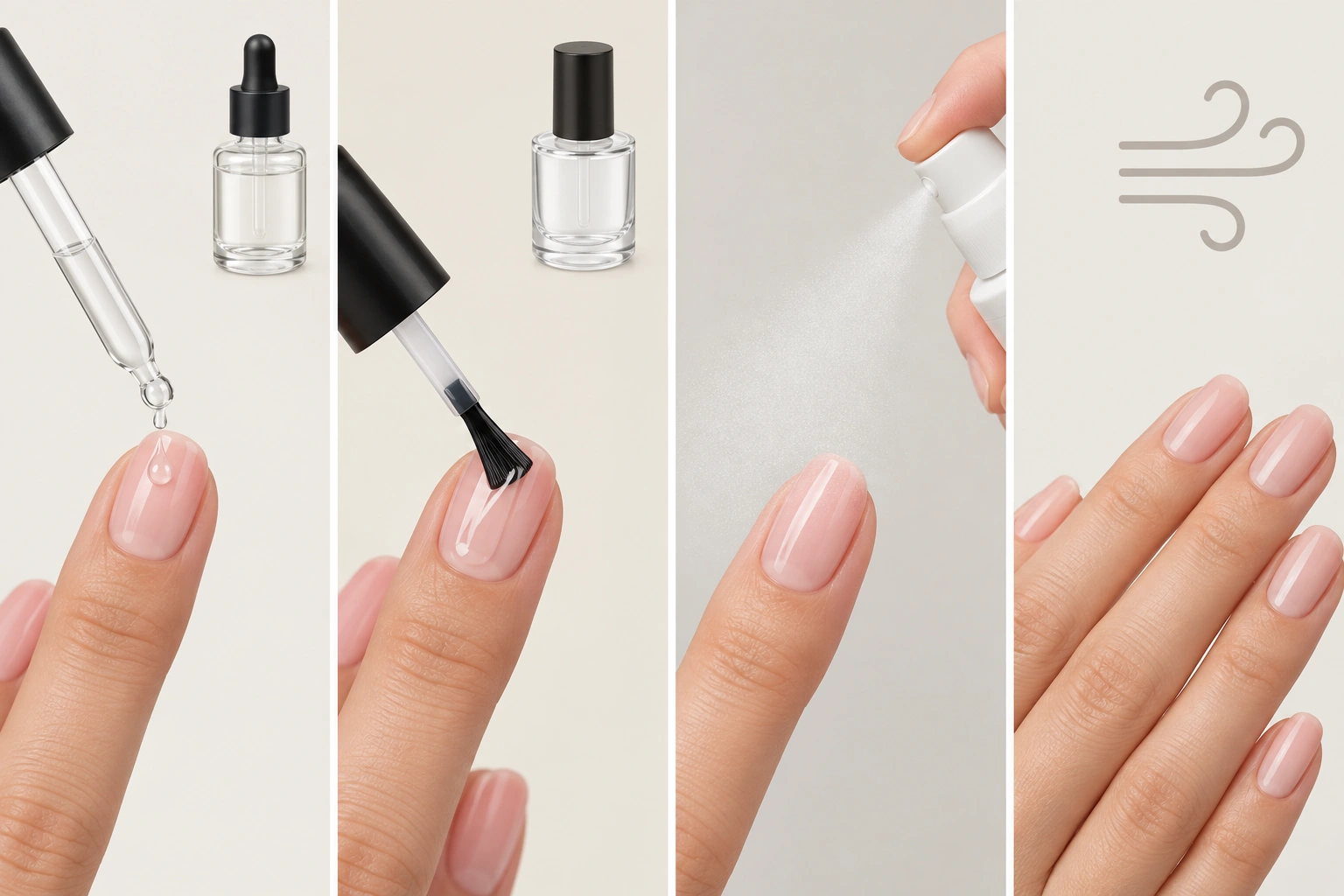
Drying Drops vs Quick-Dry Top Coat, Drying Spray, and Air Drying
Here is the practical comparison most beginners need:
| Method | What it does best | Main downside | Best for |
|---|---|---|---|
| Drying drops | Reduces surface tackiness and helps polish feel dry sooner | Usually modest speed-up only | Beginners who want a simple, low-mess option |
| Quick-dry top coat | Adds protection and can speed overall drying | Adds another layer and can be a separate purchase | People who want more durability plus faster drying |
| Drying spray | Can be fast and convenient | Can be messier and less precise | Users who want a spray-on shortcut |
| Air drying | Costs nothing and needs no extra product | Usually the slowest option | People who are patient or painting only one coat |
If you want the simplest answer, drying drops are often easier than spray and less involved than building a full quick-dry routine. But if you want stronger wear and faster results together, a quick-dry top coat may be the better buy.
Fan or cold air methods can help a little, but they are usually less effective than a product designed to work with polish chemistry. They are fine as a backup, not as your main plan.
Are Drying Drops Safe for Nails and Cuticles?
For most people, drying drops are used only on the nail surface, but safety still matters. Check the ingredient list if you have sensitive skin or easily irritated cuticles, because these products may contain solvents that can dry surrounding skin. If you use too much or let the product run onto the skin often, it may cause irritation.
It is smart to keep the product off broken skin and out of your eyes. Use it in a ventilated area if the formula has a strong smell. And do not assume a product is suitable for every polish type unless the label says so.
If you want a general consumer-safety reference for cosmetics use, the FDA’s cosmetics information is a solid place to review basic guidance.
What to Do If Polish Still Feels Tacky
If your manicure still feels soft after using drying drops, don’t panic. Try these checks first:
- Wait longer than you think you need to.
- Avoid pressing your nails against anything to “test” them.
- Make sure the coats were thin and even.
- Check whether you used enough product for the full nail surface.
- Confirm that the polish type is compatible with the drops.
If the polish is still sticky hours later, the issue may be the formula, the coat thickness, or a too-heavy top coat. In that case, drying drops may not be the right fix.
For more help with polish that seems to stay wet, our article on faster drying tips for nail polish walks through the most common causes.
Are Nail Polish Drying Drops Worth Buying?
For many beginners, yes — if your main goal is to reduce waiting time and avoid light smudges. Drying drops are especially worth trying if you usually paint thin coats, use regular polish, and want a simple product that is easy to apply.
They are less worth it if you often use thick coats and expect instant hardness. In that case, a quick-dry top coat or simply improving your application technique may give you better results.
A simple decision rule:
- Buy drying drops if you want a low-cost, low-mess way to make regular polish feel dry sooner.
- Choose a quick-dry top coat if you want faster drying plus more protection and better value for wear time.
- Skip both if you usually paint rarely, do not mind waiting, or already use a polish system that dries fast enough for you.
Drying drops mainly improve drying time, not chip resistance or polish longevity. If your goal is longer wear, a good base coat, top coat, and careful application matter more than the drying product itself.
When to See a Nail Technician or Dermatologist
If you keep having trouble with polish that never seems to dry properly, or if products regularly sting, burn, or irritate your skin, it may be worth asking a professional for help. A nail technician can help you improve your application technique, and a dermatologist can check for skin sensitivity or reaction issues.
FAQ
Do nail polish drying drops actually work?
Yes, they can work well for reducing surface tackiness and helping polish feel dry sooner. They are usually better at speeding up the “dry to the touch” stage than fully hardening thick polish layers.
How fast do drying drops work?
That depends on the brand and your manicure. Some brands make specific timing claims, but results vary with formula, coat thickness, and application. In general, they may help polish feel ready sooner rather than instantly dry.
Do drying drops work on gel polish?
Usually no, not in the same way they work on regular polish. Gel systems use a different drying process, so check the product label before assuming compatibility.
Are drying drops better than a quick-dry top coat?
Not always. Drying drops are simpler and usually less messy, but a quick-dry top coat may offer better protection and a stronger overall routine.
Will drying drops stop smudges completely?
They can reduce smudging, but they do not guarantee it. Thick coats, early touching, or uneven application can still cause dents or marks.
Can I use drying drops on every coat?
Most products are meant to be used as directed on the final coat or top coat. Follow the label, because using them too often or at the wrong time may not help.
Why does my polish still feel tacky after using them?
The most common reasons are thick coats, too much polish, or not waiting long enough. Sometimes the polish formula itself is the issue.
Are drying drops safe for sensitive skin?
They can be, but not for everyone. Check the ingredients, avoid broken skin, and stop using the product if it irritates you.
If you want to keep learning the basics, our guide to common nail polish mistakes is a useful next step.

