
How Long Nail Polish Takes to Dry Between Coats: A Beginner’s Guide

If you’re painting your nails at home, the biggest timing question is simple: how long does nail polish take to dry between coats? The short answer is that beginners should usually wait until each coat is dry to the touch before adding the next one. With regular polish, that often means waiting a few minutes between thin coats, but the exact timing depends on the formula, how thickly you applied it, and your room conditions.
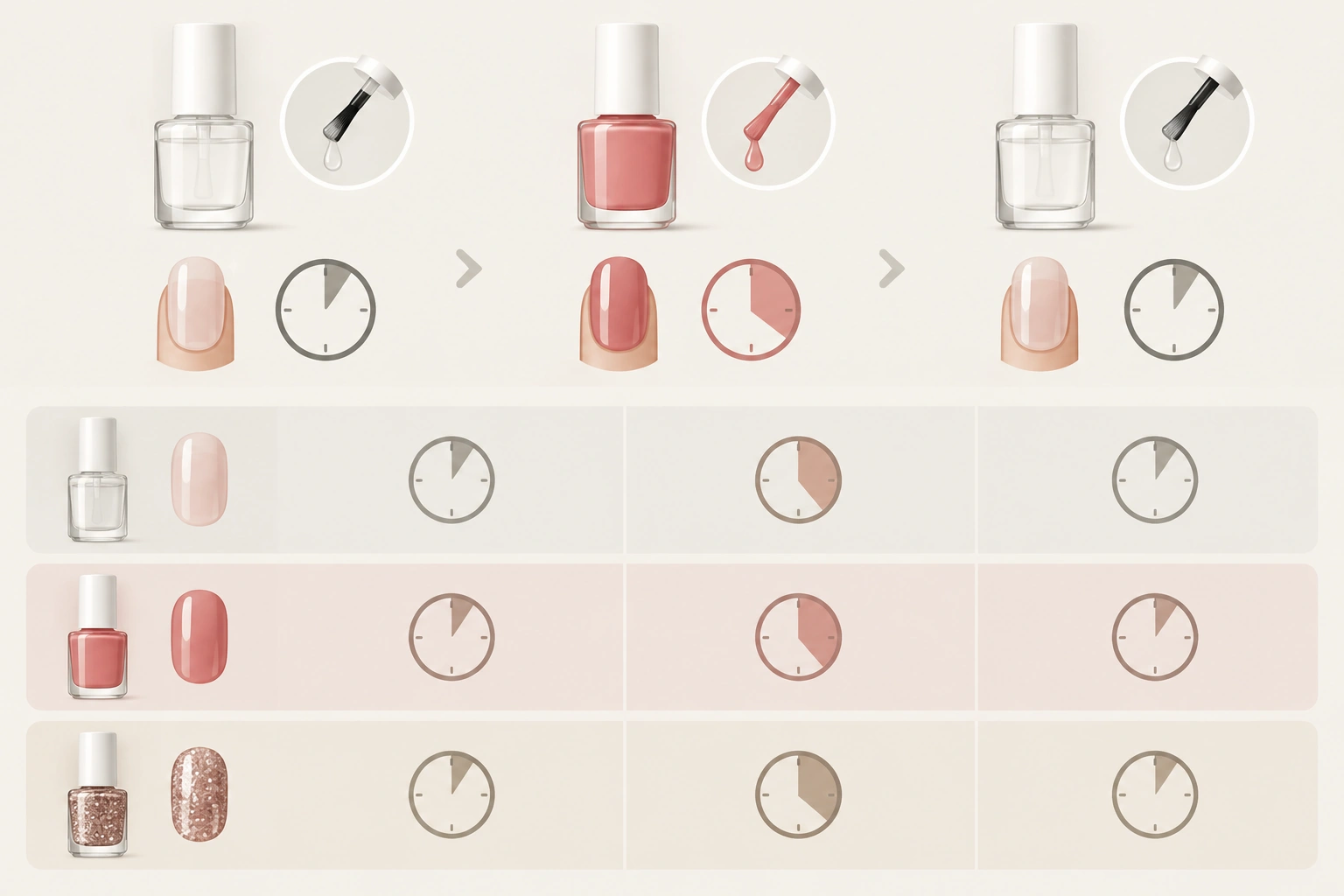
The goal is not just “looks dry.” You want the layer to be set enough that the next coat won’t drag, wrinkle, or trap wet polish underneath. That’s what gives you a smoother finish and fewer dents later.
Quick Answer: How Long to Wait Between Coats
For most beginners using regular nail polish, a practical rule is to wait until the surface feels dry and no longer tacky, then add the next coat in a thin layer. If the coat is thick, you’ll need more time. If the polish is quick-dry, you may be able to move faster. If it’s gel, you should follow the lamp-cure instructions instead of air-drying.
Here’s a simple guide you can use while painting:
| Polish type | Between-coat timing | What to look for |
|---|---|---|
| Regular polish | About 5–10 minutes for thin coats; longer if the coat is heavier | Surface feels dry, not sticky |
| Quick-dry polish | About 1–5 minutes between thin coats | Coat sets faster but still needs care |
| Gel polish | No air-dry waiting; cure under a UV/LED lamp | Follow the product’s lamp instructions |
| Base coat | About 1–3 minutes, just until set | Should not slide or feel wet |
| Color coat | About 5–10 minutes for thin coats | Surface is dry enough not to drag |
| Top coat | About 5–10 minutes before normal use; longer if applied thickly | Avoid pressure until the manicure is fully dry |
If you want a deeper breakdown of overall drying time, see our guides on how long nail polish takes to dry and how long it takes to dry completely.
What “Dry to the Touch” Really Means
A coat can feel dry on top and still be soft underneath. That’s why a manicure can smudge even after you think you waited long enough.
Dry to the touch means the surface no longer feels wet or sticky when you lightly touch it. Ready for the next coat means the polish is dry enough that the brush won’t drag, streak, or lift the layer underneath. Fully cured means the polish has hardened much more completely and is less likely to dent from pressure, fabric, or a bumped nail. Those are not the same thing.
Here’s a simple way to think about it:
| Stage | What it means | Beginner-friendly timing |
|---|---|---|
| Dry to the touch | Surface feels set, not wet or sticky | Usually after a few minutes |
| Ready for the next coat | Brush glides on without dragging the layer below | Often shortly after surface-dry |
| Fully cured | Manicure has hardened enough for normal wear | Often much longer than the wait between coats |
Think of it this way: if you can barely tap the nail without leaving a mark, the coat may be ready for the next layer. If it still feels rubbery, strings, or pulls when you touch it, wait longer.
How Long to Wait by Polish Type
Different formulas dry in different ways, so the wait between coats changes too.
Regular nail polish
Regular polish dries by air exposure. Thin coats usually set faster than thick ones, but beginners often use too much product, which slows everything down. A light, even coat is easier to dry and easier to build.
Quick-dry polish
Quick-dry formulas are made to shorten waiting time, especially between coats and after the final layer. They can be helpful if you don’t have much time, but they still need careful application. A thick coat can still stay soft underneath even if the top feels set.
Gel polish
Gel polish is different. It usually does not air-dry between coats. Instead, it cures under a UV/LED lamp according to the product instructions. If you’re using gel, don’t guess at timing—follow the system exactly.
Base coat and top coat
Base coat and top coat are part of the full system, but they do not always need the same wait time as color polish. A base coat should be set enough to hold the color layer without sliding. A top coat should be applied carefully and then left alone long enough to avoid dents and smears.
What Changes Drying Time Between Coats
A few basic factors make a big difference:
- Coat thickness: Thin coats dry faster than thick coats.
- Humidity: Damp air slows evaporation.
- Airflow: Gentle airflow helps the polish set more evenly.
- Room temperature: Very cold or very warm rooms can affect drying.
- Layer count: More layers mean more total drying time.
- Formula: Regular polish, quick-dry polish, and gel behave differently.
The easiest win for beginners is applying thin, even coats. That one habit solves a lot of drying problems.
What “Too Thick” Looks Like, and How Much to Apply
If you’re unsure whether a coat is too thick, look for these signs:
- The polish pools near the cuticle or sidewalls.
- The brush leaves visible ridges instead of a smooth film.
- The coat looks glossy and wet for a long time.
- The color seems opaque in one pass, which often means too much product.
- The polish wrinkles or dents easily after you think it’s dry.
A better approach is to use one thin base coat, then two thin color coats, then one thin top coat. As a practical rule, each pass should look even but not heavy. If the polish looks streaky, that is usually fine after the first coat; it often evens out on the second coat.
For beginners, “thin” usually means:
– enough polish to cover the nail in a smooth layer,
– not enough to flood the cuticle,
– and not so much that the brush drags a thick bead of product.
How to Tell When the First Coat Is Ready
You do not need to guess blindly. Try this gentle check:
- Wait a few minutes after applying the coat.
- Hold your hand still.
- Lightly tap the side of one nail with the tip of another finger.
- If it feels tacky, soft, or leaves a mark, give it more time.
Another clue is shine. A coat that still looks very wet and glossy usually needs more time. A coat that has settled and lost some of that wet look is closer to ready.
Be careful not to press hard. A strong test can create the very dent you were trying to avoid.
Step-by-Step: The Best Timing for Base Coat, Color Coat, and Top Coat
A simple manicure rhythm helps a lot.
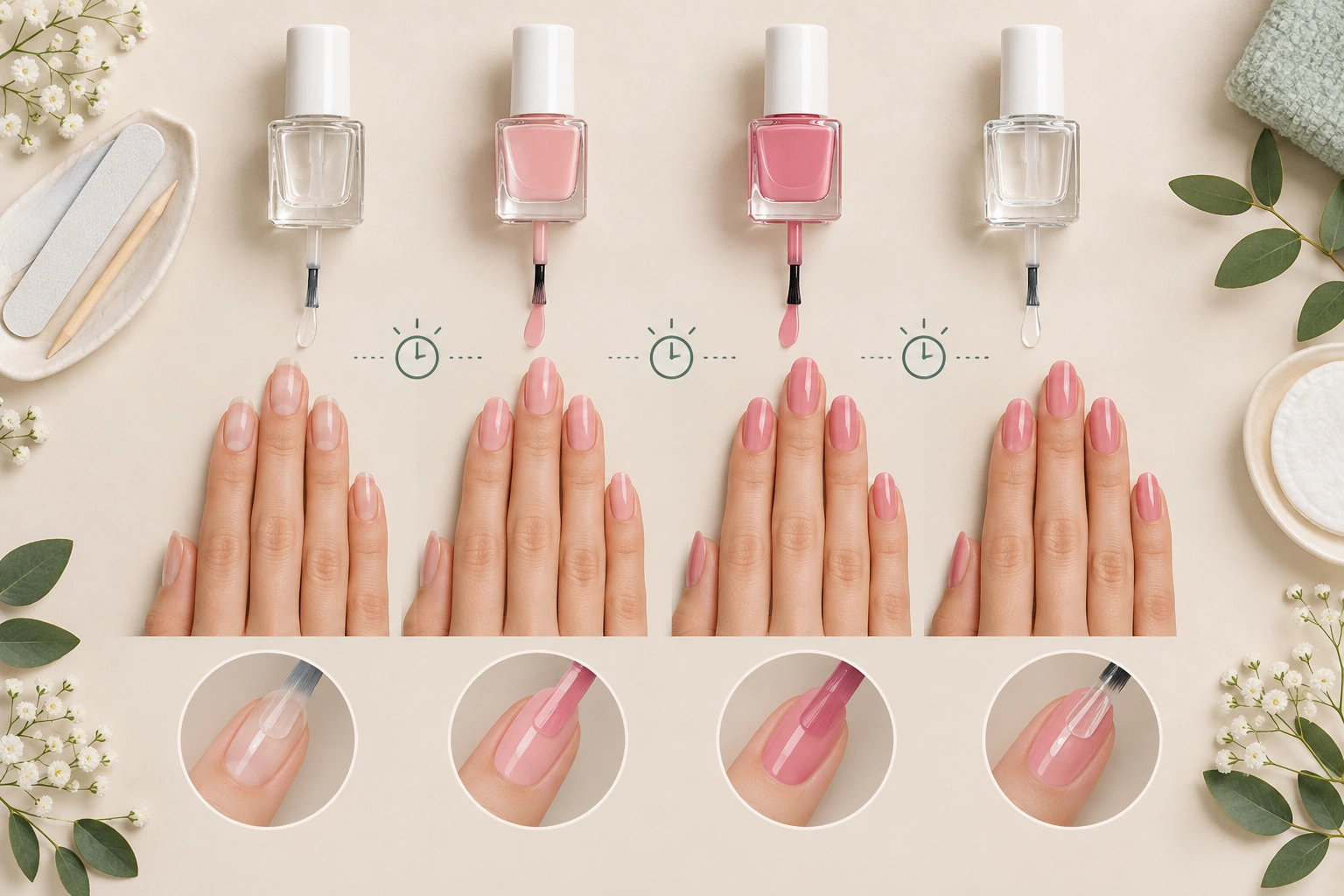
1. Apply base coat in a thin layer
Brush on a thin base coat and let it settle until it no longer looks wet. This creates a smoother surface for color and helps the polish grip better.
2. Add the first color coat
Keep the first color coat thin. Thick first coats are one of the main reasons polish seems dry on top but still gets damaged underneath. If the color looks streaky, that is normal after the first pass.
3. Wait before the second color coat
Only apply the next coat once the first is dry enough not to drag. If the brush leaves lines or the surface feels soft, wait longer. Two thin coats usually work better than one heavy coat.
4. Finish with top coat
Once the color layers are set, apply top coat in a smooth pass. Then leave the manicure alone. Even if the top coat looks shiny and finished, the layers underneath may still need time to harden.
How to Speed Up Drying Safely
If you want faster drying without ruining the manicure, use methods that help evaporation instead of trapping heat.
Good options include:
- Use thinner coats
- Paint in a cooler, dry room
- Keep air moving gently
- Choose a quick-dry top coat
- Wait a little longer after the final coat before touching anything
- Keep your hands still and away from fabric for the first 10–15 minutes after the last coat
- Use a fan on a low setting, at a distance, rather than hot air
Avoid blasting nails with strong heat. Heat can cause bubbles, uneven drying, or a surface that sets too fast while the layers underneath stay soft.
A quick-dry top coat can be especially helpful if you’re short on time, but it works best when the color coats underneath are already applied thinly.
Common Mistakes That Make Polish Take Longer to Dry
These are the mistakes I see beginners make most often:
Applying coats too thickly
Thick polish traps wet layers underneath. It may look smooth at first, but it stays soft longer and dents more easily.
Rushing the second coat
If the first coat is still tacky, the brush can pull it around and create streaks or wrinkling.
Touching the nail to “check”
Pressing too hard can leave a dent even if the polish was almost ready.
Painting in a humid room
Moist air slows drying, so the manicure can stay soft longer than expected.
Using too many layers
Extra layers add time. If you need more coverage, build it with thin coats instead of one heavy one.
Confusing gel with regular polish
Gel needs the right lamp and system. It does not dry the same way as air-dried polish.
When to Choose Quick-Dry Polish or Gel Polish
If you usually feel frustrated waiting between coats, it may be worth changing the product rather than fighting the timing.
Choose quick-dry polish if:
– you want regular polish but less waiting,
– you prefer a simple at-home manicure,
– you still want to air-dry instead of using a lamp.
Choose gel polish if:
– you want a lamp-cured manicure,
– you’re comfortable following a specific system,
– you want a different wear style than regular polish.
Regular polish is still the easiest place to begin. Quick-dry polish is a nice middle ground. Gel is best only if you want the lamp-cure process and have the right products.
How Long Nail Polish Takes to Fully Dry After the Last Coat
After the final coat, the manicure may feel ready sooner than it truly is. That is normal.
For beginners, a good rule is to expect surface dryness within minutes, but full hardening to take much longer. A polish can be dry enough to touch lightly and still not be fully set for everyday use. The final hardening stage takes longer than the surface stage. That’s why a manicure can get dented by a blanket, hair tie, or jeans pocket even when it seemed finished.
A safe approach is to treat the nails gently for a while after painting. Avoid heavy pressure, hot water, and anything that presses directly on the nail surface until the polish has had more time to settle. As a practical benchmark, try to wait at least 10–15 minutes before using your hands normally, and longer if the coats were thick or the room was humid. For the safest result, give the manicure more time before activities that squeeze or scrape the nails.
When to See a Nail Technician or Dermatologist
See a nail technician if your polish keeps wrinkling, bubbling, or lifting even when you follow the timing rules. That can point to an application issue, product mismatch, or a technique problem that’s easier to fix in person.
See a dermatologist if you notice nail pain, persistent discoloration, swelling, or changes that do not seem related to polish alone. Polish drying problems are one thing; ongoing nail changes are different.
Frequently Asked Questions About Drying Nail Polish Between Coats
How many minutes should I wait between coats?
There is no single exact number that fits every polish. For beginners, wait until the coat is dry to the touch and not tacky before applying the next one. Thin coats dry faster than thick ones.
Can I tell if polish is dry by tapping it?
Yes, but use a very light touch. A gentle tap is enough. If the nail feels sticky or leaves a mark, it needs more time.
Why does my polish smudge even after waiting?
Usually the coat was surface-dry but not fully set, or the layer was too thick. Humid conditions can also slow drying. Smudging can also happen if the nail was bumped, pressed by fabric, or exposed to water too soon.
Do base coat and top coat need different wait times?
They can. A base coat just needs to set enough for color to go on cleanly. A top coat should be left alone longer because it finishes the manicure and can dent easily.
Does thin polish dry faster than thick polish?
Yes. Thin coats dry more evenly and usually faster. Thick coats often trap soft polish underneath.
Can I use a hair dryer to dry nail polish faster?
It is better to avoid strong heat. Heat can cause bubbles or uneven drying. Gentle airflow is safer than hot air.
Is gel polish faster than regular polish?
It can be faster only if you use the correct UV/LED lamp and compatible gel formula. It does not dry the same way as regular polish.
What if my polish is still soft after a long wait?
That usually means the coat was too thick, the room was humid, or the formula needs more time. Give it longer, and use thinner coats next time.
The Simple Rule to Remember
If you want the safest beginner approach, use thin coats, wait until each coat is dry to the touch, and don’t rush the final layer. That one habit does more for a smooth manicure than any fancy trick.
