
How Long to Wait Between Nail Polish Coats: A Beginner-Friendly Timing Guide

If you’ve ever painted your nails and wondered whether the next coat is going on too soon, you’re not alone. The short answer is this: wait until each coat is dry-to-touch before adding the next one, and expect that to take longer with regular polish, thicker coats, or humid conditions. In practice, that often means a few minutes between thin coats, but the exact timing can vary by formula and environment.
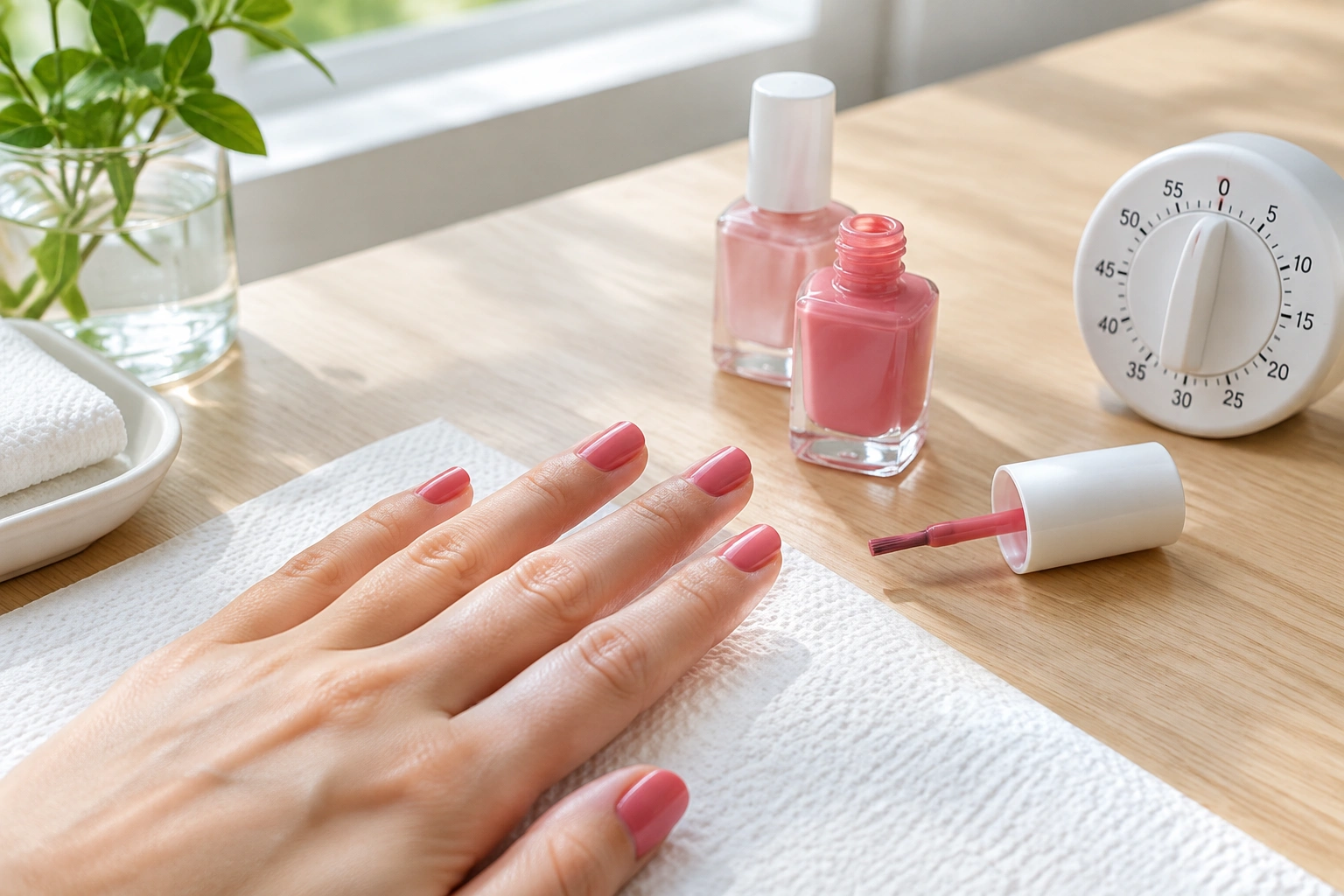
The goal is not just speed. The goal is a smooth manicure that does not drag, dent, bubble, or peel early. If you rush the layers, the polish may look fine at first but stay soft underneath. That is when smudges happen.
Quick Answer: How Long to Wait Between Nail Polish Coats
A beginner-friendly baseline is to wait until the previous coat no longer looks wet and feels dry when you gently test the edge of the nail. For many regular polishes, that means waiting about 3 to 5 minutes between thin coats. Quick-dry formulas may let you move faster, often around 1 to 3 minutes. Thicker coats usually need longer, often 5 to 10 minutes or more.
A simple rule works well at home:
- Thin base coat: wait until it is dry-to-touch, usually about 2 to 4 minutes for many regular polishes
- Thin color coat: wait until it is dry-to-touch before the next layer, often about 3 to 5 minutes
- Quick-dry polish: many thin coats can be ready in about 1 to 3 minutes, depending on the formula
- Thick coats: wait longer, often 5 to 10 minutes or more, because the surface can set before the layer underneath does
- Top coat: apply only after the color layer is no longer tacky
If you want the safest approach, give each coat a little extra time rather than less. A slightly longer pause usually helps the finish level out and reduces the chance of dragging the layer underneath.
For more on full drying time, you may also find our guide on how long nail polish takes to dry completely useful.
Dry-to-Touch vs Fully Cured
These two phrases are not the same, and beginners often mix them up.
Dry-to-touch means the surface feels set enough that a light touch does not leave an obvious mark. The polish may seem ready for another coat.
Fully cured means the polish has hardened all the way through. Regular polish can take much longer to reach that stage than it does to feel dry on top.
That difference matters because a nail can seem ready while the lower layers are still soft. If you add another coat too early, the brush can disturb the layer underneath and create streaks or dents.
A practical beginner rule: if the polish is no longer glossy and a light edge tap leaves no mark, it is usually ready for the next coat. If it still looks shiny-wet or feels tacky, wait a bit longer.
Think of it this way: dry-to-touch is the point where you can continue carefully. Fully cured is the point where the manicure is much less likely to shift from normal activity.
How to Tell a Coat Is Ready for the Next One
You do not need to press hard on the nail to test it. In fact, that usually causes the problem you are trying to avoid.
Use these gentler checks instead:
- Look for shine changes. Wet polish usually looks glossy and reflective. As it sets, the shine becomes less liquid-looking.
- Check the side of the nail. A very light tap on the edge is safer than pressing the center, which can leave a dent.
- Watch for brush drag. If the brush starts pulling the first coat instead of gliding over it, the layer is still too soft.
- Notice tackiness. If the surface feels sticky or grabs at a fingertip, wait longer.
If you are unsure, pause a little more. A few extra minutes is easier to recover from than a smudged coat.
Wait Times by Coat Type: Base Coat, Color Coat, and Top Coat
Different layers play different roles, so their timing can feel slightly different.
| Coat type | What to wait for | Practical beginner guidance |
|---|---|---|
| Base coat | Dry-to-touch before color | Apply in a thin layer and wait until it no longer feels tacky |
| First color coat | Dry-to-touch before second color coat | Thin coats usually set faster and look smoother |
| Second color coat | Dry-to-touch before top coat | Give this layer a little extra patience if it looks glossy or soft |
| Top coat | Set enough to avoid dragging | Apply carefully and avoid heavy strokes |
A base coat usually dries a bit faster than a color coat because it is often thinner. Color coats often need more patience because pigment can make the layer heavier. A top coat can be especially easy to disturb if the color underneath is still soft, so do not rush it.
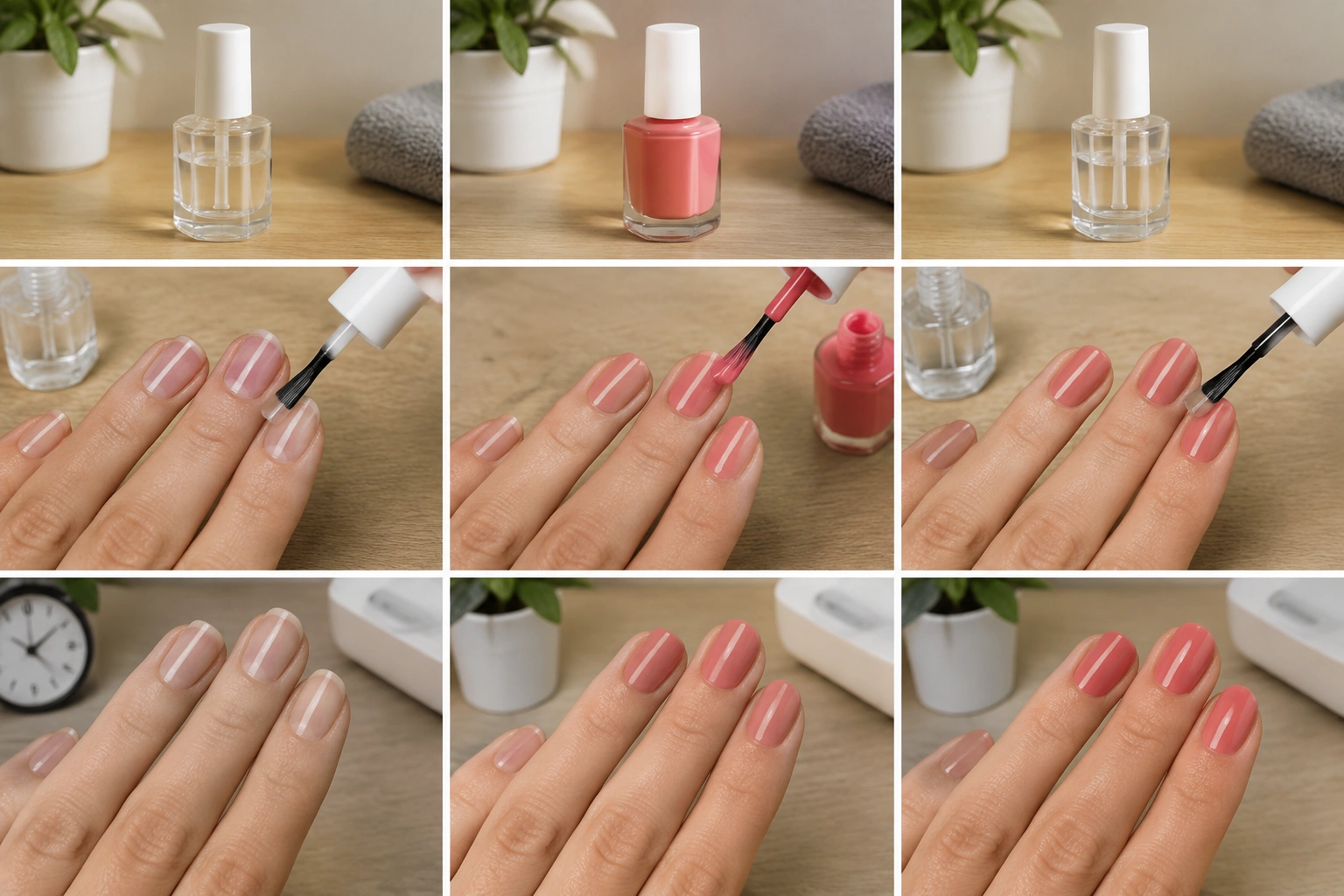
If you are using multiple color coats for opacity, each one should be thin enough to dry at a reasonable pace. Two thin coats are usually easier to manage than one thick coat.
How Polish Type Changes Drying Time
Regular polish and quick-dry polish do not behave the same way.
Regular polish usually gives you more working time, which can be helpful if you are still learning to paint neatly. The trade-off is that it often needs longer between coats.
Quick-dry polish is designed to set faster, so you may be able to move to the next coat sooner. That convenience can be useful, but quick-dry formulas can still smudge if the coat is too thick or the room is humid.
If your polish label gives application timing, use it as a starting point. Not every brand gives especially clear directions, so general timing guidance is still useful.
Very old or thickened polish can dry more slowly and apply unevenly, so it may need extra time between coats. If a bottle has become stringy or clumpy, it may be harder to get even, thin layers in the first place.
Why Thin Coats Dry Faster Than Thick Coats
Thin coats dry faster because there is less liquid to set. They also level more evenly, which helps the finished manicure look smoother.
Thick coats create problems even when the top layer seems dry. The surface may feel ready, but the polish underneath can stay soft. That can lead to:
- bubbling
- streaking
- dents
- longer drying time
- easier chipping later
This is why beginners often get better results by using two or three thin layers instead of trying to cover the nail in one pass. You may need an extra coat for full coverage, but the manicure usually looks cleaner.
How Room Conditions Affect Drying Time
The room you paint in matters more than many beginners expect.
Humidity slows drying because the polish has a harder time setting. A bathroom after a shower is usually a poor choice.
Temperature also matters. Very cold rooms can slow the process, while a moderate room temperature is more comfortable for painting.
Airflow helps. Light moving air can speed surface drying, but keep the airflow gentle so you are not kicking up dust or debris onto wet nails.
A practical setup is a dry room with gentle airflow and no steam. If your nails are taking longer than expected, the room may be part of the reason.
What Happens If You Apply the Next Coat Too Soon
Rushing the next layer can ruin a manicure that looked promising a minute earlier.
Common problems include:
- Smudging: the brush or your next coat shifts the layer underneath
- Streaking: the color pulls unevenly across the nail
- Bubbling: trapped solvents or thick layers create tiny bubbles
- Dents: a soft layer gets marked by the brush or a surface bump
- Poor durability: the manicure may chip sooner because the layers did not set properly
This is why the surface test matters. If a coat is still tacky, the next layer is likely to disturb it.
How to Speed Up Drying Without Ruining the Manicure
You can shorten the wait without forcing the polish to dry badly.
Try these safer methods:
- Use thin coats instead of thick ones.
- Leave a little space between each layer so the polish can settle.
- Paint in a room with light airflow rather than steamy air.
- Choose a quick-dry top coat if you want a faster finish.
- Keep your strokes smooth and avoid going back over the same area repeatedly.
Avoid extreme heat, open flames, or unsafe drying tricks. Those can create more problems than they solve. If a coat is still tacky after a reasonable wait, give it more time first. If the surface has been dented or dragged, it is usually better to let it dry fully and fix that nail later than to keep layering over damage.
For a broader look at polish lifespan and storage, our guide on how long opened nail polish lasts can help too.
Simple Step-by-Step Timing Guide for a Beginner Manicure
Here is an easy order to follow at home:
- Apply a thin base coat.
- Wait until it is dry-to-touch.
- Apply the first thin color coat.
- Wait again until it is dry-to-touch.
- Apply the second color coat if needed.
- Wait until the surface is no longer tacky.
- Apply the top coat with light, even strokes.
- Let the manicure sit before doing anything rough with your hands.
If you are new to painting nails, give yourself more time than you think you need. The whole process goes more smoothly when you are not trying to hurry each step.
A good beginner habit is to paint one hand at a time if you tend to bump wet nails. That gives you more control and fewer accidents.
Common Mistakes That Make Polish Dry More Slowly
A few habits cause most drying problems:
- Applying thick coats
- Brushing over a layer that has already started to set
- Painting in humid air
- Adding the top coat too quickly
- Touching the nail too often to “check” it
- Trying to fix a flaw with more polish instead of waiting
The biggest one is usually thickness. If you only change one thing, make your coats thinner. That alone often improves both drying time and finish quality.
When to Wait Longer Than Usual
Some situations call for extra patience:
- the coat looks especially thick
- the polish is a slower regular formula
- the room feels humid
- the nail still looks glossy and wet
- the brush drags or leaves a mark when you test the edge
In those cases, wait longer before adding the next layer.
How Long to Wait Before Normal Activity
Dry-to-touch does not always mean ready for everything. After the final coat, give the manicure more time before normal activity, especially if you want to avoid dents.
A practical rule is:
- Light hand use: often okay after about 15 to 30 minutes if the polish is thin and already dry-to-touch
- Putting on shoes or handling tight items: wait longer, often 30 minutes to 1 hour for safer results
- Heavier use or anything likely to press on the nails: wait several hours if you can, especially with regular polish
If you need to use your hands sooner, be extra careful and avoid pressure on the nail surface. Some polish can feel dry on top but still be soft underneath, so it is smart to treat the manicure gently for a while after finishing.
FAQs
How do I know if nail polish is dry enough for the next coat?
Use a light touch on the nail edge, not the center. If the surface feels tacky, glossy-wet, or drags under the brush, wait longer.
Should I wait longer between color coats and top coat?
Usually, yes. The top coat can drag the color layer if it goes on too soon, especially if the color coat is thick.
Is quick-dry polish really faster?
Usually it is faster than regular polish, but it still needs proper dry time between layers. Thick coats and humid rooms can slow it down.
Does humidity really matter?
Yes. Humid air can slow the setting process and make polish stay soft longer, even if the room feels comfortable.
What if I smudge a coat?
If the smudge is small, it may be better to let the polish dry fully and fix it later. If the mark is deep or the layer is clearly disturbed, remove that nail and repaint it rather than stacking more polish on top.
For more timing-related basics, you may also want our guide on how long to wait between coats of nail polish.
