
How Much Should I Tip at a Nail Salon? A Practical Guide for Manicures, Pedicures, and More

If you want the short answer: in most U.S. nail salons, a tip of 15% to 20% is standard. For this article, a simple rule is to start at 15% and move to 20% when the service is especially good, detailed, or time-consuming.
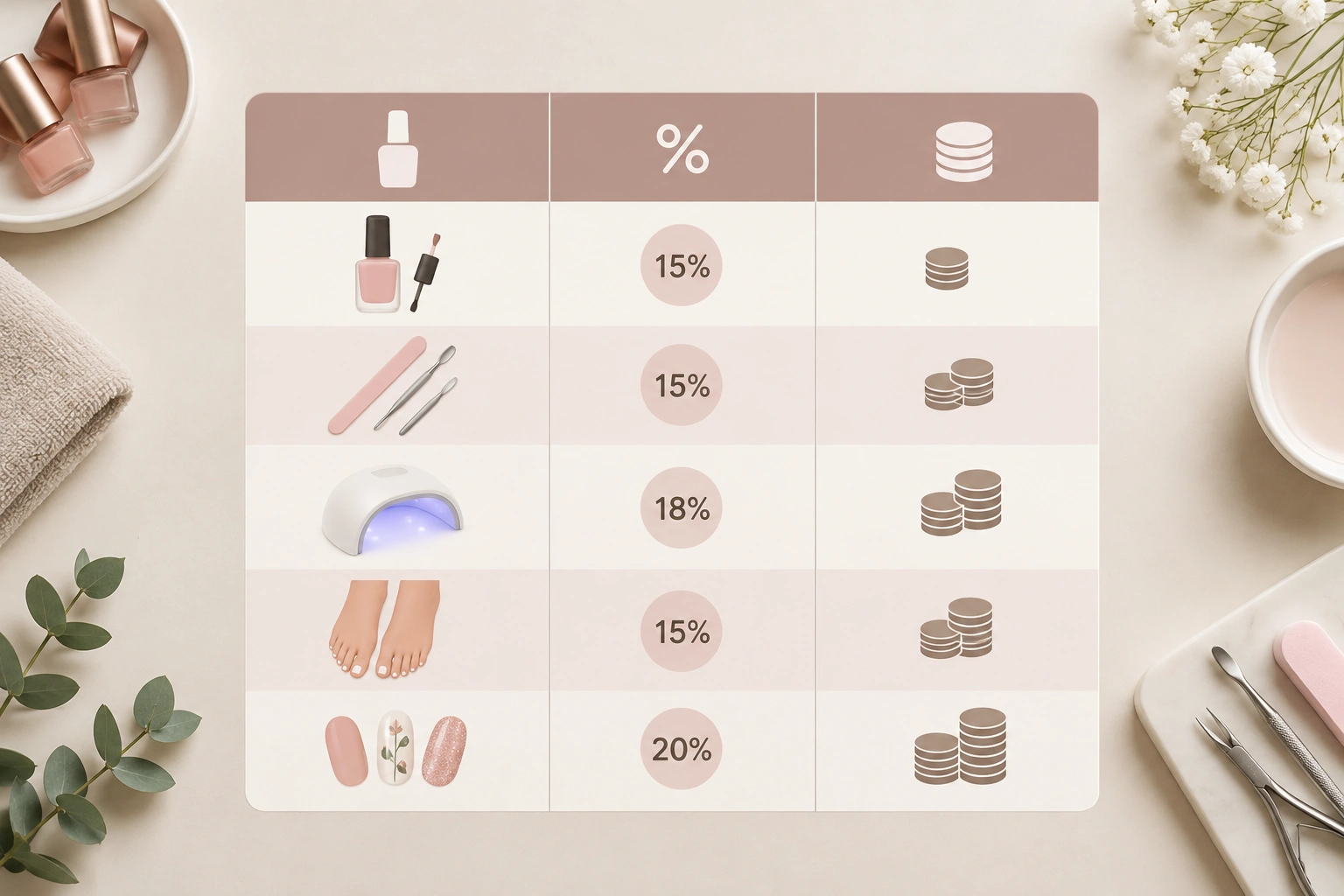
For a fast rule you can use today:
- Basic manicure: tip 15% to 20%
- Pedicure: tip 15% to 20%
- Gel, acrylic, dip, or nail art: usually still 15% to 20%, with the higher end more common for time-heavy or detailed work
- Multiple technicians: tip each person for the part they handled
- Owner did the service: tipping is still often appreciated, though local salon culture can vary
For example, a $55 pedicure would mean an $8.25 tip at 15% or an $11 tip at 20%. A $70 gel set would mean a $10.50 tip at 15% or a $14 tip at 20%.
[IMAGE]
Standard Nail Salon Tipping Etiquette
Think of nail salon tipping as a range, not a single rule. That matters because nail services are not all the same. A quick polish change, a structured gel set, and a detailed pedicure can take very different amounts of time, skill, and product.
The most practical way to choose a tip is to ask three questions:
- Was the service good?
- Was it more complex or time-consuming than usual?
- Am I tipping one person or several?
If the answer to the first two is yes, leaning toward 20% makes sense. If the appointment was straightforward and you were satisfied but not especially wowed, 15% is a reasonable baseline.
One practical detail: for nail salon tipping, it is usually simplest to calculate the tip on the pre-tax service total. If you want to keep the math easy, use the price of the service before sales tax and then add the tip on top. If the salon has a posted policy that says otherwise, follow that policy.
Quick Tip Table for Common Nail Services
Here’s the easiest way to turn percentages into real dollars.
| Service price | 15% tip | 18% tip | 20% tip |
|---|---|---|---|
| $30 | $4.50 | $5.40 | $6.00 |
| $45 | $6.75 | $8.10 | $9.00 |
| $55 | $8.25 | $9.90 | $11.00 |
| $60 | $9.00 | $10.80 | $12.00 |
| $70 | $10.50 | $12.60 | $14.00 |
| $100 | $15.00 | $18.00 | $20.00 |
These examples are helpful because nail salon pricing can change a lot by service type, time, and materials. A salon may charge more for gel, acrylic, dip, or detailed nail art because those services usually require more time and product.
If you want a quick decision rule:
– Round to the nearest convenient cash amount if you’re paying in person.
– Use 20% when the service was excellent or unusually detailed.
– Use 15% when the service was good but standard.
How Much to Tip for Manicures, Pedicures, Gel, Acrylic, and Dip Powder
Basic manicure
For a standard manicure, 15% to 20% is the usual range. If the service is simple and quick, 15% is fine. If your nail tech took extra care with shaping, cuticle work, or polish application, 20% is a fair thank-you.
Pedicure
Pedicures often involve more time and more physical effort than a basic manicure, so many clients tip near the top of the range. 20% is common when the pedicure was thorough, comfortable, and well done.
Gel manicure
Gel services often take longer than a basic polish service, especially if removal or detailed prep is involved. A 15% to 20% tip still fits, but many clients lean toward 20% because of the extra time and technique involved.
Acrylic or dip powder
Acrylic and dip powder services usually take more skill, more time, and more product than a standard manicure. That doesn’t mean you must tip more than 20%, but it does make the higher end of the usual range feel more appropriate.
Nail art or custom design
Detailed nail art is one of the clearest cases for tipping at the top of the range, or slightly above it if the work is especially intricate. The design may take much longer than a basic service, and the technician is doing creative, precise work.
A practical way to think about it: the more the appointment depends on craftsmanship, the more you should lean toward 20%. That’s not a penalty; it’s a recognition of time and skill.
When to Tip More or Less
A tip is not a strict scorecard, but it is a useful way to reflect the actual service you received.
Tip more when:
- The appointment took longer than expected
- The work was detailed, custom, or rushed in on short notice
- The technician was especially careful, efficient, or accommodating
- You received multiple services in one visit
Tip less when:
- The service was basic and routine
- The salon experience was acceptable but not exceptional
- You’re budgeting carefully and still want to leave something appropriate
If the service was disappointing, the safest approach is usually to keep the tip modest rather than zeroing it out, unless there was a serious problem. A smaller tip communicates dissatisfaction without creating a scene. If something was clearly wrong, speak to the front desk calmly before leaving.
Should You Tip on the Full Price, Discounted Price, or Gift Card Amount?
This is one of the most common sources of confusion.
A practical rule:
– If you used a coupon or promotion: tip based on the original service price when the discount was a salon promotion, because the tech still performed the full service.
– If you used a gift card: tip based on the service total you would have paid without the gift card, then pay that tip separately.
– If the salon clearly states gratuity is based on the final amount: follow the salon’s policy.
Why this matters: a discount changes what you pay, but it does not change the amount of work the technician did. That’s why the most useful rule is to tip on the pre-tax service price and ignore the discount when the salon itself offered the promotion. If the discount is unusually large or the salon explains a different policy, follow that guidance.
For example:
– A $70 gel set on sale for $56: a 15% tip on the original price is $10.50; a 20% tip is $14
– A $55 pedicure paid with a gift card: tip $8.25 to $11 based on the service price, not the gift card balance
For general consumer guidance around beauty products and salon hygiene standards, the FDA’s cosmetics page is a useful resource to keep in mind when you’re choosing a salon and asking questions about products and practices.
What to Do If the Salon Owner Does Your Nails
Many people wonder whether they should still tip when the salon owner is the one doing the service.
In most salon settings, the answer is yes, tipping is still customary or appreciated, unless the owner specifically says otherwise. That said, local practice can vary. Some independent owners price their services with the understanding that they are keeping more of the service fee, while others still receive tips just like staff technicians.
Use this simple approach:
– If the owner is clearly working as your nail tech and the service was good, tip as you normally would.
– If the owner declines a tip, respect that.
– If you’re unsure, a modest tip at the usual percentage is a safe default.
This is one of those situations where a little social awareness helps. If the salon is small and the owner is very hands-on, you can always ask quietly at checkout whether tips are accepted.
How to Tip When Multiple Technicians Work on One Appointment
Split appointments are common. One person may remove old product, another may shape and paint, and a third may do nail art or finishing touches.
The fairest approach is to tip each person based on the part they handled. That doesn’t mean you need to calculate everything to the penny. It does mean the tip should reflect who actually worked on your nails.
Here’s a simple example:
– Technician A removes old gel and preps nails
– Technician B applies a new set
– Technician C adds nail art
If the total service is $90, one practical split might be:
– $9 to $10 for Technician A
– $12 to $15 for Technician B
– $5 to $10 for Technician C, depending on how detailed the art was
If you are tipping one pooled amount instead, ask the front desk whether they can divide it among the technicians. If not, handing each person a separate tip is clearer.
For a group appointment, the same rule applies: if one person pays for multiple services, tip based on each service and each technician’s role, not just the single combined bill.
Cash vs Card: The Best Way to Leave a Tip
Cash is still the easiest tipping method because it is immediate and unambiguous. The technician gets it right away, and there’s no doubt about the amount.
Card tipping is also fine at many salons. If you don’t carry cash, don’t skip the tip just because you can’t leave bills. Most salons can add a tip to the card transaction or let you fill in a tip line.
Trade-offs to consider:
– Cash: faster for the tech, easier to hand directly, but requires planning
– Card: more convenient, but sometimes less immediate and occasionally limited by the salon’s payment system
If you know you’ll be getting your nails done, bringing a little cash is still smart. But if the salon is card-only, tipping on the card is completely acceptable.
Check the Bill for Gratuity or Service Charges
Before you tip, glance at the receipt. Some salons add a service charge or automatic gratuity, especially for group bookings or larger appointments.
Do not double tip by accident.
Look for words like:
– gratuity
– service charge
– auto tip
– added fee
If anything is unclear, ask the front desk before paying. A quick question now is much easier than trying to correct an overcharge later.
This matters most for:
– bridal parties
– group bookings
– high-ticket services
– salons with a built-in service fee policy
What to Do If the Service Was Excellent or Disappointing
When the service is excellent, tipping at 20% is a clean, respectful choice. If the technician went out of their way, fit you in on short notice, or handled a complicated design well, a little above 20% is a generous way to show appreciation.
When the service is disappointing, keep your response calm and proportional:
1. Don’t argue at the register.
2. Pay the bill.
3. Leave a smaller but still respectful tip if the work was completed.
4. If there was a real issue, mention it politely to the manager or owner.
A lower tip should reflect the experience, not become a public confrontation. That keeps the situation professional and gives the salon a chance to make it right.
A Simple Rule You Can Use Every Time
If you want one dependable answer, use this:
- 15% for standard service when you want to stay on the conservative side
- 20% for excellent service, detailed work, or longer appointments
That range works for most manicures, pedicures, gel, acrylic, and dip services. It also leaves room for the real-world details that matter: who did the work, how complex it was, whether the bill already includes gratuity, and whether you’re tipping in cash or by card.
For readers who want a second practical reference point, NailPrime’s related guides can help you compare tipping expectations across salon situations: how much should I tip at the nail salon, how much should you tip at a nail salon, and how much to tip at a nail salon.
FAQ
How much should I tip for a manicure?
A 15% to 20% tip is standard. If the manicure was simple and satisfactory, 15% is fine. If the service was polished and professional, 20% is a comfortable default.
How much should I tip for a pedicure?
Most clients tip 15% to 20%, with 20% common for a thorough, well-executed pedicure.
Is 15% or 20% standard at a nail salon?
Both are within the usual range. 15% is the lower end of normal, while 20% is the go-to amount for very good service.
Do I tip on the full price or after discounts?
If the discount is a promotion or coupon, many people tip based on the original service price. If you used a gift card, tip on the service price before the gift card is applied. When in doubt, ask the salon or use the pre-tax amount for the service.
Do I tip if the salon owner does my nails?
Usually, yes, if tips are accepted there. Some owners keep tips, some don’t. If you’re unsure, a normal tip is a safe choice unless the owner tells you otherwise.
Can I tip by card?
Yes. Cash is convenient, but card tipping is common and acceptable if the salon offers it.
What if more than one technician worked on my nails?
Tip each person separately when possible, or ask the front desk to split one tip fairly based on who did what.
Is gratuity already included in the bill?
Sometimes. Check for service charges or automatic gratuity before adding more.
What if the service was bad?
Stay polite, pay the bill, and leave a smaller tip if the service was completed. If there was a serious issue, raise it calmly with the salon manager before you leave.
Do gel, acrylic, dip, or nail art services deserve more?
They often involve more time and skill, so tipping toward the higher end of the usual range is common.

