
How to Choose a Nail Salon You’ll Trust for Manicures and Pedicures

Choosing a nail salon should feel reassuring, not risky. The best salon is not simply the cheapest one or the closest one. It’s the place that consistently balances hygiene, skill, transparency, and the specific service you need.
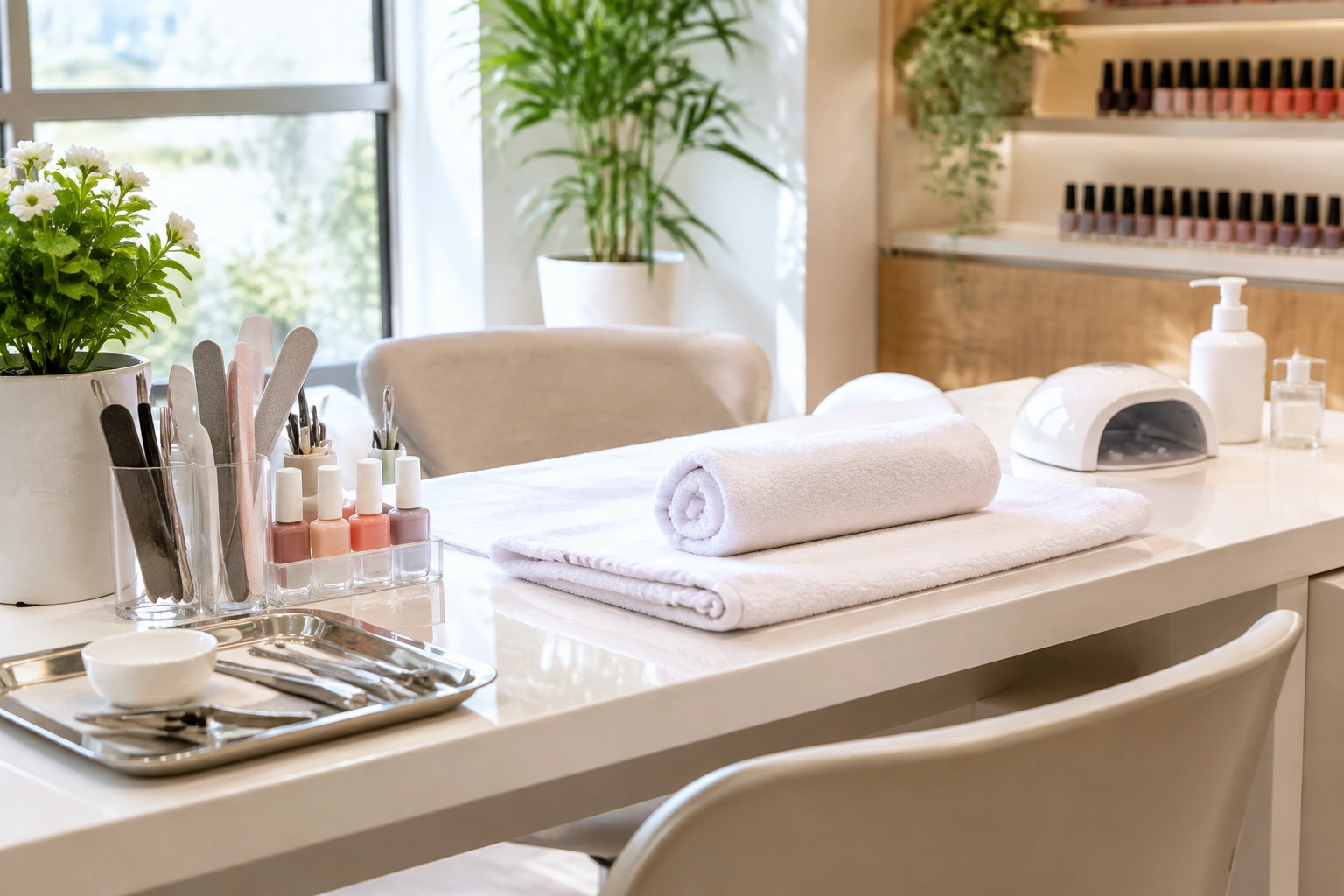
That matters because a manicure or pedicure is hands-on service. You are trusting someone with your skin, your nails, and the tools used on them. So the smartest way to choose is to evaluate the salon like a practical checklist: clean environment first, then credentials, then service fit, then price and convenience.
If you want a broader primer on what a nail salon is and how services are typically structured, this overview of nail salon basics is a helpful companion read.
How to Choose a Nail Salon: Start With the Basics
Think in layers. A salon can have pretty decor and still be a poor choice. Another may look simple but do excellent work and follow good sanitation habits.
My rule as a salon educator is this: if a salon fails the hygiene or professionalism test, nothing else matters. If it passes those, then you can compare service menu, price, and convenience.
A useful framework:
- Safety — Are the work areas, tools, and pedicure stations handled carefully?
- Skill — Do the technicians seem trained and consistent?
- Transparency — Are prices, services, and add-ons clear?
- Fit — Does the salon actually offer the manicure or pedicure you want?
- Convenience — Can you realistically return there without stress?
That order helps you avoid the common mistake of choosing based on aesthetics alone.
Check Hygiene and Sanitation First
This is the first filter because it protects you from the most avoidable problems. A clean salon doesn’t guarantee perfection, but a messy one is a warning.
Here’s what to look for when you walk in:
- Stations are wiped down between clients.
- Floors and sinks are reasonably clean, not dusty or sticky.
- Towels, files, and tools are organized instead of scattered.
- Foot baths look fresh and maintained.
- Trash bins are not overflowing.
- The salon does not smell strongly of stale chemicals or mildew.
Pay attention to the pedicure area in particular. Poor foot-bath hygiene is one of the easiest things to miss because the chairs may look nice while the basin is not being handled carefully.
A more specific in-person sanitation checklist can help:
- Pedicure tubs or basins: Are they visibly drained, scrubbed, and reset between clients rather than just wiped on top?
- Liners: If the salon uses liners, are they fresh and placed in the basin before the service starts?
- Fresh towels: Does each client get clean towels, or do you see the same towel being reused?
- Tool handling: Are metal tools taken from a clean pouch or sanitized tray, rather than picked up loose from a shared table?
- Single-use items: Are files, buffers, and other disposable items opened fresh or clearly separated from used ones?
- Work area reset: Does the station get cleared and wiped before the next person sits down?
The CDC has general guidance on infection prevention and hygiene practices in community settings, and OSHA explains workplace safety standards that matter in salons, especially around sanitation and chemical handling. You can use those as a reference point for what “basic care” should look like: CDC infection prevention guidance and OSHA workplace safety information.
A practical decision rule: if the salon is visibly cluttered, if tools are being passed around carelessly, or if the pedicure area looks neglected, keep looking.
Verify Licenses and Technician Training
Licensing is not decoration. It is one of the clearest signs that a salon and its technicians are operating within the rules required in their area.
Most states require some form of salon license and nail technician license, though the exact rules vary. Because requirements differ by location, check your state or local board rather than assuming every salon is regulated the same way.
What to look for:
- A salon license displayed where customers can see it.
- Technician licenses posted or available on request.
- Names on the license matching the person doing your service.
- A calm answer if you ask how long the technician has been licensed or what services they specialize in.
You do not need a long interview. A simple, polite question is enough: “Are your technicians licensed in this state?” A good salon answers without defensiveness.
Licensing does not guarantee artistry, but it does tell you the salon has met a baseline requirement. That baseline matters more than a polished Instagram feed.
Look for Proper Tool Sterilization and Single-Use Supplies
This is one of the most important parts of choosing a nail salon, and one of the easiest to judge if you know what to ask.
Metal tools such as cuticle nippers and nippers used for nail prep should be cleaned and properly disinfected between clients, following the salon’s sanitation process. Single-use items like files, buffers, and some liners should be treated as disposable unless the salon clearly explains otherwise.
A good salon usually has a system. You may notice:
- Sealed tool pouches or wrapped sets
- Freshly opened disposable items
- Technicians reaching for clean tools instead of reusing items from the table
- A clear separation between used and sanitized tools
If you want a quick check, ask: “How do you disinfect metal tools between clients?” You’re not looking for a perfect script. You’re looking for a clear, confident explanation.
Be cautious if you see the same file or buffer being used repeatedly without any sign it was meant for one-time use. That is a simple, visible red flag.
For broader context on cosmetic safety and product handling, the FDA’s consumer information is a solid reference point: FDA cosmetics and personal care guidance.
Compare Reviews, Reputation, and Word of Mouth the Right Way
Star ratings are useful, but they are not enough by themselves.
A salon with a 4.8 rating can still be a poor fit if the reviews mention the same problems over and over. Read for patterns, not just praise.
A practical way to judge reviews is to look at three things:
- Review volume: A salon with many reviews gives you a more stable picture than one with only a handful. A very high rating from a tiny number of reviews is less convincing than a slightly lower rating backed by a larger pattern of feedback.
- Review recency: Recent reviews matter more than older ones because staff, ownership, and standards can change. If the newest comments are negative and the older ones are glowing, that is worth noticing.
- Repeated complaint patterns: One complaint may be a fluke. The same complaint appearing again and again is more meaningful.
Look for repeated comments about:
- Rushed service
- Uneven polish application
- Poor communication
- Surprise charges
- Dirty stations or foot baths
- Friendly, consistent technicians
- Long-lasting results
- Careful removal and prep
Also pay attention to review quality. Detailed reviews that mention the service, the technician, and what actually happened are usually more useful than one-line posts that only say “great place” or “terrible experience.” Extremely generic praise, repeated wording, or a sudden cluster of short reviews can be less helpful.
Word of mouth is also useful, especially from people whose nail preferences match yours. A friend who loves quick basic manicures may not be the best guide if you want structured gel work or detailed pedicure care.
A practical example: if Salon A has slightly fewer stars but the reviews mention careful work, clean stations, and fair pricing, while Salon B has higher stars but repeated complaints about rushed appointments, I would lean toward Salon A.
Match the Salon to the Service You Actually Need
Not every salon is equally strong at every service. That matters more than many people realize.
If you want a basic manicure, most salons can handle it. But if you want gel, acrylic, or dip powder, look for a place that clearly offers that service and seems to do it often.
Match the salon to your goal:
- Basic manicure/pedicure: Look for consistency, cleanliness, and time management.
- Gel polish: Look for neat prep, careful curing, and a salon that offers removal guidance.
- Acrylic nails: Look for technicians with visible experience in shaping and balance.
- SNS/dip powder: Look for clean powder handling and good application hygiene.
- Pedicure-focused visit: Look for strong basin cleaning habits and comfortable chair setup.
If a salon offers everything but has no clear specialty, that can still be fine. The key is whether the service you want appears to be a regular part of their work, not an afterthought.
If you’re still deciding what service to book, this guide on what to get at the nail salon can help you narrow the choice before you compare salons.
Judge Price by Value, Not Just the Lowest Number
Low price is only a bargain if the service is complete and done well.
When comparing salons, ask what the price includes. A manicure that looks inexpensive at first may cost more once you add shaping, removal, gel upgrade, nail art, or cuticle care. A more expensive salon may actually be better value if those services are included up front.
Compare these details:
- Base service price
- Removal fee
- Gel or polish upgrade fee
- Nail shaping fee, if any
- French tip or design pricing
- Pedicure add-ons
- Tip expectations, if the salon makes them feel structured
Cheap and premium salons are not just different on price. They often differ in what you get for that price.
A lower-cost salon can make sense if you want:
– A simple polish change or basic manicure
– A quick service with no extras
– A convenient location for routine upkeep
A higher-priced salon is more justifiable when it offers:
– Better sanitation practices you can actually observe
– More experienced technicians for complex services
– More time per appointment
– Better product selection or more careful prep
– Service inclusions that would cost extra elsewhere, such as removal, shaping, or detailed cuticle care
That said, a higher price is not automatically better. If the salon is expensive but still rushed, unclear about pricing, or weak on sanitation, you are not getting true value.
The most useful question is not “What is cheapest?” It’s “What am I getting for the price, and is the pricing clear before I sit down?”
Compare Independent Nail Techs vs Full-Service Salons
This is another useful comparison when you are choosing where to go.
An independent nail tech may offer more personal attention, flexible scheduling, and a more specialized service style. That can be a good fit if you already know the tech’s work and want consistency with one person.
A full-service salon may be better if you want:
– More appointment availability
– A wider menu of services
– Backup if your usual technician is unavailable
– A setting that can handle multiple needs in one visit, such as manicure plus pedicure
Neither option is automatically better. Choose the one that matches your priorities. If you care most about a specific technician’s skill, an independent nail tech may be ideal. If you care more about convenience and variety, a full-service salon may be the better choice.
Assess Professionalism, Atmosphere, and Customer Service
Atmosphere matters, but not because a salon needs to be luxurious. It matters because professionalism tends to show up in small habits.
Watch how the staff communicates:
- Do they greet clients clearly?
- Do they explain timing and pricing without rushing?
- Do they listen when a customer asks for a change?
- Do they handle tools and products with care?
A calm, tidy, well-run salon usually feels organized. That does not mean it has to be fancy. It means the process feels controlled and respectful.
Here’s a practical sign of quality: the technician doesn’t make you feel like you’re interrupting them when you ask a question. That kind of communication often reflects how they’ll handle your service too.
If you’re comparing salons with similar sanitation and pricing, professionalism can be the tie-breaker.
Weigh Convenience: Location, Hours, Walk-In Access, and Appointments
Convenience matters, but it should not outrank safety or quality.
Walk-in salons are useful when you need flexibility or a quick service. Appointment-only salons usually offer more predictability, especially if you want a specific technician or a more detailed service. Neither is automatically better.
Choose based on your habits:
- Walk-in salon: Better if your schedule changes often or you need something same-day.
- Appointment-based salon: Better if you want a reserved time and less uncertainty.
- Neighborhood salon: Better for repeat visits and easier maintenance.
- Destination/high-end salon: Better if you want a special experience and are willing to plan ahead.
A salon close to home or work is easier to return to, which matters more than people think. The best salon is the one you can realistically keep using, not just the one that looks good once.
Red Flags That Should Make You Walk Away
Some warning signs are easy to ignore because the salon may still look pleasant. Don’t ignore them.
Walk away if you notice:
- Disposable items being reused
- Dirty or sticky workstations
- Foot baths that do not look properly cleaned between clients
- Tools handled carelessly
- A technician rushing through prep
- Pricing that changes without explanation
- Dismissive or impatient behavior when you ask a question
- Strong pressure to upgrade or add services you didn’t request
One subtle red flag is rushed service. If the technician seems eager to finish before the basics are done properly, that often shows up later in the quality of the manicure or pedicure.
Another one is vague pricing. If the salon cannot clearly explain what is included, surprise charges are more likely.
Questions to Ask Before Booking or at Check-In
You do not need a long list. A few smart questions can tell you a lot.
Try these:
- “Are your technicians licensed in this state?”
- “How do you disinfect metal tools between clients?”
- “Do you use single-use items for files or buffers?”
- “Is the price for this service all-inclusive?”
- “Do you offer the specific service I want, like gel, acrylic, or dip?”
- “How long does this service usually take?”
- “Do I need an appointment, or do you accept walk-ins?”
A good salon answers clearly and without making you feel awkward. If staff seem annoyed by basic questions, that is useful information.
A Simple Decision Checklist for Choosing the Best Option
Before booking, compare your top two or three salons using this checklist:
- Cleanliness: Did the salon look and smell reasonably clean?
- Licensing: Were licenses visible or easy to confirm?
- Tool handling: Did you see evidence of proper disinfection and single-use items?
- Reviews: Do the reviews show consistent patterns, not just a high star score?
- Service fit: Does the salon regularly offer the manicure or pedicure you want?
- Price: Is the pricing clear and fair for what is included?
- Professionalism: Did staff seem respectful, organized, and attentive?
- Convenience: Can you realistically get there again when you need a refill or maintenance visit?
If a salon checks most of those boxes, it is usually worth booking. If it fails on hygiene, licensing, or transparency, keep searching.
When to See a Nail Technician or Dermatologist
If you notice nail pain, swelling, drainage, unusual discoloration, or a problem that keeps returning, pause salon services and get professional medical advice. A nail technician can help with cosmetic concerns and service choices, but they should not be used as a substitute for medical care when something looks or feels wrong.
Final Thought
The best way to choose a nail salon is to use a simple decision filter: first confirm sanitation and licensing, then compare reviews for patterns, then judge whether the salon fits the service you actually want and the price you’re being asked to pay. If two salons seem similar, choose the one that shows better tool handling, clearer pricing, and more consistent recent feedback. That approach will usually lead you to the safer, better-value option.
