
What Is a Nail Salon? A Practical Guide to Services, Safety, and What to Expect

A nail salon is a business that focuses on nail care for hands and feet. In practical terms, that usually means manicures, pedicures, polish application, nail enhancements, and basic nail maintenance such as shaping, filing, buffing, cuticle care, and repair. Some salons keep the menu simple and fast. Others offer more detailed services like gel polish, acrylic nails, dip powder, and nail art.
If you have never been to one, think of a nail salon as the place you go when you want your nails cared for by a trained nail technician instead of doing the work yourself. That can be for everyday upkeep, a special event, or simply because you want a cleaner finish and longer wear than you can usually get at home.
A useful way to think about it: a nail salon is primarily about nail services, while a beauty salon may cover hair, brows, waxing, or makeup too. A day spa may feel more wellness-focused and may bundle nail services into a broader relaxation experience. If you want just your nails done efficiently, a nail salon is often the most direct choice.
What Services Do Nail Salons Offer?
Most nail salons build their menu around a few core services. The exact list varies, but these are the ones you will see most often.
Basic manicure
A basic manicure usually includes nail shaping, filing, cuticle care, buffing, and polish application. Some salons also include a hand massage or lotion step, but that is not universal. If you want neat, natural-looking nails without added length, this is usually the simplest service to book.
Pedicure
A pedicure focuses on the feet and toenails. It often includes trimming, shaping, cuticle work, foot exfoliation, and polish. Many people choose pedicures for cosmetic reasons, but they are also popular because feet tend to need more maintenance than hands.
Gel polish
Gel polish is a longer-wear polish service cured under a lamp. It is usually chosen by people who want their manicure to last longer with less chipping than regular polish. The trade-off is removal and upkeep: gel generally needs more careful removal than standard polish.
Acrylic nails
Acrylic nails are a type of enhancement used to add length, strength, or a more sculpted shape. They are useful if your natural nails break easily or you want a dramatic look. The trade-off is maintenance. Acrylics usually need regular fills as the natural nail grows out.
Dip powder
Dip powder is another enhancement option that sits between a polish service and a full artificial nail set. Many clients choose it for durability and a smooth finish. It can be a good middle ground if you want something longer-lasting than regular polish but do not want the same look or upkeep as acrylics.
Nail art and repairs
Some salons offer nail art, from simple accents to more detailed designs. Others provide nail repair for chips, breaks, or a single damaged nail. If one nail breaks before a big event, a repair service can be more practical than redoing the whole set.
A salon menu is not always standardized, so ask what is included before you book. One salon’s “manicure” may be very basic, while another may package in exfoliation, extra massage, or gel removal.
What Happens During a Typical Nail Salon Visit?
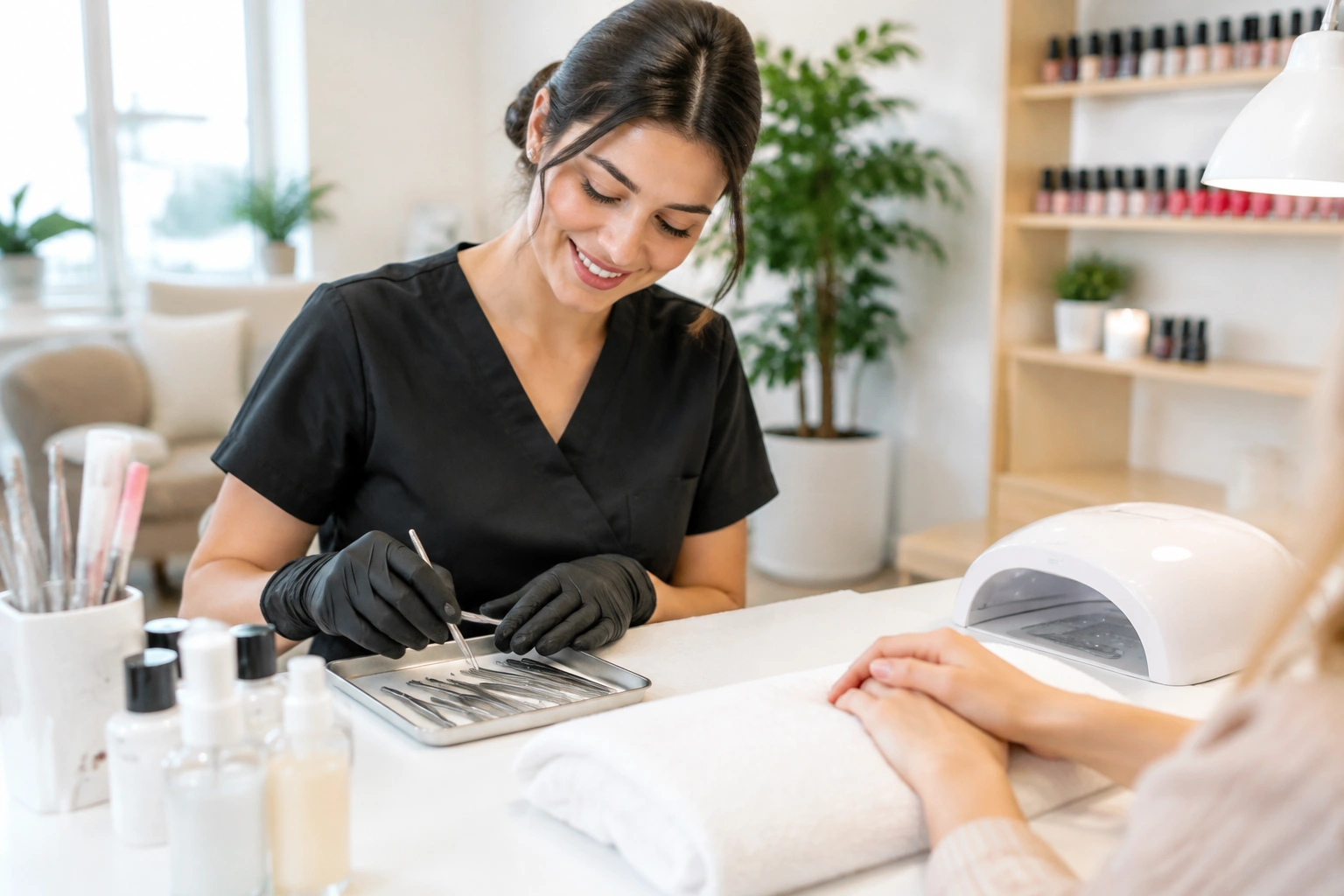
If you have never had a salon service before, the process is usually straightforward.
1. Check in and choose a service
You will usually tell the front desk or technician what you want: a manicure, pedicure, gel polish, or an enhancement service. If you are unsure, this is the time to ask what each option includes and how long it takes. If you have an appointment, arriving a few minutes early gives you time to check in, review the menu, and settle payment details before the service starts.
2. Consultation
A good technician will quickly confirm your length, shape, color, and any concerns. If you have weak nails, sensitive skin, allergies, nail damage, or a specific event date, say so early. That helps the technician steer you toward a service that fits your needs instead of just what looks good in the moment. If you are prone to irritation, ask what products they use and whether they can avoid certain ingredients or techniques.
3. Prep work
For a manicure, prep often includes cleaning the nails, shaping, cuticle care, and light buffing. For a pedicure, it may also include foot soaking or exfoliation. The point of prep is not just appearance; it creates a cleaner surface so polish or enhancement products adhere better.
4. Service application
This is where polish, gel, acrylic, or dip powder is applied. If you booked regular polish, expect base coat, color, and top coat. That layering matters because each layer has a job: the base coat helps with adhesion, the color gives coverage, and the top coat protects the finish.
5. Drying or curing
Regular polish air-dries. Gel polish is cured under a lamp. If you leave too soon with regular polish, you can dent it. If gel is not properly cured, the finish may not wear the way you expect.
6. Finish, payment, and departure
At the end, the technician usually checks the result with you and may give quick aftercare instructions. This is also when you pay. Many salons accept cash, card, or digital payment, but it is smart to confirm before booking. If you tip, a common approach is to tip at the end of the visit, usually based on the service total and your satisfaction with the work. Then you can leave once your nails are dry enough or your technician says they are ready.
For most basic manicures, plan on a shorter appointment, while pedicures and enhancement services usually take longer. If you are scheduling your first visit, it is worth asking how much time the service typically takes so you do not feel rushed.
Manicure vs. Pedicure: What’s the Difference?
A manicure treats the hands and fingernails. A pedicure treats the feet and toenails. That sounds obvious, but the experience and maintenance are different enough that it helps to compare them directly.
| Service | Main focus | Typical use case | Durability | Maintenance | Best for |
|---|---|---|---|---|---|
| Manicure | Hands and fingernails | Everyday grooming, events, polished appearance | Regular polish: shorter wear; gel/enhancements: longer wear | Frequent touch-ups if using regular polish | People who use their hands a lot and want neat nails |
| Pedicure | Feet and toenails | Foot care, sandal season, neater toenails | Often lasts longer than hand polish because toenails grow more slowly | Less frequent than manicures for many people | People who want tidy, comfortable-looking feet |
A manicure tends to show wear faster because hands are exposed to water, typing, cleaning, and daily friction. Pedicures often last longer visually, but they still need maintenance if polish chips or toenails grow out.
If you are choosing just one service, use your immediate need as the guide. Want your hands to look polished for work or an event? Book a manicure. Want your feet to look neat in open-toe shoes or before a trip? Book a pedicure.
How Nail Salons Differ From Beauty Salons and Day Spas
A nail salon is usually more focused and service-driven than a general beauty salon or spa.
A beauty salon often offers hair services, brows, waxing, and sometimes nails. If you want one location for several grooming services, that can be convenient. The downside is that nails may be only one part of the business, so the experience can feel less specialized.
A day spa typically leans into relaxation and wellness. A nail spa may treat a manicure or pedicure as part of overall nail wellness, not just a beauty upgrade. That usually means more emphasis on the atmosphere and the experience.
A traditional nail salon, by contrast, is often built around efficiency, repeat visits, and a clear service menu. If you want a straightforward manicure, fill, or pedicure without extra spa extras, that is usually where a nail salon shines.
Gel Polish, Acrylic Nails, and Dip Powder: Which Should You Choose?
This is where many first-time clients get stuck. The best choice depends on how long you want the result to last and how much maintenance you are willing to handle.
Gel polish
Choose gel if you want a polished look with better wear than regular polish. It is a strong choice for people who want their nails to stay neat between appointments. The trade-off is removal and the fact that it is still a polish service, not a length-adding enhancement.
Acrylic nails
Choose acrylic if you want added length, shape, or stronger-looking nails. Acrylic is often the most dramatic option of the three. The trade-off is upkeep: as your natural nail grows out, you will usually need fills to keep the set looking balanced.
Dip powder
Choose dip powder if you want durability and a more substantial feel than regular polish without necessarily going as far as acrylic. It is often appealing to people who want long wear but prefer a simpler look.
The easiest decision rule is this:
– If you want color only and low fuss, choose regular polish or gel.
– If you want length, choose acrylic.
– If you want durable wear with a middle-ground feel, consider dip powder.
How to Tell If a Nail Salon Is Clean and Safe
Cleanliness matters because you are trusting a salon with tools that touch skin and nails. You do not need to be an expert to spot the basics.
Look for these signs:
– Workstations that are wiped down between clients
– Tools that appear sanitized, not just rinsed
– Fresh disposable items where appropriate
– Pedicure tubs or liners that are clearly cleaned between uses
– A salon that does not feel overcrowded or chaotic
Watch for these red flags:
– Reused nail files, buffers, or wooden sticks that should be disposable
– Footbaths that still have debris, cloudy water, or visible residue
– Technicians skipping handwashing or not changing gloves when moving between clients
– Open tool trays with dirty implements mixed in with clean ones
– Towels, liners, or disposable items being reused
A safe salon should clean and disinfect reusable tools between clients, replace disposables when needed, and keep footbaths or liners visibly clean. If you are not sure, it is reasonable to ask how they sanitize tools and how they clean pedicure tubs.
If the salon looks disorganized, has dirty tools on open display, or seems to rush between clients without cleaning, that is a warning sign.
A practical rule: if you would not feel comfortable seeing the setup used on your own hands or feet, keep looking.
How to Choose a Reputable Nail Salon
A reputable salon usually makes the decision easy before you sit down.
Use this checklist:
1. Services match your goal. If you want gel, acrylic, or dip powder, confirm the salon offers it.
2. The space looks maintained. Clean floors, tidy stations, and organized tools matter.
3. Staff communicate clearly. You should be able to ask about service length, removal, and aftercare.
4. Pricing is transparent. A salon should be able to explain what is included and what costs extra.
5. Reviews sound consistent. Look for repeated comments about cleanliness, reliability, and quality, not just one beautiful photo.
Before booking, ask a few practical questions:
– Is removal included, or is that an extra charge?
– What exactly is included in the manicure or pedicure?
– How do you sanitize tools and clean footbaths?
– Do you use disposable liners, files, or buffers where appropriate?
– How long will the service take?
If you are booking for the first time, call ahead and ask one simple question: “Do you take walk-ins, and what is included in your basic manicure or pedicure?” The answer will tell you a lot about how the salon operates.
How Much Does a Nail Salon Visit Usually Cost?
Prices vary by location, salon type, and service level, so it is better to think in ranges than in a single “correct” number. A basic manicure is usually less expensive than gel, acrylic, or dip powder because it takes less time and uses fewer products. Pedicures often cost more than manicures because they take longer and involve more steps.
As a general budgeting guide, a basic manicure may be on the lower end, while gel, dip, acrylic, and pedicure services usually cost more. In many areas, simple services can start in a modest range and more detailed or premium services can rise quickly, especially in larger cities or higher-end salons. Because pricing varies so much, the safest move is to call ahead for a quote based on the exact service and your location.
The main pricing drivers are:
– Service type
– Product used
– Amount of nail prep or removal needed
– Salon location and overhead
– Whether you add nail art or repairs
When comparing prices, ask what the quote includes. A lower posted price may not include removal, shaping upgrades, or gel removal. A more expensive service may actually be the better value if it lasts longer and needs less maintenance.
Basic Nail Care Before and After Your Visit
A little preparation makes the appointment smoother and helps the result last longer.
Before your visit
- Remove old polish if the salon does not include removal
- Bring a reference photo if you want a specific shape or color
- Avoid cutting your cuticles at home right before the appointment
- Tell the salon ahead of time if you need extra time for a special service
- Mention sensitive skin, allergies, nail damage, or recent irritation before booking if it may affect product choice
After your visit
- Follow the drying or curing instructions
- Wear gloves for cleaning or dishwashing if you want polish to last longer
- Use cuticle oil or hand cream if your technician recommends it
- Avoid picking at lifting edges, which can make a small chip turn into a bigger issue
If you chose gel, acrylic, or dip powder, maintenance matters even more. Those services can look great for longer, but they also need proper removal or fill appointments to stay neat.
When a Nail Salon Is the Better Choice Than Doing Nails at Home
At-home nail care is fine for simple upkeep, but a salon makes more sense when you want better tools, longer wear, or a cleaner finish than you can usually manage yourself.
A salon is often the better choice if:
– You want gel, acrylic, or dip powder
– You need a polished look for an event
– You want foot care that is more thorough than a basic home routine
– You are not confident shaping your own nails evenly
– You want a service that lasts longer than a quick DIY polish job
Home care wins on cost and convenience. Salon care wins on precision, product options, and results that are usually more consistent. If your goal is “good enough for today,” home can be fine. If your goal is “looks neat for two weeks or more,” the salon is usually worth it.
When to See a Nail Technician or Dermatologist
A nail technician can help with routine care, shaping, polish, and many cosmetic concerns. If you have a nail problem that looks unusual, painful, or persistent, a dermatologist is the better person to evaluate it.
If you want general guidance about when a salon visit may or may not be appropriate for a specific issue, see can I go to a nail salon for an ingrown toenail. For concerns about cuts and infection risk, it is also worth reading can you get HIV from a nail salon cut, which addresses a common fear with careful context.
FAQs
Do I need an appointment at a nail salon?
Not always. Many salons accept walk-ins, but appointments are better for longer services or busy days.
What should I bring to my first nail salon visit?
Usually nothing is required. If you want a specific look, bring a photo. If you prefer your own polish, call ahead and ask whether the salon allows it.
How long does a manicure last?
That depends on the service. Regular polish usually wears for a shorter time than gel or enhancements. Your daily routine matters too, especially if your hands are often in water.
Is a pedicure only for appearance?
No. While many people go for the look, a pedicure also helps keep toenails neat and can include basic foot care steps.
Can I ask questions during the service?
Absolutely. A good technician expects questions about shape, color, maintenance, and aftercare. Clear communication usually leads to better results.
What if I do not know what service to book?
Describe your goal instead of guessing the service name. Say whether you want simple color, longer wear, added length, or foot care, and let the technician guide you.
A nail salon is simply a place built to help you care for your nails well, safely, and with results that fit your lifestyle. Once you understand the service menu and what to look for in a salon, choosing the right appointment becomes much easier.

