
How to Fix Separated Nail Polish: A Beginner-Friendly Guide

Separated nail polish is common, and in many cases it can be saved. The key is to figure out whether the bottle just needs gentle remixing or whether the formula has started to break down.

If your polish looks uneven, with color settled at the bottom and a clearer layer on top, that usually points to pigment separation. If it also feels thick, stringy, or clumpy, the polish may need a little more help — or it may be too old to rescue.
For a better understanding of why polish behaves this way, it helps to know what nail polish is made of and how it works in the bottle. If you want that bigger picture, see what nail polish is made of and how nail polish works for beginners.
What Separated Nail Polish Looks Like
A separated bottle usually looks uneven in one of a few ways:
- A lighter or clearer layer sits on top
- The color pigment has sunk to the bottom
- The polish looks streaky when you tilt the bottle
- The formula seems thicker than it used to be
- You may notice clumps or stringy bits when you pull the brush out
Some settling is normal if a bottle has been sitting unused. The key is whether the polish still blends back into a smooth, even liquid. Mild pigment settling that disappears after gentle rolling is different from a formula that stays clumpy, grainy, or stringy.
If the bottle has a mixing ball inside, that can help move pigment back through the liquid. If you do not see one, gentle mixing matters even more.
Quick comparison: what to do based on the bottle’s condition
| Polish condition | Best next step | What to avoid |
|---|---|---|
| Slight separation, otherwise smooth | Gently roll the bottle | Hard shaking |
| Settled pigment, no clumps | Roll first, then test | Adding remover |
| Thick but still smooth | Add a small amount of nail polish thinner if needed | Over-thinning |
| Clumpy, stringy, or bad-smelling | Replace the bottle | Warming the bottle or using acetone |
| Separates again quickly after remixing | Check the cap seal, clean the neck, and inspect the bottle’s age | Repeated heavy shaking |
Why Nail Polish Separates in the Bottle
Nail polish is a mix of pigments, solvents, and film-forming ingredients. Over time, the heavier color particles can sink while the liquid parts stay higher in the bottle. That is pigment separation.
Another common issue is solvent loss. If the bottle is opened often or not sealed tightly, some of the liquid can evaporate. When that happens, the polish gets thicker and may not flow smoothly.
Age also matters. Older polish is more likely to separate, thicken, or become hard to bring back together. A bottle that has been sitting for years is more likely to need replacement than a fresh one that just settled.
Can Separated Nail Polish Be Saved?
Usually, yes — if the problem is mostly settling.
A polish is often worth trying to fix when:
- The color has just separated into layers
- The polish is thick but not hardened
- The formula still smells normal
- The bottle can be mixed back into a smooth liquid
A bottle is less likely to be worth saving when:
- The polish is very clumpy or stringy
- The formula has turned rubbery or grainy
- It separates again very quickly after mixing
- The smell seems off
- The polish has clearly aged past its useful life
If you are unsure, test the polish on a nail wheel, a swatch stick, or one nail before doing a full manicure. That quick check tells you whether the finish still looks even and whether the brush applies cleanly.
The Safest Way to Mix Separated Nail Polish
The safest first move is gentle mixing, not aggressive shaking.
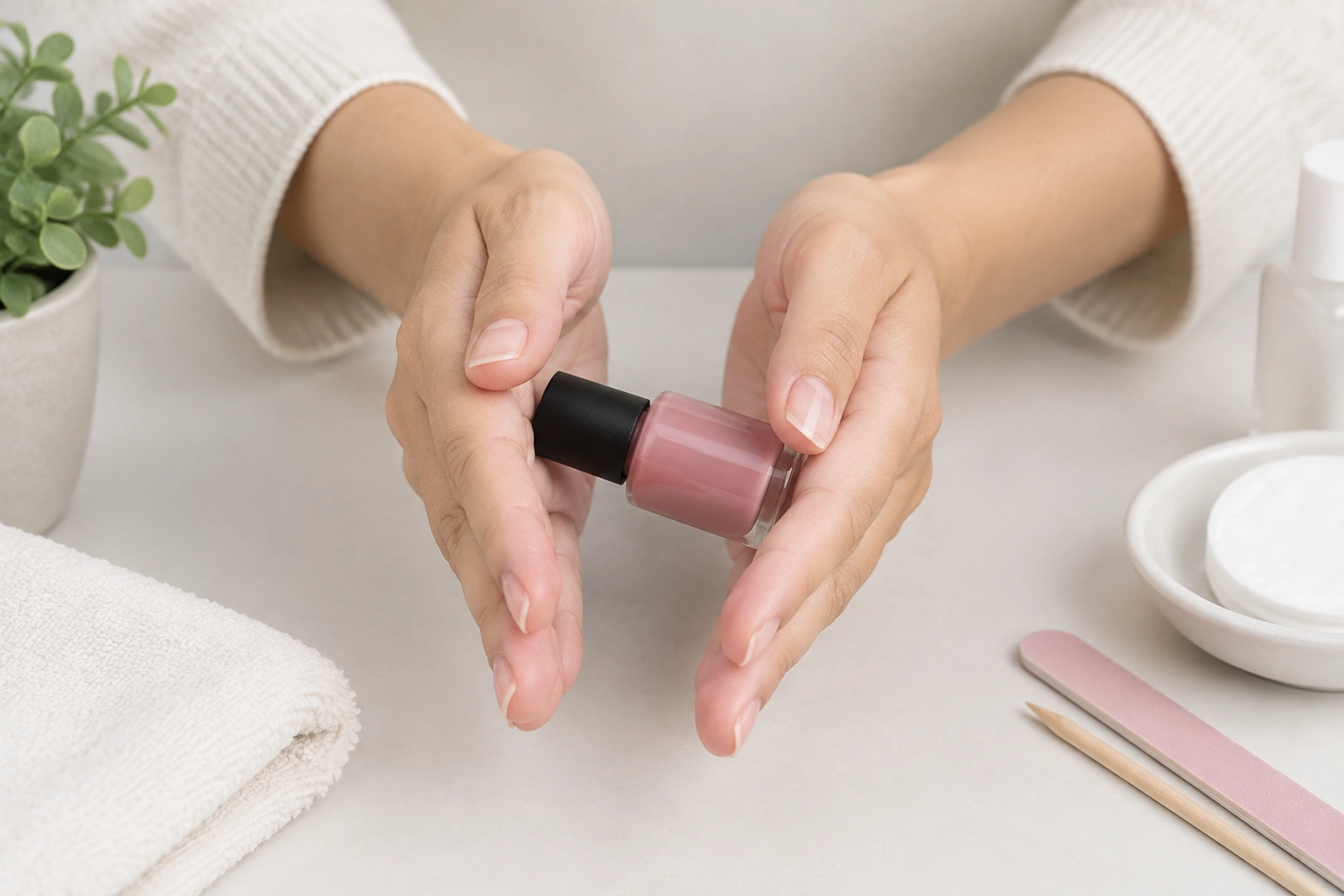
Here is a simple method:
- Close the cap tightly.
- Hold the bottle between your palms and roll it back and forth.
- Turn the bottle upside down and right side up a few times.
- Let it sit for a moment so bubbles can rise.
- Open it and check the texture before applying.
If the bottle has a mixing ball, rolling helps that ball move through the polish and break up settled pigment. That can be enough for a lightly separated bottle.
If the polish still looks uneven after rolling, mix a little longer rather than immediately shaking hard. The goal is to blend the formula without whipping air into it.
A better mix gives you smoother application and fewer streaks. That matters even more if you are trying to avoid patchy coverage, which is a separate issue from separation but often shows up in the same bottle. If you want help with that, see how to fix patchy nail polish.
Shake vs. Roll: Which Is Better?
For beginners, rolling is usually the safer choice.
Rolling
Rolling is gentler, so it is less likely to trap bubbles in the polish. It also lowers the chance of splashing polish into the cap or around the neck of the bottle.
Shaking
Shaking mixes faster, but it can create bubbles and make the polish apply unevenly. If a bottle has been shaken hard, you may notice tiny air pockets in the finish or a streaky first coat.
A simple rule helps here:
- Roll first for normal separation
- Shake only if the brand specifically recommends it
- Avoid hard shaking when the polish already looks thick or bubbly
When to Use Nail Polish Thinner
If rolling alone does not restore the polish, nail polish thinner can help. Use it when the polish is still basically usable but has become too thick to apply smoothly.
Nail polish thinner is made for this job. It is different from remover because it is intended to restore flow without stripping the formula apart.
Use thinner carefully:
- Add just one or two drops to start.
- Close the bottle and roll it gently to mix.
- Test the polish on a nail wheel, swatch stick, or one nail.
- If it still feels too thick, add one or two more drops and test again.
That slower approach helps you avoid over-thinning, which can make the polish too sheer or weak in coverage. If the polish starts to look watery or loses opacity, stop adding thinner.
If you are comparing thinner to replacing the bottle, use this rule: if the polish still looks and smells normal but feels heavy, thinner is worth trying. If the formula is badly clumped, stringy, or clearly degraded, replacement is the better choice.
What Not to Add to Nail Polish
A few common “fixes” can actually ruin the polish.
Do not use nail polish remover
Remover is not the same as thinner. It can break down the polish too much and change how it applies.
Do not use acetone as a shortcut
Acetone is strong and can damage the formula quickly. It may make the bottle temporarily thinner, but it often leaves the polish unstable.
Do not warm the bottle
Do not warm polish in hot water, in a microwave, or near a heater or other direct heat source. Heat can destabilize the formula and may create safety risks when the bottle is sealed or made from fragile materials.
Do not add random liquids
Water, oils, hand sanitizer, and other household products are not made for nail polish and can ruin the finish.
If you are handling thinner or other solvents, work in a well-ventilated area and follow the product label. For general chemical safety guidance, the FDA’s cosmetics information and CDC guidance on solvent exposure are useful starting points.
How to Tell If the Polish Is Too Old to Save
Some bottles are simply past the point of repair.
Signs that a polish may be too old to save include:
- Persistent clumps that do not break up
- A stringy texture that stays stringy after thinning
- A bad or unusual smell
- Separation that comes back very quickly
- A grainy finish on the nail
- A formula that looks partially dried out inside the bottle
Not every older bottle is automatically ruined. If the polish still recombines smoothly after gentle rolling and a small amount of thinner, it may still be usable. True spoilage is more likely when the texture problems keep coming back even after you try to re-mix and thin it carefully.
If the polish still looks messy after gentle rolling and a small amount of thinner, it is often better to stop trying to rescue it. Repeated fixing can waste time and still leave you with poor results.
What to Do If the Polish Is Still Clumpy or Stringy
If the polish is not smooth after your first attempt, do one careful follow-up step rather than several big ones.
Try this:
- Roll the bottle again.
- Check the cap seal to make sure it closes tightly.
- Clean dried polish from the bottle neck so the cap can seal properly.
- Add only a tiny amount of thinner if the formula is still too thick.
- Mix gently.
- Test a small swatch.
If the polish separates again very quickly, or if the same problems keep returning, the bottle may be too old or the seal may be failing. Older bottles are often not worth repeated rescue attempts.
Clumpy polish can leave bumps, drag marks, and uneven color. Stringy polish often pulls into threads on the brush and makes neat application difficult. Beginners sometimes keep trying to “fix” that texture, but more mixing is not always the answer.
How to Prevent Separation Next Time
A few storage habits can help polish stay usable longer:
- Tighten the cap fully after each use
- Store bottles upright
- Keep them in a cool, dry place
- Avoid leaving them in direct sunlight
- Clean dried polish from the neck of the bottle so it seals properly
- Check whether your bottle already has a mixing ball before assuming it needs more force
The seal matters more than many beginners realize. If air can get into the bottle repeatedly, the polish is more likely to thicken and separate again.
If you want to understand the difference between a basic polish formula and other types of nail products, what is nail polish is a helpful place to start.
When to See a Nail Technician or Dermatologist
A nail technician can help if you are unsure whether the polish is still usable or if you want guidance on product handling. A dermatologist is the right person to contact if you notice nail or skin irritation after using a product.
Get help sooner if:
- The polish causes burning, redness, or itching
- The bottle leaks or spills and you are unsure how to clean it safely
- You keep seeing strange changes in the polish and cannot tell whether it is expired or contaminated
FAQs About Fixing Separated Nail Polish
Is separated nail polish still okay to use?
Often yes, if the issue is just settling. If it mixes back into a smooth texture and applies normally, it is usually still usable.
Should I shake or roll the bottle?
Roll first. Shaking can create bubbles and make the polish harder to apply smoothly.
Can I use remover instead of thinner?
No. Nail polish remover is not a safe substitute for thinner.
How do I know if the polish is expired?
Look for clumps, stringiness, a bad smell, or separation that keeps coming back after mixing.
Can I save polish that is thick but not clumpy?
Usually yes. A small amount of nail polish thinner may help if the formula is still otherwise normal.
Why does my polish separate again so quickly?
That can happen when the bottle is old, not sealed well, or losing solvent over time.
Final Takeaway
Most separated nail polish can be fixed if the problem is simple settling. Roll the bottle gently, check the texture, and only use nail polish thinner when the polish is thick but still in decent shape. If the formula stays clumpy, stringy, or unstable, replacing it is the safer choice.

