
How to Fix Thick Nail Polish: A Beginner-Friendly Guide to Saving Your Favorite Bottle

If you’ve opened a bottle and found the polish slow, gloopy, or hard to brush on, don’t panic. Thick polish is usually a consistency problem, not a lost cause. In many cases, you can bring it back to a smooth, usable texture with the right thinner and a little patience.
The key is to fix the formula without damaging it. That means using the right product, adding it gradually, and knowing when a bottle has gone too far to save.
Why Nail Polish Gets Thick in the First Place
Nail polish thickens for two main reasons: the solvents evaporate, and the ingredients separate over time. Once the bottle has been opened and closed many times, air gets in and the liquid portion slowly disappears. That leaves the polish denser and harder to spread.
Older bottles can also become uneven. Pigment, shimmer, and other solids may settle or separate, which can make the polish look lumpy or inconsistent. That is why one shake may not be enough to fix it.
A warm bathroom, a bottle left uncapped, or a cap that doesn’t close tightly can speed up the problem. If you want a deeper look at how polish is made and why this happens, our beginner guide to how nail polish works is a helpful place to start.
Nail Polish Thinner vs. Nail Polish Remover: What to Use and What to Avoid
This is the most important choice in the whole process.
Nail polish thinner is made to restore the polish’s flow without breaking down the formula too aggressively. It is formulated to replace lost solvents and bring the polish back toward its original consistency. Nail polish remover, on the other hand, is designed to dissolve and remove polish from nails, not revive a bottle. That difference matters because remover can keep changing the polish after you’ve added it, which may make the formula weaker or unstable over time.
Here’s the simple rule for beginners:
- Use nail polish thinner if the polish is thick but still looks normal.
- Avoid using regular remover as a routine fix.
- Be especially cautious with acetone-heavy remover, since regular remover and acetone can break down the polish formula over time instead of restoring it.
For general consumer safety basics around cosmetic use, the FDA’s cosmetics information is a useful reference point. You may also see polish brands explain bottle care on their own sites, such as essie’s nail polish guidance.
Quick comparison table
| Problem | Best choice | Why |
|---|---|---|
| Polish is thick but still smooth-looking | Nail polish thinner | Designed to restore viscosity more safely |
| Polish is slightly dry and hard to brush on | Nail polish thinner | Helps the formula move again without overworking it |
| You only have remover nearby | Not ideal | May alter the formula instead of fixing it |
| Polish is stringy, rubbery, or badly separated | Usually replace it | The formula may be too degraded to save |
How to Tell Whether the Bottle Is Still Salvageable
A thick bottle is often worth trying to fix if it still looks like polish, just denser than usual. If it stirs or rolls smoothly and the color still looks even after mixing, there’s a good chance it can be saved.
A bottle is usually not worth the effort if it is:

- stringy when you lift the brush
- rubbery or glue-like
- full of clumps that don’t blend back in
- separated in a way that won’t improve with gentle mixing
- so old that it still feels wrong after thinning
A good beginner test is this: if the polish is thick but still moves, try thinner. If it behaves more like dried glue than polish, replace it.
How to Thin Thick Nail Polish Safely, Step by Step
The safest fix is gradual. Don’t try to “flood” the bottle with thinner and hope for the best. Small additions give you control.
1) Set up a clean, ventilated space
Open the bottle in a well-ventilated area. Nail products contain solvents, so you want fresh air and no open flame or heat source nearby.
2) Check the bottle neck and cap
Sometimes the polish thickens around the neck first. Wipe away dried product if needed so the cap can close tightly later.
3) Add a little nail polish thinner
For a standard bottle, start with 1–2 drops of nail polish thinner. That is usually enough for a first test without overdoing it. If the bottle is larger or the polish is especially thick, you may need a little more, but formulas vary, so add slowly and stop to check the texture after each small addition.
4) Mix gently
Roll the bottle between your hands or tilt it slowly to blend the thinner in. Avoid hard shaking if you can, because aggressive shaking can create bubbles and make the polish harder to apply smoothly.
5) Test the consistency
Open the bottle and check the brush. The polish should move more easily and coat the brush in a smooth layer. If it still drags or looks too dense, add a little more thinner and test again.
6) Try a swatch or nail
Before you decide the bottle is fixed, apply it to one nail or a swatch. You’re looking for even flow, normal opacity, and a finish that still looks like the original polish.
If you want a related troubleshooting guide, our article on how to thin thick nail polish covers the same process from a slightly different angle.
How Much Nail Polish Thinner to Add
There isn’t one exact amount that fits every bottle, because polish formulas vary. That’s why the safest approach is to start small and adjust slowly.
A practical beginner method is:
- start with 1–2 drops for a standard bottle
- mix
- test
- repeat only if needed
If the polish is still too thick after that, add another small amount rather than making a big jump. That may feel slower than dumping in a big splash, but it protects the formula. Too much thinner can make polish runny, sheer, or weak in coverage.
Signs you’ve added enough
You’re probably close when:
- the polish moves easily on the brush
- it spreads without dragging
- it still covers the nail normally
- it doesn’t look watery or streaky
What to Do If You Added Too Much Thinner
Over-thinned polish usually looks too watery, sheer, or weak. It may run off the brush too quickly and need extra coats just to look normal.
If that happens, there is no reliable way to fully reverse it. You can sometimes let the bottle sit closed and see whether it thickens slightly as some solvent evaporates, but that is only a limited, unreliable correction and it usually helps only if the polish was barely over-thinned.
If the polish has become watery or lost coverage, replacement is often the best option.
This is why gradual testing matters. Once a polish is too thin, it can be hard to bring it back to the sweet spot.
How to Use Slightly Thick Polish in the Meantime
If the polish is only a little thick and you want to use it before it is fully fixed, adjust your application technique.
Try these practical moves:
- wipe off excess product from the brush
- use thinner coats instead of one heavy coat
- work a little faster so the polish doesn’t drag
- cap the bottle between nails if you’re doing a full manicure
- reload the brush more often rather than pressing hard
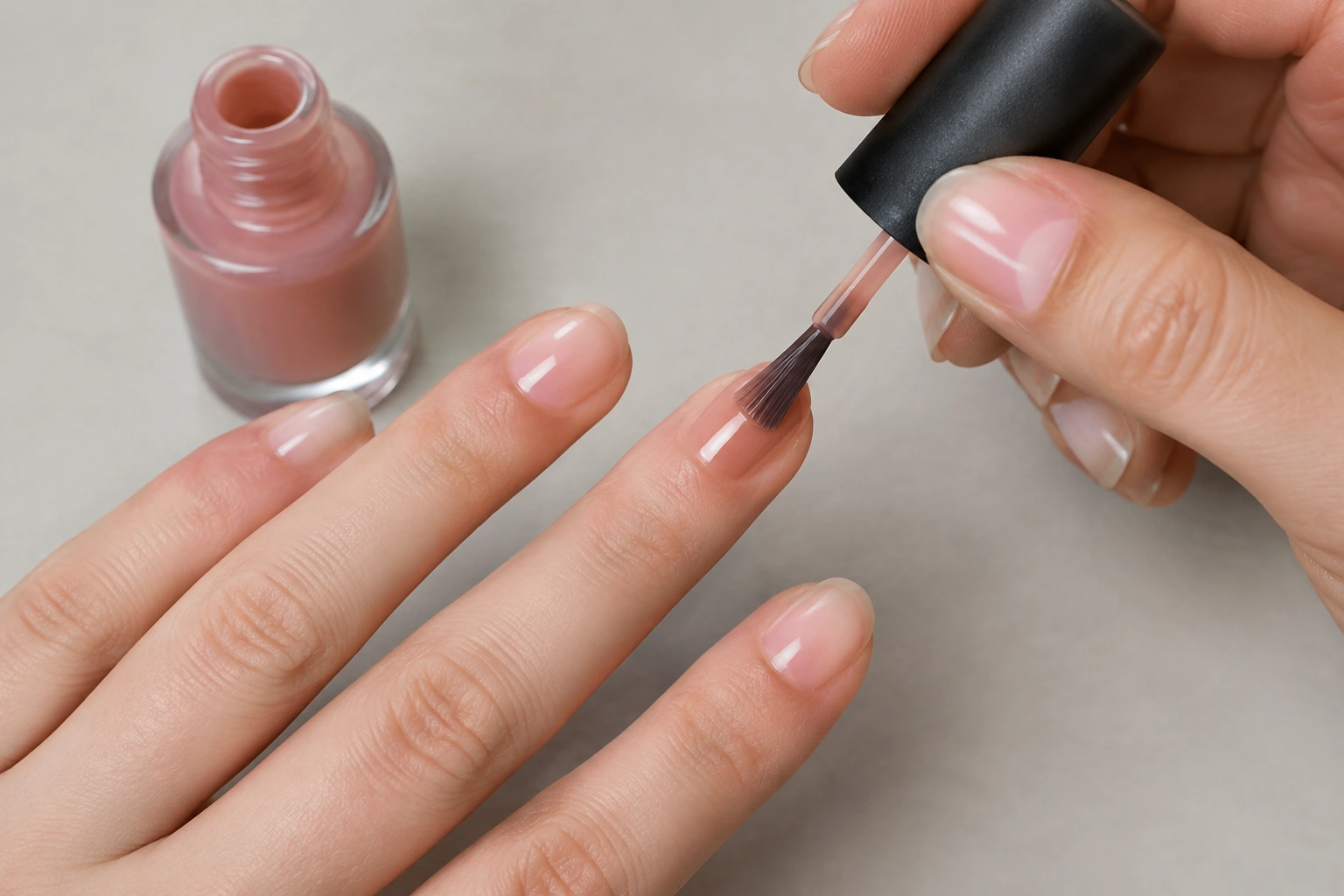
A slightly thick polish can still look good if you apply it carefully. What usually causes the mess is trying to force it on like a normal, fresh formula. If you’re also dealing with patchiness, this guide to fixing patchy nail polish may help you get a smoother finish.
Another comparison table: save it or replace it?
| Bottle condition | Try to save? | Why |
|---|---|---|
| Thick but still smooth | Yes | Usually responds well to thinner |
| Slightly separated but mixable | Yes | Often just needs gentle blending |
| Stringy or rubbery | Usually no | Formula may be too degraded |
| Clumpy and uneven after thinning | Usually no | Results are unlikely to improve |
| Normal color but poor flow | Yes | Often a simple viscosity issue |
How to Prevent Nail Polish from Thickening Again
Once you’ve fixed the bottle, storage habits matter. The goal is to slow down evaporation and keep the formula stable.
Keep the cap tightly closed
This is the biggest habit. Every time the cap is left loose, air gets in and the polish can thicken faster.
Store it away from heat and sunlight
A cool drawer is better than a warm bathroom shelf or a sunny windowsill. Heat speeds up solvent loss and can shorten the life of the formula.
Don’t leave the bottle open while painting
Open it only when you need it. If you’re painting multiple nails, close it between steps.
Handle the brush and neck cleanly
Wipe polish off the bottle neck before closing it. Dried product there can stop the cap from sealing properly.
When to See a Nail Technician or Dermatologist
If a bottle is old enough that it keeps separating, stays stringy after thinning, or behaves oddly no matter what you do, it’s usually better to replace it. A nail technician can also help if you’re unsure whether a specialty formula should be handled differently.
If the polish or remover irritates your skin, or if you notice nail or skin changes that worry you, a dermatologist is the right person to ask. Nail products are not suitable for everyone, and it’s better to stop using something that seems to cause a reaction.
Quick FAQs About Fixing Thick Nail Polish
Can I use nail polish remover instead of thinner?
Not as a routine fix. Remover is made to dissolve polish, not restore a bottle’s consistency. Nail polish thinner is the safer choice for reviving thick polish.
Will thinner change the color or finish?
It can if you add too much. A small amount usually just restores flow, but over-thinning may make the polish look sheerer or affect the finish.
Can I fix very old polish?
Sometimes, but only if it is thick rather than ruined. If it is stringy, rubbery, or clumpy in a way that won’t blend out, replacement is usually the better call.
Should I shake the bottle hard?
Gentle rolling or slow mixing is better. Hard shaking can create bubbles and make the polish harder to apply smoothly.
Is warming the bottle a good idea?
A little warmth may help loosen polish temporarily, but keep it gentle and avoid heat sources. Never use high heat or anything near a flame.
How do I know when to stop adding thinner?
Stop when the polish coats the brush smoothly and applies without dragging. If it starts looking watery, you’ve probably gone too far.
The Bottom Line
Thick nail polish is often fixable if the formula is still basically intact. The safest path is simple: use nail polish thinner, add it gradually, mix gently, and test as you go. If the bottle has turned stringy, rubbery, or badly separated, save your time and replace it.

