
How to Make Kids’ Nails Stronger: Safe, Simple Care Tips for Parents

Weak nails in children usually improve when you focus on the basics: gentle trimming, regular moisture, fewer habits that traumatize the nail, and a diet that supports healthy growth. That sounds simple, but it works because children’s nails are constantly being exposed to water, friction, and little daily bumps that adults often overlook.
Healthy nails are made of keratin, the same protein found in hair and skin. When nails become brittle, peel, or split, the cause is often practical rather than mysterious. Dry weather, frequent handwashing, nail biting, thumb sucking, picking, and rough play can all leave a child’s nails looking ragged. In some cases, the issue can also reflect poor nutrition, injury, or infection, which is why persistent changes deserve attention. Nationwide Children’s Hospital explains that nail problems such as peeling, splitting, or brittleness can result from injury, infection, or poor nutrition.
If you’re trying to figure out how to make kids nails stronger, the best place to begin is with a child-safe routine that prevents damage before it starts.
Why Kids’ Nails Become Weak or Brittle
Children’s nails are thinner and more easily damaged than many parents expect. A nail that splits after one rough day at school may not mean anything serious. But repeated peeling, cracking, or breakage usually points to one of a few common causes.
Dryness and frequent washing
Soaps, sanitizers, swimming, and cold weather can dry out the skin around the nails. When the nail plate and surrounding skin lose moisture, the nail becomes more likely to peel at the edges. This is especially noticeable in children who wash their hands often or who spend time in dry indoor heat.
Nail trauma
Kids use their hands constantly, which means their nails get bumped, scraped, and caught on clothing, toys, and sports gear. Even small injuries can weaken the nail as it grows out. A child who uses their nails to open packages, scratch stickers, or pick at scabs may keep re-injuring the same area.
Biting, sucking, and picking
Nail biting and thumb sucking are two of the most common reasons children have weak-looking nails. Those habits soften the nail, rough up the edges, and make it harder for the nail to grow in smoothly. Nicely trimmed nails can help reduce biting and picking, which can lead to infections, according to Nemours KidsHealth.
Nutrition gaps
A balanced diet matters because nail growth depends on the body having enough building blocks to make keratin. Low protein intake, and in some cases low iron or zinc, can affect nail strength. That does not mean every brittle nail is a deficiency, but food quality is worth reviewing if the nails stay weak.
Infection or medical issues
If nails are discolored, thickened, painful, or lifting from the nail bed, the problem may be more than dryness. That is the point where home care is no longer the whole answer.
Safe Habits That Help Nails Grow Stronger
The most effective routine is usually the least dramatic one. You do not need harsh strengthening products for most children. Instead, focus on habits that reduce splitting and protect the nail as it grows.
Keep nails short enough to resist snagging
Shorter nails break less often because there is less free edge to catch on fabric, toys, and teeth. For most children, trimming nails regularly is more helpful than waiting until they become long and fragile. If your child plays sports, does crafts, or tends to chew on nails, shorter nails are usually the safer choice.
For fingernails, weekly trimming is often enough, though active children or nail biters may need it more often. Toenails usually grow more slowly, so they often need less frequent trimming, but they should still be checked regularly so they do not get too long or start to curl.
Trim straight across, then soften the corners
Fingernails should be trimmed straight across and slightly rounded at the top, per KidsHealth. That shape helps reduce sharp corners without creating the deep side curves that can snag. For toddlers and younger children, a gentle clip followed by a light pass with a fine emery board can be a helpful option if the child tolerates it.
File gently, not aggressively
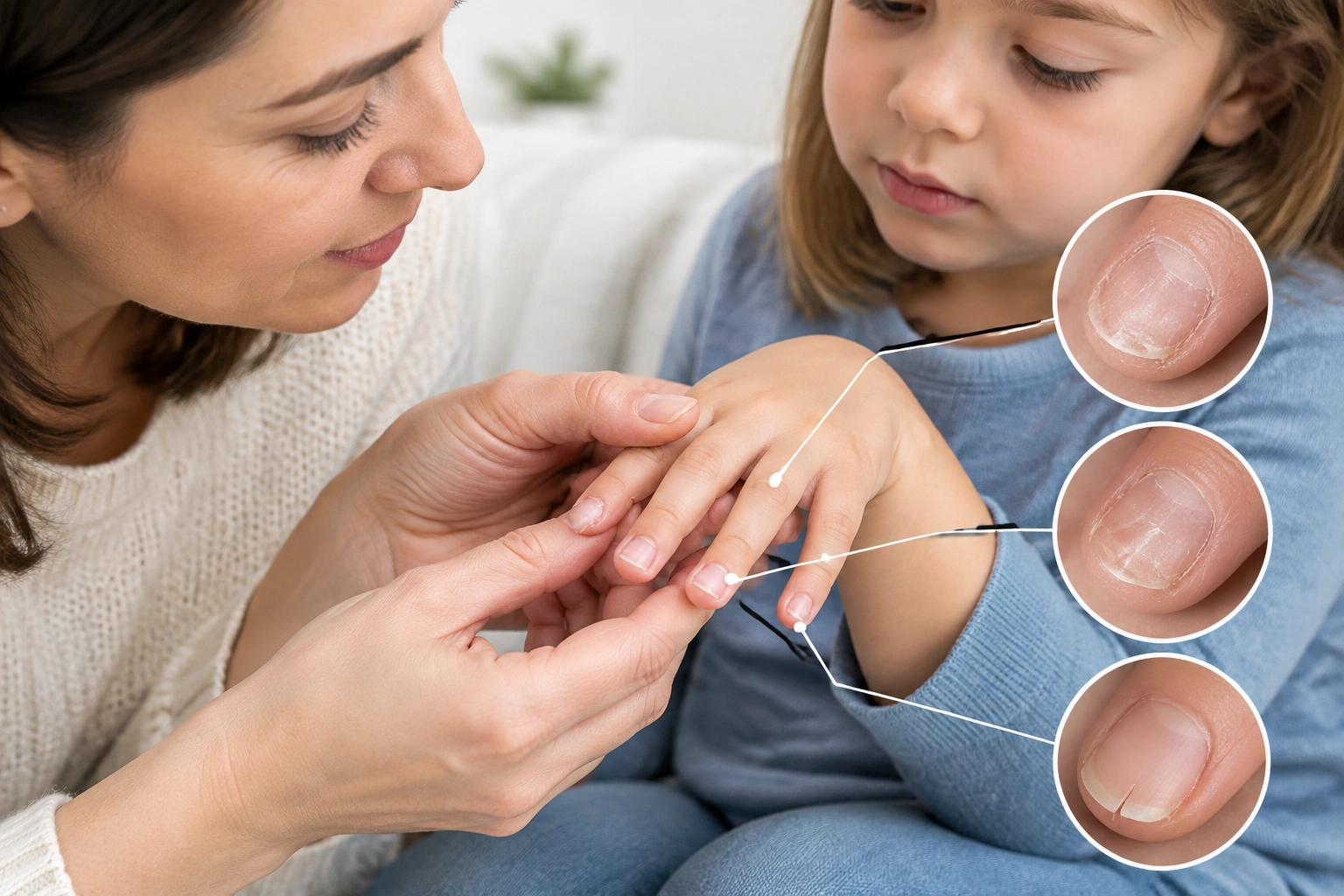
A fine emery board can be a gentle option for smoothing rough edges. Use short strokes in one direction rather than sawing back and forth. Over-filing can thin the nail and make peeling worse, especially on already fragile nails. If the nail edge is ragged, the goal is to smooth it, not reshape the whole nail.
Moisturize nails and cuticles
Regular moisturizing is one of the simplest ways to support stronger-looking nails. KidsHealth notes that a little hand lotion or moisturizer can do the trick. Apply it after handwashing and before bed, paying attention to the nail edges and the skin around them. If the skin around the nail is dry and cracked, the nail often looks worse too.
Protect nails from repeated trauma
If a child uses nails to scratch labels, peel tape, or dig at hardened dirt, the nail edge takes a beating. Simple changes help: keep a small nail brush near the sink, offer a toy or fidget during car rides, and remind older kids to use fingers or tools instead of nails when opening things.
A simple routine that actually works
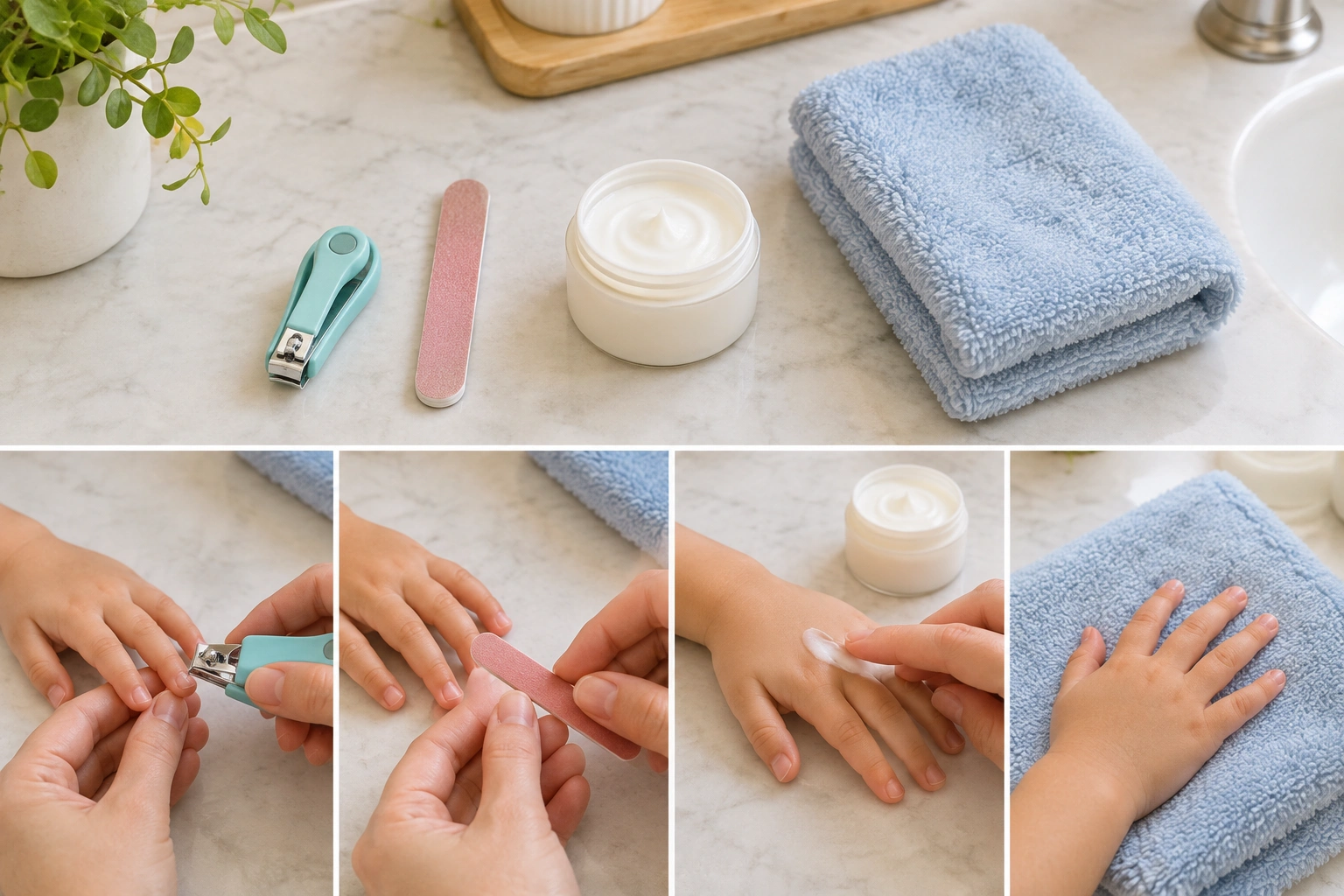
A practical weekly routine might look like this:
– Trim nails once or twice a week, depending on growth.
– Smooth rough edges after trimming.
– Moisturize after bathing and handwashing.
– Check for biting, picking, or snagging habits.
– Watch for one nail that keeps splitting in the same place.
That kind of routine is usually more effective than buying a “stronger nails” product and hoping for the best.
Foods and Nutrients That Support Healthy Nail Growth
Food is the safest starting point when you want to support a child’s nails. A balanced diet with fruits, vegetables, nuts, seeds, and adequate protein is the best nutritional foundation for nail health. That advice is conservative for a reason: children generally do better with food-first support than with a supplement-first approach.
Protein matters most
Nails are made of keratin, and keratin production depends on protein. If a child is a picky eater or relies heavily on low-protein snacks, their nails may not have the materials they need to grow well. Good child-friendly protein options include eggs, yogurt, milk, cheese, beans, lentils, tofu, chicken, turkey, fish, and nut butters if age-appropriate and allergy-safe.
Iron and zinc can matter
Iron and zinc are commonly mentioned in discussions of nail health because the body uses them for growth and repair. The goal is not to load up on supplements. It is to make sure the child’s diet includes a variety of iron- and zinc-containing foods such as meat, beans, fortified cereals, dairy, seeds, and legumes.
Don’t chase a single “nail food”
No one food will magically fix brittle nails. A child who eats a mix of protein, fruits, vegetables, grains, and healthy fats is more likely to support nail growth overall than a child who takes random supplements without a clear reason.
Watch the bigger picture
If weak nails come with poor appetite, low energy, pale skin, slow growth, or frequent illness, nutrition may be part of a larger issue. That is when a pediatrician should help sort out whether the child needs testing.
Should You Use Biotin or Other Supplements?
This is where many parents get pulled toward adult nail advice that does not translate well to children. Supplements are not automatically better than food, and they are not automatically safe just because they are sold over the counter.
Food first, supplements second
For most healthy children, a balanced diet is the right first step. Evidence for supplements is limited, with biotin sometimes discussed more than others, but that does not mean children should take it routinely. It is better to ask whether the child is eating enough protein and a varied diet before assuming they need a pill.
Why pediatric guidance matters
Children are not small adults. Doses, ingredient combinations, and even “hair, skin, and nails” products marketed to adults may be inappropriate for them. Some supplements contain amounts that are unnecessary or too high for children. Others include extra ingredients that a child does not need.
Parents should not start biotin, multivitamins, or other supplements for brittle nails unless a pediatrician recommends them. Unnecessary supplementation can also make it harder to figure out the real cause of the nail changes.
When a supplement might be considered
A supplement may be discussed if a pediatrician identifies a true deficiency, a restricted diet, or another reason the child is not getting enough nutrients from food. In that case, the clinician can recommend the right product and dose. Without that guidance, supplements are guesswork.
A simple rule
If the nail problem is mild and the child otherwise seems healthy, focus on food and daily care first. If the nails are persistently brittle and the child has other symptoms, ask the pediatrician before using supplements.
How to Stop Nail Biting, Thumb Sucking, and Picking
If a child keeps damaging the nail with a habit, no moisturizer or vitamin will fully solve the problem until the behavior changes. The good news is that these habits respond well to practical, low-pressure strategies.
Keep nails short and smooth
This removes the rough edges that make biting and picking more tempting. A child is less likely to chew on a nail that does not have a sharp corner to catch.
Replace the habit, not just the reminder
Telling a child “stop biting your nails” usually does not work on its own. Give the hands something else to do: a stress ball, a textured toy, a drawing pad, or a small object to hold during screen time or car rides.
Notice the trigger
Some children bite nails when they are bored, anxious, tired, or focused. If you can spot the pattern, you can interrupt it earlier. For example, a child who bites during homework may do better with a short movement break or a small fidget at the desk.
Use gentle accountability
For older children, a reward chart or simple progress tracker can help. Keep it positive. The aim is to notice improvement, not to shame the child for slipping back into the habit.
Protect the skin if the habit is strong
If the skin around the nails is raw, cracked, or bleeding, the area is more likely to get infected. In that case, the habit needs attention quickly, and a pediatrician should be involved if the damage is significant.
Child-Safe Nail Products to Use—and What to Avoid
Parents often ask whether they should buy a strengthening product. For children, less is usually more.
Safer choices
Gentle hand lotion or moisturizer is usually the most useful product. A simple, fragrance-light cream or ointment can help reduce dryness around the nail. For older children, a tiny amount of cuticle oil may be acceptable if it is labeled for child use or specifically approved by the pediatrician and if the child is old enough not to put it in their mouth.
What to skip
Avoid adult nail hardeners, formaldehyde-based products, and harsh chemical treatments on children. These are designed for adult cosmetic use, not for sensitive child skin and nails. They can irritate the surrounding skin and are not the right fix for a child’s brittle nails.
Compare the options
A moisturizer supports the nail environment by reducing dryness. A hardener tries to make the nail feel firmer, but that is not the same as making it healthier. For children, the first option is usually the safer and more useful one.
Be careful with polish and removers
If you do use polish on an older child, keep it occasional and choose gentle removal. Strong removers can dry the nail and surrounding skin. If the goal is healthier nails, frequent polish changes are rarely helpful.
For more practical care basics, you may also find our guide on safe, simple steps for kids’ nails useful.
When Weak Nails May Signal a Health Problem
Sometimes brittle nails are just dry nails. Sometimes they are a clue that something else is going on. The difference is usually in the pattern.
Red flags to watch for
Make a note if the nails are:
– Suddenly much weaker than usual
– Peeling or splitting on many fingers at once
– Discolored, thickened, or lifting
– Painful, swollen, or tender
– Accompanied by fatigue, pale skin, poor growth, or poor appetite
These patterns may point to iron deficiency, another nutrient issue, infection, or a different medical concern.
When to call the pediatrician right away
Call the pediatrician promptly if the nail problem is painful, swollen, draining, rapidly spreading, or paired with fever, significant redness, or signs of infection. Also call sooner if your child seems unwell, has poor growth, or has other symptoms that make the nail changes part of a bigger issue.
When it can wait for a routine visit
If the nails are mildly brittle but your child is otherwise healthy, it is reasonable to bring it up at the next routine appointment. That is especially true if the problem looks linked to dryness, nail biting, or repeated minor trauma.
One nail versus many nails
If only one nail keeps splitting in the same place, the cause is often trauma. If several nails are changing at once, the cause is more likely to be systemic or environmental. That distinction helps you decide whether to adjust habits or call the doctor.

When to See a Dermatologist
For children, the pediatrician should usually be the first stop. A dermatologist is the better choice if the nail changes seem unusual, severe, or ongoing, or if the pediatrician wants a specialist to evaluate possible skin or nail disease.
See a dermatologist sooner if:
– The nail is painful, swollen, or draining
– The color changes are new or spreading
– The nail is lifting from the nail bed
– The child has repeated infections around the nails
– The weakness does not improve after several weeks of gentle care
– Other symptoms suggest a skin or nail disorder
If you are unsure, call the pediatrician first. They can decide whether the child needs lab work, treatment, or a referral.
A Simple Plan Parents Can Follow This Week
If you want a straightforward place to begin, use this four-part plan:
- Trim nails straight across and keep them short.
- Moisturize after washing hands and before bed.
- Reduce biting, picking, and thumb sucking with a replacement habit.
- Improve meals with protein and a few iron- and zinc-rich foods.
That plan is realistic, low-risk, and usually enough to help mildly weak nails recover as they grow out. If the nails still look brittle after a few weeks, or if other symptoms show up, call the pediatrician.
FAQs
How long does it take for kids’ nails to get stronger?
Nails grow slowly, so improvements usually take time. You may notice less splitting once the child stops biting or the nails are trimmed and moisturized regularly, but a full change can take weeks as the new nail grows out.
Are cuticle oils safe for children?
Sometimes, yes, if the product is gentle and the child is old enough not to put it in their mouth. For younger children, a plain moisturizer is usually the safer choice.
Should I cut my child’s nails very short?
Shorter nails can help reduce breakage and biting, but cutting too close can cause discomfort or skin injury. Trim enough to keep the edge neat, then lightly smooth it with a gentle file if needed.
Can weak nails mean my child is missing a vitamin?
They can, but not always. Dryness, trauma, and habits are more common causes. If weak nails come with tiredness, poor growth, pale skin, or other changes, ask the pediatrician about possible deficiencies.
Do kids need nail hardeners?
Usually not. Most healthy children do better with gentle trimming, moisturizing, and habit changes than with adult-style hardeners.
What if my child keeps biting their nails?
Keep the nails short, offer a replacement habit, and watch for triggers like boredom or stress. If the habit is severe or causing skin damage, bring it up with the pediatrician.
When should I worry about discoloration?
If a nail turns yellow, brown, black, or green, or if the color change comes with pain, swelling, or lifting, it deserves medical attention rather than home treatment.
Can I use the same nail products I use on myself?
Not usually. Adult nail hardeners and strong removers are not ideal for children. Gentle moisturizer is the safest place to start.
How often should I trim my child’s nails?
Trim them as often as needed to keep them short and smooth. For many children, that means weekly or every couple of weeks, but active kids or nail biters may need more frequent care. Toenails usually need less frequent trimming than fingernails.
When should I call the pediatrician?
Call if weak nails are persistent, getting worse, painful, discolored, swollen, or paired with other symptoms like fatigue, poor growth, fever, or drainage.

