
How to Take Care of Kids’ Nails: Safe, Simple Steps for Babies, Toddlers, and Children

Keeping a child’s nails clean and trimmed is one of those small routines that quietly prevents a lot of problems. Short, smooth nails help reduce scratches, keep dirt from collecting underneath, and lower the chance that torn skin becomes irritated or infected. The best routine is simple: trim, file, clean, and watch for changes that do not look normal.
For parents and caregivers, the goal is not perfect-looking nails. The goal is safe nails that are short enough to protect skin, but not cut so close that the fingertips or toes become sore.
Quick Answer: The Safest Way to Care for Kids’ Nails
The safest basic routine is:
- Trim nails when they are soft, such as after a bath or shower.
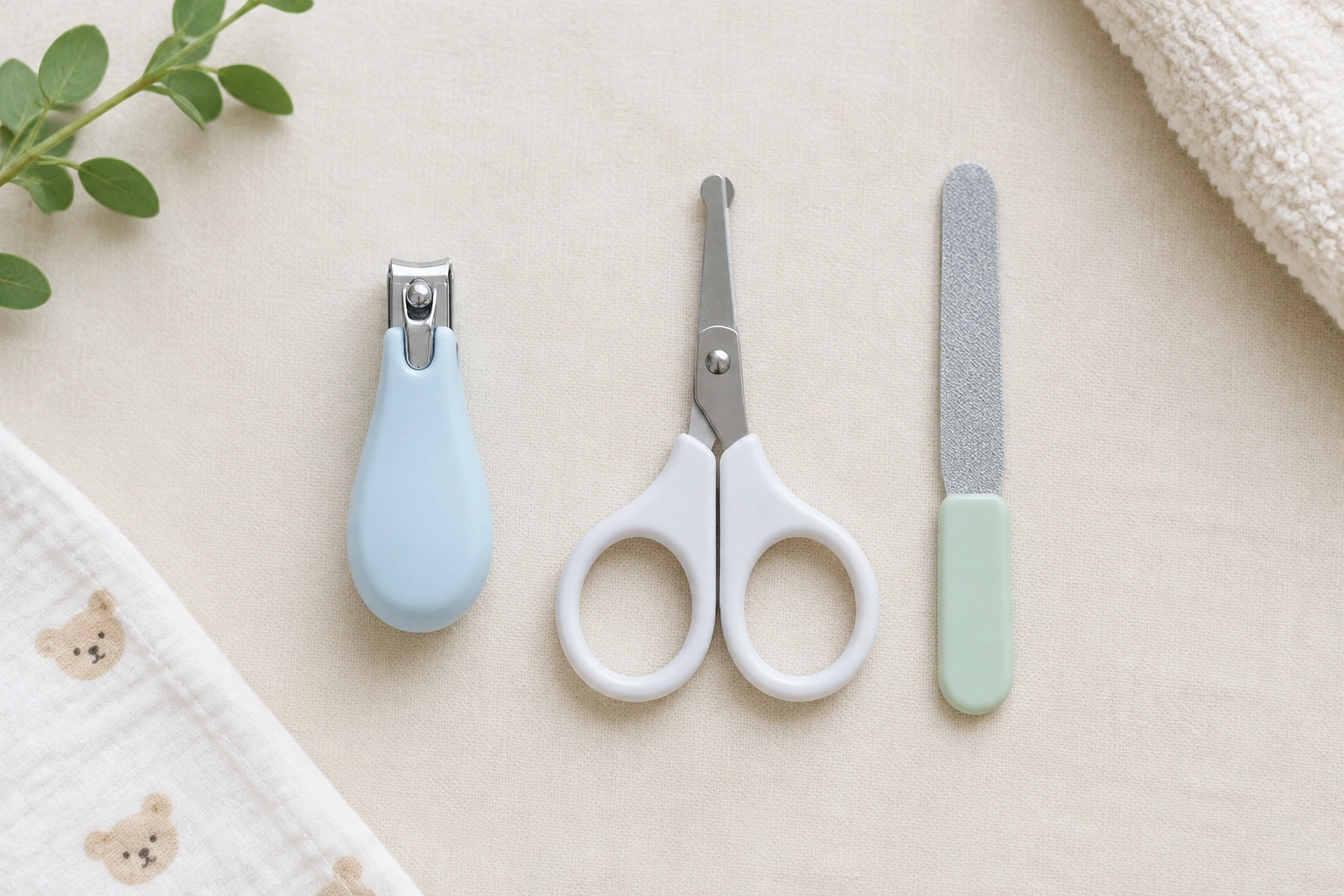
- Use a baby nail clipper, round-tip scissors, or a nail file depending on the child’s age and nail size.
- Cut fingernails almost straight across and round the corners slightly.
- Cut toenails straight across.
- Smooth sharp edges with a file or emery board.
- Check for redness, swelling, pain, thickening, or unusual color changes.
That routine works because it balances hygiene with protection. Long nails can collect dirt more easily, and CDC guidance on nail hygiene notes that dirt and germs can live under fingernails and that keeping nails short can help reduce how much debris collects there. You can read more on CDC nail hygiene guidance.
If your child is very young, squirmy, or anxious, keep the session short. One careful pass is better than repeated attempts that increase the chance of nicking skin.
What You Need: The Best Nail-Care Tools for Babies and Children
A small, controlled tool is easier to use on tiny nails than a large adult clipper. The most useful options are:
- Baby nail clippers for small nails and better control
- Round-tip scissors for precise trimming on tiny fingers
- A nail file or emery board for smoothing edges after clipping or for soft touch-ups
The American Academy of Dermatology recommends using a nail clipper or nail scissors, trimming after a bath or shower when nails are softer, and smoothing rough edges with a file or emery board in one direction rather than back and forth. See the AAD nail care basics.
Baby nail clippers vs. round-tip scissors
Baby clippers are often easier for quick, straight cuts. Round-tip scissors can feel more precise on very small nails, especially when you want to work slowly around a tiny fingertip. The trade-off is simple: clippers are usually faster, while scissors may give more control in tight spaces. The safest choice is the one you can handle steadily without rushing.
When a file is enough
A file is useful when the nail is already short but has a rough edge that could scratch a cheek or snag on clothing. For newborns and very young babies, some caregivers prefer filing alone in the earliest weeks until the nails are a little larger and easier to trim. Filing takes longer, but it can feel less stressful when you are worried about cutting skin.
How Often to Trim Fingernails and Toenails by Age
There is no single schedule that fits every child. Nail growth varies, so the most practical rule is to trim whenever nails start to curl, catch on fabric, scratch skin, or collect visible dirt.
Here is a simple home guide:
| Age group | Fingernails | Toenails | Practical note |
|---|---|---|---|
| Newborns and very young infants | Check every few days; file or trim only if needed | Check every few days; trim only if needed | Filing alone is often enough at first, especially if nails are soft and tiny |
| Older infants | Check weekly; trim as needed | Check weekly; trim as needed | Nails may grow faster and become sharp enough to scratch |
| Toddlers | Trim weekly or as needed | Trim every 1 to 2 weeks, or as needed | Active kids scratch themselves more easily |
| Older children | Trim weekly or before nails become long or jagged | Trim straight across before corners press into skin | Sports and shoe pressure can make toenails more sensitive |
In general, fingernails usually need attention more often than toenails because hands are used constantly and nails may grow faster. Toenails tend to need less frequent trimming, but they deserve extra care because cutting them poorly can increase the chance of an ingrown nail.
If you are unsure whether it is time, look at the nail, not the calendar. If the edge is sharp enough to scratch, it is time.
Step-by-Step: How to Cut Kids’ Nails Without Hurting Skin
The easiest time to trim is when your child is calm. Some parents prefer after a bath because the nails are softer; others choose nap time or a quiet moment when the child will sit still. The best timing is the one that lets you work carefully.
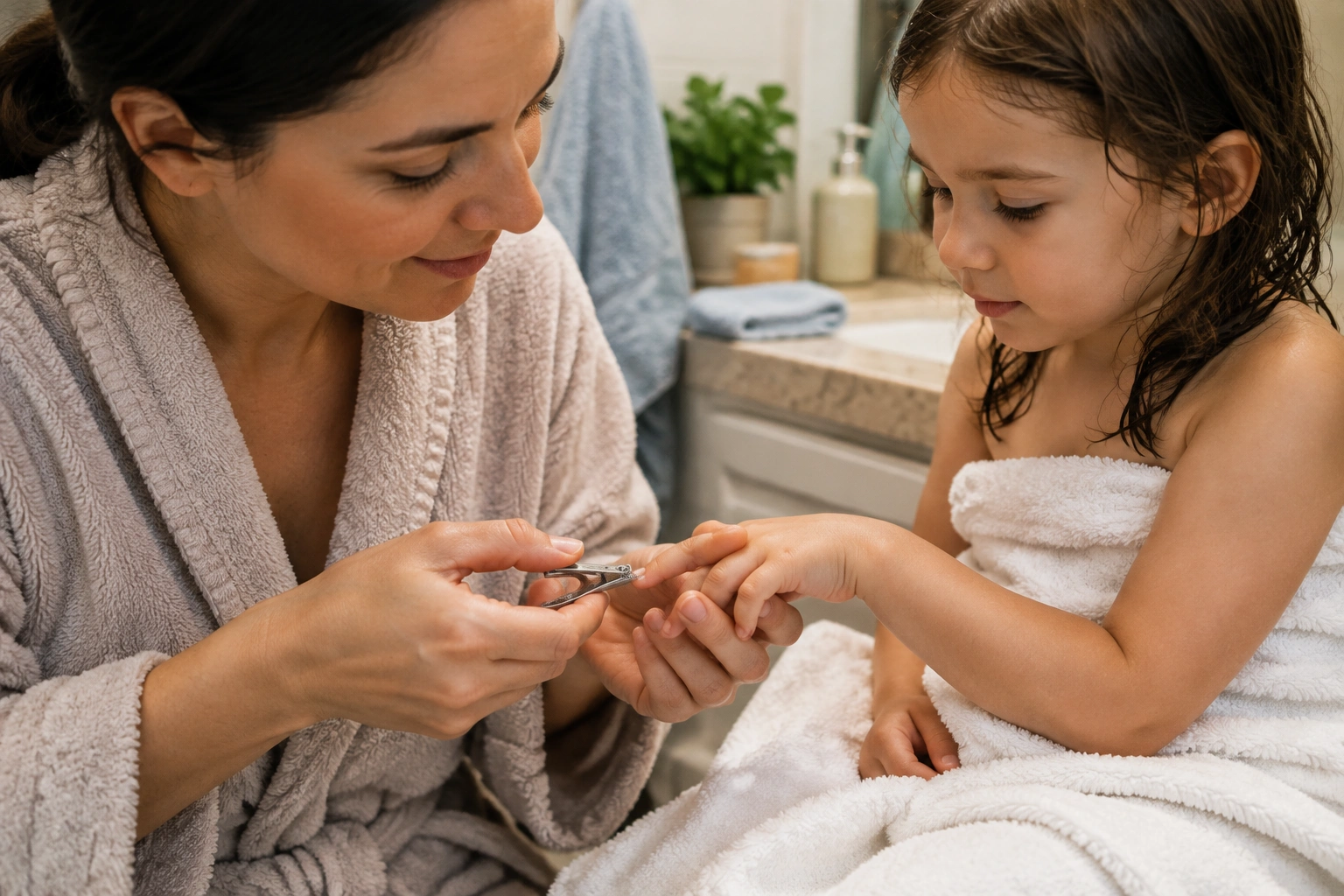
A safe trimming routine
- Wash and dry the hands or feet first. Clean nails are easier to see.
- Hold the finger or toe firmly but gently. Support the tip so it does not jerk away.
- Trim small amounts. Make several tiny cuts instead of one deep cut.
- Follow the natural shape of the nail. For fingernails, cut almost straight across and slightly round the corners.
- Keep toenails straight across. This lowers the chance of an ingrown nail.
- Smooth any rough edge. Use a file in one direction.
- Stop if the skin is nicked or the child is upset. A fresh attempt later is safer than forcing the issue.
For babies who move a lot, work on one hand or foot at a time and pause often. If needed, trim just one or two nails and return later. That may feel slow, but it reduces mistakes.
If you accidentally cut too close
If the nail bleeds a little, apply gentle pressure with a clean cloth. Do not dig deeper to “fix” the shape. Leave the area alone and watch for redness, swelling, or increasing pain.
Clip, File, or Both? How to Smooth Sharp Edges Safely
Clipping removes length quickly. Filing smooths the rough edge that can scratch skin.
That is why many caregivers use both: clip first, then file. The combination gives a cleaner result with less snagging. The AAD specifically recommends smoothing rough edges with a file or emery board and filing in one direction rather than back and forth, which can weaken the nail.
When clipping makes more sense
Clipping is the better choice when the nail is clearly too long or has a sharp corner. It is faster and more efficient for trimming the main length.
When filing makes more sense
Filing works well when the nail is already short, when you want to soften a jagged edge, or when a child is too small and wiggly for a full trim. It is slower, but it gives more control.
When both are best
If your child scratches their face in sleep, clip the nails to a safe short length and then file away any rough points. That extra step can make a noticeable difference in how often tiny scratches happen.
Fingernail Care vs Toenail Care: What’s Different
Fingernails and toenails should not be trimmed the same way.
Fingernails
Fingernails can be cut almost straight across, with the corners rounded a little. This keeps them strong and helps reduce sharp edges that can scratch skin.
Toenails
Toenails should be cut straight across. Rounding the corners too much can encourage the nail to grow into the skin, which raises the risk of an ingrown nail. If a toenail starts to curve or press into the side of the toe, be extra careful with future trims and watch for redness or pain.
A simple rule to remember
Hands get shaped; toes get squared. That small difference helps prevent some of the most common nail problems in children.
How to Clean Under Kids’ Nails Without Damaging the Skin
Nails should be clean, but they should not be scraped aggressively. Dirt can collect under the free edge of the nail, especially after outdoor play, crafts, or meals. During regular handwashing, gently clean around the nail with soap and water and a soft washcloth.
A soft nail brush can be helpful for older children if dirt is visible. Keep the pressure light. Do not dig under the nail with a sharp object or force anything beneath the skin.
The CDC notes that dirt can collect under fingernails and that regular washing is important, especially before meals and after bathroom use. That is one reason regular washing matters. See the CDC’s nail hygiene page.
How to Prevent Scratches, Hangnails, and Ingrown Nails
A few small habits can prevent a lot of irritation.
To reduce scratches
Keep fingernails short enough that they do not catch on skin or fabric. This matters most for babies and toddlers who rub their faces in sleep or while upset.
To prevent hangnails
Do not pull at loose skin. Clip a hangnail cleanly with a small, clean tool instead of tearing it. Pulling usually makes the skin split farther and can leave a sore edge.
To lower the risk of ingrown toenails
Trim toenails straight across and avoid cutting them too short. Shoes that squeeze the toes can make the problem worse, so make sure footwear leaves enough room at the front.
Keep nails from drying out
Dry nails can break more easily, so regular moisturizing can help. Nationwide Children’s Hospital notes that moisturizing regularly can help because dry nails break more easily. That is especially useful in dry weather or after frequent handwashing.
What to Do About Nail-Biting and Thumb-Sucking Habits
Nail-biting and picking can damage the nail edge and the skin around it. They also make it harder to keep nails clean.
A calm, non-punitive approach works best:
- Keep nails short so there is less to bite.
- Smooth rough edges with a file.
- Notice patterns, such as biting during screen time, stress, or boredom.
- Offer a replacement habit, like holding a small object or using a fidget.
- Avoid shaming, which often makes the habit harder to change.
Nationwide Children’s recommends avoiding biting or picking at nails and encouraging kids to use a nail file instead. That is a practical goal for older children who can participate in their own care.
If thumb-sucking or nail-biting is frequent and the skin around the nail becomes irritated, focus on comfort and routine rather than punishment. The habit usually improves more easily when the nails are already smooth and less tempting to pick.
When Nail Changes Are Normal vs. When to Worry
Some nail changes are harmless. Others deserve a closer look.
Usually manageable at home
- A slightly rough edge after trimming
- A small hangnail with no redness or swelling
- Mild dryness that improves with moisturizing
- Short-term dirt under the nail that comes off with washing
Warning signs that need attention
- Redness, swelling, warmth, or pain around the nail
- Pus or drainage
- Thickening of the nail
- The nail lifting from the skin
- A dark streak or unusual discoloration that does not go away
- Repeated ingrown toenails
- A nail that becomes tender without a clear reason

Persistent changes are a good reason not to ignore the nail, even if the child seems otherwise well.
When to See a Pediatrician or Dermatologist
For children, persistent nail problems should be assessed by a pediatrician first, and a dermatologist may be helpful if the issue seems skin-related or keeps returning.
Seek medical advice if:
- the nail area is painful, swollen, or draining,
- a nail is repeatedly ingrown,
- discoloration is persistent or spreading,
- the nail is thickening or separating from the skin,
- eczema or skin irritation around the nail keeps coming back,
- or your child seems uncomfortable every time the area is touched.
At-home care is appropriate for routine trimming, cleaning, and smoothing. Once there is pain, swelling, drainage, or an unusual color change, home care is no longer enough. If you are unsure, a pediatrician is usually the best first stop; a dermatologist is especially helpful when the nail problem may be linked to skin conditions or keeps returning.
For older children who are ready for more independence, our guide to natural nails for teens and simple care tips can help them keep nails neat between trims. Parents who are also thinking ahead about salon services may find our article on what age kids can get their nails done useful for age-appropriate choices.
A Simple Home Routine That Actually Sticks
The easiest routine is the one you can repeat without stress. Check nails during regular washing, trim when they start to scratch or catch, file rough edges, and keep an eye out for swelling, pain, or color changes. If the nail is only sharp or rough, home care is usually enough; if it is painful, swollen, draining, or changing color, it is time to call the pediatrician. That is usually enough to keep kids’ nails comfortable, clean, and low-risk.
If you want to build stronger nail habits for the whole family, our guide to daily nail care ideas for healthier, stronger nails offers practical habits that work well beyond childhood.
FAQ
How often should I trim my child’s nails?
Trim them whenever they start to get sharp, long, or dirty. Fingernails usually need attention more often than toenails.
What is the safest tool for a baby’s nails?
Baby nail clippers, round-tip scissors, or a fine nail file can all work. The safest choice is the one you can control steadily.
Should I cut nails after a bath?
Yes, that often helps because nails are softer and easier to trim.
Can I clean under my child’s nails with a sharp tool?
No. Stick to soap, water, a soft cloth, or a gentle nail brush. Do not dig under the nail.
When should I call the doctor?
Call if there is pain, swelling, drainage, thickening, or a persistent color change. If you are unsure whether it is a skin issue or a nail issue, start with the pediatrician.

