
How to Make Nail Polish Dry Faster: A Beginner-Friendly Guide That Actually Helps

Fresh polish looks simple, but drying is where most beginners run into trouble. The good news is that you can speed things up a lot with the right method and a little patience in the right places.
Fastest Safe Way to Dry Nail Polish Right Now
If you want the fastest beginner-friendly option at home, use thin coats, then finish with a quick-dry top coat if you have one. After that, hold your hands still under gentle fan airflow. If you do not have a drying product and need a backup, careful cold-water use can be tried, but it is not the best method and it should be used cautiously.
A simple order of priority is:
- Apply polish in thin layers.
- Use a quick-dry top coat if available.
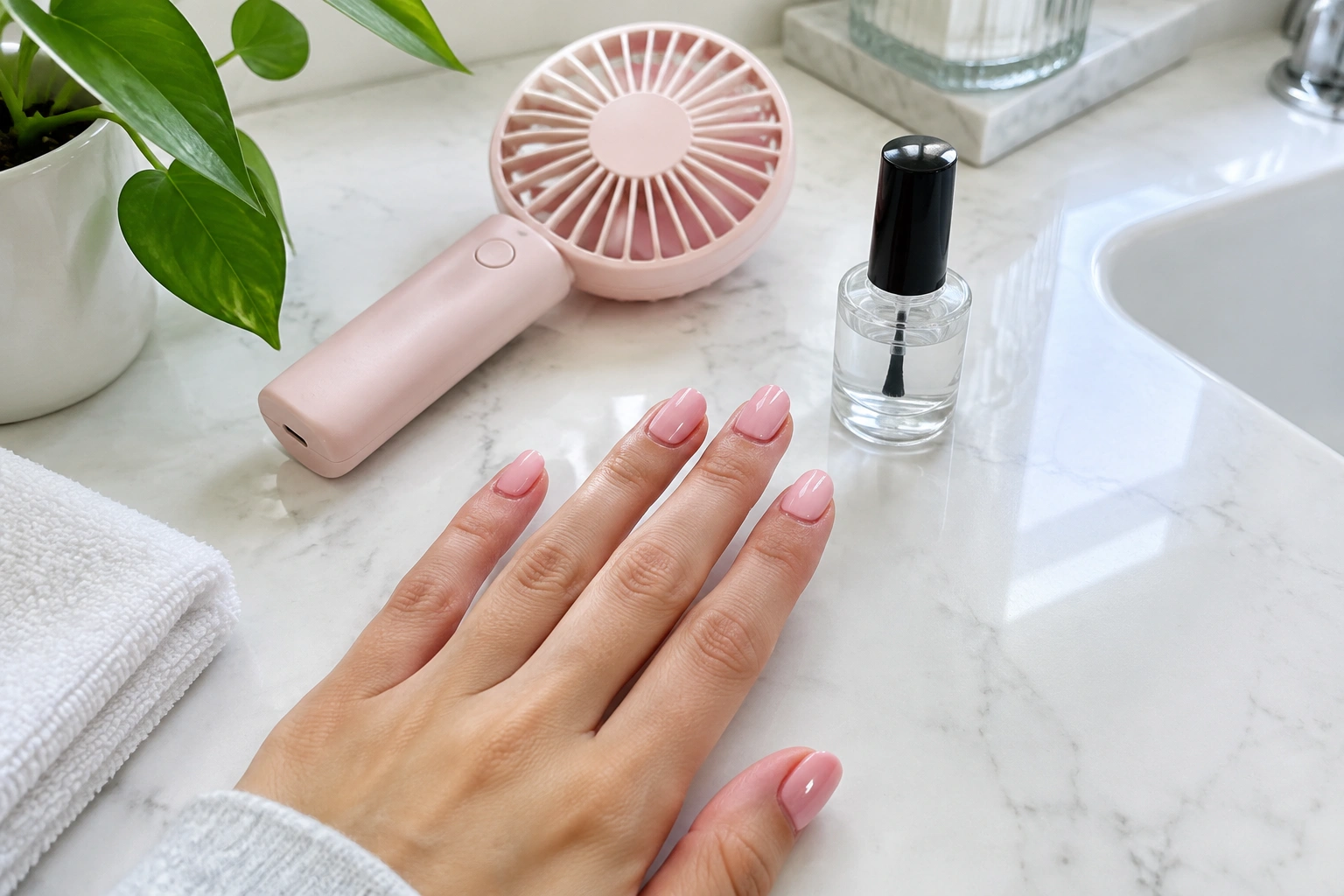
- Let the nails sit under a fan with gentle airflow.
- If needed, try careful cold water or ice water very gently.
- Avoid touching, testing, or “checking” the nails too soon.
If you already own a drying product, use the directions on that bottle first. Results vary by formula and by how thickly the polish was applied, so product instructions matter more than internet shortcuts.
Why Nail Polish Takes Time to Dry
Nail polish does not become hard the moment it looks smooth. First, the top layer starts to set. After that, the inside still needs time to finish drying.
That is why a nail can feel “fine” for a minute and still dent when you grab your phone or unzip a bag. The surface may be dry to the touch, while the layers underneath are still soft.
This is also why thick coats cause so many problems. A heavy coat traps more solvent, so the outside can seem ready before the center is.
Surface-dry vs. fully cured
These two ideas sound similar, but they are not the same:
- Surface-dry means the top feels dry enough that a light touch may not leave a mark.
- Fully cured means the polish has hardened more completely and is less likely to dent or smudge.
A manicure can be surface-dry and still not ready for rough use. That is the gap beginners often miss.
The Drying Methods That Actually Help
Some methods are useful because they help the polish set faster. Others mostly create the feeling of progress without really solving the problem.
Here is a simple comparison to help you choose.
| Method | Speed | Safety | Cost | Finish |
|---|---|---|---|---|
| Fan airflow | Good for gentle drying | Low risk when used gently | Free if you already have one | Usually preserves finish |
| Cold water | Can help the outer layer set | Mixed; easy to rush or disturb polish | Very low | Can be okay, but handle carefully |
| Quick-dry top coat | Often the most practical shortcut | Usually safe when used as directed | Extra product cost | Often gives a smoother finish |
| Drying drops | Helpful for some formulas | Usually low risk when used properly | Extra product cost | Often good, but depends on formula |
Fan drying
A fan is one of the easiest beginner methods because it does not require touching the polish. Gentle airflow can help solvents evaporate.
Use low, steady airflow and keep your hands still. Strong air blasts are not better. They can create ripples if the polish is very wet or if your brushwork was thick.
Cold water
Cold water is a common trick, but it is not a magic fix. It may help the outer layer set, yet it does not fully harden polish instantly.
If you try it, keep the water gentle and do not run a strong stream over fresh nails. Sudden water pressure can leave dents or marks. A light, careful dip is less risky than splashing or rubbing. Ice water follows the same caution: it is not the best method, and it is mainly a backup if you do not have a better option.
Quick-dry top coat
A quick-dry top coat is one of the most useful products for beginners. It forms a faster-setting layer on top of the color, which can help protect the manicure while it sets.
This is often the better choice if you want speed and a cleaner finish. It is especially useful when you already have it at home and do not want to rely on a household hack.
Drying drops
Drying drops are another handy option. They are usually designed to help polish set more quickly without adding too much bulk.
They can be convenient if you dislike a thicker top coat feel. The trade-off is that results depend more on the polish formula and how much product you use.
What Works Best: Quick-Dry Top Coat vs. Drying Drops
If you are choosing between these two, think about what matters most to you.
- Quick-dry top coat: better if you want a protective finish over the whole manicure.
- Drying drops: better if you want a lighter feel and already like your regular top coat.
A quick-dry top coat is often the more beginner-friendly pick because it does two jobs: it helps the manicure set and adds shine or protection. Drying drops are simpler in feel, but they may not protect the nail as much on their own.
If you want a product-based shortcut, this is usually the first one to try. For a broader overview of drying options, see our guide on the best way to dry nail polish quickly.
How to Apply Polish So It Dries Faster
Drying speed starts before the polish ever leaves the bottle. The way you apply it matters just as much as the product itself.
Use thinner coats
Thin coats dry faster than one thick coat because there is less polish sitting on the nail. That means less soft material trapped underneath.
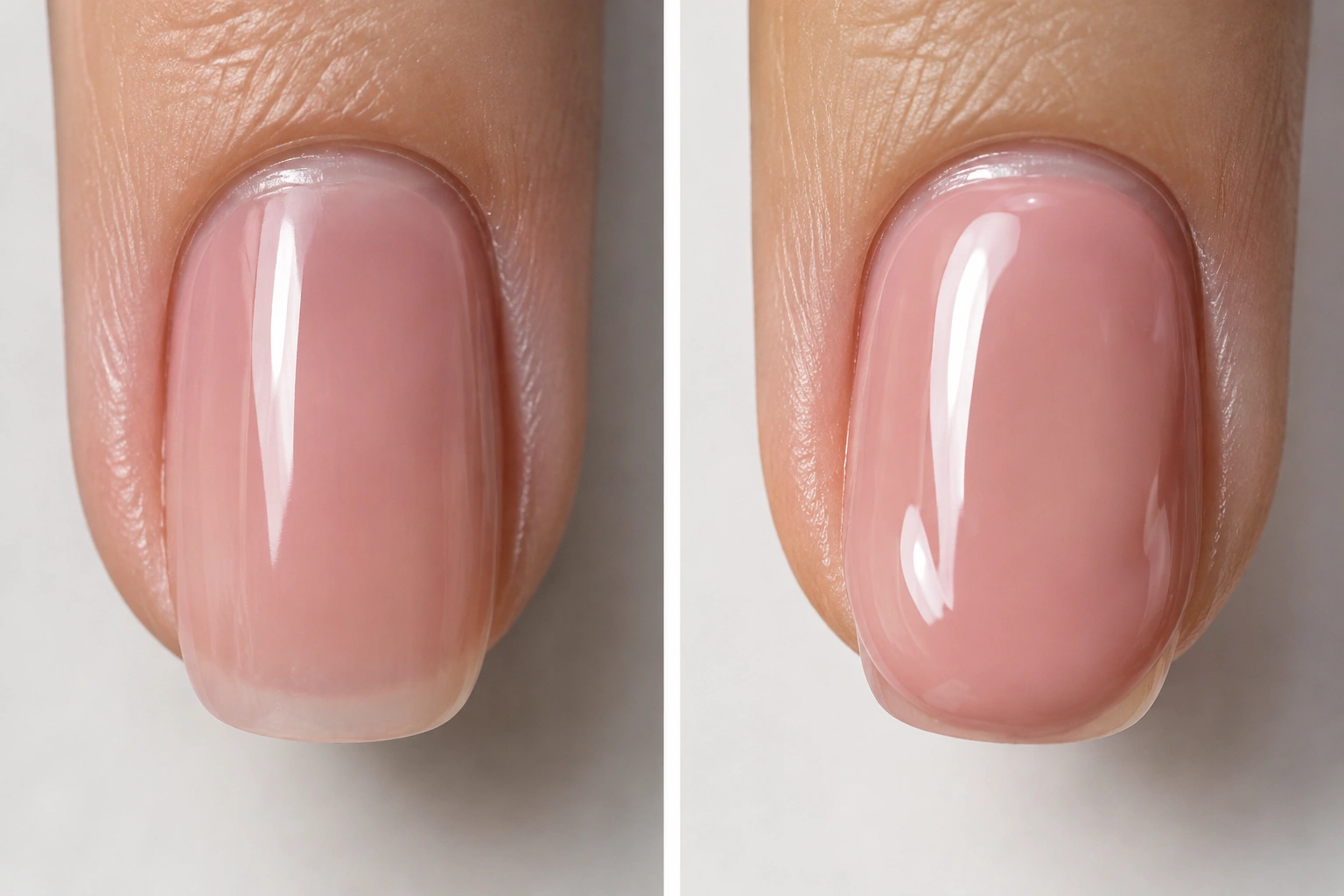
A good beginner rule is to load only a small amount on the brush and wipe off excess if needed. If the polish looks heavy or pools near the cuticle, it is probably too much.
Wait between coats
Give each layer a little time before adding the next one. You do not need to wait forever, but stacking wet coats on top of wet coats slows everything down.
A simple sign is this: the polish should look mostly set before the next coat goes on. If it still drags or strings, wait a bit longer.
Keep the brushwork smooth
Try to use fewer passes over the same area. Repeated brushing can pull at the layer underneath and create streaks or wrinkles.
If you want a deeper step-by-step walkthrough, our article on how to make nail polish dry faster covers the basics in a beginner-friendly way.
What Not to Do While Polish Is Drying
A lot of “fast drying” advice backfires because it disturbs the polish before it has set.
Avoid these common mistakes:
- Using a thick coat and hoping it will dry anyway
- Touching the nail to test it
- Typing, gripping, or opening lids too soon
- Using strong heat, which can cause bubbling or uneven finish
- Running water forcefully over fresh polish
- Trying to fix a deep dent immediately, which often makes it worse
Heat is especially tricky. It can make the surface behave unpredictably, and it does not guarantee a better finish. Gentle airflow is usually the safer choice.
If you are tempted to “speed things up” with a random hack, pause and ask whether it might disturb the polish more than help it.
How to Tell When Nails Are Dry Enough to Use Your Hands
A nail that feels dry to a light touch is not always ready for normal activity. That is the part that catches people off guard.
A simple rule of thumb: most regular polish is often touch-dry in about 10 to 20 minutes and safer for normal use after roughly 1 to 2 hours, but thicker coats and slower formulas can take longer. If you used a quick-dry top coat, the surface may feel ready sooner, but the polish can still dent if you put pressure on it too early.
Use this simple test:
- If the polish still feels soft, keep waiting.
- If it feels dry but you can still dent it with pressure, treat it as not ready.
- If it feels firm and you can lightly tap without a mark, it is safer for gentle tasks.
Even then, be careful with anything that presses on the nail edge. Bags, zippers, and phone cases can leave marks long after the polish seems dry.
What to Do If You Already Smudged a Nail
A small smudge does not always mean you need to redo the whole manicure.
Use this quick decision rule:
- Minor surface smudge: leave it alone if possible, or smooth it only if the polish is still soft enough to blend.
- Deep dent, wrinkle, or dragged polish: it is usually better to redo that nail.
- Smudge that reaches several areas of the nail: a full redo is usually the cleanest fix.
If you keep touching a fresh smudge, the damage usually spreads. One clean redo is often faster than trying to rescue a badly disturbed nail.
If only one nail is affected, fix that nail first and let the others continue drying undisturbed. For a more focused walkthrough, see how to make nail polish dry quickly.
How to Keep Nails From Denting After They Seem Dry
This is where beginners often get tricked. The polish may look finished, but pressure can still leave a mark.
A few practical habits help:
- Keep your hands open instead of clenched.
- Avoid tight shoes, heavy bags, or anything that presses on the tips.
- Give extra time before bed, because blankets and pillowcases can mark fresh polish.
- Be careful with warm showers right after painting, since heat and moisture can soften the finish.
The safest rule is simple: if the manicure matters, give it more time than you think it needs. That extra buffer is usually what keeps the polish looking smooth.
When to See a Nail Technician or Dermatologist
If polish repeatedly wrinkles, bubbles, or refuses to set no matter what you do, a nail technician can help you check whether the application method or product choice is the issue.
If you notice irritation, burning, or a reaction around the nail area after using polish or drying products, stop using the product and speak with a dermatologist. Product instructions and ingredient lists matter, especially if you are sensitive to certain formulas. For general cosmetic safety information, the FDA’s cosmetics guidance is a useful place to start.
A Simple Beginner Routine for Faster Drying
If you want the shortest practical routine, use this:
- Prep nails and apply a base coat.
- Paint two or three thin coats instead of one thick one.
- Wait briefly between coats.
- Finish with a quick-dry top coat if you have it.
- Let the nails rest under gentle fan airflow.
- If you have no drying products, use careful cold water only as a backup.
- Avoid pressure on the nails even after they feel dry.
That routine will not make polish truly dry instantly, but it is one of the most reliable ways to get close without ruining the finish. For another practical angle, you may also like how to make nail polish dry faster and how to make nail polish dry quickly.

