
How to Make Sticky Nail Polish Dry Faster Without Ruining Your Manicure

If your manicure still feels sticky, tacky, or soft, you are usually dealing with one of two things: the polish is still drying, or the layers were applied in a way that makes drying take much longer. The good news is that many beginner mistakes can be fixed without starting over.
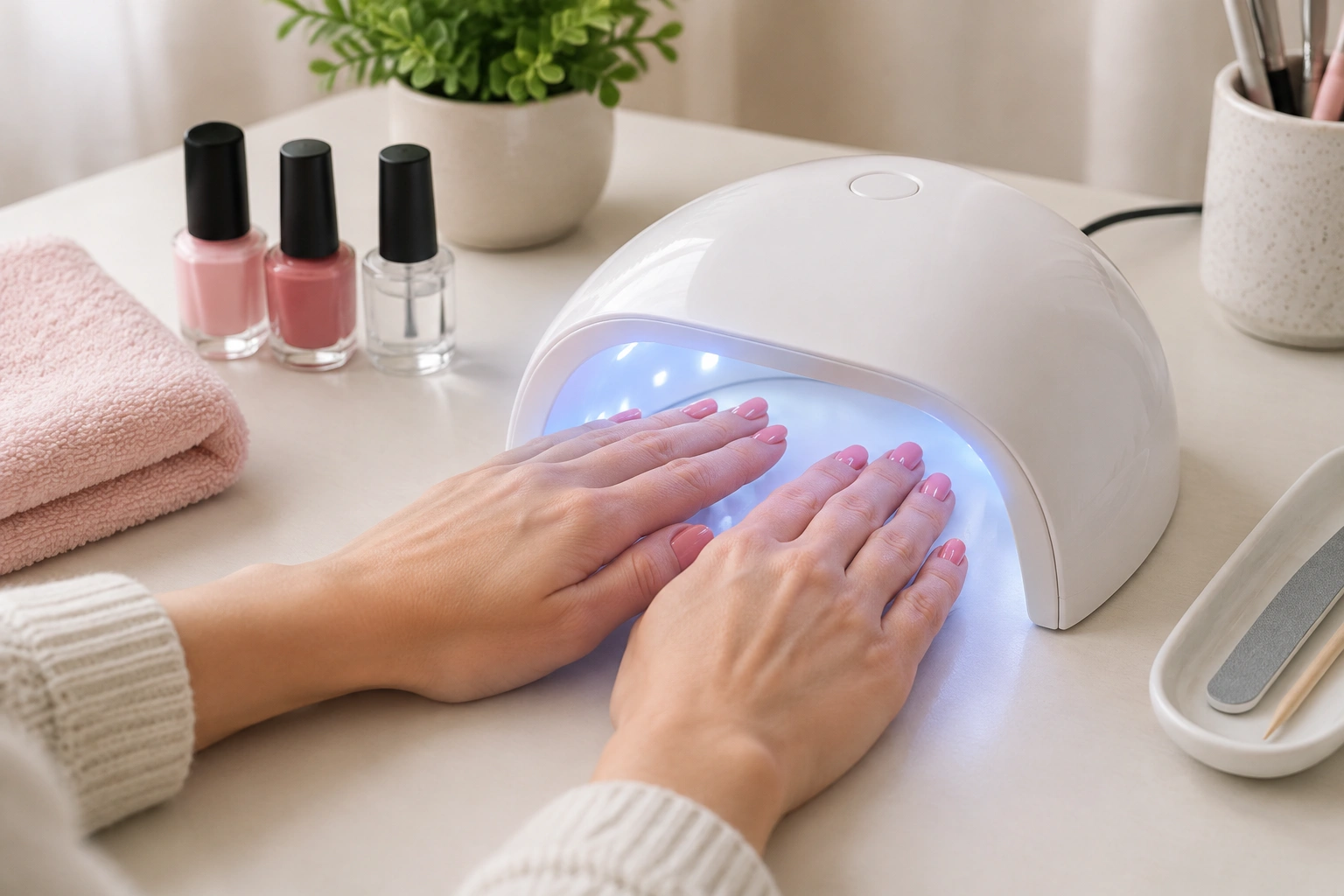
The goal is not to rush polish at any cost. It is to help it dry evenly so the surface does not smudge while the layers underneath stay soft. That difference matters more than most beginners realize.
Why Nail Polish Feels Sticky or Tacky
A nail polish surface can feel sticky for different reasons, and the fix depends on which one you are dealing with.
Surface-dry is not the same as fully dry
Sometimes polish feels dry on top, but it is still soft underneath. That means it may look finished, yet a light press can leave a dent. This is common with thicker coats or multiple layers.
A fully dry manicure should feel set and stable, not soft or easily marked. If the polish still shifts when you touch it lightly, it likely needs more time.
When sticky is normal
A little tackiness right after painting is normal. Fresh polish needs time for the solvents to evaporate and for the layers to set. If you applied thin coats and waited a reasonable amount of time between them, the polish may simply need a bit longer.
When sticky points to a problem
If the polish stays tacky for a long time, the issue may be application, product age, or both. Thick coats, old polish, or too many layers can all slow drying. In some cases, the manicure can be saved. In others, removal and reapplication gives a cleaner result.
For a broader overview of drying methods, you may also find these quick-dry nail polish tips useful.
How Long Nail Polish Usually Takes to Dry
There is no single clock that fits every polish, but beginners often expect nails to be ready much sooner than they really are.
As a general beginner-friendly guide, polish may feel surface dry in about 5 to 15 minutes, touch dry in roughly 15 to 30 minutes, and fully dry in about 1 to 2 hours or longer. Thick coats, extra layers, and humid conditions can push that timeline out further, while thin coats and quick-dry formulas may shorten it.
Thin coats dry faster
A thin base coat, thin color coats, and a thin top coat usually dry more reliably than one heavy layer. Thin coats give the solvents a chance to escape instead of trapping softness underneath.
Multiple coats need more patience
Each added layer increases drying time. Even if the top looks set, the lower coats may still be soft. That is why a manicure can seem dry and still dent when you reach for your keys or zip a bag.
Regular polish versus quick-dry formulas
Regular polish usually needs more time and more careful handling. Quick-dry polish or a quick-dry top coat is made to help the manicure set faster, but it still works best when the layers underneath are not too thick.
If you want a step-by-step drying routine, this guide to making nail polish dry faster covers the basics in more detail.
Common Reasons Nail Polish Stays Wet Too Long
When polish remains sticky after normal wait time, one of these causes is usually involved.
The coats were too thick
This is the most common reason. A thick coat may look glossy and even, but the top can dry before the center does. That creates a soft, tacky feel that lingers.
If you painted on one heavy coat to avoid doing two thin ones, the manicure may actually take longer, not less time.
The polish bottle is old or thickened
Old polish often applies unevenly. If the formula has become stringy, separated, or hard to spread, it may not dry the way it should. Sometimes the problem is not your technique at all. It is the product.
A bottle that has changed texture a lot may be better replaced than forced into another manicure.
You did not wait long enough between coats
If each layer goes on before the last one has set, the polish can trap softness. This is especially common with beginners who paint all ten nails quickly and then add the next coat right away.
A safer habit is to let each layer lose its wet shine before adding the next one.
The top coat was too heavy
A top coat can help seal the manicure, but a thick top coat can also slow drying if it is applied too generously. A thin, even top coat usually works better than a flood of product.
The environment is working against you
Humidity and lack of airflow can all make drying feel slower. That does not mean the polish is bad. It may just need better conditions.
What to Do Right Now to Help Sticky Polish Dry Faster
If your manicure is already on your nails, the safest fix is to help it set without disturbing the surface. A simple order helps: stop touching the nails, use gentle airflow, wait 10 to 15 minutes, then decide whether a quick-dry top coat or removal is the better fix.
Step 1: Stop touching the nails
The first move is to leave the polish alone. Even light testing can leave dents or drag marks.
Step 2: Use gentle airflow
A fan or nail dryer can help move solvent vapors away from the polish surface. Keep the airflow light and steady. Strong blowing can kick up dust and may make the surface look uneven.
A small fan is usually better than your breath, which adds moisture and warmth.
Step 3: Wait 10 to 15 minutes before changing anything
If the manicure is only slightly tacky, give it a short, uninterrupted wait before you add anything or try to fix it. That extra pause can be enough for a surface that is almost set.
Step 4: Decide whether to seal or start over
If the polish is nearly dry but still a little tacky, a quick-dry top coat may help finish the job. If it is still very soft, uneven, or clearly layered too thickly, removal may be the better option.
Keep your hands still and flat
Movement is one of the easiest ways to ruin a soft manicure. Rest your hands on a table, palms down, and avoid gripping anything for a while. Even a “dry-looking” polish can dent if you bend your nails too soon.
Add a quick-dry top coat only if the polish is not puddled
A quick-dry top coat can help seal the surface, but it is not a fix for very wet polish. If your nails are already heavily layered and soft underneath, adding more product may only trap the problem.
Use it when the manicure is tacky but not freshly flooded with polish.
Try cool water only after the surface has begun to set
Some people use cool water to help polish firm up, but this works best after the surface is no longer wet enough to smear. If the manicure is still very soft, water can leave marks or create a dull finish.
Leave cuticle oil for later
Cuticle oil is great after the manicure is dry enough to handle, but it does not dry wet polish. Put it on too soon and you may soften the surface or make it feel slippery.
For a quick comparison of methods, see the table below.
Quick Comparison: What Helps Sticky Polish Dry

| Method | Best for | Trade-off | Beginner note |
|---|---|---|---|
| Fan or gentle airflow | Lightly tacky polish | May not solve very thick coats | Low risk if you do not touch the nails |
| Quick-dry top coat | Fresh manicure with thin layers | Adds another product step | Works best when polish is already mostly set |
| Cool water | Surface that is nearly dry | Can smear very wet polish | Use carefully and only after initial setting |
| Waiting longer | Thick or multiple coats | Takes patience | Safest option when in doubt |
| Removal and reapplication | Old, stringy, badly applied polish | Takes more time now | Best when the manicure is clearly failing |
What Not to Do When Polish Still Feels Wet
Some common “fixes” make the problem worse.
Do not press a fingertip onto the nail to test it
This is the fastest way to leave a dent. If you want to check, look for shine, softness, or drag instead of poking the polish.
Do not add more polish over a wet coat
Extra polish does not speed drying. It usually adds another soft layer that needs even more time.
Do not use heat
Warm air can seem helpful, but heat may trap softness or create bubbles and streaks. If you need airflow, choose cool or room-temperature air instead.
Do not soak your hands too early
Water can interfere with a polish that has not started setting. If the manicure is still soft, washing dishes or taking a long soak is likely to cause dents.
Do not try to brush over a smudge
If the polish has already shifted, brushing over it often makes the mark larger. At that point, wait and decide whether the nail can be cleaned up or needs to be redone.
For a more detailed breakdown of drying mistakes, this nail drying guide may help.
How to Tell Whether You Should Wait or Start Over
This is the decision beginners struggle with most.
Wait longer if the polish is only lightly tacky
If the manicure looks smooth, the color is even, and the surface is just a little soft, more time is usually enough. Keep your hands still, add gentle airflow, and avoid testing it.
Fix it if the issue is mostly surface tackiness
If the polish seems almost set but still feels a bit sticky, a quick-dry top coat or a fan may help finish the job.
Start over if the manicure is thick, uneven, or already damaged
If the polish is lumpy, dented, smudged, or still soft after a long wait, the better choice may be removal and reapplication. That is especially true if the bottle is old or the polish has become stringy.
A manicure that looks messy now usually does not improve just because more time passes.
How to Prevent Sticky Polish Next Time
The best way to avoid tacky polish is to make drying easier from the start.
Build the manicure in thin layers
Thin coats are the most reliable habit you can learn. They dry more evenly and are less likely to trap softness.
Let each coat settle before the next one
You do not need to wait forever, but each layer should lose its wet, glossy look before you add the next. That small pause helps the manicure dry as a system instead of as a pile of soft layers.
Check the polish texture before you paint
If the bottle is thick, stringy, or separated, it may not apply well. Shake or roll it gently if the brand recommends that, and replace it if the formula has clearly gone off.
Finish with the right top coat
A thin quick-dry top coat can help seal the manicure and improve handling. Just remember that it works best on a well-applied base, not on a heavy, wet mess.
If you want another practical resource, this faster-drying polish article explains more prevention habits.
When to See a Nail Technician or Dermatologist
See a nail technician if your polish repeatedly stays sticky even when you use thin coats and normal drying time. That can help you spot whether the issue is your technique, the product, or both.
See a dermatologist if you notice redness, burning, swelling, or a rash around the nails after using polish or removers. That is not a drying problem anymore, and it should be taken seriously.
FAQ: Sticky Nail Polish Drying Questions
Why does my nail polish feel dry on top but soft underneath?
That usually means the surface has set faster than the layers below it. Thick coats and too many layers make this more likely.
Can I use a fan to dry nail polish?
Yes, gentle airflow is one of the safer ways to help polish dry. Just keep the air cool and avoid blowing directly so hard that dust gets stuck in the finish.
Is cold water a good way to dry polish?
It can help once the polish has started to set, but it is not ideal for very wet nails. If the manicure is still soft, water can smear it.
Should I put on another top coat if polish is sticky?
Only if the manicure is already close to dry and the layers are thin. If the polish is very wet or thick, another coat can make things worse.
Why is my old polish not drying right?
Older polish may become thick, stringy, or separated. That can affect how it applies and how it dries. If the bottle has changed a lot, replacement may be the simplest fix.
How do I know if I should remove the polish?
If the manicure is still soft after a long wait, looks uneven, or has already smudged badly, removal and reapplication is usually the cleaner choice.
What is the safest way to fix tacky polish fast?
Use gentle airflow, keep your hands still, and wait a little longer. If the polish is nearly set, a quick-dry top coat may help finish it.
For another related routine, this quick drying guide may also be useful.

