
How to Protect a Damaged Toenail: A Safe At-Home Care Guide

A damaged toenail can make every step uncomfortable. Maybe you stubbed your toe, dropped something on it, wore shoes that were too tight, or noticed the nail starting to split or lift after repeated pressure. Whatever caused it, the next question is usually the same: How do I keep it from getting worse?
Learning how to protect a damaged toenail is mostly about keeping the area clean, reducing pressure and friction, protecting loose edges, and resisting the urge to aggressively cut, file, glue, or cover the damage.
Minor injuries can often be protected at home, but a severely painful, bleeding, badly bruised, infected, or significantly detached toenail deserves professional attention. This guide explains what you can safely do yourself, which nail tools can help, and when it is better to stop DIY care.
Quick Answer
To protect a damaged toenail, gently clean it, trim only loose nail that is no longer attached to skin, smooth snagging edges carefully, and protect the toe with a light dressing and roomy footwear. Keep the area clean and watch for increasing pain, redness, swelling, warmth, pus, or significant nail discoloration.
First, Look at What Kind of Damage You Have
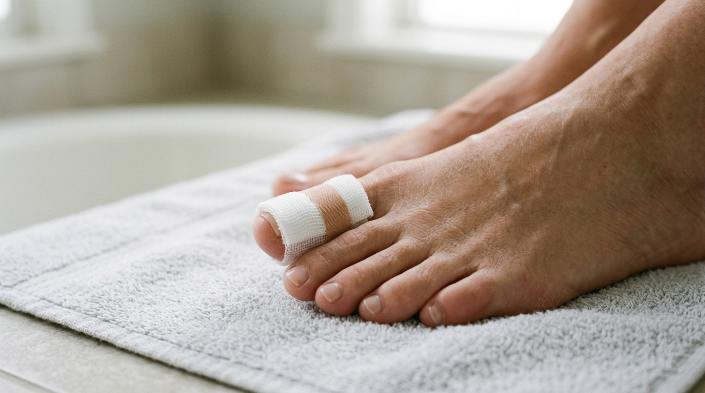
Not every damaged toenail needs the same care.
A toenail may be:
- Cracked or split at the free edge
- Bruised after being hit or crushed
- Partially lifted from the nail bed
- Torn at one corner
- Thickened after repeated pressure
- Bleeding around the nail
- Sore because it keeps rubbing inside a shoe
The nail bed is the skin underneath the hard nail plate. An injury that reaches this area can be more serious than a small chip at the end of the nail.
According to the American Academy of Dermatology’s injured-nail guidance, medical care is appropriate when an injured finger or toe cannot bend, blood covers more than half of the nail, the nail becomes black or purple, or the injury is particularly painful.
That is an important distinction. Home care should be about protecting a mild injury while it heals, not trying to repair a serious nail-bed injury yourself.
How to Protect a Damaged Toenail Step by Step
If the injury appears minor and you do not have signs that require prompt medical care, keep your routine simple.
1. Clean the Area Gently
Wash your hands first. Then gently clean the injured toe with soap and water.
Avoid aggressively scrubbing underneath a loose nail. You do not want to turn a small injury into a deeper one by pushing tools or brushes beneath the nail plate.
Pat the toe dry with a clean towel.
Do not use a sharp manicure tool to explore underneath the damaged nail.
2. Do Not Pull Off an Attached Toenail
A partially lifted nail can be incredibly tempting to pull.
Don’t.
If part of the nail is still attached to the nail bed or surrounding skin, leave that portion alone. Pulling it can tear healthy tissue, cause bleeding, increase pain, and create a larger opening where germs may enter.
The MedlinePlus guide to nail injuries explains that nail injuries can involve the nail plate, nail bed, cuticle, and surrounding skin, and more serious nail tears or avulsions may require professional treatment.
3. Carefully Manage a Completely Loose Edge
If a small piece at the end of the toenail is clearly hanging free and is no longer connected to skin, it may keep snagging on socks or bedding.
The American Academy of Dermatology advises gently trimming away nail that is hanging off and no longer connected to the skin.
Use a clean, appropriate nail clipper and remove only the obviously detached portion. Never cut into a painful, pink, bleeding, or attached area.
If you cannot clearly tell what is attached, leave it alone.
4. Smooth Sharp Edges With a Nail File
A nail file can be helpful when a damaged nail has a rough edge that keeps catching.
Use a fine or moderately fine file and very light pressure. You only need to remove the snag.
For a more detailed look at file selection and controlled technique, NailPrime’s guide to filing thick toenails safely explains why aggressive filing can create heat, tenderness, and additional nail damage.
Stop filing immediately if you notice:
- Pain
- Heat or burning
- Bleeding
- Throbbing
- Increasing sensitivity
- Pink tissue becoming exposed
Never file directly over an open wound or exposed nail bed.
5. Protect the Nail From Friction
Once the area is clean, the goal is to stop the injured nail from catching, rubbing, or being bumped again.
A light dressing can provide useful padding. The American Academy of Dermatology recommends keeping an injured nail protected with a light dressing as it heals and advises placing adhesive on the skin around the nail rather than directly on the injured nail.
Change a dressing if it becomes wet, dirty, or loose.
Avoid wrapping the toe so tightly that it feels numb, cold, increasingly painful, or compressed.
6. Choose Shoes With Plenty of Toe Room
Your favorite pointed pumps may need a temporary break.
A damaged toenail repeatedly hitting the inside of a shoe has little opportunity to settle down. Choose footwear with enough width and depth that the injured toe is not being squeezed.
This is especially important if the original damage came from running, hiking, dancing, sports, or tight footwear.
NailPrime’s guide to protecting toenails from damage covers everyday habits such as proper footwear, gentle filing, and avoiding repeated nail trauma.
If a shoe hurts the damaged toe, switch shoes rather than trying to pad your way through significant pressure.
Which Nail Tools Are Safe for a Damaged Toenail?
A complicated pedicure kit is unnecessary. In fact, fewer tools usually mean fewer opportunities to accidentally disturb the injury.
| Tool | Useful For | Cost Level | Main Safety Consideration |
|---|---|---|---|
| Toenail clipper | Removing a clearly detached free edge | Low | Never cut attached or painful nail |
| Fine emery board | Smoothing a small snag | Low | Replace when dirty or worn |
| Glass nail file | Gentle edge smoothing | Low–moderate | Do not use over open tissue |
| Metal file | Firm nail edges | Low–moderate | Can be too aggressive on damaged nails |
| Electric nail file | Rapid material removal | Moderate–high | Generally unnecessary for an injured nail at home |
| Clean gauze/bandage | Padding and protection | Low | Avoid excessive pressure |
For most minor damage, a clean clipper and gentle manual file are enough.
An electric nail drill is particularly easy to overuse. Speed is not an advantage when you are working close to sensitive or injured tissue.
What If the Toenail Is Bruised or Turning Dark?
A dark spot after dropping something on your toe or repeatedly hitting the nail inside a shoe may be blood underneath the nail.
Small bruises may grow outward with the nail. A large collection of blood, however, can create significant pressure and throbbing.
Do not try to drill, burn, puncture, or pierce the toenail yourself to release blood.
A clinician can determine whether drainage or another treatment is appropriate. The American Academy of Dermatology recommends medical attention when blood covers more than half the nail, the nail is black or purple, or the injury is particularly painful.
Severe pain or a misshapen toe may also indicate an injury beyond the nail itself.
What If the Toenail Starts Lifting?
A damaged toenail sometimes separates partially from the nail bed.
Protect it rather than repeatedly lifting it to see underneath.
Keep the area clean, avoid tight footwear, and prevent the loose portion from catching. Do not force an attached nail back down with nail glue, acrylic, gel, or another cosmetic product.
If the nail is substantially detached, painful, bleeding, or associated with a significant injury, seek medical advice.
Toenails also grow slowly. Even if a damaged nail eventually falls off, replacing it is not a quick process. The NHS guide to common nail problems notes that toenails lost after an injury can take many months to grow back.
Should You Put Nail Polish or Gel Over a Damaged Toenail?
It is understandable to want to hide bruising or discoloration, especially during sandal season.
But covering an actively injured nail can make it harder to monitor what is happening underneath.
Avoid a cosmetic pedicure over a nail that is:
- Bleeding
- Open or raw
- Painful
- Significantly lifted
- Draining fluid
- Surrounded by inflamed skin
A salon service can make a healthy nail look prettier, but polish, gel, acrylic, or a press-on cannot repair injured nail-bed tissue.
Wait until the injury is stable and comfortable before treating it like a cosmetic concern.
How to File a Damaged Toenail Without Making It Worse
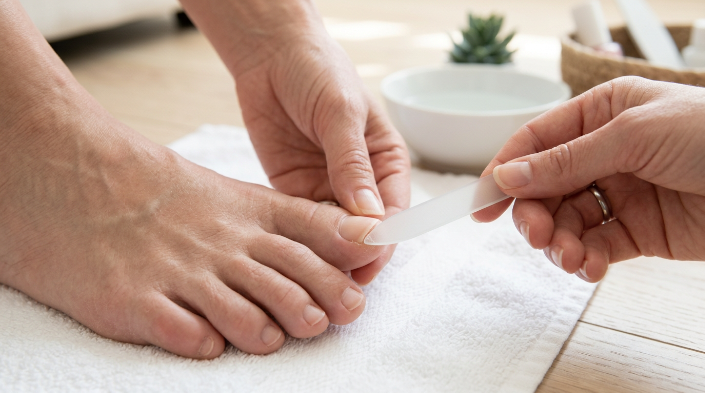
Filing can protect a damaged nail when the problem is simply a snagging free edge. It is not a treatment for the injury itself.
Choose a Gentle File
A fresh fine emery board or smooth glass file gives most beginners plenty of control.
Very coarse files remove material quickly, which can be a disadvantage when the nail is already compromised.
Work Only on the Free Edge
The free edge is the portion extending beyond the skin.
Use a few light, controlled strokes to smooth a sharp point or split. Avoid digging down the sides of the nail or trying to thin the entire nail plate.
If you are also struggling with hard or unusually thick nails, NailPrime’s guide to the best way to file thick toenails explains the differences between common file types.
Stop Earlier Than You Think
A damaged nail does not need to look perfectly shaped.
Your immediate goal is simply to stop it from catching.
If the edge is smooth enough to move comfortably inside your sock without snagging, that is usually a better stopping point than continuing to file for cosmetic perfection.
Expert Tip: If you cannot file a rough spot without touching painful skin or a portion of nail that is still attached to injured tissue, skip the filing. Protect the area instead and let a professional assess it if the snag is causing problems.
Hygiene Matters While a Toenail Heals
Damaged skin around a nail creates more reason to pay attention to hygiene.
Keep your personal nail tools clean and dry, and do not share them with another person. Disposable emery boards should be replaced when contaminated, damaged, or difficult to clean.
Also avoid repeatedly soaking an open or injured nail simply because soaking feels like a traditional pedicure step.
Keep socks clean and change them when they become damp. Allow shoes to dry between wears when possible.
Most importantly, check the toe regularly. You want to notice changes early rather than discovering worsening inflammation after covering the nail for several days.
Warning Signs of Infection or a More Serious Problem
A mildly injured toe may be tender initially, but symptoms should not steadily become worse.
Watch for:
- Increasing redness
- Increasing swelling
- Skin that feels unusually warm
- Worsening pain or throbbing
- Yellow or white drainage
- Pus
- Persistent bleeding
- Fever
- Bad odor together with other concerning changes
MedlinePlus recommends contacting a healthcare provider when redness, pain, or swelling increases, pus drains from a nail injury, fever develops, or bleeding will not stop.
Do not try to file, cut, or polish your way through these symptoms.
DIY Care vs. Professional Care
Here is a simple way to decide which direction makes sense.
| Situation | DIY Protection May Be Reasonable | Professional Evaluation Is Smarter |
|---|---|---|
| Tiny rough free edge | Yes | Usually unnecessary |
| Small superficial split | Often | If painful or extending deeply |
| Mild soreness after shoe pressure | Often | If persistent or worsening |
| Nail significantly lifted | No | Yes |
| Large dark bruise | Not necessarily | Yes, especially with significant pain |
| Pus or increasing redness | No | Yes |
| Persistent bleeding | No | Yes |
| Severe throbbing pain | No | Yes |
| Toe looks bent or misshapen | No | Prompt medical evaluation |
| Nail-bed tissue appears deeply injured | No | Yes |
The point is not to be alarmed by every tiny crack. It is to recognize where normal grooming ends and injury care begins.
Common Mistakes to Avoid
Even a small toenail injury can become more uncomfortable when you keep disturbing it.
Avoid these common mistakes:
- Pulling off a partially attached nail. You may tear healthy tissue with it.
- Filing aggressively. Heat, pain, and sensitivity mean you are doing too much.
- Cutting deeply into the corners. This can injure surrounding skin and may contribute to ingrown-nail problems.
- Using nail glue as an injury treatment. Cosmetic repair is not the same as wound care.
- Covering a concerning nail with dark polish. You may hide changes you need to monitor.
- Wearing tight shoes. Constant pressure can repeatedly traumatize the nail.
- Sharing nail tools. Keep personal grooming tools personal.
- Trying to drain blood under the nail yourself. Leave puncturing or drainage procedures to a healthcare professional.
- Ignoring worsening redness or drainage. Those changes deserve attention.
- Trying to make the nail look perfect immediately. Protection and healing matter more than appearance.
When to See a Nail Technician or Dermatologist
A nail technician can be helpful later for gentle cosmetic maintenance, but an active injury is not simply a pedicure problem.
If the toenail is bleeding, significantly detached, very painful, badly bruised, or surrounded by inflamed or draining skin, start with an appropriate healthcare professional rather than a salon appointment.
A dermatologist can evaluate nail and surrounding-skin problems. Depending on the injury, urgent care or another medical professional may also be appropriate.
Seek prompt medical attention when:
- Pain is severe or worsening
- Bleeding will not stop
- A large portion of the nail is dark with blood underneath
- The nail is black or purple after an injury
- The toe looks bent or deformed
- Much of the nail has torn away
- There is a deep cut
- Redness, warmth, or swelling is spreading
- Pus or other drainage develops
- You develop a fever
If you have diabetes, poor circulation, reduced sensation in your feet, or another condition that makes foot wounds more concerning, ask your healthcare professional for guidance rather than assuming ordinary DIY nail care is appropriate.
How Long Does a Damaged Toenail Take to Heal?
There are really two timelines: the injured skin becoming comfortable again and the damaged nail growing out.
A mild injury can start feeling better much sooner than the toenail looks normal. Because toenails grow slowly, visible damage can remain for months as it gradually moves toward the free edge.
If the entire nail is lost, regrowth can take a long time. MedlinePlus says a replacement toenail may take about 12 months to grow, while NHS guidance notes that toenail regrowth after an injury can take up to 18 months.
So patience matters.
Do not repeatedly thin, buff, or reshape new growth in an attempt to speed the process.
FAQs
Can I put a Band-Aid over a damaged toenail?
A light adhesive bandage can provide padding for a minor injury. Keep adhesive on the surrounding skin rather than sticking it directly to injured nail tissue, and avoid wrapping the toe too tightly. Replace the dressing when it becomes wet or dirty.
Should I cut off a damaged toenail?
Do not cut off nail that is still attached to skin or the nail bed. If a tiny portion is completely detached and hanging free, it may be carefully trimmed to prevent snagging. When you are unsure what is still attached, leave it alone.
Can I file a cracked toenail?
You can gently smooth a superficial crack or rough spot at the free edge if filing does not hurt. Do not file over exposed tissue, a deep crack, bleeding area, or painful nail-bed injury.
Should I cover a bruised toenail with polish?
It is better to keep a newly injured or changing nail visible so you can monitor it. Avoid polish, gel, or artificial-nail products over an open, painful, bleeding, significantly lifted, or potentially infected toenail.
Will a damaged toenail fall off?
Sometimes. A significant injury can cause a toenail to loosen and eventually fall off as a new nail grows. Do not pull an attached nail off yourself simply because it seems loose.
How do I stop a damaged toenail from catching on socks?
If the snag is on a painless free edge, carefully smooth it with a gentle nail file. A light dressing can also protect the area. Do not cut or file into attached, painful tissue just to eliminate a snag.
How do I know if my damaged toenail is infected?
Increasing redness, warmth, swelling, worsening pain, pus, drainage, or fever are warning signs. These symptoms should not be treated as a routine pedicure issue; contact an appropriate healthcare professional.
Conclusion
Knowing how to protect a damaged toenail comes down to doing less, not more. Keep a minor injury clean, remove only nail that is clearly detached when appropriate, gently smooth harmless snags, protect the toe from friction, and give it plenty of room inside your shoes.
Most importantly, do not pull, aggressively file, glue, puncture, or cosmetically cover an injury that needs time or professional attention.
Watch how the toe changes from day to day. If pain, swelling, redness, bruising, bleeding, detachment, or drainage looks significant or gets worse, put the pedicure tools away and get appropriate medical advice.
Give the nail protection now, and let healthy new growth—not aggressive DIY repair—do the cosmetic work over time.

