How to Remove Nail Polish Stains from Nails: A Beginner-Friendly Guide

If your nails look yellow, orange, or tinted after polish comes off, the safest first move is usually to remove any leftover color, then treat the stain gently. For most beginners, non-acetone remover is a good first try if the stain is mild or your nails are dry; acetone nail polish remover is often the faster option for stubborn staining.
Simple decision path: if the stain is mild, try a gentle remover or a mild home remedy first; if it is stubborn, use acetone carefully; if the nail is painful, green/black/brown, thickened, lifting, or smelly, stop and seek medical advice.
The main caution: don’t attack the stain with heavy scrubbing or repeated harsh treatments. Natural nails can dry out quickly, and overdoing it can leave them looking worse, not better.
Why Nail Polish Stains Natural Nails
Nail polish can leave color behind when strong pigments sit on the nail plate for a long time. Dark reds, blues, blacks, and some bright shades are more likely to do this. Sometimes the stain is only on the surface. Other times, the nail looks discolored because the polish has dried into tiny ridges or the nail is already a little dry.
A stain is often cosmetic when it showed up after polish wear and does not come with pain, swelling, odor, or nail lifting. That said, some nail problems do not start with all of those signs, so persistent or unusual discoloration should not be assumed to be polish alone.
For a deeper look at why nails can look yellow after polish, see this guide on why nail polish turns nails yellow. If you want to understand the general risk of frequent polish wear, this article on whether nail polish can make nails yellow is also helpful.
How to Tell a Surface Stain from a Nail Health Issue
A true surface stain usually looks like color sitting on top of the nail or in the upper layers of the nail plate. A good clue is timing: it appears after a dark manicure, stays fairly even across the polished area, and starts to fade as the nail grows out or after gentle removal.
More concrete examples:
- Polish staining: yellowing after red or dark polish, orange tint after a bright lacquer, or a faint brown cast that matches the area covered by polish
- Trauma-related discoloration: a bruise under the nail after stubbing a toe or finger, often dark red, purple, brown, or black and sometimes tender
- Possible fungal or infectious changes: green discoloration under a lifted nail, thickening, crumbling edges, odor, or a nail that is separating from the nail bed
If the color is spreading, the nail is changing shape, or the discoloration does not behave like a normal stain, stop home treatment and get it checked.
Fast Removal Method: Using Nail Polish Remover Safely
For stubborn stains, remover-based care is usually the most effective option. The basic rule is simple: use the mildest method that still works.
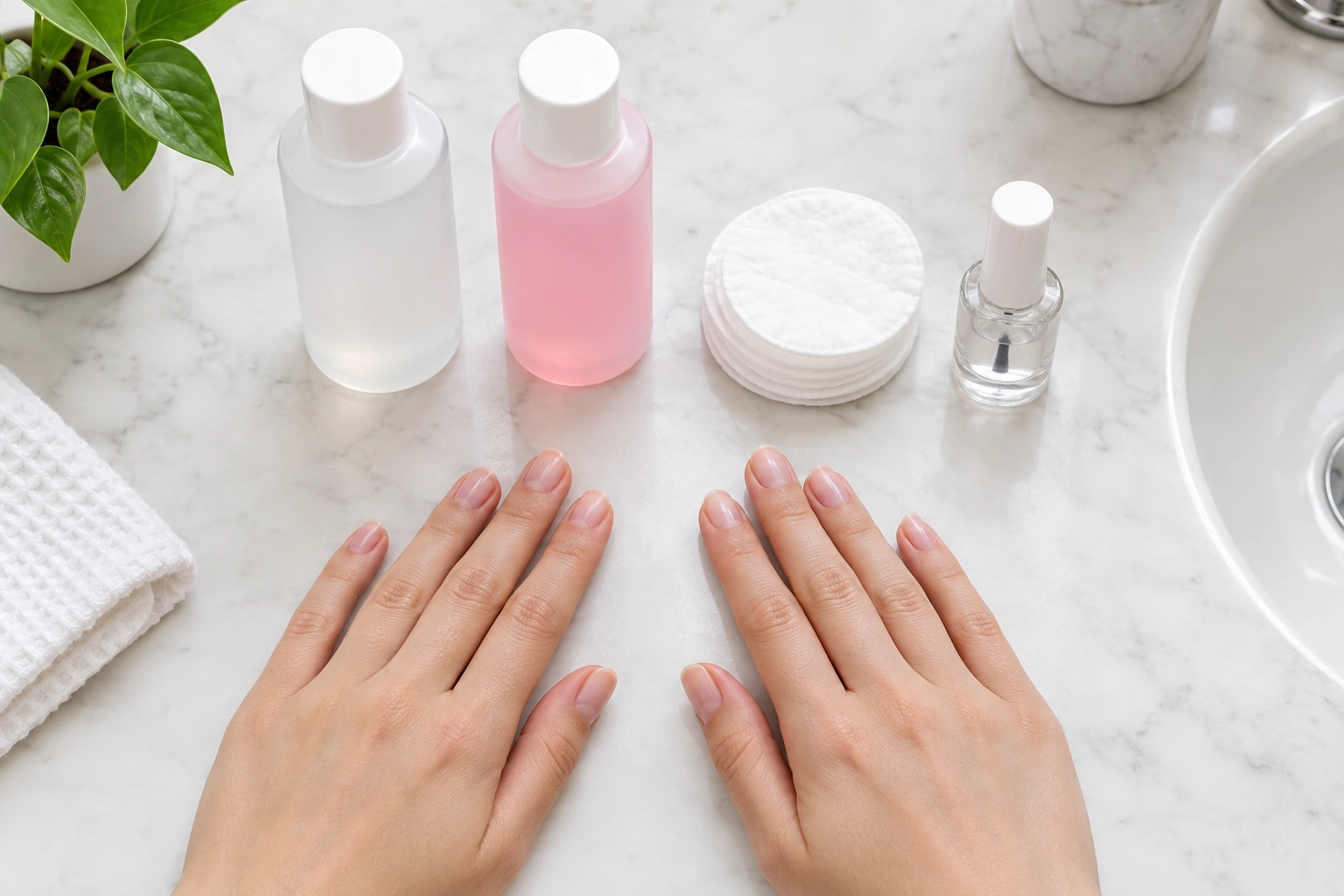
Choose acetone or non-acetone based on the stain
Acetone remover
– Best for stronger, more stubborn staining
– Works faster
– Can be more drying
Non-acetone remover
– Better for dry, brittle, or sensitive nails
– Gentler feeling
– May take more time and may not fully lift deep stains
If your nails are already dry, start with non-acetone. If the stain is strong and you need faster results, acetone is usually the more practical choice.
How to use remover without overdoing it
- Put a little remover on a cotton pad or lint-free wipe.
- Press it onto the stained nail for a few seconds.
- Wipe in one direction.
- Repeat with a fresh section of cotton if needed.
- Stop once the stain starts to lift instead of scrubbing harder.
If the stain is still visible after a careful pass, give the nail a break before trying again. Repeated soaking or rubbing can leave the nail plate dry and rough. If your nails feel tight or chalky afterward, wait at least a day or two before another remover attempt and focus on moisture first.
For readers who want to understand the broader dryness issue, this guide on whether wearing nail polish is bad for nails explains why nails sometimes need recovery time.
Gentle Home Remedies for Mild Staining
Home remedies can help with very light surface tint, but they usually work more slowly than remover. They are best for faint staining when you want to avoid stronger products.
The most reasonable first tries are the gentlest ones:
- Baking soda paste: may help with light surface discoloration, but use it sparingly and do not scrub hard
- White vinegar soak: sometimes used for mild discoloration, though results vary
- Whitening toothpaste: can act like a mild polish, but it is not ideal for repeated use
Use extra caution if your nails are dry, peeling, or already damaged. In those cases, skip abrasive or acidic remedies first and go straight to moisture and a gentler remover if needed. Hydrogen peroxide is more likely to irritate sensitive nails, so it is usually not the first choice for beginners.
A simple approach for a mild stain is to try one gentle method once, then stop if the nail feels dry, stingy, or rough. Mixing several remedies in one session is more likely to irritate the nail than help it. After any home remedy, wait until the nail feels normal again — often at least a day — before trying another treatment.
Should You Buff the Nail?
A light buff can improve the look of a superficial stain, but only if the stain seems to sit on the surface and the nail is otherwise healthy. Buffing should be a last-resort touch-up, not a main removal method.
When buffing may help
- the stain is faint
- the nail feels smooth and strong
- you want to reduce a small amount of surface tint
When to avoid buffing
- the nail is thin, peeling, or brittle
- the stain is deep
- you have already tried other methods and the nail feels sensitive
If you do buff, use a fine-grit buffing block with very light pressure. Think of it as polishing the surface, not sanding it down. One or two quick, gentle passes is enough. If you need to press hard or keep going, stop. More pressure can thin the nail plate and make future staining more likely.
This is a good place to be conservative. A nail that has been over-buffed can look dull, feel tender, and stain more easily next time. If your nails are already dry or fragile, it is better to skip buffing entirely and let them recover.
Aftercare: Restore Moisture After Stain Removal
Once the stain has been treated, the nail usually needs moisture more than anything else.
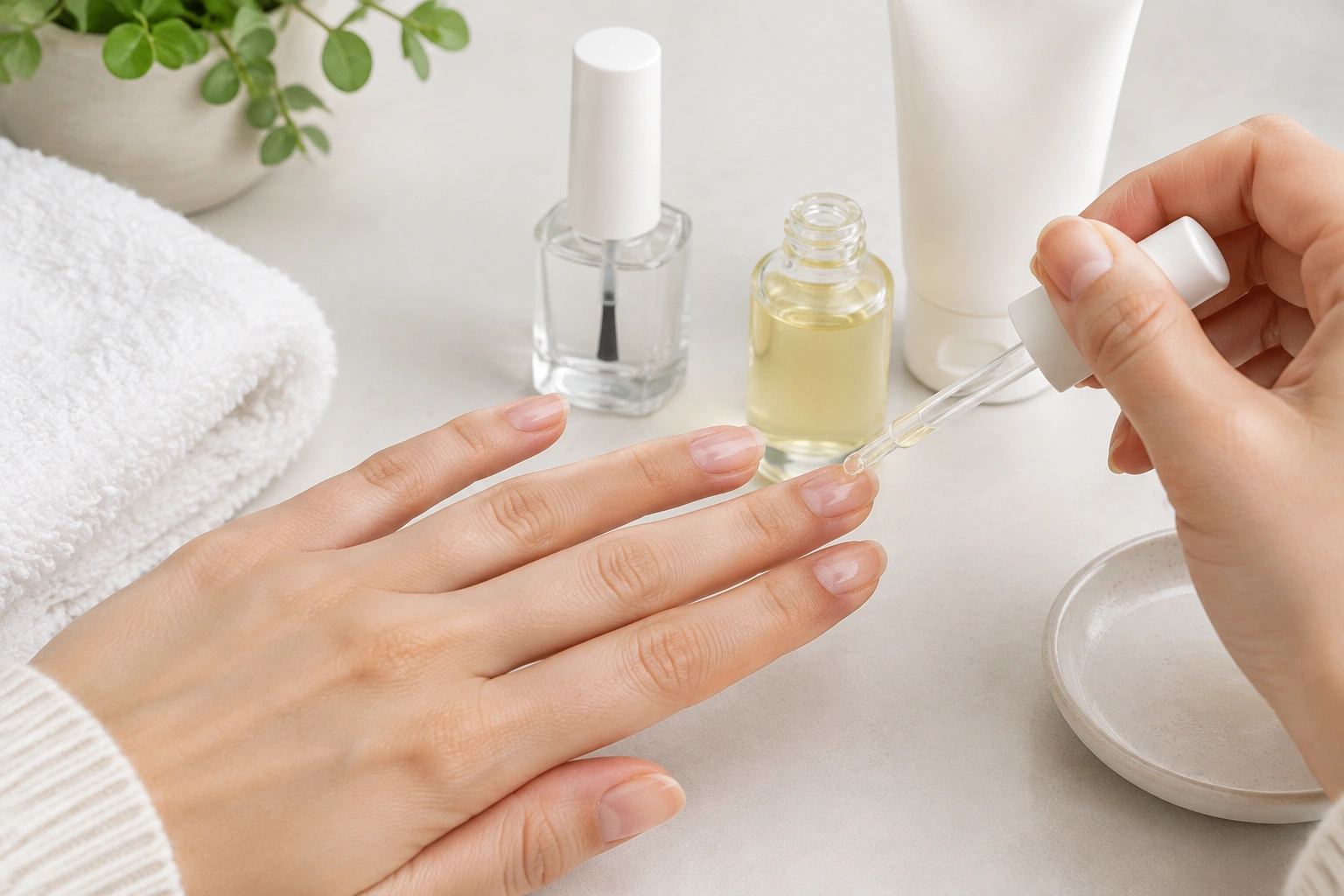
A practical aftercare routine:
- wash off any residue
- dry the nails well
- apply cuticle oil
- follow with a simple hand cream or nail cream
- give the nails a break from harsh products if they feel tight or rough
If you used acetone, buffing, or a home remedy, this step matters. Dry nails can look chalky and more discolored, even when the stain is mostly gone. If the nails still feel sensitive, wait another day or two before repeating any stain-removal method.
If your nails often need recovery time, this article on whether you should give your nails a break from polish may help you decide when to pause between manicures.
Quick Comparison: Which Method Should You Try?
| Method | Speed | Gentleness | Best For | Main Trade-Off |
|---|---|---|---|---|
| Acetone remover | Fast | Lower | Stubborn polish stains | Can dry nails |
| Non-acetone remover | Moderate | Higher | Mild stains, dry nails | May not fully remove deep staining |
| Home remedies | Slow | Varies | Very light surface tint | Results are less predictable |
| Light buffing | Fast for surface tint | Low if overdone | Superficial discoloration | Can thin nails if used too much |
If you want the shortest route, acetone is often the most effective option for stubborn stains. If your nails are already dry, non-acetone remover is the safer starting point. Home remedies and buffing are better treated as backup options for mild cases.
How to Prevent Nail Polish Stains Next Time
The easiest prevention step is a base coat. Even better, use a stain-blocking base coat before dark or highly pigmented polish.
A few practical habits help a lot:
- apply base coat before color
- reapply polish only when needed instead of layering old color over and over
- remove dark shades sooner rather than leaving them on for a very long time
- avoid painting directly onto bare nails with strongly pigmented polish
- keep nails moisturized so the surface stays smoother
If you wear dark shades often, prevention matters more than treatment. A good base coat can save you from repeated cleanup later.
For more context on polish-related discoloration, this article on whether nail polish damage is real is a useful read.
When to See a Nail Technician or Dermatologist
Home care is fine for a mild stain that clearly follows polish use. Get help if the discoloration does not act like a normal stain.
See a professional if you notice:
- green, black, or brown discoloration
- pain, swelling, or odor
- nail lifting, thickening, or crumbling
- discoloration that spreads
- no improvement after gentle care and polish removal
A nail technician can help with cosmetic cleanup and prevention, but they are not a substitute for medical evaluation. If the discoloration is persistent, unexplained, or looks like it may involve trauma or infection, a dermatologist is the right choice.
For general nail health guidance, the CDC’s nail care and hygiene resources and FDA consumer safety information are useful places to start.
FAQ: Nail Polish Stains on Nails
Can nail polish stains be permanent?
Usually, no. Many polish stains grow out as the nail grows, especially if you prevent new staining and keep the nail healthy. If the discoloration does not improve or seems unusual, it is worth checking the cause.
Is acetone safe for stained nails?
Acetone can be a practical choice for stubborn stains, but it may dry the nail. Used carefully and followed by moisture, it is often a reasonable option for natural nails. If your nails are already brittle, non-acetone remover may be a better first try.
What if home remedies do not work?
That usually means the stain is deeper than a surface tint. Switch to a remover-based method or let the nail grow out if the stain is mild and not bothering you.
Why do dark polishes stain more?
Dark and highly pigmented colors leave more color behind on the nail plate, especially if there was no base coat underneath.
How can I stop this from happening again?
Use a base coat every time, especially with dark shades. Remove polish before it has a chance to sit on the nail for too long, and keep nails moisturized so the surface stays in better condition.
When should I stop trying to fix it myself?
Stop if the nail becomes sore, dry, rough, thickened, lifted, smelly, or discolored in a way that does not match a simple polish stain. That is a sign to get it checked rather than keep treating it at home.
A useful rule for beginners: if the nail looks like a cosmetic stain and feels normal, treat it gently. If it looks unusual, hurts, or changes shape, do not assume polish is the only reason.