
Does Nail Polish Damage Nails? A Beginner’s Guide to Safer Wear

If you’ve ever wondered whether polish is the thing harming your nails, the short answer is: usually not by itself. In most cases, the bigger culprits are how polish is removed, how much the nail is filed or buffed, and how often nails are exposed to drying products.
That doesn’t mean nail polish is completely harmless. It can contribute to dryness, staining, or breakage if your routine is rough on the nail plate. But for many beginners, the good news is that simple habits make a real difference. You can wear polish and still keep nails in decent shape.

[Image placeholder: polished natural nails with base coat]
Quick Answer: Does Nail Polish Damage Nails?
Nail polish sits on the nail plate, which is the hard outer part of the nail made of keratin. It does not soak into the nail like lotion soaks into skin. The polish itself is usually not the main source of damage; the bigger risk is repeated removal, filing, buffing, and peeling.
Nail polish does not stop nail growth or oxygen supply in any meaningful way. Nails do not need to “breathe” through polish, so the idea that polish suffocates them is misleading.
The real risk usually comes from what happens around the polish. Peeling it off, scraping it away, or repeatedly buffing the nail surface can thin the nail and leave it rough. Frequent use of remover can also dry nails out, especially if you already have brittle or peeling nails.
So the practical answer is this: nail polish can be part of a healthy routine if you remove it gently and avoid over-prepping the nail.
What Nail Polish Actually Touches on the Nail
To understand the damage question, it helps to know the parts of the nail.
The visible nail is the nail plate. It’s made of compact keratin layers. Under and around it are living skin structures, including the nail bed and cuticle area. Polish sits on the nail plate, not inside the nail.
That’s why the idea that nails need to “breathe” through polish is misleading. The nail plate is not like skin. It does not take in oxygen the way living tissue does. What matters more is how much stress you put on the nail surface and surrounding skin.
A base coat can help create a smoother surface and reduce staining, especially with darker colors. It won’t make polish magically damage-proof, but it can be a useful buffer between the color and your nail plate.
For a related read on product storage and freshness, see how long opened nail polish lasts.
What Usually Causes Nail Damage: Polish, Remover, or Habits?
Most beginner nail problems come from habits, not the color formula itself.
1) Peeling off polish
This is one of the easiest ways to damage nails. When you peel polish, you may lift off thin layers of the nail plate with it. That can leave nails feeling rough, thin, or flaky.
2) Scraping with tools
If polish is softened with remover and then scraped aggressively, the nail surface can be scratched or thinned. Even if the nail looks fine at first, repeated scraping adds up.
3) Over-filing and buffing
A little prep is normal. Too much is not. Heavy buffing removes the shiny top layer of the nail plate and can make nails more fragile over time. Filing the nail edge too aggressively can also lead to splitting.
4) Drying effects from remover
Even if polish comes off cleanly, remover can leave nails and cuticles dry. Dry nails are more prone to peeling and breaking, especially if you already wash your hands often or live in a dry climate.
If you want a deeper look at remover specifically, this guide on whether nail polish remover damages nails is a helpful next step.
Regular Polish vs Gel Polish vs Acrylics
If your main goal is to reduce damage, the type of system matters.
| Option | Wear time | Removal difficulty | Damage risk if removed poorly | Beginner-friendly? |
|---|---|---|---|---|
| Regular nail polish | Shorter | Easiest | Lower | Yes |
| Gel polish | Longer | More involved | Higher | Sometimes |
| Acrylic nails | Longest | Most involved | Higher | Less so |
Regular polish is usually the simplest choice for beginners. It chips sooner, but that also means removal is usually easier and less stressful on the nail.
Gel polish lasts longer and can look very smooth, but removal is more involved. If gel is peeled or picked off, the nail plate can be affected. Acrylics are even more dependent on correct removal and maintenance, so they tend to be less forgiving if you are still learning.
If your nails are already weak, regular polish is often the gentlest place to begin. If you want longer wear, gel may be worth it only if you’re willing to follow careful removal every time.
How to Remove Nail Polish Without Weakening Nails
Gentle removal matters more than fancy products.
A simple beginner method
- Soak a cotton pad with remover.
- Press it onto the nail for a few seconds.
- Wipe in one direction instead of scrubbing back and forth.
- Repeat if needed rather than rubbing hard.
- Wash hands and apply cuticle oil or hand cream afterward.
That “press, then wipe” approach reduces friction. It also helps avoid the habit of scraping at stubborn spots with your nails or a metal tool.
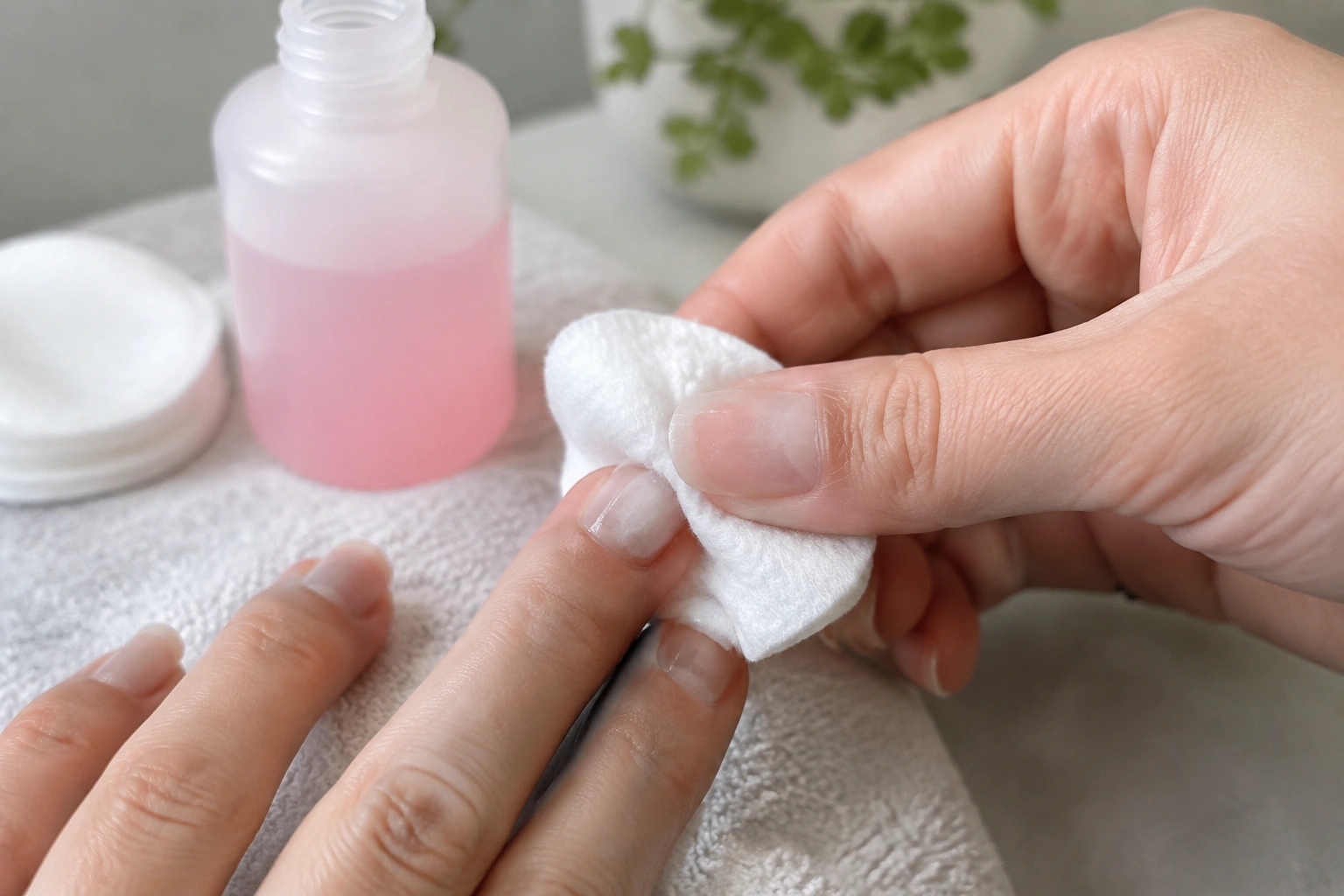
If polish is still clinging to the edges, re-soak the cotton and hold it in place a little longer. That is usually better than forcing it off.
For more on drying time and how it affects the removal routine, you may also find how long nail polish takes to dry completely useful.
Acetone vs Non-Acetone Remover: Which Is Gentler?
This is one of the most common beginner questions, and the answer is a trade-off.
Acetone remover
– Removes polish faster
– Usually needs less rubbing
– Can feel more drying
Non-acetone remover
– May feel milder
– Can take longer
– Sometimes requires more rubbing, which can add friction
For beginners, a simple rule is: if the polish is stubborn, choose acetone and limit rubbing. If the polish comes off easily with very little effort, non-acetone can be enough. The goal is to use the remover that gets the job done with the least scrubbing.
If you want ingredient-level guidance, look for removers that avoid heavy fragrance and unnecessary added drying agents when possible. And if you don’t want to get too technical, remember this: the removal method matters more than the label on the bottle.
The gentlest option is the one that removes polish with the least force. That is not always the one with the softer label.
How Often Can You Wear Nail Polish Without Harming Nails?
There is no single schedule that works for everyone. What matters is how your nails respond.
A practical rule is this: repaint as needed, but remove chipped polish promptly so you do not start picking at it. If your nails stay smooth, flexible, and free of peeling, regular polish wear is probably not causing obvious trouble. If they start feeling dry, rough, or flaky, your routine may be too aggressive.
Here are a few useful decision rules:
– If you repaint often, keep removal gentle each time.
– If polish chips badly, remove it before you start picking at it.
– If your nails are already brittle, give them longer breaks between manicures.
– If you notice visible thinning, stop filing and buffing so much before the next application.
Some people wear polish weekly without major issues because they remove it carefully and moisturize afterward. Others need more breaks because their nails are naturally dry or fragile. A simple beginner cadence is to keep polish on as long as it looks neat, remove it when it starts chipping, and take a break when nails start to feel dry or peel.
How to Keep Nails Healthy While Wearing Polish
A few simple habits do most of the work.
Use a base coat
A base coat helps reduce staining and gives polish a smoother surface to grip. It can also make removal easier, which matters if you wear darker shades.
Keep prep light
Before polishing, lightly shape the free edge if needed. Avoid repeated buffing over the whole nail plate. You want the nail surface clean, not thinned out.
Moisturize after removal
Nail polish remover can leave nails and cuticles dry. A cuticle oil or plain hand cream after removal helps restore comfort and reduce brittleness.
Don’t pick at chips
A small chip is annoying, but peeling the rest off is worse. If a manicure starts lifting, remove it properly instead of trying to “clean up” the edges with your fingers.
Give nails a little recovery time
If you wear polish back-to-back, even a short break can help your nails feel less dry. During that time, keep them trimmed and moisturized.
If you’re wondering why polish sometimes looks uneven or separates in the bottle, this article on why nail polish separates can help you avoid applying a formula that’s already off.
Signs Your Nails May Be Getting Damaged
Nails often give early warning signs before they become a real problem.
Watch for:
– Peeling layers at the free edge
– Splitting or cracking
– A thin, bendy feeling
– Rough, chalky texture
– White patches or surface dullness after removal
– Soreness around the nail or cuticle area
A single dry manicure does not mean your nails are ruined. But if the same signs keep showing up after each polish cycle, your routine may be too harsh.
The most common fix is usually not “stop all polish forever.” It is often “stop peeling, reduce buffing, and moisturize more.”
When to Take a Break From Polish
A break makes sense when your nails need recovery more than they need color.
Pause polish use if:
– Nails are thin or painful
– Peeling keeps coming back
– You see repeated splitting
– The nail surface feels rough after every removal
– You are tempted to peel or scrape polish off
During a break, keep nails short, use hand cream regularly, and apply cuticle oil if you have it. That gives the nail plate a calmer environment while it grows out.
If your nails improve after a week or two, that’s a useful sign that the issue was routine-related rather than permanent.
When to See a Nail Technician or Dermatologist
If your nails keep breaking despite gentler habits, or if you notice pain, strong discoloration, swelling, or changes that do not improve, it is worth getting professional advice.
A licensed nail technician can help you adjust your prep and removal routine. A dermatologist is the better choice if the nail changes seem severe, unusual, or persistent. If polish-related symptoms improve when you stop wearing polish, that usually points to a routine issue. If they do not improve, it may be something else.
Final Takeaway
Does nail polish damage nails? Usually, the polish color itself is not the main problem. The bigger risks are rough removal, too much filing or buffing, and repeated dryness from remover. If you keep the routine gentle, regular polish can fit into a nail-care routine without causing major harm.
For beginners, the easiest framework is: use regular polish if you want simpler removal, choose acetone only when you need it to avoid extra rubbing, and take a break when nails start to feel dry or peel. That gives you a practical way to decide without overcomplicating the routine.

