
How Long Does Nail Polish Take to Dry Completely? A Beginner’s Guide

If you want the short answer, regular nail polish usually feels dry on the surface long before it is truly ready for normal use. For a beginner-friendly rule of thumb, plan for at least a few minutes before light handling, then longer for full protection from dents, smudges, and sheet marks.
The exact drying time depends on the polish formula, how thickly you applied it, how many coats you used, and even the room conditions. A thin manicure in a warm, breezy space will usually dry faster than a thick one in a humid room. If you want a deeper breakdown of the basics, this guide on how long nail polish takes to dry is a helpful companion.
Quick Answer: How Long Nail Polish Takes to Dry Completely
For regular nail polish, “dry to the touch” and “completely dry” are not the same thing.
- Dry to the touch means the surface no longer feels wet.
- Smudge-resistant means it can handle light use without easily marking.
- Fully dry means the polish has hardened enough that normal activity is much safer.
A beginner should think in layers of patience:
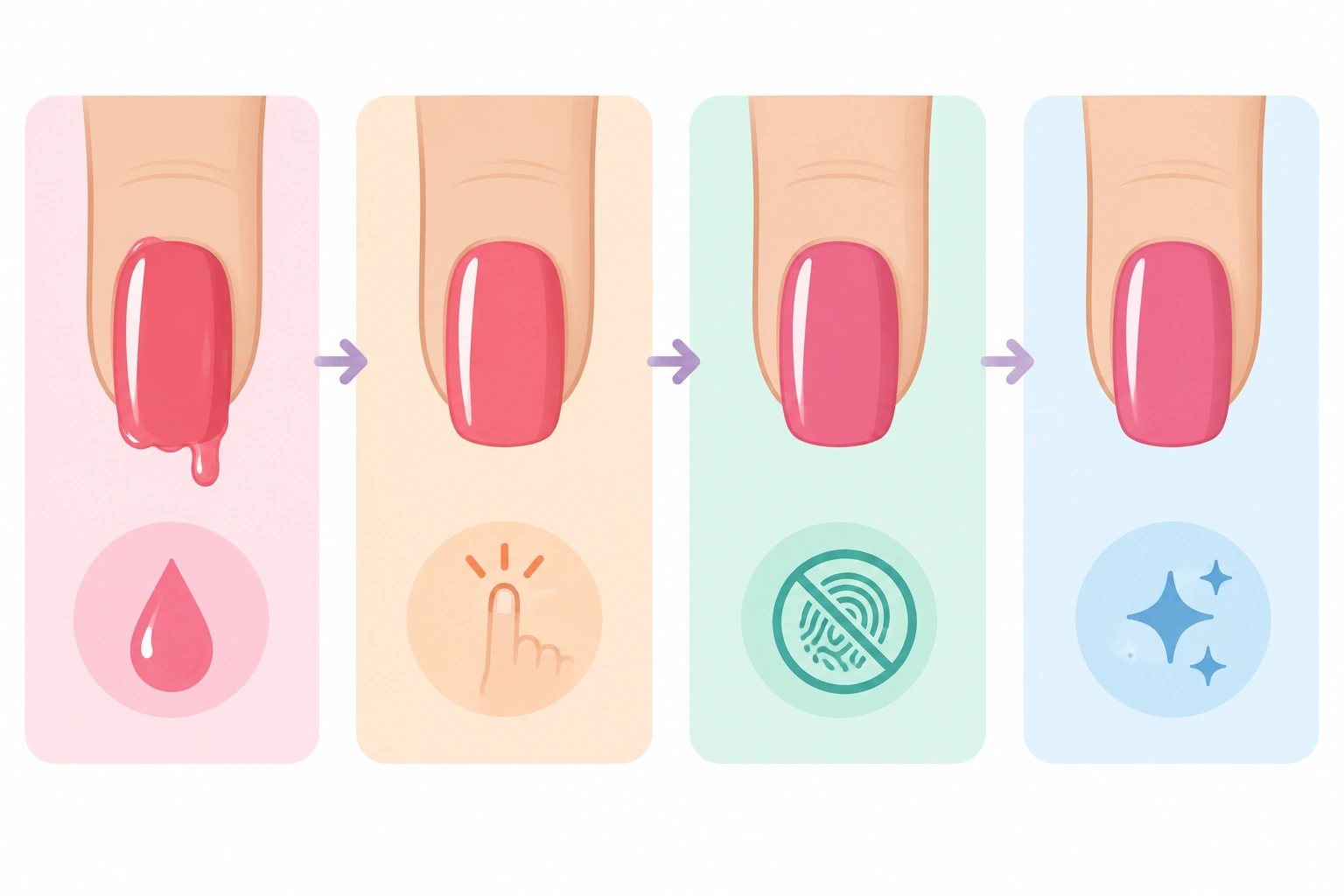
- About 5–10 minutes: surface may feel dry
- Around 15–30 minutes: lighter tasks may be possible, depending on the manicure
- About 1–2 hours: many manicures are more reliably smudge-resistant
- Several hours or overnight: thicker coats, multiple layers, and top coats can take longer to feel truly set
That is why a manicure can seem fine and still dent when you use it too soon. The top layer often dries first, while the layers underneath are still settling.
A simple drying timeline
| Stage | What it means | What to do |
|---|---|---|
| Wet | Polish is still movable | Do not touch anything |
| Dry to the touch | Surface feels dry | Use caution; avoid pressure |
| Smudge-resistant | Light contact is safer | Handle light tasks carefully |
| Fully dry | Less likely to dent or mark | Resume normal use more confidently |
If you are planning your day around a fresh manicure, the safest choice is to treat surface dryness as only the first checkpoint, not the finish line.
Dry to the Touch vs Fully Dry: What the Difference Means
This is the part that confuses most beginners. Nail polish can feel dry before it is truly ready.
1) Wet
At this stage, the polish still moves if it is touched. Even a small tap can leave a mark. This is the easiest stage to ruin, so avoid all contact.
2) Dry to the touch
Here, the top surface feels dry, but the polish underneath may still be soft. That does not mean the manicure is safe.
3) Fully dry
This is the stage you want before doing anything that puts pressure on your nails. Fully dry polish is much less likely to dent when you grab a bag, pull on clothing, or rest your hands on a surface.
If you are ever unsure, assume the polish needs more time. That small pause can save the whole manicure.
What Changes Drying Time
Several simple things affect how long polish takes to dry. Understanding them helps you choose a routine that fits your schedule.
Coat thickness matters most
Thin coats dry faster than thick coats. Thick polish traps more solvent and stays soft longer.
This is one of the biggest beginner mistakes. A heavy coat may look smoother at first, but it often causes more smudging later. Two thin coats usually work better than one thick coat.
More layers mean more waiting
Base coat, color coats, and top coat all add time. Each layer needs a chance to settle before the next one makes the stack thicker.
If you are in a hurry, fewer well-applied coats are usually better than piling on extra polish for coverage.
Formula and finish can change speed
Different polishes behave differently. Some formulas are designed to dry faster, while glittery, metallic, or very opaque formulas can take longer because they are thicker and hold more product in the layer.
Top coat choice matters
A standard top coat can add shine and protection, but it may also add another layer that needs time. A quick-dry top coat is made to help the manicure set faster, which is useful when you need to get moving.
Humidity, temperature, and airflow
Room conditions can affect drying time. High humidity can slow drying and leave polish feeling soft longer.
For safety guidance around nail products and ventilation in general, the FDA’s cosmetics information is a useful place to check.
How Long to Wait Before Everyday Tasks
Once polish feels dry, most beginners want to know the practical part: when can I use my hands again?
The table below gives conservative, beginner-friendly guidance. Your polish may set faster or slower, but these wait times help reduce smudges.
| Task | Safer waiting approach |
|---|---|
| Typing lightly | Wait about 15–30 minutes, and longer if the coat is thick |
| Using your phone | Light use may be okay sooner, but avoid pressing nails on the screen |
| Putting on loose clothing | Wait until the polish is at least surface dry |
| Pulling on tight sleeves | Wait longer; fabric can drag across soft polish |
| Putting on shoes | Wait at least 1–2 hours for fingernails, and longer for toenails if the shoes are snug |
| Showering | Wait as long as you can; ideally several hours, and overnight is safer |
| Going to bed | Wait until the polish is fully dry if possible, ideally several hours or overnight |
| Doing dishes or cleaning | Best to wait until the manicure is well set, then wear gloves |
A few real-life examples
If you painted your nails before work, try to keep hand use light for a while. Typing may be okay after a short wait, but avoid rubbing your nails against desks, bags, or clothing.
If you painted toenails, shoes are the big concern. Tight shoes can dent polish even after it feels dry, so give toenails extra time.
If you painted your nails at night, bedtime is the most common smudge trap. Sheets, blankets, and sleeping positions can all leave marks if the polish is still soft.
For more on how long polish tends to last once it is applied, you may also find how long nail polish lasts useful.
Regular Polish vs Gel Polish vs Quick-Dry Products
Not all polish types dry the same way.

Regular polish
Regular nail polish dries in the air. It is beginner-friendly and easy to remove, but it usually needs the most patience.
This is the best choice if you want a simple at-home routine without special tools.
Gel polish
Gel polish is different. It does not air-dry in the same way; it typically needs a UV or LED lamp to cure. That makes it a different process from regular polish, so it is only useful here as a comparison.
Quick-dry top coats and drops
Quick-dry helpers can shorten the waiting time and make a manicure easier to live with sooner. They are especially useful when you need to get dressed, pack a bag, or move on with your day.
The trade-off is that they are an extra step and may not work the same way on every formula. They help, but they do not make polish instantly hard.
Fastest Safe Ways to Dry Nail Polish
If you want the safest speed-up methods, keep them simple.
Use thinner coats
This is the easiest improvement for beginners. Thin coats dry more evenly and are less likely to trap soft layers underneath.
If coverage looks streaky after the first coat, that is normal. A second thin coat is usually better than one thick one.
Choose a quick-dry top coat
A quick-dry top coat can help seal the color and reduce waiting time. It is a good choice when you want a cleaner finish without changing your whole routine.
Try quick-dry drops or sprays
These products can help the surface set faster. They are useful if you often do your nails before bed or before heading out.
Keep the room comfortable
If possible, avoid painting nails right after a hot shower or in a steamy bathroom. Extra moisture can slow things down.
If you want a related timing guide for prep products, this page on how long a nail dehydrator takes to dry may also help.
Common Mistakes That Make Polish Take Longer to Dry
A lot of smudges come from a few predictable habits.
Applying thick coats
Thick polish looks efficient, but it is one of the biggest reasons manicures stay soft too long.
Rushing between coats
If you layer too quickly, the lower coat may still be soft when the next one goes on. That can make the whole manicure stay tacky longer.
Using too much product near the cuticle
Extra polish around the edges can stay soft longer and is easier to bump.
Forgetting that humidity slows things down
A manicure that dries fine in one room may be much slower in another. If your polish seems unpredictable, the environment may be the reason.
How to Tell If Your Nails Are Actually Dry
You do not need to press hard on the nail to check it.
Use a light visual check
Look for shine and movement. A wet nail often looks more fluid and may reflect light differently than a dry one.
Watch the tasks that cause dents
If you can touch your hair or a pillow without leaving a mark, that is a better sign than simply “it feels dry.”
A manicure that survives light contact is not always ready for pressure. That distinction matters.
Simple Rules for a Smudge-Free Manicure
Here is the beginner version to remember:
- Thin coats dry better than thick ones.
- Dry to the touch is not the same as fully dry.
- More layers mean more waiting.
- Humidity can slow things down.
- Quick-dry products help, but they do not make polish instant.
- Treat shoes, bedding, and tight clothing as high-risk until the polish is truly set.
If you are short on time, choose a thinner application, use a quick-dry top coat, and give your manicure as much breathing room as possible before normal activity.
If you want to avoid the frustration of a ruined fresh manicure, the safest habit is simple: when in doubt, wait a little longer.
When to See a Nail Technician or Dermatologist
If your polish never seems to dry normally, or if your nails and skin react badly to nail products, it is worth asking a professional for advice. A nail technician can help you adjust your application routine, and a dermatologist can help if you suspect a skin or nail issue.
FAQ
How long does regular nail polish take to dry completely?
It varies by formula and application, but regular polish usually needs much longer than the surface-dry stage. Thin coats dry faster; thick coats take longer.
Is nail polish dry when it feels dry on the surface?
Not always. Surface dry only means the top layer has set. The layers underneath may still be soft.
Can I go to bed after painting my nails?
Only if you are confident the polish is fully dry. If not, sheets can leave marks or dents.
Do quick-dry top coats really help?
Yes, they can reduce waiting time and help the manicure become usable sooner. They are helpful, but they are not instant.
Does gel polish dry faster than regular polish?
Gel polish usually cures faster under a UV or LED lamp, but it is a different process from air-drying regular polish.

