I Got Cut at the Nail Salon: Should You Be Worried?

If you got nicked or cut during a manicure or pedicure, the first question is usually the right one: is this just a small accident, or something I should worry about?
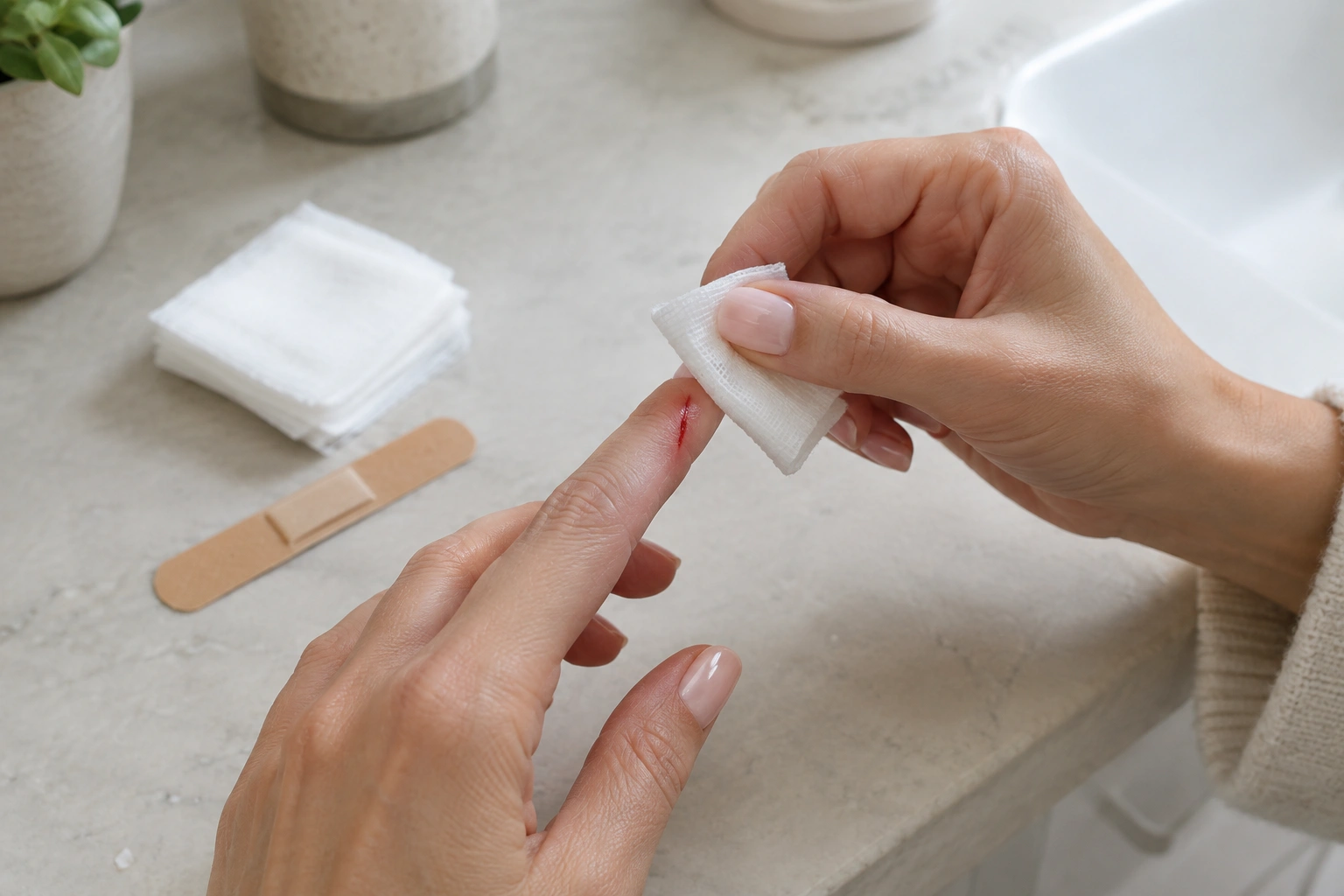
Most minor salon cuts are exactly that — minor. If the bleeding stops with gentle pressure, the cut is shallow, and the area starts looking better over the next day or two, it usually can be cared for at home. But a deeper cut, a wound that keeps bleeding, or a cut that becomes more painful, red, warm, or swollen needs more attention.
The biggest mistake is either panicking too soon or brushing it off completely. A calm middle ground works best: clean it, protect it, and watch it closely for the next 24 to 48 hours.
If the injury happened because of a tool, aggressive cuticle trimming, or a visibly dirty setup, that does not automatically mean you were exposed to something serious — but it does mean you should pay closer attention and consider telling the salon.
Quick Answer: Is a Nail Salon Cut Usually Serious?
A small nick at the nail salon is often not serious if:
- the bleeding stops within a few minutes
- the cut is shallow and not gaping
- pain is mild and improves
- the skin around it stays calm instead of getting redder or hotter
A cut is more concerning if:
- bleeding does not stop with pressure
- the wound is deep, open, or edges separate
- pain is getting worse instead of better
- redness, swelling, warmth, pus, or fever develops
That difference matters because a tiny surface nick and a deeper skin break are not the same injury. A superficial cut usually needs simple wound care. A deeper cut may need medical evaluation, especially if it happened near the nail fold or on a foot with thicker skin and more pressure from walking.
One more important point: not every salon cut means poor hygiene. Sometimes a technician slips during an otherwise clean service. But if the salon uses blades or razors, that is a red flag — Memorial Hermann notes that razors and knives have no place in a nail salon, and that cuticles should not be cut because they protect the nail area. Memorial Hermann’s nail salon safety guidance is worth reading if you want to understand what unsafe technique can look like.
What to Do Right Now: First Aid for a Nail Salon Cut
Treat it like a small wound first, not like a nail issue.
First 24 hours: what to do now, later today, and when to get help
- Right now: wash your hands, rinse the cut gently, and apply steady pressure with clean gauze or a clean cloth until the bleeding stops.
- Later the same day: cover it with a bandage, keep it clean and dry, and check it a few times to make sure the bleeding has not restarted and the area is not getting more swollen or painful.
- Within 24 to 48 hours: if the cut is deeper than it first looked, keeps reopening, or starts showing redness, warmth, swelling, pus, or worsening pain, get medical advice from urgent care, your clinician, or a nurse line.
- Get immediate help sooner: if bleeding does not stop after steady pressure, the cut is deep or gaping, or you can see tissue below the surface.
1) Wash your hands first
Before touching the cut, clean your own hands with soap and water. That keeps bacteria off the wound.
2) Rinse the cut gently
Use clean running water to rinse away any dust, nail dust, lotion, or debris. If there is visible dirt, let the water run over it rather than scrubbing.
3) Stop the bleeding with pressure
Use clean gauze or a clean cloth and press steadily on the cut. Do not keep lifting the cloth to check every few seconds; that interrupts clotting.
4) Apply a thin layer of ointment if you normally use one
If you tolerate topical antibiotic ointment, a small amount can help keep the area from drying out. If you know you react to those products, skip it and keep the wound clean and covered.
5) Cover it with a bandage
A bandage protects the cut from friction, dirt, and water. That matters even more if the cut is near a fingertip, toe, or cuticle area that gets bumped often.
6) Keep it dry and untouched for the first day
Do not pick at it, peel the skin, or keep checking it under harsh sanitizer. That can reopen the wound.
If the cut is on a finger or toe that was just soaked, scrubbed, or filed, be extra gentle for the rest of the day. The skin may sting more simply because it has been irritated.
For a very minor cut, it is reasonable to call a pharmacist or nurse line if you are unsure whether basic home care is enough.
For general skin and wound-care basics, the CDC’s wound care guidance is a useful place to look for conservative, public-health information.
How to Tell Normal Healing From an Infection
The first 24 to 48 hours are the most useful window for watching the wound. A little tenderness is expected. What you want to see is a steady trend toward improvement.
Normal healing often looks like this
- mild soreness at the exact spot of the cut
- a small scab forming
- tenderness that is stable or easing
- no spreading redness
- no drainage or only a tiny amount of clear fluid early on
A practical way to judge the wound is to compare how it looks now with how it looked a few hours ago. If the area is calmer, that is reassuring. If it looks angrier, bigger, or more tender, that is a reason to take it seriously.
This is especially important on toes, where shoes can trap moisture and pressure can make a small wound worse.
How Worried Should You Be About Hepatitis, HIV, or Other Infections?
This is the part that makes people spiral, so let’s keep it grounded.
A small salon cut is much more likely to lead to a routine skin infection than a bloodborne illness. For a simple manicure nick, hepatitis B, hepatitis C, or HIV transmission is very unlikely. That risk becomes more relevant only if there was a specific exposure scenario — for example, a visibly contaminated tool, a reused sharp item with fresh blood on it, or a much deeper injury with meaningful blood contact.
In other words, a tiny nick by itself is not the same thing as a high-risk blood exposure. It is reasonable to stay alert, but not to assume the worst.
If the tool looked dirty, reused in a questionable way, or the injury involved a lot of bleeding, call your primary care clinician or urgent care and ask whether any follow-up is appropriate. That is the right place to ask about testing, vaccination status, or other next steps.
For workplace and salon safety context, OSHA has a page on health hazards in nail salons, which is useful for understanding that nail salon hygiene is a real safety issue, not a silly concern.
When a Salon Cut Needs a Doctor or Urgent Care
Get medical help sooner rather than later if any of these apply:
- the bleeding will not stop after steady pressure
- the cut is deep, gaping, or you can see tissue below the surface
- the wound is on the face, near an eye, or across a joint and keeps reopening
- pain is severe or worsening
- you notice redness, swelling, warmth, pus, or fever
- you have diabetes, poor circulation, a weakened immune system, or take blood thinners
- the cut happened with a dirty-looking tool or a blade
- your tetanus shot may not be up to date and the wound is deep or dirty
Tetanus is not something to guess about from memory if the cut is more than a superficial nick. If you are unsure about your vaccination status and the wound is deeper than you expected, ask a clinician.
Minor nick versus concerning cut
| Situation | More likely minor | More likely needs care |
|---|---|---|
| Bleeding | Stops quickly with pressure | Keeps bleeding or restarts easily |
| Depth | Surface nick | Deep, gaping, or tissue is visible |
| Pain | Mild and improving | Worsening or throbbing |
| Skin changes | No spreading redness | Redness, warmth, swelling, pus |
| Health risk | Healthy skin and no major conditions | Diabetes, immune suppression, blood thinners |
| Cause | Simple slip with a clean tool | Dirty tool, blade, or rough technique |
What to Document and Whether to Tell the Salon
If the cut was truly minor, you may only want to note it for yourself. But if the injury was more than a tiny nick, documenting it is smart.
Save:
- the receipt
- the date and time
- the technician’s name, if you know it
- the salon owner’s or manager’s name, if you can get it
- photos of the cut right after it happened and again later
- timestamped photos, if possible
- the name of the service you were getting
- any details about the tool or technique used
- the names of any witnesses, if someone saw what happened
If the cut was significant, contact the salon the same day if you can. Ask to speak with the owner or manager, and request an incident report if they have one. If they do not, ask for a written acknowledgment of what happened.
That matters for two reasons. First, it gives the salon a chance to respond appropriately. Second, if you do need medical follow-up, reimbursement, or reporting later, you will have a clear record of what happened.
If you end up needing reimbursement for treatment, documentation helps. Keep the tone practical, not emotional: describe the injury, the service, any immediate response from the salon, and what you were told afterward.
Questions to Ask About Salon Sanitation and Tool Safety
If you are unsure whether this was an accident or a hygiene problem, ask direct questions.
Useful questions include:
- Are tools disinfected between clients?
- Are any tools single-use?
- How are metal tools cleaned and stored?
- Do you use fresh liners for footbaths?
- How do you handle a cut if it happens during service?
- Do you use blades or razors on skin?
The answers matter more than a polished front desk. A clean-looking salon can still have weak sanitation habits, and a modest-looking salon can still do things properly. What you want is a consistent process.
One clue to avoid in the future: aggressive cuticle trimming. Cuticles are protective skin, not something that should be cut away casually. Memorial Hermann specifically warns that cuticles should not be cut and that razors and knives have no place in a nail salon. That is a helpful standard to keep in mind when you are judging technique. Read the safety warning here.
How to Prevent Cuts at Future Nail Appointments
You cannot control every slip, but you can lower the odds.
Before the appointment
Choose salons that are willing to explain their cleaning process without acting annoyed. Look for concrete hygiene practices you can actually see: single-use items where appropriate, sealed disinfectant containers, clean footbaths or fresh liners, and tools stored in a sanitary way. If a salon dodges basic sanitation questions, that is useful information.
During the service
Speak up if the tech is pushing too hard, trimming live skin, or using a tool that feels sharp in the wrong way. A good technician would rather adjust pressure than keep going through discomfort. Technicians should not cut cuticles aggressively or cut live skin to make the nails “look cleaner.”
For pedicures
If your skin is sensitive or you have any circulation or healing concerns, ask for a gentler service. Dry pedicure approaches or properly lined basins are often discussed as safer options than setups that rely on questionable plumbing or rough scraping.
After the service
If the skin looks irritated, keep the area clean and let it recover before another aggressive service. Damaged skin is easier to irritate again.
If you want help choosing what to ask for at your next appointment, this guide on what to ask for at a nail salon can help you speak more clearly and avoid vague requests.
When to Choose a Different Salon Next Time
A one-time slip does not automatically mean the salon is unsafe. But I would switch salons if any of these happened:
- the technician acted casually about cutting you
- the salon used blades, razors, or visibly unsafe tools
- they could not explain how tools are disinfected
- they seemed irritated when you asked about sanitation
- the injury happened alongside other rough or careless behavior
If the salon took the incident seriously, cleaned the area, apologized, and showed a clear sanitation process, you may decide to give them another chance. If they minimized the cut or acted defensive, that is usually the bigger warning sign.
Trust the pattern, not just the apology.
FAQ: Common Questions After a Nail Salon Cut
Do I need to get tested after a small salon cut?
Usually not for a tiny, clean-looking nick. Testing questions become more relevant if there was significant blood exposure, a visibly contaminated tool, or a clinician thinks the exposure was meaningful.
Can I get hepatitis or HIV from a nail salon cut?
A simple cut does not automatically mean exposure to a bloodborne infection. The more common concern is a regular skin infection. If the injury involved dirty tools or heavy blood exposure, ask a medical professional what follow-up makes sense.
Should I tell the salon owner?
Yes, if the cut was more than trivial or if you want the incident recorded. Keep it factual and brief.
What if the cut was from cuticle trimming?
That is worth mentioning. Cuticle cutting is not considered good practice because cuticles protect the nail area. If the injury came from that technique, I would be more cautious about returning.
How long should I watch it?
Watch closely over the first 24 to 48 hours. If the area gets redder, warmer, more swollen, or more painful instead of calmer, get medical advice.
Do I need a tetanus shot?
If the cut is deep, dirty, or you are not sure your tetanus vaccination is current, ask a clinician or urgent care. That question is especially important if the wound is more than a surface nick.
The bottom line: a nail salon cut is often minor, but it deserves proper cleaning, protection, and a short period of close observation. If the wound is deep, keeps bleeding, or starts looking infected, do not wait it out.