Is Nail Polish Bad for Your Nails? A Beginner-Friendly Guide

If you enjoy polish but worry about nail health, here’s the simple answer: nail polish is usually not the main thing that damages nails. The bigger problems are often how polish is applied, how it’s removed, and whether your nails are already dry, thin, or irritated.
Temporary cosmetic changes like staining or dryness are not the same thing as true nail damage. Damage usually means the nail plate is actually changing in a structural way, such as thinning, peeling, splitting, or lifting from the nail bed. That distinction matters because some polish-related changes grow out or improve with gentler care.
That means you can often keep wearing polish safely if you use a few smart habits. A base coat, gentle removal, and a little moisture between manicures go a long way. The FDA’s consumer guidance on cosmetics is also a helpful reminder that nail products are meant for cosmetic use, not as treatment for nail problems.
Quick Answer: Is Nail Polish Bad for Your Nails?
For most healthy nails, occasional or regular polish use is not automatically harmful. The nail plate is made of keratin, which is a tough, non-living surface. Polish sits on top of it rather than soaking deep into the nail.
The catch is that nails can still become dry, stained, or rough if polish is worn and removed in a harsh way. Peeling off polish, scrubbing hard with remover, or over-buffing the surface can make nails look weaker even when the polish itself is not the main problem.
So the practical answer is this: polish is usually fine, but your habits matter.
How Nail Polish Interacts with the Nail
To understand the risk, it helps to know the parts of the nail.
The nail plate is the hard part you paint. The cuticle is the thin skin at the base of the nail that helps protect the area where new nail grows. When polish is applied neatly, it mostly stays on the nail plate and does not need to touch the cuticle.
Polish can still affect the nail in a few simple ways:
- It can trap moisture and color on the surface.
- It can make nails look yellow or dull if it stays on a long time.
- It can irritate the skin around the nail if it touches the cuticle repeatedly.
- It can leave nails feeling dry after removal, especially if acetone is used often.
That dryness is usually temporary, but repeated stress can make nails peel or split more easily.
What Kind of Damage Can Happen?
Most polish-related nail problems fall into a few common categories. Some are mostly cosmetic. Others can signal real stress on the nail.
Dryness
Dry nails often feel rough, look dull, or split at the edges. This can happen after repeated remover use, especially if the skin around the nail is already dry.
Yellowing or staining
Clear or dark polish can stain the nail plate, especially if a base coat is skipped. This usually looks worse than it is and often improves as the nail grows out.
Peeling
Peeling usually shows up at the free edge of the nail. It can happen after rough removal, over-buffing, or picking at polish.
Brittleness
Brittle nails break more easily and may feel thin. Sometimes this is related to polish habits, but it can also happen from water exposure, cleaning products, or simple dryness.
Surface thinning
If the top layers of the nail are filed or buffed too much, the nail may feel weaker. This is more likely from prep and removal than from polish itself.
If you want a deeper look at whether old or poorly stored product plays a role too, see how to tell if nail polish is bad and does nail polish go bad?.
What Usually Causes Nail Problems: Polish or the Way It’s Worn?
In many cases, the problem is not the polish formula alone. It’s the routine around it.
Here are the biggest troublemakers:
- Peeling off polish instead of removing it properly
- Over-buffing the nail before application
- Scraping with a tool or fingernail during removal
- Leaving polish on too long when it starts to lift
- Skipping breaks when nails are already dry or peeling
- Using harsh remover repeatedly without moisturizing afterward
A simple example: if your nails look rough after a manicure, the damage may come from rough removal rather than from the color you wore.
Regular Polish vs Gel Polish vs Dip Powder
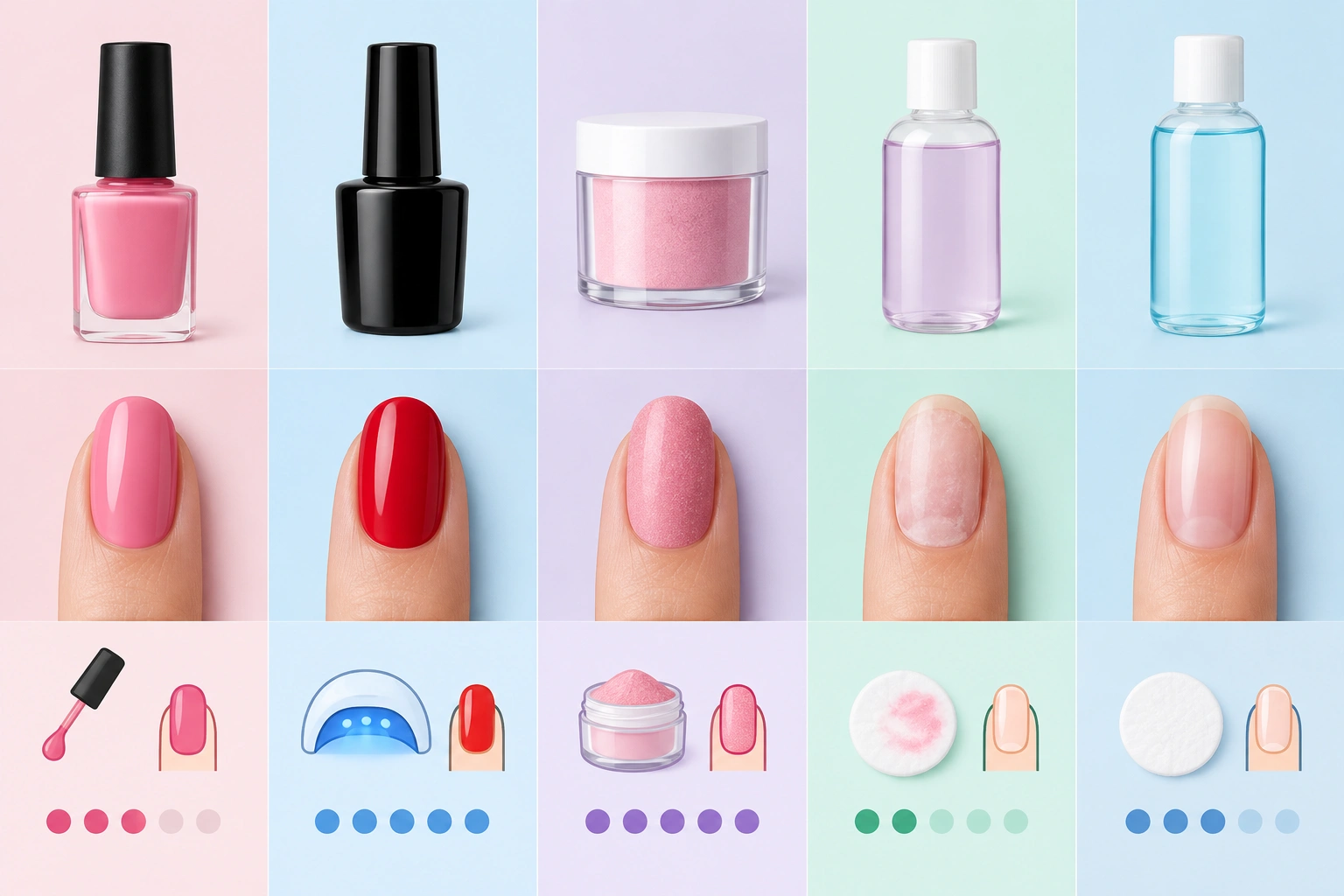
Different systems have different trade-offs. This table gives a quick beginner-friendly comparison.
| Type | Damage risk | Ease of removal | Best for |
|---|---|---|---|
| Regular polish | Usually the gentlest option | Easiest to remove | Beginners, frequent color changes |
| Gel polish | Can be harder on nails during removal | More difficult; needs careful soaking or salon removal | People who want longer wear |
| Dip powder | Can be more stressful if removal is rough | Usually more involved | Long wear, but only if you can remove it gently |
Regular polish is often the easiest choice if you want the lowest-maintenance option. Gel can be convenient because it lasts longer, but it may be harsher in practice because it often needs soaking, filing, or more detailed prep and removal. If gel is peeled off, it can take layers of the nail plate with it.
Dip powder can also be durable, but it may be more stressful on nails if the product is filed heavily, the surface is over-prepped, or removal is rushed.
If you’re comparing manicure styles, Professional Beauty often covers salon trends and service differences in a way that can help beginners understand what they’re asking for.
Acetone Remover vs Non-Acetone Remover
Both removers can work. The better one depends on your nail condition and how much patience you have.
Acetone remover
Acetone removes polish faster and more completely. That can be useful because less rubbing usually means less mechanical stress on the nail. It is often the better option for gel because it can help reduce forceful removal.
The downside is dryness. Acetone can leave nails and surrounding skin feeling tight or rough, especially if you use it often.
Non-acetone remover
Non-acetone remover is usually gentler in feel, but it often works more slowly. In practice, that slower removal can mean more rubbing, which is not always gentler overall.
Simple decision rule
- Choose the remover that gets polish off with the least rubbing.
- Use acetone if you want faster removal and are dealing with gel or stubborn polish.
- Use non-acetone if it removes your polish cleanly without extra scrubbing and your nails are already dry.
For many beginners, the safest remover is the one that gets polish off cleanly with the least scrubbing.
How to Apply Nail Polish More Safely
A careful application routine can prevent a lot of common problems.
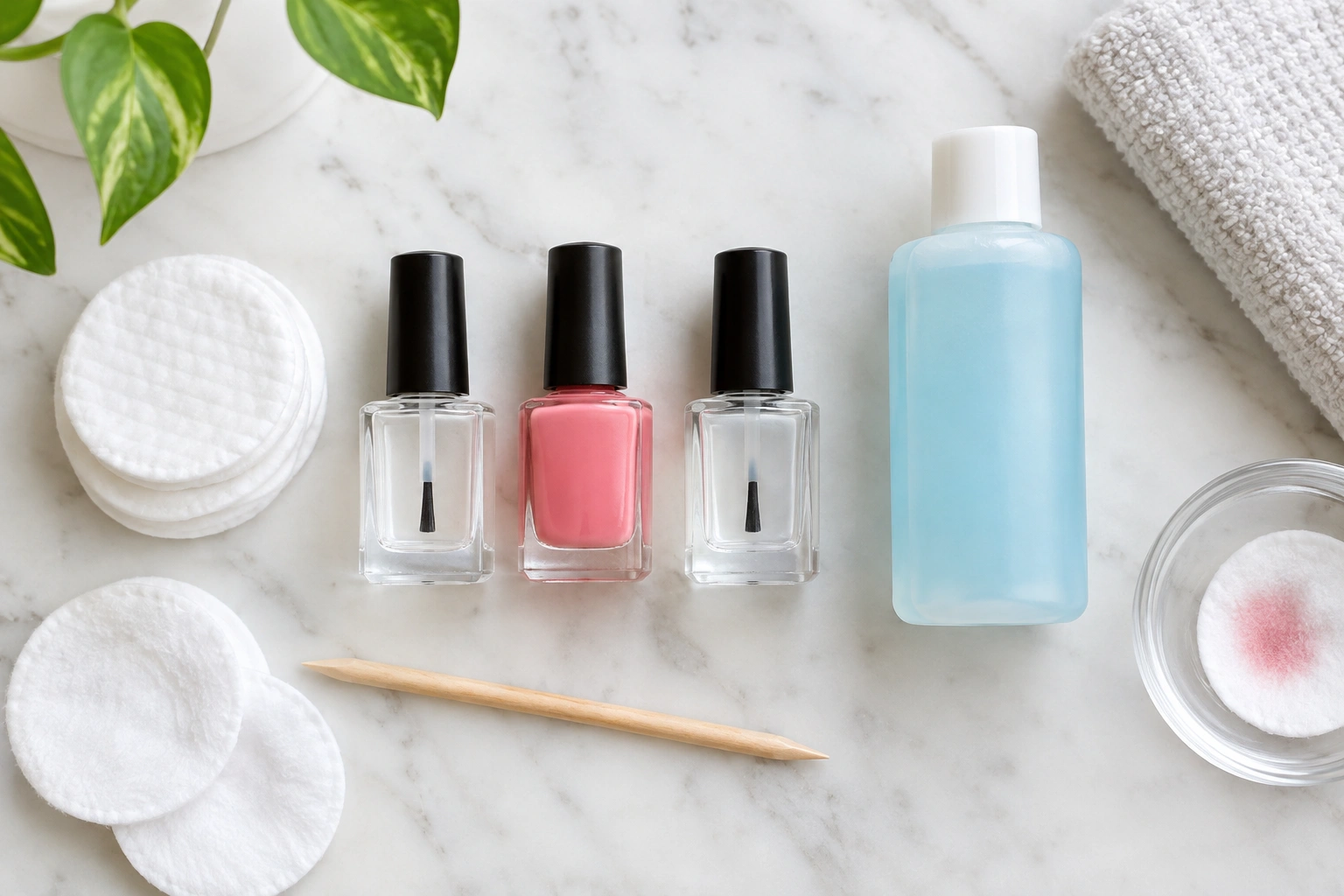
Use a base coat
A base coat helps reduce staining and gives the color something smoother to grip. It also adds a thin layer between the polish and the nail plate.
Don’t buff aggressively
A little smoothing is fine, but heavy buffing can thin the nail surface. If your nails already peel, skip extra buffing unless you truly need it.
Keep polish off the skin
Try not to flood the cuticle area. Polish sitting on the skin can lead to lifting and can make removal messier later.
Let each layer dry enough
Thick, rushed coats chip faster. Thin coats usually wear better and are easier to remove later.
Seal the edge
Brushing the color and top coat lightly across the free edge can help reduce tip wear.
A simple at-home manicure can be gentler than a rushed salon one if you’re careful with prep and removal. The key is not the location. It’s the technique, plus sanitation and how the product is handled.
How to Remove Nail Polish Without Damaging Nails
Removal is where many beginners accidentally cause the most damage.
A gentle removal routine
- Soak a cotton pad with remover.
- Hold it on the nail for a few seconds.
- Wipe in one direction instead of scrubbing back and forth.
- Repeat if needed rather than scraping.
- Wash your hands after removal.
- Apply hand cream or cuticle oil right away.
If polish is stubborn, give the remover time to work. Rubbing harder is usually what causes extra dryness and surface wear.
What not to do
- Do not peel polish off.
- Do not dig under lifted edges.
- Do not scrape gel or dip powder off with force.
If you use remover often and your nails feel dry, this article may help you compare whether nail polish remover damages nails.
How to Care for Nails Between Manicures
Healthy nails need a little support between polish changes.
A few simple habits help:
- Use hand cream after washing your hands.
- Apply cuticle oil if the skin around the nail feels dry.
- Wear gloves for cleaning or dishwashing when possible.
- Give nails a break if they start peeling.
- Keep nails trimmed if the tips are weak.
If your nails are already dry or peeling, a short polish-free stretch can help. There is no fixed rule for everyone, but many people do better by waiting until the nail surface feels less rough before repainting, rather than layering polish again right away.
This does not mean you must stop wearing polish forever. It just means your nails should not be treated like disposable surfaces.
When to Take a Break From Polish
A break is a good idea when your nails are showing stress.
Pause polish if you notice:
- peeling or splitting that keeps returning
- nails that feel thinner than usual
- repeated staining that does not improve
- redness or itching around the cuticle
- roughness after every removal
If your nails are already dry or peeling, it can help to rotate in a polish-free period until they feel more stable again. If they look better after a few weeks off, your routine may have been too harsh.
Signs the Problem May Not Be Nail Polish
Not every nail change comes from polish.
Watch for signs that point to something else:
Skin irritation around the nail
- Itching
- Redness
- Swelling
- Rash
- Burning or tenderness
These symptoms can suggest contact irritation or contact dermatitis, especially if they show up on the skin around the nail. If they are persistent, worsening, or spreading, they should be medically evaluated.
Nail-plate changes
- Lifting from the nail bed
- Green, dark, or unusual discoloration
- Thickening or crumbling
- Bad odor
- Pain
- Nail shape changes that do not grow out
These changes can suggest infection or another nail condition and should also be checked medically, especially if they are painful, spreading, or not improving.
Polish may hide the problem, but it usually does not cause every type of nail change.
When to See a Nail Technician or Dermatologist
See a professional if the issue is mild but keeps coming back, or if you’re not sure whether your routine is the cause.
A dermatologist is especially important if:
- discoloration does not grow out
- the nail is painful
- the nail is lifting
- the nail becomes thick, crumbly, or distorted
- symptoms spread to multiple nails
- redness or swelling gets worse
A nail technician can help with safer application and removal habits, but persistent or unusual changes should be checked medically. If you’re unsure whether a change is just cosmetic, it is better to ask sooner rather than later.
FAQ: Nail Polish and Nail Health
Does regular nail polish damage nails?
Usually not by itself. The bigger risk comes from harsh removal, picking, over-buffing, and repeated dryness.
Is gel polish worse than regular polish?
It can be, mainly because removal is harder. If gel is peeled off, it can damage the nail plate more than regular polish would.
Does acetone ruin nails?
Not necessarily, but it can dry them out. If you use acetone, follow with moisturizer and avoid extra scrubbing.
How often should I take a break from polish?
There is no single rule for everyone. Take a break when nails are peeling, thinning, or irritated, or when polish removal starts to leave them rough.
Why do my nails turn yellow under polish?
Staining can happen, especially with darker colors or long wear. A base coat usually helps reduce this.
What is the safest way to remove polish?
Use remover with minimal rubbing, and never peel polish off. For gel or dip, removal should be slow and gentle rather than forced.
Bottom Line
Nail polish is usually not bad for your nails when you use it carefully. The main risks come from dryness, staining, and rough removal, not from color alone. If you keep your nails moisturized, use a base coat, and remove polish gently, you can enjoy manicures without making your nails work harder than they need to.