
What to Ask for at the Nail Salon for Acrylics: A Clear Guide for Getting the Set You Want

If you want acrylic nails but don’t want the guessing game, the goal is simple: walk in knowing the service name, the shape and length you want, and the finish you’re paying for. That alone prevents most misunderstandings.
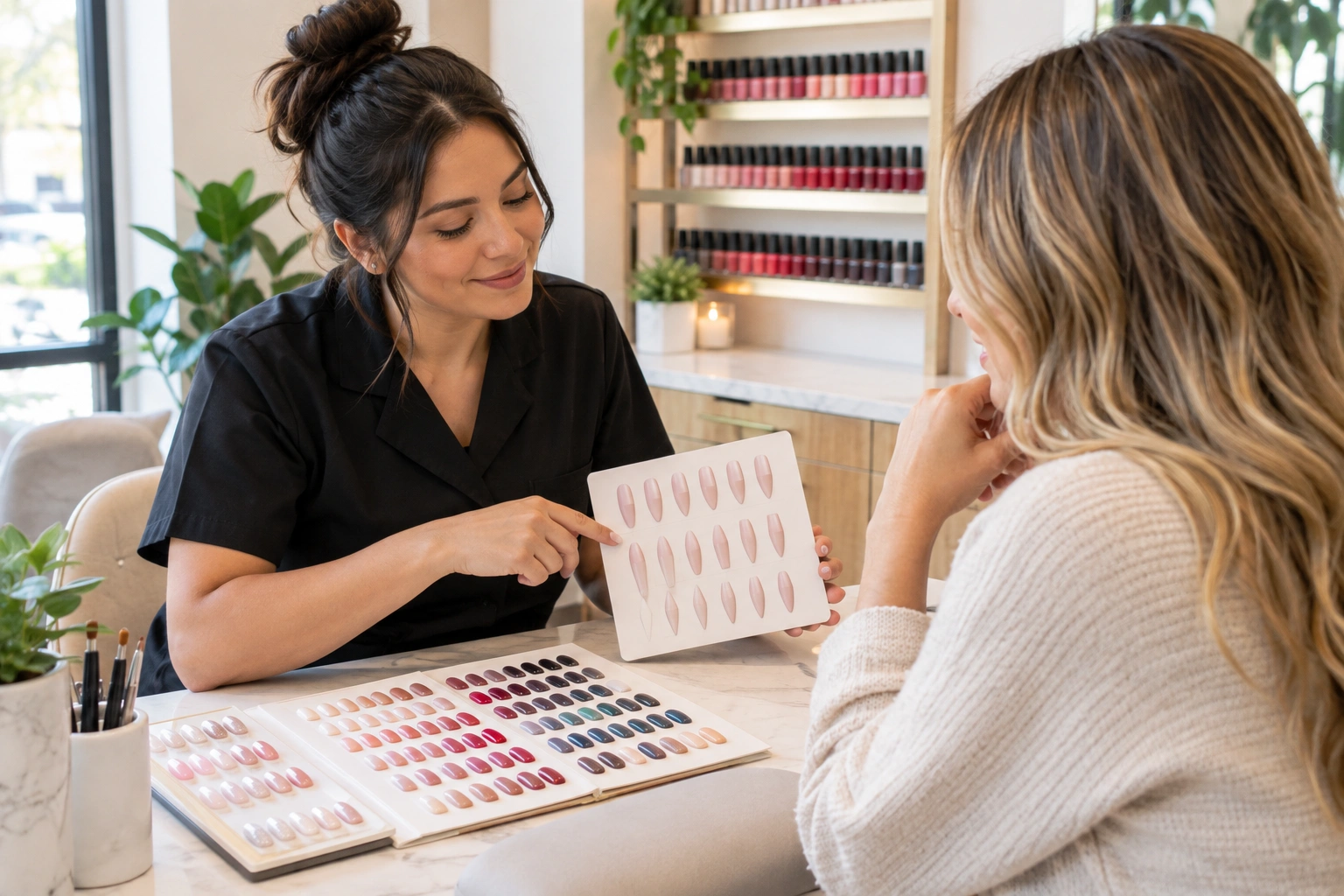
Acrylic services are usually straightforward once you know the salon language. You’re not just asking for “acrylics”; you’re choosing between a full set, a fill-in, or removal and replacement, then deciding on shape, length, color, and any add-ons. If you want a broader primer on salon wording, this guide pairs well with what to ask for at a nail salon and what a full set means.
What to Ask for If You Want Acrylic Nails
The cleanest request is usually: “I’d like a full set of acrylic nails.” That tells the technician you want an enhancement built onto your natural nails, rather than a basic manicure or polish change.
If you already have acrylics on, say that up front. The correct service may be a fill-in instead of a new set. If you want the old set removed and a fresh one applied, say “removal and replacement” or ask what the salon recommends.
Acrylic is different from gel, hybrid gel, and dip powder, so saying only “I want long nails” can lead to the wrong service. A nail tech can help you choose, but only if they know what you’re aiming for. One practical way to avoid confusion is to name the service, then the look: “full set, short almond, nude pink.”
If you’re unsure whether acrylic is the right enhancement, a side-by-side comparison helps.
Nail Tips vs Nail Forms: What to Ask For
If your salon is adding length, they may use nail tips or nail forms. They’re not the same.
- Nail tips are pre-made plastic extensions glued to the natural nail, then covered with acrylic.
- Nail forms are temporary guides placed under the nail so the technician can sculpt the acrylic into length and shape.
If a technician asks which method you want, you can say:
- “I’m fine with tips.”
- “Please use forms if that works better for my nails.”
- “Can you recommend tips or forms based on my nail condition?”
- “I’d like sculpted acrylic, if that’s an option.”
A technician may recommend one method over the other based on your natural nail length, the shape you want, or whether your nails need more support. If you want a more natural-looking extension or a very custom shape, forms may be preferred. If you want a straightforward length add-on, tips may be the simpler choice.
The Exact Phrases to Say at the Salon
A good salon conversation is short, specific, and easy to confirm. You do not need to sound like a nail technician. You just need to give the right details.
Try these ready-to-use phrases:
- “I’d like a full set of acrylics.”
- “I want them short and rounded, with a natural look.”
- “Can you do a medium almond shape with a nude color?”
- “I already have acrylics on. Do I need a fill-in or a full set?”
- “I want acrylics with tips” or “I want acrylics with forms.”
- “What’s the total price for this length and design before we start?”
- “I have a photo reference, but I want it shorter than this picture.”
- “I’m sensitive to strong smells—do you have good ventilation?”
If you’re booking by phone or text, keep it even simpler: state the service, shape, length, and whether you want color or design. Example: “Full set acrylics, short coffin, solid red, no nail art.”
How to use a photo reference well
A photo helps most when you explain what you like about it. Don’t assume the picture says everything. Point out the shape, length, finish, and color separately.
A better request sounds like this: “I like the shape in this photo, but I want it a little shorter and in a French tip instead of glitter.” That gives the technician room to match the look without copying something that may not fit your hands or daily routine.
If you’re visiting a salon for the first time, checking the salon’s social media can help you see the type of work they actually do. One useful habit is to ask which technician created a set you like, especially if you want a specific style.
Full Set, Fill-In, Overlay, or Removal and Replacement?
This is where a lot of clients get tripped up, so it helps to know the terms before you sit down.
| Service term | What it usually means | Best for |
|---|---|---|
| Full set | A new acrylic enhancement created from scratch | First-time acrylic clients or a fresh look |
| Fill-in | Filling the grown-out gap near the cuticle area | Keeping existing acrylics looking fresh |
| Overlay | Acrylic applied over the natural nail without much added length | Clients who want strength more than length |
| Removal and replacement | Taking off the old set and applying a new one | Damaged, outdated, or poorly grown-out acrylics |
| Nail repair | Fixing one broken or lifted nail | Small issues between appointments |
If you already wear acrylics and ask for a full set when you really need a fill-in, you may end up paying for more work than necessary. On the other hand, if your current set is lifting badly or the shape has grown out unevenly, a new set may be the cleaner option.
A fill-in is usually the maintenance service clients return for after some wear, because it fills the gap between the natural nail growth and the acrylic. That keeps the set looking balanced without removing everything.
If you have natural nails and want strength more than length, an overlay may be the better request. If you want added length too, ask about a full set with tips or forms. If you’re not sure which service fits your nails, ask the technician: “Based on my nails, do you recommend an overlay, fill-in, or full set?”
How to Choose Nail Shape and Length
Shape affects both style and practicality. Length affects comfort, durability, and how easy it is to do everyday tasks.
Here’s the practical version:
- Square: crisp and bold; can show wear faster on the corners.
- Round: soft and easy to live with.
- Oval: flattering and a little more elegant than round.
- Almond: tapered and polished; often looks longer than it is.
- Coffin: trendy and dramatic; usually needs a bit more care.
- Stiletto: sharp and high-impact; least practical for many daily routines.
If you type a lot, work with your hands, or want something low-fuss, shorter round or oval shapes usually make life easier. If you want a statement set for an event, almond, coffin, or stiletto can deliver that effect, but they tend to be less forgiving.
For length, use plain language: “short,” “medium,” or “long,” then add a comparison if needed. For example: “I want them about fingertip length” or “a little longer than my natural nail, but not dramatic.” That gives the technician a usable reference without guessing.
A smart rule: the more length you add, the more you should think about daily wear. Longer nails can look beautiful, but they’re more likely to catch, bend, or feel awkward if you’re not used to them.
What to Ask About Color, Finish, and Nail Art
Once the structure is set, decide what goes on top of it. Acrylic services can be finished with a clear top coat, polish, gel polish, French tips, ombré, or nail art.
Use these requests to stay specific:
- Solid color: “I want a sheer nude” or “opaque white.”
- French manicure: “Classic French with a soft white tip.”
- Ombré: “Pink-to-white ombré, not glitter ombré.”
- Nail art: “Simple line design on two accent nails.”
- Natural finish: “Clear acrylic with a glossy top coat.”
If you’re not sure how a color will look in real life, ask to see it on one nail first if the salon allows it. Some powders and polishes look different on the nail than in the jar or bottle.
That same rule applies to photos: a picture is a great starting point, but it should not be the only instruction. Say what you want to keep and what you want changed. For example, “I like this ombré fade, but I want a warmer pink and no rhinestones.”
How Acrylics Compare With Gel, Dip Powder, and Press-Ons
If you’re choosing between service types, focus on the kind of wear you want, how long you want the set to last, how it is removed, and how much upkeep you’re comfortable with.
| Option | What it’s like | Removal, durability, and maintenance |
|---|---|---|
| Acrylics | Strong enhancement with lots of shape control | Usually filed off or soaked/removed by a professional; tends to be a sturdy option, but fills are common as the nail grows out |
| Gel nails | Often lighter-looking and flexible | Often needs careful removal to avoid damage; can be a good fit if you want a smoother finish and are okay with salon maintenance |
| Dip powder | A powder-based enhancement with a different application style | Typically removed with soaking and filing; can wear well, but regrowth and surface upkeep still matter |
| Press-ons | Pre-made nails applied temporarily | Easiest to remove at home; best for short-term wear, but they usually need less long-term maintenance because they’re not a salon-built enhancement |
Acrylics are often the better choice when you want a sculpted shape or a more customized long set. Press-ons make more sense if you want something temporary. Dip and gel may suit people who prefer a different feel or application style.
If you’re torn, ask the technician what service best matches your lifestyle. A good tech will explain the trade-off between durability, feel, removal, and upkeep instead of pushing the same service on everyone.
What Affects the Final Price
The base price is only part of the bill. What you actually pay can change based on length, shape, added color, removal, repair work, and nail art.
Before the appointment starts, ask:
- “What’s included in the base acrylic price?”
- “Is the price different for extra length?”
- “Do you charge more for shape changes, like almond or coffin?”
- “How much more is French tip or ombré?”
- “Do you charge extra for nail art on each finger?”
- “Is removal included if I already have acrylics on?”
- “Are repairs or broken nails priced separately?”
This matters because two clients can both ask for acrylics and end up with very different totals. A simple nude full set is not the same as a long coffin set with ombré, glitter, and accent art.
If you’re budgeting, say so early. “I want to stay around the base price” is a useful line. It helps the technician suggest a shape or finish that fits your budget instead of surprising you later.
What to Check for Hygiene, Safety, and Sensitivity
Acrylic services should be done in a clean, orderly station with proper tool handling. You do not need to inspect the salon like a health officer, but you should pay attention to a few basics.
Ask directly:
- “Are tools sanitized between clients?”
- “Do you use new disposables like files or buffers when needed?”
- “Is the station cleaned before my service?”
- “Do you have good ventilation here?”
- “What product brands do you use?”
- “I have a known allergy/sensitivity to [product or ingredient]. Can you tell me if that’s used here?”
If you have a history of reactions, share that before the service begins. The technician may need to adjust product choices or recommend that you proceed cautiously. Acrylic products can have strong odors, so ventilation is worth asking about even if you’re not especially sensitive.
For broader guidance on salon cleanliness and safe practices, the CDC’s infection prevention resources and FDA cosmetics information are helpful places to understand why sanitation and product awareness matter.
If a station looks messy, tools are reused without explanation, or the tech seems dismissive when you mention sensitivity, that’s a reason to pause.
How to Make Acrylics Last Longer
Acrylics usually hold up better when you treat them like a finished enhancement, not an indestructible shell.
Practical habits that help:
- Wear gloves for cleaning or heavy water exposure.
- Use your fingertips, not the nails, to open cans or scrape things.
- Keep cuticle oil handy if your tech recommends it.
- Book maintenance before the grow-out becomes extreme.
- Ask how the salon prefers you to handle a lift or break if it happens.
The most useful question is: “What should I do if one nail lifts or breaks?” That gives you the salon’s preferred repair plan before a small issue turns into a bigger one.
If you want a longer-lasting result, ask the technician what shape and length make sense for your routine. A slightly shorter set often wears better than a dramatic one, especially if you use your hands a lot.
For aftercare and safe product prep, Nail Prime also has helpful guides on how to find a safe nail salon and nail prep and cleanser basics.
Common Mistakes to Avoid When Ordering Acrylics
The most common problem is being too vague. Saying “I want acrylics” without shape, length, or finish leaves too much room for interpretation.
Other mistakes to avoid:
- Bringing a photo but not explaining what you actually like about it.
- Booking a fill-in when you need a full set or removal.
- Forgetting to ask about add-on pricing.
- Choosing a length that looks good online but gets in the way of your daily routine.
- Assuming every salon includes the same extras.
- Skipping the sanitation questions because you feel awkward asking.
The easiest fix is to think in layers: service, shape, length, color, finish, then budget. If you cover those five things, the appointment usually goes much more smoothly.
When to See a Nail Technician or Dermatologist
See a nail technician if you’re unsure which acrylic service fits your current nails, or if you want help deciding between a fill-in and a new set. A good tech can tell you what’s realistic based on your nail condition and the style you want.
If something starts to feel wrong during the appointment, ask the technician to stop and assess it. Mild discomfort from filing or pressure can happen, but sharp pain, sudden burning, marked swelling, or a reaction that seems to be getting worse are reasons to stop service and get medical advice if needed.
If you notice ongoing nail changes that don’t seem related to normal wear, or if the nail area looks irritated or infected, don’t continue the service. A dermatologist or other medical professional is the safer next step.
FAQs
What should I say if I want acrylic nails for the first time?
Say, “I’d like a full set of acrylics,” then add your preferred length, shape, and color. That gives the technician the service name and the style details.
Should I ask for a full set or a fill-in?
If you already have acrylics, ask whether you need a fill-in or a full set. If you’re starting fresh, ask for a full set.
Can I bring a photo to the salon?
Yes. Just explain what you want from the photo, such as the shape, color, or finish, because a picture alone may not cover every detail.
What shape is best if I want low maintenance?
Short round or oval shapes are usually easier to live with than very long square, coffin, or stiletto styles.
What should I ask about price before they begin?
Ask what the base price includes and what costs extra, especially for length, shape changes, French tips, ombré, nail art, or removal.
How do I know if the salon is clean?
Look for organized stations, sanitized tools, and clear answers when you ask about disinfecting and disposables. If the salon seems careless about hygiene, that’s a warning sign.
Can acrylics be natural-looking?
Yes. Ask for a short length, a soft shape, and a nude or clear finish if you want a subtle result.
How do I ask for acrylics that last longer?
Ask the technician which shape and length suit your lifestyle, and follow their maintenance guidance between appointments.
How do acrylics compare with press-ons?
Acrylics are a salon-applied enhancement with more customization and longer wear potential, while press-ons are temporary and easier to remove.
Should I ask about ventilation?
Yes, especially if you’re sensitive to strong smells. Good ventilation is a reasonable question in any nail salon.
Do I need to bring anything?
Usually no. Some salons may allow you to bring a favorite polish, but it’s best to ask first.
How often do acrylics need maintenance?
Maintenance timing can vary by salon, wear, and nail growth, so ask your technician when they want you back for a fill-in.

