
Why Do Dogs Like Nail Files? What Their Interest Really Means

If your dog sniffs, licks, paws at, or tries to steal a nail file the moment you set it down, it can look as if nail files are one of her favorite things. That naturally raises the question: why do dogs like nail files?
Usually, the file itself is not special in the way food or a favorite toy is. Dogs may be drawn to its scent, texture, movement, the attention it creates, or positive experiences they have learned to associate with grooming. Puppies may also mouth almost anything while exploring or teething.
The important part is separating harmless curiosity from unsafe chewing. Below, you’ll learn why a dog may be fascinated by a nail file, whether it is safe to let her investigate it, and how to redirect that interest into safer nail-care habits.
Quick Answer
Dogs may seem to like nail files because the tools smell like their owner, have an unusual texture, invite natural chewing or investigation, or have become linked with treats and attention. Puppies are especially mouthy. A nail file should not be used as a chew toy, because pieces, sharp edges, or abrasive surfaces can cause injury.
Why Do Dogs Like Nail Files?
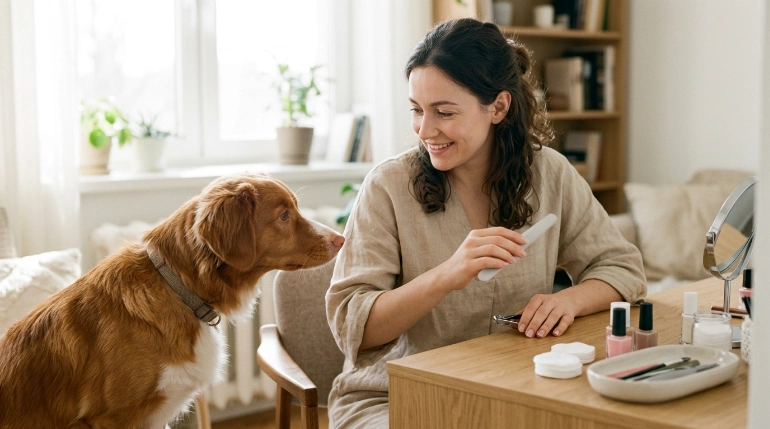
There is no good evidence that dogs have a specific built-in attraction to manicure files. A better explanation is that a nail file combines several things dogs commonly find interesting: human scent, a novel texture, easy access, and a predictable reaction from the person who owns it.
1. It Smells Like You
A file you have used can carry skin oils, nail dust, lotion residue, and your general scent. Dogs rely heavily on scent when investigating their environment.
The American Kennel Club explains in its guidance on why dogs chew household objects that frequently handled items may be attractive partly because they smell like their owner.
That can explain why your dog ignores a brand-new file in a drawer but grabs the one you just used.
2. The Texture Is Interesting to the Mouth
Chewing is normal canine behavior. The rough surface of an emery board or the firm edge of a grooming tool can feel unusual compared with a soft toy.
The American Animal Hospital Association notes that dogs use their mouths to investigate objects and that chewing can also relieve boredom or provide self-comfort. An object being interesting to chew does not make it a safe chew object.
3. Puppies Explore With Their Mouths
Puppies are especially likely to pick up manicure tools, socks, pens, cords, and other small household objects.
Mouthing helps puppies explore, and teething can increase their urge to chew. If your puppy keeps grabbing your file, she may not be showing a special preference for nail-care tools at all. The file may simply be within reach during a stage when nearly everything is worth investigating.
4. Your Reaction Can Make the File More Exciting
Your dog picks up the nail file, you gasp, rush over, call her name, and try to get it back. From your point of view, you are preventing a dangerous chew session. From your dog’s point of view, grabbing that object may have produced instant attention.
If the pattern repeats, the dog can learn that stealing the file starts a game. Prevention and calm redirection are usually better than dramatic chasing.
5. Grooming May Predict Treats
If you have taught your dog to tolerate paw handling or nail filing using treats, praise, or play, the nail-care tool can become a predictor of something good.
The AKC’s dog nail-care routine guidance recommends building trust around grooming tools and notes that individual dogs may prefer different nail-care methods.
A dog who walks over when she sees the file may therefore be thinking, “This is the activity where I get chicken,” rather than “I love nail files.”
6. Some Dogs Enjoy Scratchboard Training
A scratchboard is different from handing a dog a nail file. It is a board with an abrasive surface that a dog is trained to scratch with her paws.
The AKC describes this as one way for some dogs to wear down their own nails, particularly dogs that dislike having their feet handled. The dog can become enthusiastic about the activity because it is a trained behavior that earns rewards and gives her more control.
7. Boredom or Self-Soothing Can Play a Role
A dog who repeatedly searches for household objects to chew may need more appropriate outlets. Walks, sniffing, play, food puzzles, training, and safe chew toys can reduce the temptation to invent entertainment with manicure supplies.
If your dog repeatedly eats non-food objects rather than merely mouthing them, talk with your veterinarian. Repeated ingestion can be associated with pica or another behavioral or medical problem.
Is It Safe for Dogs to Chew on Nail Files?
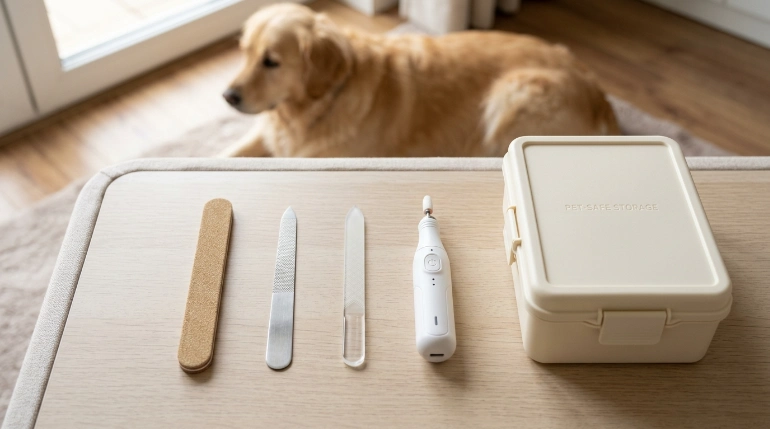
No. A nail file is a grooming tool, not a dog chew toy.
The main risk is often physical rather than the file being universally “toxic.” Safety depends on the material, coatings, residue, size, and whether the dog breaks or swallows any part of it.
Our guide on whether dogs can chew on nail files goes deeper into immediate risks and what to do if your dog has already damaged one.
Potential problems include:
- Mouth injuries: Abrasive or sharp edges can scrape gums, lips, or the tongue.
- Broken teeth: Very hard materials can damage teeth.
- Choking: A broken piece can lodge in the throat.
- Digestive obstruction: Swallowed plastic, board, metal, or other pieces may not pass normally.
- Chemical residue: Used files may carry polish, remover, lotions, or cleaning products.
- Cuts: Cracked glass or damaged metal can create sharp edges.
AAHA warns that unsafe chew items can cause dental injuries, choking, or intestinal blockage. That is a good reason to treat any manicure file as off-limits.
Nail File Materials: What Changes the Risk?
| Nail File Type | Main Chewing Concern | Best Use |
|---|---|---|
| Emery board | Can fray, break, or be swallowed | Human nail shaping |
| Metal file | Hard on teeth; can develop sharp edges | Controlled filing only |
| Glass/crystal file | Can break into sharp pieces | Human nail care |
| Manual pet file | Still unsafe as a chew toy | Supervised dog nail maintenance |
| Electric grinder | Moving parts, heat, cord/battery concerns | Controlled nail grinding |
| Scratchboard | Can over-file if used excessively | Supervised trained scratching |
If you are deciding whether a file is suitable for grooming, see NailPrime’s guide to whether nail files are safe for dogs. A tool can be suitable for controlled nail care and still be unsafe for chewing.
Does Liking a Nail File Mean My Dog Will Like Having Her Nails Filed?
Not necessarily.
A dog can love stealing an emery board and still dislike anyone touching her feet. She can also ignore a loose file but calmly tolerate a manual pet file during grooming.
Watch body language rather than assuming interest equals consent. A comfortable dog may keep a loose body, take treats normally, and stay near you without restraint.
Stop if you see:
- Repeated paw pulling
- Freezing or stiffening
- Hiding
- Growling or snapping
- Yelping
- Frantic attempts to escape
For actual nail maintenance, our guide on whether nail files work on dogs explains when a manual file is useful and when a pet grinder is more practical.
How to Turn Nail-File Interest Into a Safe Grooming Routine
1. Control Access to the Tool
Let your dog see or sniff the file while you hold it. Do not hand it over like a toy. Reward calm investigation, then put the tool away.
2. Practice Paw Handling Separately
Briefly touch a leg, paw, and toe during relaxed moments, rewarding calm behavior. A dog who likes seeing the file may still need time to become comfortable with paw handling.
3. Choose a Dog-Appropriate Tool
For light smoothing, a manual pet file may be enough. For thick nails, an electric dog nail grinder is often more efficient.
VCA Animal Hospitals’ guide to trimming dog nails notes that files and grinders can be used, while also warning about grinder heat, skin contact, and long hair becoming caught.
If you are considering powered filing, NailPrime also explains whether electric nail files are good for dogs.
4. Work in Tiny Sessions
You do not need to finish four paws at once. File one nail tip, reward, and stop while your dog is calm. Increase the work only if she remains comfortable.
5. Avoid the Quick
The quick is living tissue inside a dog’s nail containing blood vessels and nerves. Cutting or grinding into it causes pain and bleeding.
The ASPCA’s dog grooming tips recommend trimming when nails approach the ground or begin clicking or snagging. If you are unsure where the quick ends, ask a groomer or veterinary professional to demonstrate.
6. Store and Clean the Tool
After the session, clean the tool according to its manufacturer’s instructions and put it away. Do not leave it on a coffee table or open manicure cart where curiosity can turn into chewing.
Expert Tip: Keep separate kits for your manicure tools and your dog’s grooming supplies. Separate storage improves hygiene and prevents you from accidentally using a chewed or pet-only file on your own nails.
Manual File, Grinder, Scratchboard, or Professional Grooming?
A manual pet file is quiet and usually the least expensive option, but it is slow and best for light smoothing.
An electric grinder removes nail more efficiently and leaves a smooth edge, but it adds noise, vibration, heat, and hair-entanglement concerns.
A scratchboard can help dogs that dislike paw restraint. However, it may not maintain every nail equally, especially dewclaws.
A professional groomer or veterinary team costs more than DIY care but may be the better choice when a dog is very fearful, the nails are severely overgrown, or you are not confident about where to stop.
Hygiene Matters
Dog paws contact floors, sidewalks, soil, grass, and outdoor debris. Your personal manicure tools contact your hands and nails, so avoid routinely sharing the same file between yourself and your dog.
Inspect a pet file before each use. Replace it if the abrasive surface is peeling, the board is splitting, the metal has a sharp defect, or a grinder attachment is damaged.
If the skin around a nail is red, swollen, moist, bleeding, or producing discharge, do not file over it. That is no longer simple cosmetic maintenance.
Common Mistakes to Avoid
- Letting the dog play with the file first. This teaches chewing rather than calm grooming.
- Chasing the dog for a stolen file. Prevent access and teach a calm “drop it” or trade routine.
- Using a damaged file. Cracks, splinters, sharp edges, and loose parts raise injury risk.
- Using a file covered in manicure products. Polish, remover, gel residue, or cleaners do not belong in a dog’s mouth.
- Assuming curiosity means the dog likes filing. Watch body language during actual paw handling.
- Grinding too long in one place. Friction can create uncomfortable heat.
- Forcing a frightened dog. Short cooperative sessions are safer.
- Ignoring repeated swallowing of non-food objects. Frequent ingestion deserves veterinary attention.
When to See a Nail Technician or Dermatologist
For a dog’s nails, a human nail technician or dermatologist is not the right professional. Routine canine nail care belongs with an experienced dog groomer, veterinarian, or veterinary technician.
Contact a veterinarian if your dog has:
- A nail torn near the base
- Bleeding that does not stop promptly
- Swelling, redness, pus, or a bad odor
- Limping or obvious paw pain
- A nail growing into the paw pad
- Repeated splitting or abnormal nail growth
- A swallowed piece of nail file
- Choking, vomiting, repeated retching, abdominal pain, or unusual lethargy after chewing a file
If your dog repeatedly eats non-food objects, mention that pattern too. It may need medical and behavioral evaluation rather than simply better storage.
FAQs
Why does my dog lick my nail file?
Your dog may be investigating your scent, skin oils, nail dust, or other residues. Licking does not mean the file is safe. Remove it and offer an appropriate toy or chew.
Why does my dog steal nail files?
Curiosity, chewing instinct, boredom, owner scent, or the attention you give when reacting can all contribute. Store files out of reach and reward a calm trade.
Can dogs chew emery boards?
They should not. Emery boards can fray, break, and be swallowed, and a used board may carry cosmetic residue.
Do dogs enjoy getting their nails filed?
Some do after gradual training with rewards. Others dislike paw handling, vibration, or the filing sensation. Judge comfort from the dog’s behavior during grooming.
Is a scratchboard safer than a nail file?
A scratchboard can reduce paw restraint and work well for trained dogs, but it still needs supervision because repeated scratching can remove too much nail.
What if my dog swallowed part of a nail file?
Take away the remaining tool and contact your veterinarian, especially if the missing piece is sharp, hard, large, glass, or metal. Seek urgent help for choking, repeated vomiting, severe pain, weakness, or breathing difficulty.
Can I use my own nail file on my dog?
A clean, sturdy human file may smooth a tiny rough edge on some thin dog nails, but pet-specific tools are usually more practical. Do not routinely share the same file between your manicure kit and your dog.
Conclusion
So, why do dogs like nail files? Most of the time, they are responding to scent, texture, natural chewing and exploration, attention, or a learned association with rewards—not a special attraction to manicure tools.
That curiosity can be harmless while the file stays in your hand, but chewing is different. Nail files can break, scrape the mouth, damage teeth, or create pieces that may be swallowed.
Keep human manicure tools out of reach. If you want to file your dog’s nails, use an appropriate pet tool, introduce it gradually, work in short sessions, and protect the quick. For a dog that is fearful, injured, or repeatedly swallowing non-food objects, choose professional help rather than pushing ahead with DIY care.
Your best next step is simple: store the tempting file safely, give your dog an appropriate chew, and turn nail care into a calm, supervised routine.

