
How Long to Wait Between Nail Polish Coats for a Smooth, Faster-Drying Manicure

If you want a clean manicure that dries properly, the short answer is this: wait about 2 to 5 minutes between coats for regular polish, and lean closer to the longer end if the layer is a little thick, the room is humid, or the formula is slow-drying. That range is consistent with guidance from polish brands and beauty editors, including examples like ella+mila and Maniology, while Essie Weingarten’s commonly cited backstage advice is often summarized as about 2 minutes between layers. In practice, that means you are not waiting for each coat to be fully dry before adding the next one; you are waiting until it has set enough that the fresh layer won’t drag, wrinkle, or trap wet polish underneath.
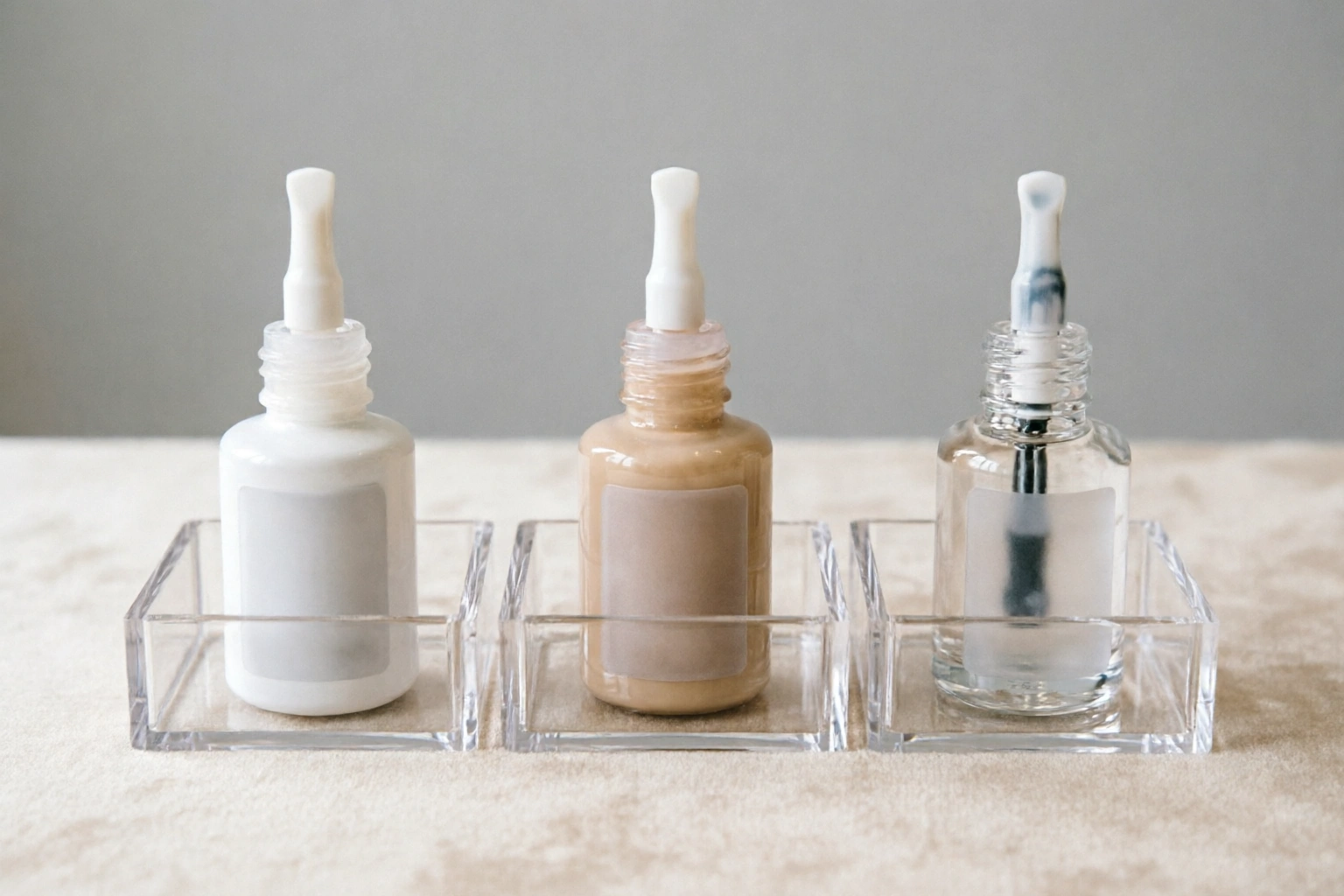
Practical rule: for regular polish, wait until a coat is dry-to-the-touch and no longer glossy-wet before layering again; that is usually about 2 minutes for a base coat and 2 to 5 minutes for color coats, while the top coat should go on once the color no longer shifts under a very light touch.
The mistake most DIY manicures make is treating “dry enough to touch” and “dry enough to layer” as the same thing. They are not. A coat can feel dry on top but still be soft underneath, which is why a too-early second coat often turns a smooth finish into streaks, dents, or bubbles.
Quick Answer: How Long to Wait Between Nail Polish Coats
Use this as your practical timing guide:
| Coat type | Typical wait time before the next coat | When to use more time |
|---|---|---|
| Base coat | About 2 minutes | If it was applied thickly or still feels tacky |
| Color coat | About 2 to 5 minutes | If the polish is opaque, creamy, or slow-drying |
| Second color coat | About 2 to 5 minutes | If the first color coat is still soft or streak-prone |
| Top coat | Apply once the color is dry-to-the-touch and no longer glossy-wet | If the color layer dents easily, wait longer |
| Quick-dry top coat | Follow the product directions, but still apply over a set color layer | If the polish underneath is visibly wet, don’t rush it |
A useful rule: thin coats can usually move faster; thick coats need more time. That trade-off matters because thicker layers may look opaque sooner, but they also trap more solvent and stay soft longer.
If you want a deeper timing reference for product-specific prep, NailPrime’s guides on how many coats of nail dehydrator and how long nail dehydrator takes to dry are helpful if you use those steps before polish.
What You Need Before You Start
A better drying result begins before the first brush stroke. Gather:
- A base coat
- Your color polish
- A top coat
- Cotton or cleanup tools if you like to tidy edges as you go
- Optional: a quick-dry top coat or drying drops
- Good lighting so you can see whether a coat is still glossy-wet or starting to set
Also make sure the nails are clean and free of lotion or oil. Oily nail plates slow adhesion, which can make the polish feel slippery and extend the time it takes to stabilize.
If you’re using prep products, a dehydrator can help remove surface moisture and oils before polish. That is different from drying polish itself, but it can improve how the layers sit and wear.
How Dry Should Each Coat Be Before the Next One?
The safest decision rule is not “fully dry.” It is dry enough that the surface no longer moves when lightly handled.
Here’s the difference:
Touch-dry
The surface no longer feels wet to a very light touch. This is a useful checkpoint, but it does not mean the polish is ready for heavy handling.
Dry-to-the-touch
A gentle contact does not leave a visible mark or pull the layer. This is usually the level you want before adding the next coat.
Fully dry
The coating has hardened through the entire layer, not just on top. This takes much longer than most people expect, especially with multiple coats.
That distinction matters because polish dries from the top down. If you seal in a soft lower layer too soon, the trapped solvents can cause wrinkling, bubbling, or a finish that dents later even if it looked fine at first.
Recommended Wait Times for Base Coat, Color Coats, and Top Coat
A simple, workable sequence is:
- Base coat: wait about 2 minutes
- First color coat: wait about 2 to 5 minutes
- Second color coat: wait about 2 to 5 minutes
- Top coat: apply once the color layer is dry-to-the-touch rather than glossy-wet
There is some variation in the advice available. Some beauty coverage has summarized Essie Weingarten’s backstage timing as roughly 2 minutes between layers, while other beauty sources recommend 2 to 5 minutes between coats, especially when the formula is not a fast-dry type. Makeup.com also notes that, if you want to be extra cautious, it may take 30 to 45 minutes before a manicure is truly set, especially once a top coat is involved. That is not a contradiction so much as a difference between “ready for the next layer” and “safe for normal use.”
For a home manicure, the practical middle ground is this: wait long enough that the coat stops looking wet and stops shifting under very light pressure. If you are in a rush, use thinner coats rather than cutting the wait time too aggressively.
For product behavior, OPI notes that once polish has dried, you can apply one layer of top coat, and its RapiDry Top Coat is ready in 60 seconds. That is a product-specific example, not a promise that every top coat works that fast. You can read OPI’s guidance on proper nail polish application.
Step-by-Step: Applying Nail Polish Without Rushing the Dry Time
1. Prep the nail
Clean the nail plate, remove residue, and make sure the surface is dry. If you use a dehydrator, let that step finish before polish goes on.
2. Apply a thin base coat
Use just enough to cover the nail. A thin base coat sets faster and gives the color something smooth to grip.
3. Wait about 2 minutes
You want the base coat to stop looking wet and glossy in a moving, liquid way. It should not feel sticky enough to drag when you gently test the edge.
4. Apply the first color coat in a thin layer
Do not chase full opacity in one pass. A thin first coat dries more evenly and gives the next layer a cleaner surface.
5. Wait 2 to 5 minutes before the second color coat
Use the shorter end of the range if the coat was thin and the room is dry. Use the longer end if the polish is creamy, the coat looks heavy, or the weather is humid.
6. Apply the second color coat only if needed
If the nail already looks even and opaque, stop there. Every extra coat adds drying time. Maniology points out that more coats mean longer drying overall, and that is one reason thin application is so effective.
7. Wait again before top coat
Let the color layer set until it is no longer tacky or easily dented. Then apply the top coat in one smooth pass.
8. Give the finished manicure extra time
Even if the surface seems dry, treat the nails gently for a while. Avoid tight shoes after a pedicure and avoid pressing nails against hard surfaces.
How Coat Thickness Changes Drying Time
Thin coats dry faster for a simple reason: there is less liquid to evaporate. They also cure more evenly on the nail surface, which reduces the chance of wrinkling or bubbling.
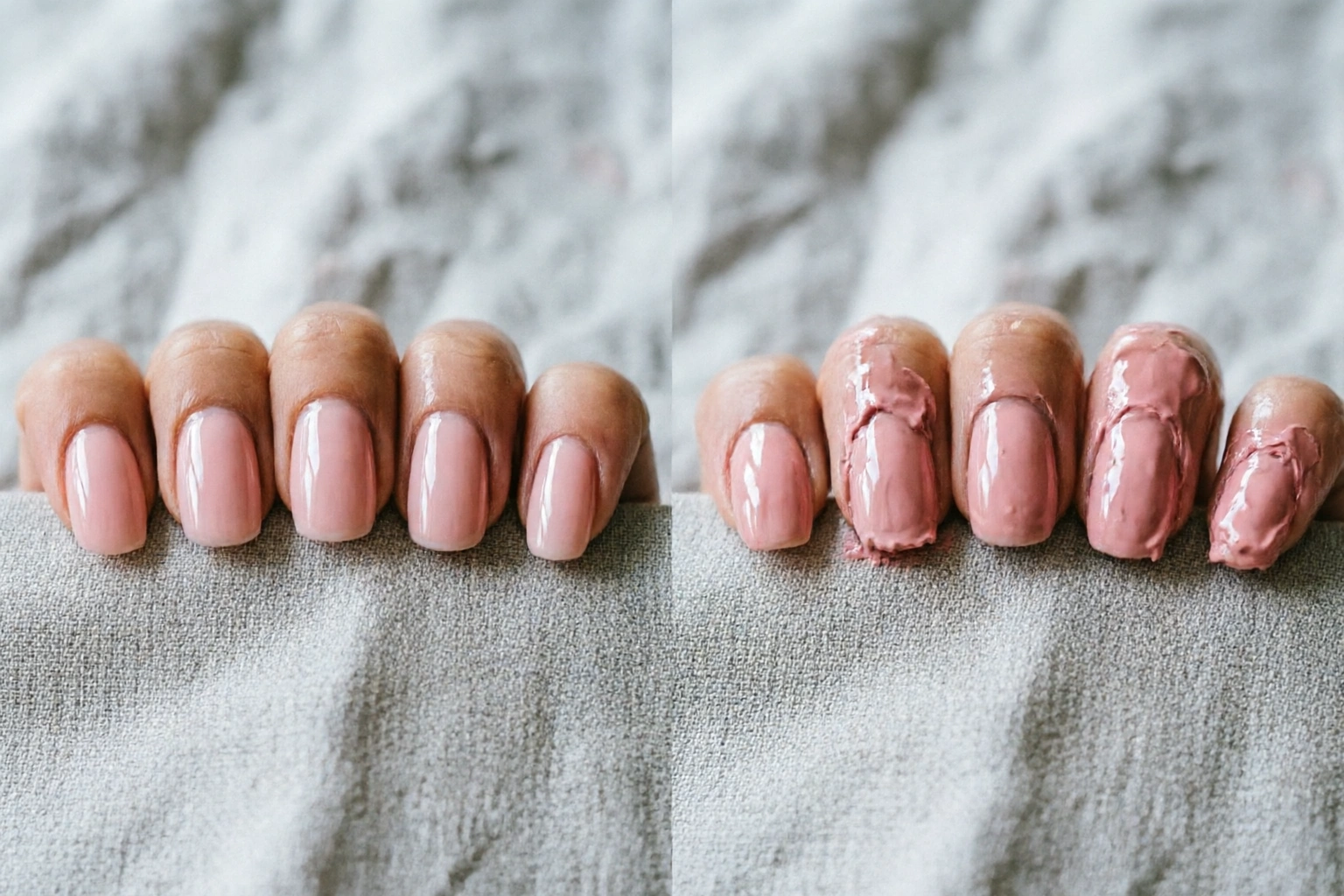
Thick coats create a trade-off:
- Benefit: more opacity in fewer passes
- Cost: slower drying, higher smudge risk, and a greater chance the top will set before the layer underneath does
That is why salon-style manicures often look so crisp. The polish is usually applied in controlled, thin layers rather than one heavy coat trying to do all the work.
If your polish keeps streaking, the answer is usually not a thicker second coat. It is usually a better first coat and a little more patience between layers.
How to Tell When a Coat Is Ready for the Next Layer
Use low-risk checks instead of pressing hard on the nail.
Good signs
- The shine has changed from wet-glossy to a softer sheen
- The surface no longer shifts when you hold your hand still
- A very light touch at the side edge does not pull the polish
Bad signs
- The polish still looks fluid
- The brush drags through the previous coat
- The surface feels soft or sticky
- You can see a fingerprint or dent form easily
A useful beginner test is to touch the side of the nail very lightly rather than the center. The side is less visible if you accidentally leave a mark, and you are less likely to ruin the main surface.
How to Make Nail Polish Dry Faster Between Coats
If speed matters, focus on the methods that reduce layer thickness and help solvent escape.
Use thinner coats
This is the biggest improvement you can make. It is better to apply two thin coats than one thick one that stays soft for much longer.
Keep the room comfortable and dry
Humidity slows evaporation. A damp bathroom after a shower is not a great manicure environment.
Use a quick-dry top coat
This can shorten the final stage, but it does not make wet polish instantly safe. Apply it only after the color layer has set enough to support it.
Avoid overloading the brush
Wipe excess polish from the brush before application. Too much product on the nail is a common reason drying slows down.
Let each layer breathe
Don’t hover over the nails, fan them aggressively, or stack coat after coat without pause. That can trap solvents instead of helping them leave.
Light airflow from a fan can help a little, but it is usually more of an optional assist than the main solution. Quick-dry drops or a quick-dry top coat are generally more effective than air drying alone for speeding up the later stages, but they still work best when the polish layers are thin and already starting to set.
Common Mistakes That Ruin a Manicure
Applying the next coat too soon
This is the fastest way to get dragging, bubbling, and a patchy finish.
Painting thick coats
Thick polish can look convenient at first, but it dries unevenly and dents more easily.
Assuming “looks dry” means “is ready”
A surface can look set while the lower layer is still soft.
Using too many coats
The more layers you add, the longer the full manicure needs to stabilize.
Putting on shoes too early after a pedicure
Closed shoes can press into polish that still feels fine at home but is not ready for friction.
Working in humid conditions
Moist air slows drying and makes timing less predictable.
Troubleshooting: What to Do If the Polish Smudges, Wrinkles, or Feels Tacky
If the polish smudges, the layer was probably not set enough before the next step. The fix depends on how bad the damage is.
If there is a light dent
Stop touching it. Sometimes a top coat can smooth minor texture if the layer underneath is only slightly disturbed.
If the polish wrinkles
That usually means the upper layer dried faster than the lower one. In that case, the problem is not just timing; it is also coat thickness. The best fix is often to remove the damaged layer and reapply thinner coats.
If the surface stays tacky for a long time
You may have used too much polish, a slow-drying formula, or a very humid environment. Give it more time before adding anything else. If you already applied the top coat too soon, do not keep layering on top of a soft base.
When the manicure is still salvageable, patience helps more than brushing over the problem. When it is not, a clean reset is faster than trying to rescue a badly wrinkled finish.
Practical Examples: Thin-Coat Manicure, Rushed Manicure, and Humid-Weather Timing
Thin-coat manicure
You apply a thin base coat, wait about 2 minutes, then apply a thin color coat. After another 2 to 5 minutes, you add the second color coat only if needed. Because each layer is light, the manicure feels smoother and the total dry time is shorter.
Rushed manicure
You use a thick first color coat and immediately add the next layer because the surface “seems fine.” The top looks okay for a few minutes, then wrinkles or dents appear later. This is the classic case where the polish was not ready even though it looked dry enough.
Humid-weather timing
The same polish takes longer to set on a rainy day or in a steamy bathroom. In that case, lean toward the longer end of the 2 to 5 minute range, and be more selective about whether you really need an extra coat.
When to Ask a Nail Technician
If your polish consistently wrinkles, peels, or never seems to harden even when you wait between coats, a nail technician can help you identify whether the issue is the formula, the prep, or the application method. Some polishes simply behave better with different techniques, and a pro can often spot whether the problem is coat thickness, surface prep, or product compatibility.
FAQ: Common Drying-Time Questions
Is one coat dry enough before applying the next one?
Usually not fully dry. It should be dry-to-the-touch and no longer soft enough to drag. For most regular polishes, that means waiting about 2 to 5 minutes.
Does the wait time change for base coat, color coat, and top coat?
A little. The base coat often needs about 2 minutes, while color coats commonly need 2 to 5 minutes depending on thickness. Top coat should go on once the color layer has set enough not to smear.
Are quick-dry formulas different?
Yes, but not magically so. Some quick-dry products shorten the process, and OPI’s RapiDry Top Coat is one example with a 60-second claim for that specific product. Even then, the polish underneath still needs to be set enough to support the next layer.
What if my polish is still tacky after waiting?
Wait longer. If it was applied thickly, in humid air, or with too many layers, the polish may need more time than the usual range.
Should I wait longer before top coat?
If the color layer is soft or glossy-wet, yes. A top coat can seal in problems if it goes on too early.
How long should I wait before putting on shoes after a pedicure?
Long enough that the polish will not dent under pressure. Makeup.com notes that some experts recommend waiting 30 to 45 minutes as a safer practice with a quality top coat and relatively new polish, and even longer caution is wise for closed-toe shoes.
Does thin polish really dry faster?
Yes. Thin coats generally dry faster because there is less material to evaporate and less chance of trapping soft polish underneath.
Can I just fan my nails to speed things up?
Light airflow can help a little, but it will not fix a coat that is too thick. Product choice and coat thickness matter more than fanning.
How do I know if I should add another coat or stop?
If the color is already even and opaque enough for you, stop. Every extra layer adds time and increases the chance of dents or smudges.
Is salon timing different from at-home timing?
Often, yes. Salons usually apply thinner, more controlled coats, which can make the same polish seem to dry faster than a thicker at-home application.

