
How Long to Wait Between Coats of Nail Polish for a Smoother, Faster Manicure

If you want a clean DIY manicure, the short answer is this: wait about 2 to 5 minutes between coats of nail polish. That range works for most regular formulas and quick-dry polishes, with thinner coats leaning toward the shorter end and thicker, slower formulas needing more time.
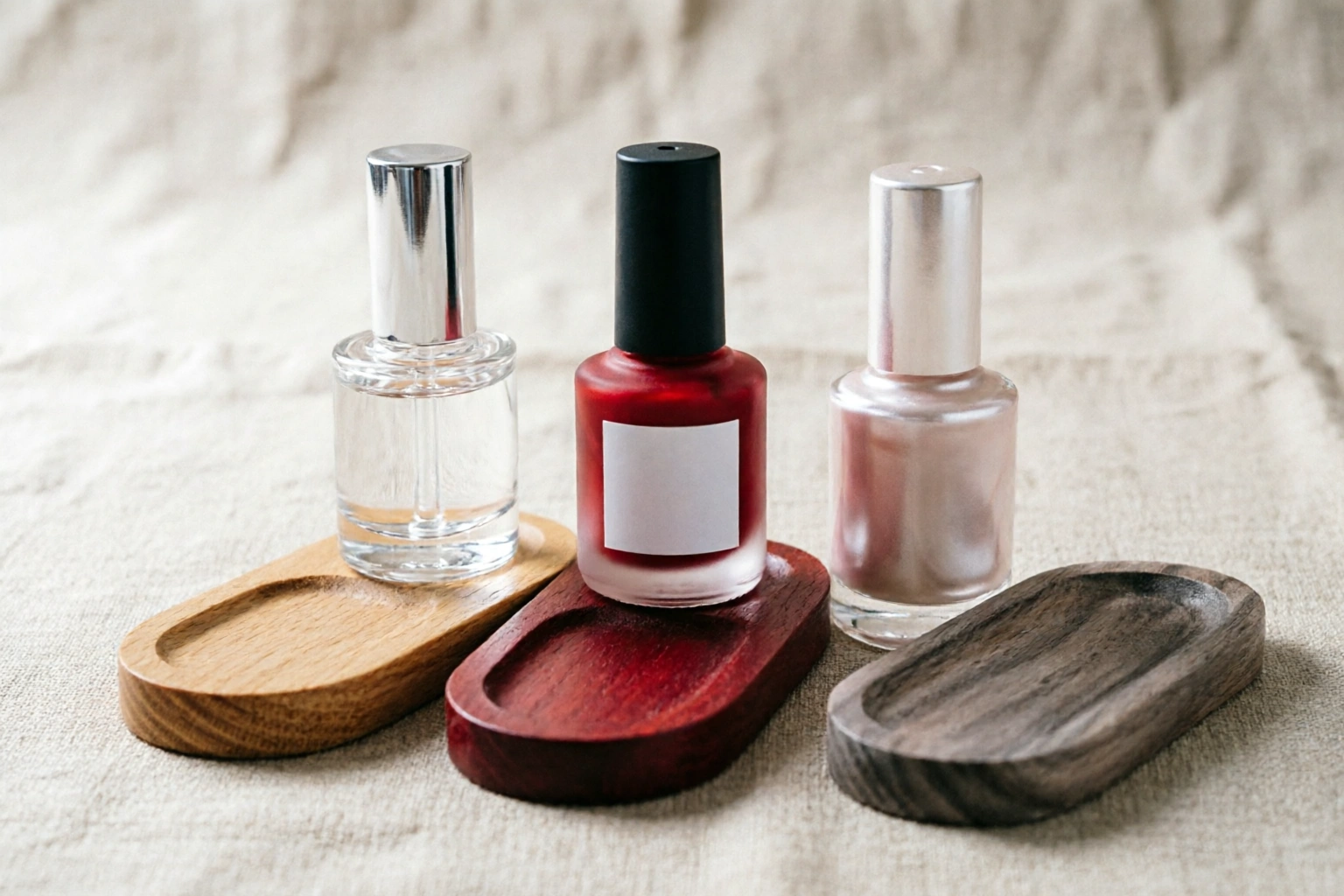
Here’s the practical version I give clients: the next coat should go on when the layer underneath is set enough that it won’t drag, dent, or wrinkle under the brush. That usually means the polish is dry to the touch on the surface, but not necessarily fully cured all the way through.
If you rush it, the second coat can smear the first, trap solvent, and create bubbles or ridges. If you wait much too long, some formulas may lose a bit of intercoat grip, which can shorten wear in some cases. Seche notes that for most nail polishes, 1 to 2 minutes between thin color coats and 2 to 3 minutes before top coat is a useful target, while ella+mila recommends 2 to 5 minutes between layers. Those ranges are a solid starting point for home manicures, especially if you’re working with thin coats.
Quick Answer: The Best Wait Time Between Coats
Use this as your working rule:
- Base coat to color: about 2 minutes
- Between color coats: about 2 to 5 minutes
- Before top coat: about 2 to 3 minutes if the color layer is thin and set
If you’re using a very fast-drying formula, you may be able to move a little sooner. If the polish is thick, dark, glittery, or the room is humid, wait longer.
A useful way to think about it is this: you are not waiting for every coat to become fully dry before continuing. You are waiting for each coat to become stable enough to support the next one.
If a coat still feels wet, tacky, or easy to drag, it is too soon. If it feels dry on the surface but still dents when you press lightly, give it a little more time before continuing.
What You Need Before You Start
The timing between coats matters more when your setup is working against you. Before painting, make sure you have:
- Base coat
- Color polish
- Top coat
- Optional quick-dry top coat
- Optional fast-drying drops
- A fan or other gentle air-moving tool
- Nail polish thinner if your bottle has gotten gummy
- A clean, dry workspace
Formula matters too. A regular polish behaves differently from a quick-dry polish, and a fresh bottle behaves differently from one that has thickened over time. If you want a deeper look at prep, NailPrime’s guides on how long nail dehydrator takes to dry and how many coats of nail dehydrator to use can help if you use dehydrator before polish.
How to Tell When a Coat Is Ready for the Next Layer
The biggest mistake is assuming dry to the touch means ready for another coat in every situation. Those are not the same thing.
Dry to the touch
This means the surface no longer feels wet when you lightly tap it. That’s useful, but it only tells you the top skin of the polish has started to set.
Fully dry or fully cured
This means the polish has hardened through the layer, not just on top. Regular polish can take much longer to reach this stage than the few minutes between coats.
Simple checks that work at home
Use these instead of guessing:
- Light tap test: Touch the edge of one nail very lightly with a fingertip. If it feels tacky or leaves a mark, wait longer.
- Brush drag check: If the first coat still looks soft enough that the second brush stroke pulls color around, it is too soon.
- Glossy-but-set look: A coat can still look shiny and be ready. Shine alone is not a reliable sign of wetness.
A simple rule helps: if the coat is dry to the touch but still dents easily, wait another minute or two before the next layer. For a regular polish manicure, that often means the first coat is ready for color again after a short pause, while a thicker or more pigmented coat may need longer.
Step-by-Step: Timing Each Coat of Nail Polish
1) Apply the base coat
Paint on a thin, even base coat. Thin application matters because a heavy base coat slows the whole manicure.
Wait about 2 minutes before color. If your base coat is still sliding or feels soft, give it another minute or two.
2) Apply the first color coat
Keep the first color coat thin. The first coat is usually the most streaky, which is normal. Resist the urge to “fix” it with a thick layer.
Wait about 2 to 5 minutes before the second color coat. If the polish is a regular formula and you applied it thinly, the shorter end is often enough. If the coat was slightly heavier, go longer.
3) Apply the second color coat
This is usually the coat that gives you full opacity. Again, thin beats thick. A heavy second coat may look richer right away, but it slows drying and increases the risk of wrinkling.
Wait about 2 to 3 minutes before top coat if the surface feels set. If the color still feels tacky, hold off longer.
4) Apply the top coat
Top coat seals the manicure and helps it wear better, but it can also disturb a soft color layer if you rush it.
Seche’s guidance is useful here: 2 to 3 minutes before applying top coat works for most polishes when the underlying layers are thin. If you’re using a quick-dry top coat, follow the brand’s instructions, because some formulas are designed to work best over polish that has already set briefly.
How Coat Thickness, Polish Type, and Weather Change Drying Time
Thin coats vs thick coats
Thin coats dry faster because there is less product for the air to work through. They also level more smoothly, which reduces streaks and bubbling.
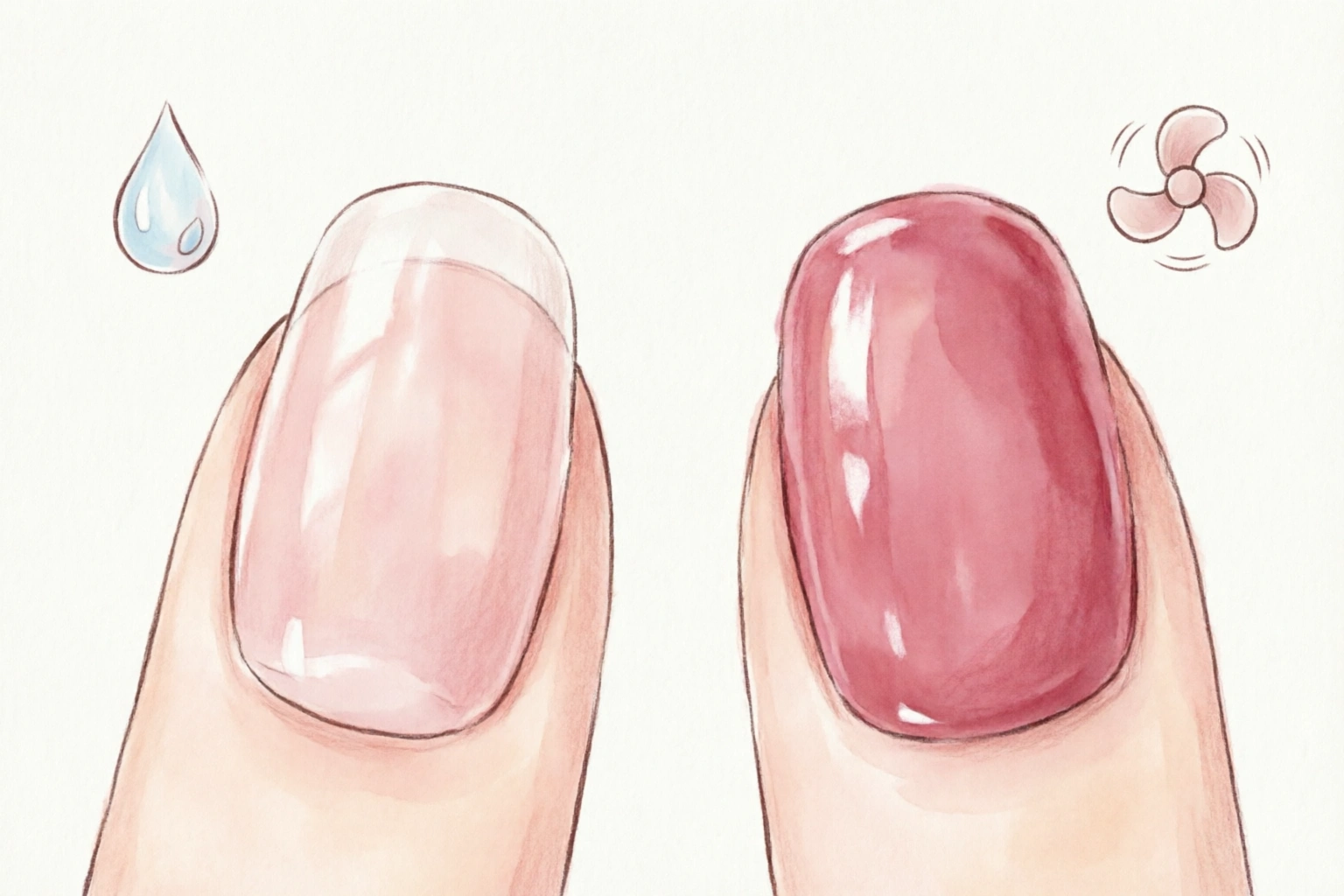
Thick coats may seem efficient, but they usually create a trade-off:
– Faster coverage in one pass
– Slower drying and a higher smudge risk
For home manicures, thin coats almost always win.
Regular polish vs quick-dry polish
Quick-dry formulas are built to set faster, but they still need some wait time between layers. ella+mila says to give 2 to 5 minutes between layers, even with quick-dry polish. That’s a good reminder that “quick-dry” does not mean “instant.”
Regular polish usually needs the longer end of the timing range. If you are unsure, wait an extra minute rather than rushing the next coat.
Dark colors and glitter polish
Dark shades often look uniform sooner than they actually are. Glitter polish is even trickier because the texture can hold onto solvent and feel dry on top while still being soft underneath.
For both, it is smart to lean toward:
– Thinner coats
– Longer pause between layers
– A quick-dry top coat at the end
Humidity and room temperature
Warm, humid air can slow evaporation, so a cool, dry room usually helps polish set faster. If you are painting in a steamy bathroom after a shower, expect longer wait times between coats.
A fan can help move air, but it does not magically cure polish. It is a drying aid, not a shortcut to skipping the wait.
Ways to Speed Up Drying Between Coats Without Ruining the Manicure
If you want faster results, the safest gains come from technique, not force.
Use thinner coats
This is the biggest speed boost available. Two thin coats dry better than one thick one and usually look smoother too.
Keep the brush loaded lightly
Wipe excess polish off the brush before applying. A brush that is overloaded lays down too much product and slows the whole manicure.
Use a quick-dry top coat
This helps most at the end of the manicure. It can improve surface set and reduce the chance of accidental dents while the polish continues to harden underneath.
Try fast-drying drops
These can help move the manicure along, especially if you are painting multiple coats. They are best used as directed, not as a substitute for thin application.
Use gentle airflow
A fan is useful because it moves solvent away from the nail surface. Keep it gentle. Strong heat is not the answer, and hot air can make the surface behave unpredictably.
For more on prep products that affect polish performance, see NailPrime’s guide on should nail dehydrator be applied to the whole nail if you use dehydrator as part of your routine.
Common Mistakes That Cause Smudging, Bubbling, or Wrinkling
Applying the next coat too soon
This is the most common problem. The surface may look fine, but the layer underneath is still soft. When the brush passes over it, the polish drags.
Using thick coats to save time
Thick coats rarely save time in practice. They often make you wait longer later because the polish stays soft underneath.
Brushing back and forth too much
Overworking the polish can trap air and create streaks or bubbles. Lay it down, smooth it once or twice, and stop.
Ignoring humidity
If the room is damp, your usual timing may no longer work. Add a little extra wait time and keep coats thin.
Assuming top coat fixes everything
Top coat protects the manicure, but it can also disturb a base that is not ready. If the color layer is soft, top coat can cause wrinkling or pull color into streaks.
Troubleshooting: What to Do If Your Polish Is Still Tacky
If a coat still feels sticky after the usual wait:
- Stop and wait longer. Another 2 to 3 minutes often solves the issue.
- Check your coat thickness. If it was heavy, expect a longer set time.
- Use gentle airflow. A fan can help, but keep it low and steady.
- Avoid touching the nail to test it repeatedly. That can leave marks and slow the surface down further.
- If the bottle is thickening, use polish thinner. Thickened polish applies unevenly and takes longer to settle.
If the surface smudges when you try the next coat, do not keep brushing over it. Let it set fully, then correct the area with a light, even layer. Repeated brushing usually makes the problem worse.
Practical Examples: Regular, Dark, and Glitter Polish
Regular polish manicure
A thin base coat, two thin color coats, and a top coat can often move along with about 2 minutes between layers. This is the easiest formula to time because it behaves predictably.
Dark polish manicure
A deep navy or burgundy shade may look polished quickly, but it can still be soft underneath. Give the first and second coats closer to 3 to 5 minutes if the layers are not ultra-thin.
Glitter polish manicure
Glitter often needs the most patience. The texture can make each coat look more set than it really is. Use thin coats and lean toward the longer end of the wait range.
Fast-dry polish on a busy night
If you need speed, pair a quick-dry formula with thin coats and a quick-dry top coat. You can usually keep the pauses short, but do not skip them entirely. Even fast-dry products need time to set.
When to Ask a Nail Technician
If your polish keeps wrinkling, bubbling, or peeling no matter how carefully you time it, the issue may be formula compatibility or application technique rather than drying time alone. A nail technician can help you identify whether the problem is the base coat, color formula, top coat, or the way the layers are being built.
For broader context on product behavior and application timing, manufacturer guidance is worth respecting. OPI notes that you should apply 2 coats of color and allow each coat to dry in between, and Seche explains why timing matters: too early can cause smears and dents, while waiting too long may reduce intercoat grip in some formulas. You can also check general nail-care resources from essie’s nail care guidance and product safety or ingredient information from the FDA cosmetics overview.
Bottom Line
Before you add the next coat, use this quick checklist:
- Is the surface dry to the touch?
- Does a light tap leave a mark or feel tacky?
- Did you apply the last coat thinly?
- Is the formula regular, quick-dry, dark, or glitter?
- Is the room humid enough to slow drying?
If the answer to the first question is yes and the others point to a stable layer, you are usually ready to continue. For most DIY manicures, 2 to 5 minutes between coats is the safest practical range. Use the shorter end for thin, fast-dry coats and the longer end for regular polish, thicker layers, dark shades, or glitter. The real goal is not the clock by itself; it is a coat that is set enough to support the next layer without dragging, denting, or wrinkling.

